
Debunking Social Security Claims: Separating Fact from Fiction in Today's Digital Landscape
Examining viral claims about DOGE's impact on Social Security and allegations against Rep. Jasmine Crockett
Key Insights on These Claims
- No evidence supports the claim that DOGE removed 9 million scammers from Social Security, though the Department of Government Efficiency has been conducting system audits
- The allegation that Rep. Jasmine Crockett cashed her deceased grandmother's Social Security checks has been thoroughly debunked as originating from satirical sources
- Social Security fraud remains a legitimate concern, but viral claims often exaggerate the scope or target public figures without evidence
The Truth About DOGE and Social Security Audits
The claim that the Department of Government Efficiency (DOGE) removed 9 million scammers from the Social Security system is not supported by credible evidence. This appears to be an exaggeration of actual efforts to clean up the Social Security database of deceased individuals and potential fraud cases.
According to verifiable information, DOGE has indeed been working to audit and improve the Social Security system, but on a different scale than claimed. Reports indicate that as of March 2025, DOGE has:
- Removed approximately 1.8 million individuals listed as being between 120-129 years old from the system
- Identified and removed roughly 4.9 million individuals in total from the system
- Faced legal challenges regarding their methods and access to sensitive data
It's important to note that while DOGE has removed accounts from the system, it's misleading to characterize all these removals as "scammers." Many represented deceased individuals whose deaths hadn't been properly recorded, outdated records, or administrative errors rather than deliberate fraud.
Understanding DOGE's Role in Government Oversight
The Department of Government Efficiency was established to identify waste, fraud, and abuse across federal programs, including Social Security. Their work has sparked both support and controversy, with some praising efforts to clean up government databases while others express concern about their methods and potential overreach.
A federal judge has reportedly blocked DOGE from accessing certain Social Security systems containing sensitive data, citing concerns about the agency's ability to protect this information appropriately. This highlights the tension between fraud prevention and privacy protection in government systems.
Fact-Check: Jasmine Crockett and the False Social Security Claims
The allegation that Representative Jasmine Crockett cashed her deceased grandmother's Social Security checks is demonstrably false. This claim has been thoroughly investigated by multiple fact-checking organizations and determined to be a fabrication that originated from satirical sources.
Here's what the evidence shows:
- The rumor began circulating on social media in early April 2025
- The claim originated from a network of Facebook pages and websites that explicitly describe their content as satirical
- Fact-checkers investigating the claim found no evidence supporting the allegation
- An obituary search for the name on the grave shown in viral posts did not list anyone named Jasmine as a family member
This false claim appears to be part of a pattern of misinformation targeting Rep. Crockett, who has been involved in several high-profile political controversies. While Crockett has faced legitimate criticism for her statements and actions as a representative, the Social Security fraud allegation has no basis in fact.
Context About Rep. Jasmine Crockett
For context, Rep. Jasmine Crockett has been in the news for various reasons unrelated to the false Social Security claims:
- She has made controversial remarks about political figures including Greg Abbott and Byron Donalds
- There was a Republican move to censure her in Congress
- She has received a Capitol Police escort following security concerns
- She was accused of an altercation with a reporter, which reportedly is under review by the U.S. Attorney's Office
- She has commented on proposals for DOGE checks to Americans, which sparked accusations of hypocrisy
- During her 2022 campaign, she received support from super PACs linked to cryptocurrency industry leaders
None of these verified events relate to the false claim about Social Security fraud.
How Social Security Scams Actually Work
While the specific claims about DOGE and Rep. Crockett are unfounded, Social Security fraud is a real concern. Understanding how actual Social Security scams work can help protect vulnerable individuals. Common types of Social Security fraud include:
| Fraud Type | Description | Warning Signs |
|---|---|---|
| Identity Theft | Using someone else's identity to claim benefits | Unexpected notices about benefits you didn't apply for; missing benefits |
| Deceased Recipient Fraud | Failing to report a beneficiary's death and continuing to collect payments | Payments continuing after death; suspicious account activity |
| Impersonation Scams | Scammers pretending to be SSA officials to steal personal information | Threats of arrest; demands for immediate payment; requests for gift cards |
| Disability Fraud | Falsely claiming disability or exaggerating medical conditions | Activity inconsistent with claimed disability; working while collecting |
| Representative Payee Misuse | Individuals authorized to manage benefits for others misusing funds | Unexplained financial hardship; basic needs not being met |
The Scale of Social Security Fraud
Social Security fraud does occur, but not typically at the scale suggested in viral claims. A 2023 audit showed that the SSA's database listed 18.9 million people who were potentially deceased, but this doesn't mean these individuals were receiving benefits fraudulently—many represent administrative errors in record-keeping.
Protecting Yourself from Social Security Scams
The Social Security Administration offers clear guidance on how to avoid becoming a victim of scams:
- Be aware that the SSA will never threaten you, suspend your Social Security number, demand immediate payment, or require payment by gift card, wire transfer, or cash
- Don't trust caller ID, as scammers can spoof official numbers
- Never give personal information to unsolicited callers
- Report suspicious communications to the SSA's Office of the Inspector General
Understanding How Misinformation Spreads
The claims about DOGE removing 9 million scammers and Rep. Crockett cashing her grandmother's checks demonstrate how misinformation can rapidly spread in today's media environment. Let's analyze the factors that contribute to the virality of such false claims:
The radar chart above illustrates how misinformation like these claims possess characteristics that make them highly shareable, compared to verified news. Both false claims score high on factors like political divisiveness, confirmation of existing biases, and involving specific numbers or public figures—all elements that enhance virality regardless of accuracy.
The Anatomy of Social Security Misinformation
Understanding how these false narratives develop and spread can help us become more discerning consumers of information. Let's explore the components using a mind map:
The mind map illustrates how Social Security misinformation develops from various sources, spreads through multiple channels, targets specific entities, follows common narrative patterns, and exploits psychological factors that make people more susceptible to believing false information.
Protecting Yourself from Social Security Scams
While the claims about DOGE and Rep. Crockett are false, real Social Security scams pose a genuine threat to Americans, particularly seniors. The following video from the Social Security Administration provides valuable information on how to identify and avoid these scams:
This video is part of the Social Security Administration's "Slam the Scam" initiative for 2025, which aims to educate the public about protecting themselves from Social Security-related fraud attempts. The campaign provides valuable guidance on recognizing legitimate communications from the SSA versus scam attempts.
Images Related to Social Security Fraud Prevention

Official Social Security Administration fraud prevention material warning about scammers who impersonate government officials
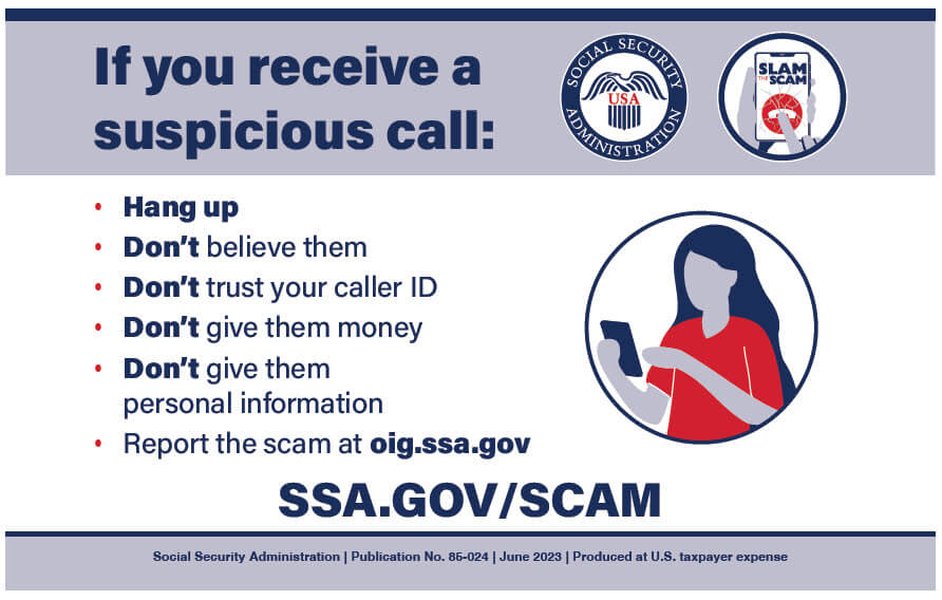
Social Security Administration guidance on identifying suspicious calls that may be scam attempts
The Social Security Administration regularly publishes materials to help citizens identify and avoid scams. These official resources should be trusted over unverified social media claims about Social Security fraud or policy changes.
Frequently Asked Questions
References
- Jasmine Crockett Grandmother Checks Fact Check - Snopes
- Fact Check: Jasmine Crockett Social Security Check Claim - Lead Stories
- No, Rep. Jasmine Crockett Didn't Collect Dead Grandmother's Social Security Checks - MSN
- DOGE Deletes Eye-Popping Number of Dead in Social Security System - MSN
- Has DOGE Uncovered Social Security Fraud? - Baltimore Sun
- Judge Blocks DOGE Access to Social Security System Sensitive Data - Washington Examiner
- Changes to Social Security Identity Checks Raise Ire of Retirees - AP News
Recommended Searches
Last updated April 6, 2025