
Unlocking Local Potential: How Decentralization Drives Economic Transformation
Exploring the shift of power from central authorities to local entities and its profound impact on economic growth and development.
Decentralization, in the context of economic development, represents a fundamental shift in how governance and economic management are approached. It involves the systematic transfer of authority, responsibilities, and resources from central government institutions to sub-national levels. These levels can include regional or local governments, community organizations, and even the private sector. The core idea is to bring decision-making and resource control closer to the people and areas they directly affect, fostering more responsive, efficient, and equitable economic outcomes.
Core Insights: The Power of Localized Economic Strategy
- Empowered Localities, Enhanced Efficiency: Decentralization allows local entities to tailor economic policies and resource allocation to their specific needs and conditions, often leading to greater economic efficiency and better public service delivery.
- Accountability and Participation: By bringing governance closer to citizens, decentralization can increase transparency, public accountability, and citizen participation in economic decision-making processes.
- Catalyst for Growth: Effective decentralization can stimulate local economic growth by promoting infrastructure development, attracting investment, and fostering an environment conducive to innovation and entrepreneurship.
Defining Decentralization in Economic Development
Decentralization in economic development is more than just an administrative reshuffle; it's a strategic approach aimed at restructuring power dynamics to foster economic vitality from the ground up. It refers to the process of transferring specific powers, functions, responsibilities, and financial resources from a central authority to regional, local, or even non-governmental entities. This transfer is intended to improve the effectiveness and efficiency of economic planning and management by enabling decisions to be made by those who have the most direct knowledge of local needs, resources, and priorities.
The underlying principle is that local actors are often better positioned to identify and respond to local economic opportunities and challenges. This approach draws from theories of fiscal federalism, which suggest that matching public spending to local preferences enhances overall welfare and economic efficiency. Ultimately, decentralization seeks to unlock the full economic potential of diverse territories by empowering them to shape their own economic destinies.

Visualizing the interconnected yet autonomous nodes of a decentralized economic system.
Pillars of Decentralization: Key Dimensions
The successful implementation of decentralization for economic development hinges on several interconnected dimensions. These pillars ensure that the transfer of power translates into tangible economic benefits.
1. Fiscal Decentralization
Empowering Local Finances
Fiscal decentralization involves granting sub-national governments significant authority over their finances. This includes the power to raise their own revenues (e.g., through local taxes and fees), make decisions on public expenditures, and manage intergovernmental fiscal transfers. The goal is to align fiscal responsibilities with local needs, enabling investments in critical areas like infrastructure, education, and healthcare, which are vital for economic growth. Effective fiscal decentralization requires clear rules for revenue sharing, borrowing, and financial management to ensure accountability and sustainability.
2. Administrative Decentralization
Delegating Management and Implementation
Administrative decentralization, also known as deconcentration, involves transferring the responsibility for planning, financing, and managing certain public functions from the central government to its local agencies or to other sub-national administrative units. This can improve the efficiency of service delivery, reduce bureaucratic delays, and make public administration more responsive to local conditions. For economic development, this means local bodies can more effectively implement development projects and manage local resources.
3. Political Decentralization
Strengthening Local Governance and Voice
Political decentralization aims to give citizens and their elected representatives more power in public decision-making. It often involves creating or strengthening elected local councils and executives who are accountable to their constituents. This form of decentralization is crucial for ensuring that economic development policies reflect local preferences and priorities. It fosters a sense of ownership and can lead to more inclusive and sustainable development outcomes by empowering communities, including marginalized groups, to participate in shaping their economic future.
4. Market Decentralization
Leveraging Private Sector and Civil Society
Market decentralization involves shifting functions previously performed by the public sector to the private sector or to voluntary and non-governmental organizations. This can take the form of privatization, deregulation, or public-private partnerships. The rationale is that market mechanisms and competition can lead to more efficient provision of goods and services, stimulating economic activity and innovation. While not always directly a transfer to "lower levels of government," it reduces the central government's direct economic role, allowing market forces and local initiatives to play a larger part in development.
Visualizing Key Factors in Successful Decentralization
The effectiveness of decentralization initiatives in promoting economic development is influenced by various critical factors. The radar chart below illustrates a hypothetical assessment of these factors for an idealized successful decentralization program. Each axis represents a crucial component, with higher values indicating stronger performance or greater presence of that factor. Understanding these interdependencies is key to designing and implementing effective decentralization reforms.
Tangible Benefits: Decentralization's Economic Dividend
When effectively implemented, decentralization can yield significant economic advantages, contributing to more robust and equitable development.
Improved Economic Efficiency and Resource Allocation
Local governments and entities typically possess superior information about local needs, preferences, and economic conditions. This proximity allows them to allocate scarce public resources more effectively, tailoring investments and services to maximize local impact. For instance, decisions about local infrastructure projects (like rural roads or small-scale irrigation) or targeted support for local industries can be made with greater precision, leading to higher returns on investment and reduced wastage compared to centrally planned initiatives.
Enhanced Public Accountability and Governance
Bringing decision-making closer to the populace can foster greater transparency and accountability. Local officials are more directly answerable to their communities, and citizens have more opportunities to participate in and scrutinize local governance. This can lead to reduced corruption, better quality public policies, and increased trust in public institutions, all of which are conducive to a stable and predictable economic environment attractive to investment.
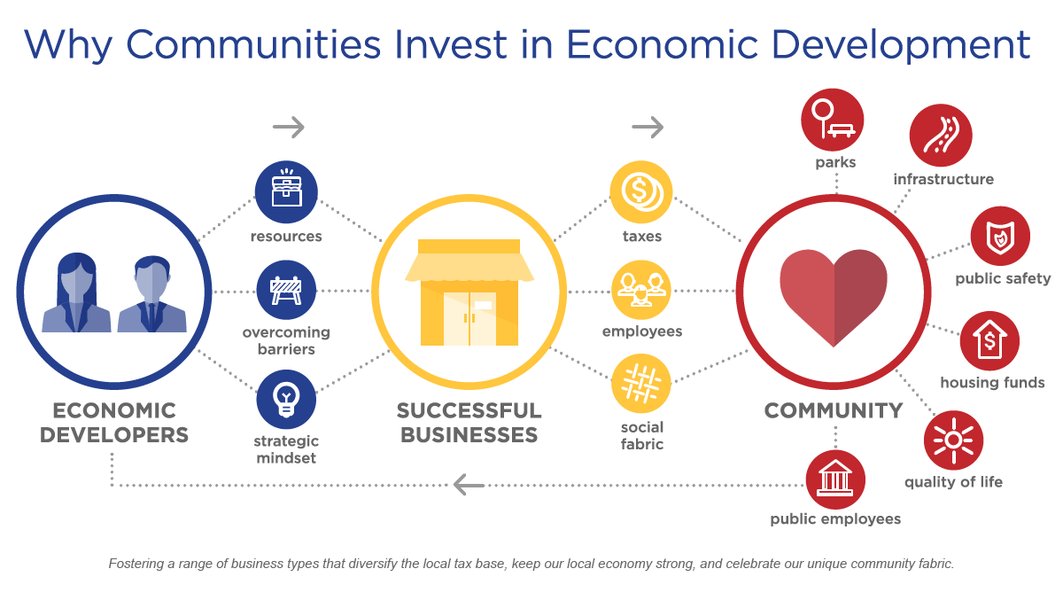
Principles guiding community-focused economic development efforts.
Stimulation of Local Economic Growth and Innovation
Decentralization empowers local authorities to create environments conducive to business and innovation. They can develop policies that support local entrepreneurship, attract investment tailored to regional strengths, and invest in enabling infrastructure. This localized approach can unlock economic potential that might be overlooked by central planners, fostering diverse local economies and creating employment opportunities. Competition among regions can also spur innovation in public service delivery and economic development strategies.
Inclusive Growth and Empowerment
By distributing power and resources more widely, decentralization can promote more inclusive economic growth. It provides avenues for marginalized communities and groups to have their voices heard and their needs addressed in economic planning. This can help reduce regional disparities, improve access to economic opportunities for all segments of society, and foster a sense of ownership over development processes. Empowerment at the local level is a key driver for equitable and sustainable economic progress.
Mapping the Landscape of Decentralized Economic Development
The concept of decentralization in economic development is multifaceted, encompassing various strategies, leading to diverse benefits, and encountering specific challenges. The mindmap below provides a visual overview of these interconnected elements, illustrating how decentralization operates as a system to influence economic outcomes.
Economic Development"] id1["Core Concept"] id1a["Transfer of power, resources,
and responsibilities from
central to sub-national levels"] id1b["Aim: Enhance efficiency,
equity, and participation"] id2["Types of Decentralization"] id2a["Fiscal Decentralization"] id2a1["Revenue generation
Expenditure decisions"] id2b["Administrative Decentralization"] id2b1["Delegation of management
and implementation"] id2c["Political Decentralization"] id2c1["Empowering local elected bodies
Citizen voice"] id2d["Market Decentralization"] id2d1["Privatization
Deregulation"] id3["Key Benefits"] id3a["Improved Economic Efficiency"] id3a1["Better resource allocation
Tailored policies"] id3b["Enhanced Accountability & Governance"] id3b1["Transparency
Reduced corruption"] id3c["Stimulated Local Growth"] id3c1["Infrastructure development
Local investment"] id3d["Inclusive Development & Empowerment"] id3d1["Reduced disparities
Broader participation"] id4["Critical Success Factors"] id4a["Strong Local Governance Capacity"] id4b["Clear Legal & Institutional Frameworks"] id4c["Adequate Financial Resources for Local Units"] id4d["Citizen Engagement & Oversight"] id4e["Political Will at Central & Local Levels"] id5["Potential Challenges"] id5a["Insufficient Local Capacity
(financial, technical)"] id5b["Elite Capture at Local Level"] id5c["Coordination Issues
(Central-Local, Inter-Local)"] id5d["Resistance from Central Authorities"] id5e["Increased Regional Inequalities
if not managed well"]
The Interplay: Types of Decentralization and Their Economic Impacts
Different forms of decentralization interact to shape economic development trajectories. Understanding their specific contributions and how they complement each other is vital for effective policy design. The following table summarizes the key types of decentralization and their primary economic impacts:
| Type of Decentralization | Core Description | Key Economic Impacts |
|---|---|---|
| Fiscal Decentralization | Transfer of financial responsibilities, including revenue collection (e.g., local taxes, fees) and expenditure decisions, to sub-national governments. |
|
| Administrative Decentralization | Delegation of planning, management, and service delivery functions from central government ministries to their field offices, or to local authorities. |
|
| Political Decentralization | Transfer of political authority and decision-making power to elected sub-national governments and representatives. |
|
| Market Decentralization | Shifting economic functions from the public sector to the private sector and civil society through mechanisms like privatization, deregulation, and public-private partnerships. |
|
Navigating Challenges: Conditions for Successful Decentralization
While decentralization holds immense promise for economic development, its success is not guaranteed. Several challenges must be navigated, and specific conditions met, to realize its potential benefits fully.
Ensuring Adequate Local Capacity
One of the most significant hurdles is the often limited administrative, technical, and financial capacity of sub-national governments. Without skilled personnel, robust financial management systems, and sufficient resources, local entities may struggle to perform their new responsibilities effectively. Capacity-building initiatives, training programs, and adequate resource transfers are crucial.
Quality of Local Governance
The economic returns of decentralization are heavily dependent on the quality of local governance. If local institutions are weak, unaccountable, or prone to corruption and elite capture, decentralization can lead to inefficient resource use or even exacerbate inequalities. Strong mechanisms for transparency, accountability, citizen oversight, and rule of law at the local level are paramount.
Clarity of Roles and Responsibilities
Ambiguity in the division of functions and responsibilities between central and local governments can lead to confusion, duplication of effort, or neglect of essential services. A clear legal and institutional framework defining the powers, roles, and resources of each level of government is necessary for smooth implementation.
Managing Inter-Governmental Relations
Effective decentralization requires a cooperative relationship between central and local governments. Central authorities must be willing to genuinely devolve power and provide support, rather than seeking to retain control. Conversely, local governments must adhere to national standards where appropriate and coordinate with central agencies.
Potential for Increased Disparities
If not managed carefully, decentralization can sometimes widen regional economic disparities. Regions with greater initial endowments or stronger capacities may benefit more, while poorer or less capable regions lag. Mechanisms for equalization grants and targeted support for disadvantaged areas are often needed to ensure equitable development.
Resistance to Change
Established central authorities may resist the redistribution of power and resources that decentralization entails. Overcoming this resistance requires strong political will, advocacy from civil society, and demonstrating the tangible benefits of decentralization.
Fostering economic and community development through localized initiatives.
Decentralization in Action: Insights from Development Practitioners
The following video features a discussion on decentralization and development, offering perspectives on making local governance work. It underscores many of the principles discussed, such as the importance of local capacity, accountability, and the potential for improved service delivery and economic outcomes when decentralization is effectively implemented. Experts delve into how these concepts translate into real-world impacts, particularly in developing contexts.
This discussion highlights that decentralization is not a one-size-fits-all solution but a complex process requiring careful design, political commitment, and continuous adaptation. The insights shared emphasize the crucial role of local institutions in translating devolved powers into tangible development benefits for communities, linking directly to economic progress through better governance and resource management.
Frequently Asked Questions (FAQ)
What is the core idea behind decentralization in economic development?
The core idea is to transfer authority, responsibilities, and resources from central government to sub-national levels (regional, local governments, communities). This aims to make economic decision-making more responsive to local needs, improve resource allocation, enhance accountability, and ultimately stimulate economic growth and development by empowering local actors.
How does fiscal decentralization specifically contribute to economic development?
Fiscal decentralization empowers local governments with greater control over revenue generation and expenditure. This allows them to invest in local priorities, such as infrastructure (roads, utilities) and public services (health, education), which are fundamental for economic growth. It can also lead to more efficient use of public funds as local officials are often better informed about local needs and can be held more directly accountable by their constituents.
Are there any risks or challenges associated with decentralization?
Yes, several challenges exist. These include insufficient administrative or financial capacity at the local level, potential for elite capture or corruption if accountability mechanisms are weak, coordination difficulties between central and local governments, and the risk of increasing regional inequalities if not managed properly. Successful decentralization requires strong local governance, clear legal frameworks, and adequate support from the central government.
How does decentralization relate to concepts like local empowerment and citizen participation?
Decentralization, particularly political decentralization, is intrinsically linked to local empowerment and citizen participation. By giving more power to elected local bodies and creating platforms for community involvement in decision-making, it empowers local citizens to influence policies that affect their lives and economic well-being. This increased participation can lead to more responsive and accountable governance, fostering a sense of ownership over development initiatives.
Recommended Further Exploration
- What are the specific impacts of fiscal decentralization on infrastructure development in developing countries?
- How does the quality of local governance affect the economic outcomes of decentralization policies?
- Explore case studies of successful decentralization reforms and their contribution to economic growth.
- What role does technology play in supporting effective decentralization and local economic development?
References

Last updated May 15, 2025