
Decentralized, Single Interface, and Autonomous Systems
Exploring the blueprint of systems that empower collective decision-making
Key Takeaways
- Decentralization: Power and governance are distributed among many participants, rejecting the need for a central authority.
- Autonomy: Smart contracts and automated protocols ensure that the system runs according to pre-programmed rules without constant human intervention.
- Single Interface: While underpinned by complex backend technologies, users interact with the system via a unified, streamlined interface.
Introduction
One of the most compelling advancements in modern technology and organizational theory is the development of decentralized, single interface, and autonomous systems. These systems redefine traditional notions of governance and control by leveraging blockchain technology, smart contracts, and user-friendly interfaces. The concept finds one of its most prominent, real-world examples in the structure and operation of Decentralized Autonomous Organizations (DAOs).
In a DAO, every decision is made collectively by its community of participants, who interact with the platform through smart contracts encoded on a blockchain. This ensures a trustless environment where every action is executed precisely as programmed, without requiring a centralized body to validate transactions or decisions. In addition, the single interface provided for user interaction abstracts away much of the complexities normally associated with blockchain and decentralized protocols, presenting a seamless experience where users can effortlessly participate in governance, submit proposals, and execute transactions.
An In-Depth Look at DAO as an Example
Decentralization in Practice
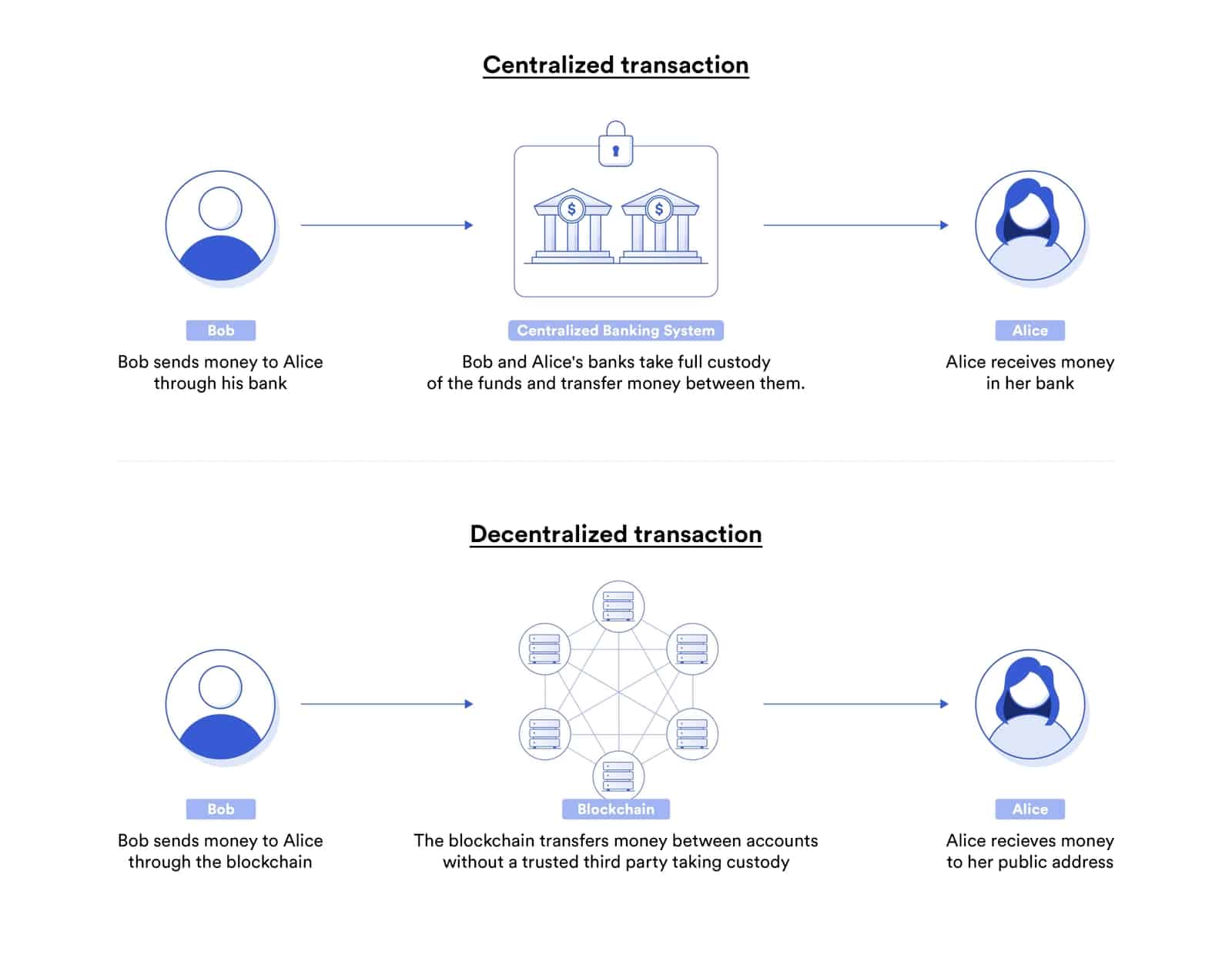
The decentralized nature of systems like DAOs means that no single entity has complete control over the system’s operations. Instead, governance responsibilities are distributed amongst a community of token holders or network participants. This approach disrupts centralized hierarchies by empowering every member with a stake in the decision-making process. In many DAOs, every token often translates to a level of voting power, enabling members to influence the course of the organization.
Take, for instance, a platform that issues governance tokens. These tokens are not only an asset but serve as a means to participate in the system’s decision-making processes. No centralized administrator controls these tokens or the decisions that arise from their use; rather, the collective consensus of the community drives the evolution of the platform. The outcome is a dynamic and evolving digital ecosystem where power is distributed among its users rather than being concentrated in a single authority.
System Autonomy via Smart Contracts
The term “autonomous system” highlights the system's ability to self-regulate and operate with minimal human interference once the protocols are in place. This is primarily achieved through smart contracts, which are self-executing programs that automatically implement rules when predetermined conditions are met.
Within a DAO, smart contracts codify all operational rules, ranging from fund allocation to voting execution. For example, when a proposal is submitted, if it meets all specified criteria, the smart contract automatically enacts the decision following a successful vote. This elimination of manual intervention not only reduces the likelihood of human error but also ensures every action is transparently recorded on the blockchain, promoting accountability and security.
The autonomous nature of these systems is central to creating environments where trust does not need to be placed in individuals or centralized institutions. Instead, the underlying technology enforces the rules impartially, ensuring the community’s will is manifested precisely as intended.
Unified User Experience through a Single Interface
Despite operating on a backend comprised of multiple distributed nodes and numerous smart contracts, one of the most important facets of modern DAOs is that they offer a unified, single interface for user interactions. This interface—often in the form of a web portal, mobile application, or dashboard—provides users with a coherent view of the entire ecosystem, masking the underlying complexities.
This single interface is geared toward ensuring accessibility. Users need not understand the technical intricacies of blockchain or packet routing to engage fully with the system. They can participate in governance votes, monitor their token holdings, or propose changes seamlessly. The interface becomes the locus of all interactions, harmonizing user experience with the robust functionality embedded within the distributed ledger.
A Detailed Example: MakerDAO
Background and Purpose
MakerDAO serves as a quintessential example of a decentralized, single interface, and autonomous system. As a prominent player in the decentralized finance (DeFi) realm, MakerDAO is designed to manage a stablecoin called DAI. The objective is to maintain price stability through decentralized borrowing and lending, backed by a system of over-collateralization.
What sets MakerDAO apart is its commitment to a community-governed structure where decisions about the platform’s evolution are made collectively by token holders. By doing so, MakerDAO avoids the pitfalls of central authority—offering instead transparency, security, and fairness in its operations.
Operational Mechanics
Smart Contracts and Automation
MakerDAO’s backbone is built on an intricate set of smart contracts that automatically manage critical aspects of its operation. These contracts handle everything from collateralized debt positions (CDPs) to liquidation events, ensuring the stability of the DAI stablecoin. When market conditions shift, the smart contracts adapt by altering parameters such as the stability fee or collateralization ratio.
The use of smart contracts in MakerDAO exemplifies how an autonomous system can operate without continuous manual oversight. Once the parameters are set and deployed, the system functions independently, executing transactions and maintaining equilibrium within the ecosystem.
Community Governance and Decentralization
Central to MakerDAO’s ethos is the idea that every token holder has a voice in governance. Decisions regarding protocol adjustments, risk parameters, and future upgrades are made via token-weighted voting. This widely distributed model of governance ensures that control is not concentrated in the hands of a few but is instead diffuse across the community.
By leveraging a decentralized model, MakerDAO demonstrates how complex financial systems can be managed without traditional intermediaries. This model paves the way for more robust, transparent systems where power and responsibility are shared equally among participants.
User Interface as the Single Point of Entry
While the backend of MakerDAO is multitiered—from various smart contracts to blockchain nodes—the single, integrated interface allows users to access all functions without having to navigate the technical labyrinth beneath. Whether users are setting up a collateralized loan or engaging in governance votes, the unified web portal or dashboard abstracts away the complexities, offering a streamlined and intuitive experience.
This single interface is crucial for mainstream user adoption. By reducing the cognitive load for end users, MakerDAO manages to democratize access to otherwise complex decentralized financial operations, making participation accessible to both tech-savvy and non-technical users alike.
Comparative Overview: Other Noteworthy Examples
While MakerDAO stands out as one of the best examples of a decentralized, single interface, and autonomous system, it is not the only one. Another prominent example is Developer DAO, a community specifically focused on onboarding, educating, and supporting Web3 developers. Much like MakerDAO, Developer DAO relies on smart contracts for autonomous operations and presents a singular interface—often a dedicated dashboard—for its members to interact and contribute.
Additionally, other systems, like certain decentralized exchanges (DEXs) such as Uniswap, leverage similar concepts by combining the robust security of blockchain with streamlined user interfaces that provide access to a broad array of complex financial operations. While Uniswap primarily focuses on facilitating seamless cryptocurrency exchanges, it also embodies the core principles of decentralization and autonomous system management.
Table: Comparative Features of Decentralized Autonomous Examples
| System Type | Key Characteristics | Notable Example |
|---|---|---|
| Decentralized | Governance is distributed among participants with no central authority controlling the system. | MakerDAO, Developer DAO |
| Autonomous | Operates via pre-programmed smart contracts that execute operations automatically when conditions are met. | MakerDAO’s smart contracts managing collateralized loans and liquidations |
| Single Interface | Unifies user interactions with the system’s complex underlying architecture in a straightforward manner. | Unified dashboards in MakerDAO and Uniswap provide a simple way to manage complex DeFi functions |
Technical Aspects and Mechanisms
Smart Contract Architecture
The smart contract is the driving force behind any decentralized, autonomous system. These self-enforcing protocols are coded to execute predetermined instructions as soon as the conditions are met. The architecture of these contracts usually includes:
Pre-Defined Rules
All decisions made within the system are based on rules that have been coded into the smart contracts long before any transaction is processed. This ensures that once a proposal meets the acceptance criteria, the system automatically implements it without manual intervention.
Transparency and Record-Keeping
Every action performed by a smart contract is logged on the blockchain, leading to a tamper-resistant record that maintains the integrity of the operations. This transparency is crucial, ensuring that members of a DAO can verify decisions and maintain trust in the system.
Resilience and Security
The distributed nature of these systems means they are resistant to single points of failure. Because smart contracts operate on a blockchain governed by multiple nodes, altering any information or attempting fraud becomes nearly impossible due to consensus protocols and cryptographic security measures.
User Interface Design Considerations
To facilitate smooth interaction in a decentralized setting, the design of the user interface (UI) is paramount. This includes:
Accessibility
The UI is designed to ensure that even users with minimal technical knowledge can participate in the ecosystem. Information is presented in an organized fashion with visual aids such as dashboards, graphs, and tables to demystify complex data.
Security Features
Since users interface with sensitive aspects like token holdings and voting systems, modern encryption and multi-factor authentication are integrated to secure access. This protects against unauthorized attempts and ensures only verified users participate in governance.
Simplicity in Complexity
The single interface consolidates all functionalities—voting, transaction monitoring, and proposal submission—into one platform, thereby concealing the underlying blockchain complexities and presenting a user-friendly experience.
Challenges and Future Development
Scalability and Participation
As decentralized systems like DAOs gain traction, scalability challenges arise. One of the significant issues is ensuring that the governance mechanism remains efficient even as the number of participants grows. In large organizations, ensuring every member’s voice is heard while maintaining a streamlined decision-making process can prove challenging.
Solutions currently being explored include quadratic voting and other novel approaches that balance influence among large numbers of members. Despite these growing pains, the fundamental architecture of decentralized, autonomous systems continues to evolve, offering iterative improvements in governance efficiency and adaptability.
Regulatory and Legal Considerations
While DAOs promise a more democratic and automated mode of operation, their legal status remains ambiguous in many jurisdictions. Regulatory challenges can impact how these organizations operate, particularly in areas such as liability and compliance. Some territories are beginning to create frameworks that recognize DAOs as legal entities, thereby providing them a clearer operational framework in a traditionally centralized regulatory paradigm.
As these systems evolve, ongoing dialogue between developers, legal experts, and policymakers will be essential to ensure they do not just operate effectively but are also safeguarded under an appropriate legal framework that encourages innovation whilst protecting participants.
Integration with Traditional Systems
Decentralized systems, particularly those built on blockchain technology, are carving out a bridge between legacy centralized institutions and emerging digital architectures. There is significant interest in integrating these decentralized platforms into conventional financial systems, supply chains, and governance models. By doing so, the trustless and automated nature of these technologies could help instill greater security, transparency, and operational efficiency in industries that have long been plagued by inefficiencies and centralized bottlenecks.
Experimental projects are also exploring the interface between decentralized governance and traditional proprietary systems. These hybrid models seek to retain the resilience of fully decentralized systems while leveraging the established infrastructure of centralized entities, providing a transitional pathway that could accelerate widespread adoption.
Conclusion
In summary, a decentralized, single interface, and autonomous system represents the convergence of community-driven governance, automated operations through smart contracts, and a unified user experience. MakerDAO, as examined in this discussion, exemplifies how these elements collectively pave the way for the democratization of financial systems and beyond. Other examples, such as Developer DAO and several decentralized exchanges, further illustrate the adaptability of this model across various applications.
These systems continue to push the boundaries of traditional centralized organizations, challenging established paradigms and opening up new possibilities for secure, efficient, and equitable management of digital and financial ecosystems. As the technology matures, we can expect further innovations that seamlessly integrate decentralized decision-making with user-friendly interfaces, setting the stage for a more democratized, interconnected digital future.
References
- What is a DAO? - Thirdweb Blog
- Decentralized Autonomous Organization - Builtin
-
What is an Autonomous System? - Udacity
- 10 Examples of Decentralized Autonomous Organizations - OriginStamp
- Autonomous Systems Overview - Rutgers University
More
Last updated February 18, 2025