
Comparing Decimals: 9.11 vs. 9.9
An in-depth analysis of decimal comparison and common pitfalls
Key Takeaways
- Decimal Formatting is Crucial: Adjusting decimals to the same number of places helps clarify which number is larger.
- Step-by-Step Comparison: Compare the integer parts first and then proceed to the decimal parts, focusing on each digit sequentially.
- Understanding Misinterpretations: Misunderstandings often occur due to tokenization issues or misinterpretation of the numbers as versions or dates.
Introduction
When presented with the two numbers 9.11 and 9.9, one might assume that since 9.11 has a higher sequence of digits, it would necessarily be the larger number. However, the comparison of decimals requires careful analysis of the digits, particularly when the representation of the numbers is not the same in terms of decimal places. In order to properly compare these two numbers, we must consider the principles behind decimal number comparison and explore why adjusting their representation to a common format is essential.
Fundamentals of Decimal Comparison
Comparing two decimals involves examining the number as a whole, with special attention given to both the integer component (the number before the decimal point) and the fractional component (the number after the decimal point). The main process includes the following steps:
Step 1: Compare the Integer Part
In our case, both 9.11 and 9.9 have the same integer part, which is 9. Since the integers are equal, the subsequent comparison must focus on the decimal part.
Step 2: Standardize the Decimal Places
It is a common practice to rewrite the numbers so that they have the same number of digits after the decimal point. For example, by representing 9.9 as 9.90, both numbers can be compared digit by digit:
9.11 becomes 9.11
9.9 becomes 9.90
Step 3: Compare Each Digit of the Decimal Part
Starting from the leftmost digit in the decimal part (the tenths position), the numbers can be compared:
- Compare the tenths digit: In 9.11, the tenths digit is 1, and in 9.90, the tenths digit is 9. Since 1 is less than 9, the conclusion is immediately clear that 9.11 is less than 9.90.
- The comparison of further decimal places, such as the hundredths digit, can also be performed. In 9.11, the hundredths digit is 1, and in 9.90, the hundredths digit is 0. However, the initial comparison in the tenths place is decisive; once the inequality is established there, it is not necessary to further analyze the subsequent digits.
Based on these steps, the correct conclusion from a mathematical standpoint is that 9.9 (or 9.90 when standardized) is greater than 9.11.
In-Depth Exploration
To fully appreciate the nuances of comparing 9.11 and 9.9, it is important to delve deeper into how decimals work and why the representation matters:
The Role of Digit Placement
In decimal notation, the position of each digit carries a specific weight. For instance, the digit immediately following the decimal point is in the tenths position, representing a value one-tenth of the whole, and the next digit represents one-hundredth of the whole. When comparing two numbers:
- Begin with the highest order place (the ones or integer part). Since they are equal in our case, this part does not determine the greater value.
- Proceed to the tenths digit. The difference here is crucial: in 9.9 (rewritten as 9.90), the tenths digit is 9 compared to 1 in 9.11. This stark difference clearly determines that 9.90 > 9.11.
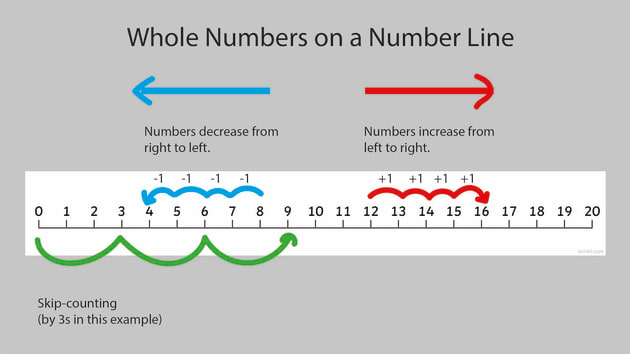
An illustrative method is to envision the numbers on a number line, where numbers increase from left to right. Both numbers begin at 9 on the number line, but as we move rightwards, 9.90 extends further than 9.11 thanks to the larger value in the tenths place.
Common Misinterpretations and Pitfalls
The comparison between 9.11 and 9.9 has garnered attention because it challenges our intuitive understanding of number representation. Some key points of confusion include:
Decimal Misrepresentation
When decimals are not presented with the same number of digits after the decimal point, it can lead to errors. For example, if one simply looks at the digits without standardizing them, the three-digit form in 9.11 might be misinterpreted as "more" than the two-digit 9.9 even though the actual value is lower when the tenths digits are compared directly.
Tokenization Issues in AI Models
Artificial intelligence models sometimes encounter difficulties when processing numbers, due to the way they tokenize input. In tokenization, numbers may be segmented into individual tokens (e.g., "9", ".", "1", "1"), causing the model to apply general rules without a complete understanding of the numerical structure. This can result in misinterpretation, where the sequence or the number of tokens incorrectly influences the perceived magnitude.
Misidentification as Version Numbers or Dates
Certain models might mistake these numbers for version identifiers or dates, where the order and formatting can follow different conventions. For example, version numbers such as 9.11 might denote a sequence and not an absolute numerical value, further complicating their direct comparison with numbers like 9.9.
In standard mathematical comparison, however, the process is straightforward: align the decimals and compare digit by digit.
Illustrative Table of Comparison
| Aspect | 9.11 | 9.9 (as 9.90) |
|---|---|---|
| Integer Part | 9 | 9 |
| Tenths Digit | 1 | 9 |
| Hundredths Digit | 1 | 0 |
| Conclusion | Lower value | Higher value |
Unraveling the Controversy
Despite the clear mathematical method, there has been noticeable debate surrounding the comparison of these numbers. Some misconceptions have stemmed from:
Initial Intuitive Perception
Many might quickly look at the number 9.11 and assume it is larger because "11" is numerically greater than "9". This misinterpretation arises from comparing parts of the number out of context, without aligning them properly. It fails to account for the place value that gives significance to each digit.
Inconsistent Digit Padding
Another factor contributing to the confusion is the difference in the number of decimal digits. The absence of a trailing zero in 9.9 might mislead someone into thinking it is a "shorter" or "smaller" number, when in fact, appending the zero to form 9.90 accurately represents the intended magnitude.
Role of Technology in the Debate
With the rise of sophisticated artificial intelligence and language models, automated systems have been tasked with performing numerical evaluations. Some models, when processing these numbers, have encountered tokenization challenges. They may tokenize the numbers incorrectly, leading to misinterpretation of the magnitude. For example, if the model parses 9.11 as separate tokens without recognizing the continuity of the decimal sequence, it might erroneously conclude that 9.11 is larger.
Such issues underscore the importance of precision in numerical representation and the need for careful analysis when handling seemingly straightforward mathematical operations.
Comparative Analysis with Additional Examples
To further solidify the understanding of why standardizing decimal places is essential, consider the following additional comparisons:
Example 1: 7.3 vs. 7.25
Rewrite 7.3 as 7.30. Then compare:
- Integer parts are both 7.
- Tenths digit: In 7.30 the tenths digit is 3, while in 7.25 it is 2.
- Thus, 7.30 (or 7.3) is larger than 7.25.
This example illustrates the necessity of considering the place values accurately when numbers are expressed with differing numbers of decimal digits.
Example 2: 5.06 vs. 5.6
Write 5.6 as 5.60. Now:
- Both have the integer part 5.
- Tenths digit comparison: 0 in 5.06 vs. 6 in 5.60.
- Therefore, 5.60 is greater than 5.06, because 6 (tenths) > 0.
Such examples reinforce the procedural steps necessary for accurately comparing decimals, regardless of their initial presentation.
Visual Representation and Further Breakdown
To help visualize the difference between 9.11 and 9.9, imagine plotting these numbers along a continuous number line. Both share the same starting point (9), but their positions diverge as soon as the decimal values are considered. Representing 9.9 as 9.90 makes the increment in the tenths place visible and quantifiable.
Consider the following breakdown:
Decomposition of the Numbers
| Component | 9.11 | 9.90 |
|---|---|---|
| Integer Part | 9 | 9 |
| Tenths Value | 0.1 | 0.9 |
| Hundredths Value | 0.01 | 0.00 |
When adding these components:
- For 9.11: 9 + 0.1 + 0.01 = 9.11
- For 9.90: 9 + 0.9 + 0.00 = 9.90
Since 0.9 is significantly larger than 0.1, it becomes discontinuously clear that 9.90 surpasses 9.11 in value.
Addressing the Debate in the Recent AI Context
In recent discussions among technology experts and AI enthusiasts, comparisons like 9.11 versus 9.9 have frequently surfaced. Such debates not only illustrate the challenges in numerical representation but also highlight how even advanced AI models can sometimes struggle with fundamental arithmetic when the context introduces varied formatting. The misinterpretations generally arise from:
Unintentional Oversimplification
AI systems occasionally break down decimal numbers into individual components rather than understanding them as a cohesive numerical value. This tokenization can lead to oversimplified comparisons where the natural order of digits based on their weight is overlooked.
Contextual Ambiguities
The numbers, when found in different contexts such as dates, version numbers, or numeric scores, might be processed differently. However, when used as pure mathematical values, the methodology of adding trailing zeros to equalize the decimal places consistently yields the correct outcome.
Given this understanding, the step-by-step methodology of comparing decimals should always result in the mathematically sound conclusion that 9.9 (or 9.90) is larger than 9.11 when both numbers are properly aligned.
Summary and Conclusion
To summarize the analysis conducted:
- Standardization: By rewriting 9.9 as 9.90, we achieve uniformity in decimal representation, which is crucial for accurate comparisons.
- Digit-wise Comparison: Starting with the integer parts (both are 9) and moving to the decimal (tenths digit in 9.11 is 1, whereas in 9.90 it is 9) directly informs us that 9.9 is numerically larger.
- Systematic Approach: The step-by-step method of comparing the number components can be applied universally to any decimal comparison, ensuring precision and avoiding common pitfalls related to misinterpretation.
It is clear from the detailed breakdown and the visual and tabulated data that when decimal numbers are aligned correctly, the larger number emerges from the higher digit in the most significant decimal place that differs. In this case, that place is the tenths position, where 9.90 firmly exceeds 9.11. Although there has been debate on this topic with some discussions claiming a reversal of this comparison, the mathematics unambiguously confirms that 9.9 (or 9.90) is larger than 9.11.
Conclusion
In conclusion, after a thorough and step-by-step examination of the numerical components of 9.11 and 9.9, it is evident that standardizing the decimal places is the crux of proper comparison. By rewriting 9.9 as 9.90, we clearly see that the tenths digit for 9.90 (which is 9) outweighs that of 9.11 (which is 1), rendering 9.9 the greater number. This analysis not only reinforces fundamental mathematical principles but also emphasizes the importance of clear numerical representation, especially in automated parsing scenarios. Such clarity could prevent well-known pitfalls observed in some AI and language model interpretations, where tokenization or misclassification inadvertently leads to erroneous conclusions. All in all, by using a systematic method to compare decimals, we confirm that 9.9 is indeed greater than 9.11.
References
- Which Number is Higher? 9.11 vs. 9.9 Explained - TechBang
-
Unveiling the Truth Behind 9.9 and 9.11 - Zhihu
- A Closer Look: Is 9.9 or 9.11 Bigger? - CSDN
- The Decimal Debate: Understanding 9.11 vs. 9.9 - Machine Heart
More
Last updated February 19, 2025