
How to Improve Decimal Comparison Skills
Mastering Decimal Comparisons with Proven Strategies and Practical Techniques
Highlights
- Emphasize Place Value – Build a solid foundation by understanding the significance of every digit in a decimal number.
- Align and Equalize – Always align the decimal points and equalize the number of digits by appending zeros where necessary.
- Practice and Visualize – Use practical exercises, visual models like number lines and place value charts, and engaging activities to solidify your skills.
Introduction
Comparing decimals accurately is a fundamental mathematical skill that transcends classroom exercises and finds applications in various real-life contexts, such as financial calculations, measurements, and scientific computations. The skills required to compare decimals hinge on a robust understanding of place value, attention to detail, and the ability to systematically evaluate numerical values. This comprehensive guide provides an in-depth exploration of the methods, techniques, and practical exercises that can help you master decimal comparison.
In this guide, we will explore key strategies such as using alignment techniques, zero-padding decimals, and deploying visual aids to enhance understanding. We will examine step-by-step procedures, interactive worksheets, and practical examples designed to solidify your understanding of comparing decimals. Whether you are a student, educator, or lifelong learner, these proven strategies will help you compare decimals with increased accuracy and confidence.
Fundamental Concepts
Understanding Place Value
The backbone of comparing decimals lies in a clear grasp of place value. Every digit in a decimal number holds a specific value based on its position relative to the decimal point. The digits to the left of the decimal represent whole numbers, while those to the right represent parts of a whole: the tenths, hundredths, thousandths, and so forth.
Key Points:
- The whole number part is the primary determinant when comparing two decimals. If the whole numbers differ, the comparison is straightforward.
- If the whole number parts are equal, you then shift your focus to the digits to the right of the decimal point.
- Every additional digit to the right of the decimal further refines the value represented, making it crucial to analyze each digit sequentially.
A solid understanding of place value not only enhances decimal comparisons but also promotes overall numerical literacy and number sense, an essential skill in math and daily financial transactions.
Importance of Decimal Alignment
Aligning decimal points is a primary technique when comparing decimals. Writing numbers in a column with their decimal points lined up simplifies the comparison process by ensuring that each digit is correctly positioned according to its place value. Misalignment can lead to significant errors in interpretation and value.
To ensure proper alignment:
- Write the decimals vertically, ensuring the decimal points form a straight line.
- If necessary, add trailing zeros to make sure each number has the same number of digits after the decimal. For example, comparing 0.5 and 0.45 is simplified by writing 0.50 versus 0.45.
This method levels the playing field and makes comparisons more straightforward, as it prevents misinterpretation of the relative size of decimals due to different numbers of decimal places.
Step-by-Step Comparison Method
To effectively compare decimals, it is essential to follow a systematic method:
- Start with the Whole Number Part: Examine the digits located to the left of the decimal point. If one number has a greater whole number, it is immediately identified as the larger decimal.
- Shift to the Decimal Digits: If the whole numbers are identical, move on to the tenths digit (the first digit to the right of the decimal). Compare these digits; if they differ, the number with the larger tenths digit is greater.
- Proceed Sequentially: Continue moving to hundredths, thousandths, and so on until a discrepancy is found. The first place where the digits differ determines the larger or smaller decimal.
- Add Trailing Zeros: When decimals have a differing number of digits after the decimal point, pad the shorter decimal with zeros. This adjustment does not change the numerical value but assists in making a clear comparison.
The process outlined above ensures systematic and consistent comparisons across various scenarios. It eliminates guesswork and reduces the possibility of error.
Enhanced Strategies and Visual Aids
Using Place Value Charts
A place value chart organizes numbers in columns representing units, tenths, hundredths, etc. By placing each decimal in these columns, you can visually compare the digits in their appropriate positions. This method is particularly beneficial to visual learners as it breaks down the decimal into understandable parts.
When using a place value chart:
- Write each digit in its corresponding column.
- Examine the chart from left to right to compare values.
- This method helps highlight exactly where the numbers differ, making it easier to decide which is greater or smaller.
Deploying Visual Models and Graphs
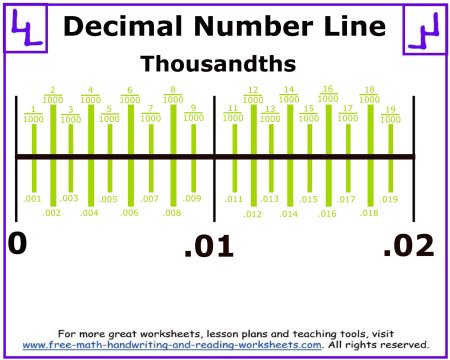
Visual models such as number lines, decimats (visual aids specifically designed to illustrate decimal values), and grid charts can simplify the process of comparing decimals. These models transform abstract numbers into tangible visual representations, clarifying the concept of decimal magnitude.
Number Lines serve as an excellent tool for visualizing the relative positions of decimals. By marking decimals on a number line, or even spacing them equally, you can see which numbers are closer together or further apart, thereby facilitating easier comparisons.
Similarly, grid representations can be used to model the value of decimals. This method employs grids where each cell represents a specific decimal fraction; comparing how many cells are filled can give immediate visual feedback on which decimal is larger.
Interactive Practices and Real-World Applications
Beyond understanding the theoretical aspects of decimal comparison, applying these skills in practice is crucial. Engaging in interactive worksheets, digital games, and real-life scenarios helps to test and reinforce your understanding.
Worksheets and Exercises:
There is a vast array of worksheets available that focus solely on comparing decimals. These exercises often incorporate multiple decimal places or require arranging a set of decimals in order. Regular practice with these worksheets can dramatically enhance both speed and accuracy.
Real-World Problems:
Applying decimal comparison in everyday life is very rewarding. For instance, comparing prices, evaluating measurements in cooking, and determining statistical data often require precise decimal comparison skills. Tying these exercises to everyday tasks also emphasizes the practical utility of the skill.
Incorporating Technology in Learning
Leveraging technology can provide instant feedback and dynamic visual representations. Various online tools and calculators enable learners to input decimals and immediately receive a comparison, helping to solidify the underlying concepts.
Digital Tools and Calculators:
Digital calculators designed for decimal comparison can aid in visualizing the number alignment process. They also offer immediate correction if errors occur, accelerating the learning process. Additionally, certain educational platforms suggest interactive games that facilitate repeated practice in a fun and engaging manner.
Techniques and Tips for Teachers and Students
Structured Comparison Techniques
For educators looking to instill a deep understanding of decimal comparison, it is important to emphasize structured approaches:
Alignment Method
Teach students to write numbers in a column with the decimal points aligned. This strategy lays the foundation for a detailed comparison as students systematically work through each digit position. Emphasize that adding trailing zeros does not change the number but makes it easier to compare.
Sequential Digit Comparison
In a step-by-step manner, instruct students to begin with the whole number section of the decimal. If the whole numbers are identical, they should move on to the tenths place, followed by hundredths, thousandths, and so forth. This systematic approach is a fail-safe strategy to avoid errors or misunderstandings.
Use of Visual Aids
Incorporate visual aids like place value charts and number lines into your lessons. Visual representations are essential for cementing the abstract concepts of decimal values into a more tangible format, making the learning experience engaging and memorable.
Common Misconceptions and Their Remedies
Despite clear methods, learners sometimes hold on to misconceptions when comparing decimals. One common error is the "longer is larger" fallacy, where students mistakenly assume that a number with more digits is inherently larger, disregarding the actual value represented by each digit.
Remedies for Misconceptions:
- Reinforce the importance of place values – a decimal with more digits simply has more precision, not necessarily a greater value.
- Encourage the use of adding zeros to equalize decimal places, which visually clarifies that, for example, 0.5 is the same as 0.50.
- Integrate real-world applications, such as measuring quantities or comparing prices, to demonstrate that conceptual understanding is more important than simply counting digits.
Practical Examples and Table Illustration
Example Problems to Consider
In order to understand decimal comparison in practice, let’s explore a few example problems:
- Example 1: Compare 0.64 and 0.362. Write them as 0.640 and 0.362 to make digit-by-digit comparisons easier.
- Example 2: Compare 0.75 and 0.728. Aligning decimals (0.750 vs 0.728) shows that the tenths digit is the same, so further comparison reveals the greater value.
- Example 3: Compare 8.391 and 8.362. The whole number parts are identical; a subsequent digit comparison shows that 8.391 is larger because the hundredths digit (9 vs 6) is greater.
These example problems reinforce that by methodically aligning and comparing decimals, one can easily determine the relative sizes.
Decimal Comparison Table
The table below summarizes a structured approach to comparing decimals:
| Step | Description | Example (Comparing 0.75 and 0.728) |
|---|---|---|
| 1 | Align decimals by writing them vertically |
0.750 0.728 |
| 2 | Compare whole numbers (left of decimal) | Both have 0 |
| 3 | Compare tenths | 7 in both numbers |
| 4 | Compare hundredths | 5 vs 2: 5 is greater, hence 0.75 > 0.728 |
This table clearly lays out the steps involved in comparing decimals. It not only acts as a useful reference when studying but also as a guide to work through any decimal comparison problem systematically.
Integrative Learning Strategies
Combining Analytical and Visual Methods
One of the best ways to master decimal comparison is by integrating both analytical processes and visual learning methods. Using a balanced approach that combines systematic reasoning with graphical aids helps address different learning styles and reinforces the concept from multiple perspectives.
For instance, start by practicing with paper-and-pencil methods to familiarize yourself with the step-by-step process. Then, transition to using digital tools that offer immediate feedback. This progression from manual calculation to technology-assisted learning ensures that you not only understand the concept but can also apply it accurately under timed conditions.
Real-World Applications
Decimal comparisons are invaluable in everyday life, particularly when precision is key. Consider the following real-world scenarios:
- Financial Decisions: When comparing interest rates, discount percentages, or various pricing options, it’s essential to accurately compare decimals to make sound decisions.
- Measurements: In fields such as construction, engineering, and science, measurements often involve decimals. Accurate decimal comparison helps ensure precision in layout, design, and research data interpretation.
- Data Interpretation: In research and statistics, data points frequently come in decimal form. Being skilled at comparing decimals is critical to analyzing trends and drawing correct conclusions from datasets.
By understanding how decimals work and practicing their comparison through relatable scenarios, learners can easily transfer their classroom skills to real-life problems.
Building Confidence Through Practice
As with any mathematical skill, mastery comes with practice. Regular exposure to different problems and situational puzzles not only enhances speed but also deepens your conceptual understanding. Engage with practice materials such as:
- Worksheet exercises specifically designed for decimal comparisons.
- Online quizzes and interactive games that test your speed and accuracy.
- Group activities or tutoring sessions where you explain your strategies to others, reinforcing your own understanding.
Consistent practice builds confidence, and as your speed improves, you will find that even complex decimal comparisons become second nature over time.
Advanced Techniques and Extensions
Comparisons Involving Fractions and Percentages
Once the basic skills for comparing decimals are mastered, it can be beneficial to extend these techniques to other areas. For example, the ability to convert decimals into fractions or percentages and then perform comparisons is a valuable skill in both academic and real-life settings.
Conversion Techniques:
- Convert decimals to fractions by identifying the place value of the final digit.
- Convert decimals to percentages by multiplying by 100, which may be beneficial during financial analysis or data interpretation.
By transferring the skills acquired in decimal comparison to similar domains, you create a robust mathematical toolkit that allows for flexible thinking and problem-solving.
Utilizing Software for Deeper Learning
With advancements in educational technology, there are now numerous software programs and mobile applications that focus on refining mathematical skills, including decimal comparison. These software programs feature interactive modules, instant feedback, and adaptive learning algorithms that adjust the difficulty level based on your progress.
Benefits Include:
- Accelerated learning through instant error correction and pattern recognition.
- Enhanced visualization with dynamic models and animated number lines.
- Engaging content that adapts to your current skill level, ensuring continuous challenge and growth.
Conclusion
Improving decimal comparison skills is a multilayered process that requires both conceptual understanding and practical application. By focusing on place value, aligning decimals properly, and using visual models like place value charts and number lines, learners can achieve a methodical and accurate approach to comparing decimals. The systematic strategy of starting from the whole number part, moving through each successive decimal place, and employing techniques like appending trailing zeros fortifies your ability to compare numbers efficiently.
Additionally, integrating both analytical and visual learning methodologies, using real-world contexts, and employing digital tools fosters a holistic understanding that transcends basic arithmetic. Educators can support this by using structured comparison techniques and addressing common misconceptions directly. With regular practice, interactive worksheets, and engaging activities, mastering decimal comparisons not only enhances mathematical proficiency but also builds confidence for tackling more advanced numerical concepts.
In summary, developing strong decimal comparison skills is an accessible goal when approached through a combination of traditional methods and modern learning aids. The journey from understanding basic place value to applying these skills in real-world scenarios is both practical and fulfilling, paving the way for enhanced numerical literacy and improved problem-solving capabilities.
References
- Comparing Decimals - Calc Workshop
- Step-by-Step Decimal Comparison - Chimpvine
- Comparing Decimals - Cuemath
- Grade 5 Comparing Decimals Worksheets - Worksheet Zone
- Comparing Decimal Numbers - Testbook
- Comparing Decimals Insights - BYJU'S
- Decimal Comparison Techniques - Third Space Learning
Recommended
Last updated February 22, 2025