
Creating a Deep Learning-Based Model for Underwater Image Enhancement
A Comprehensive Guide to Enhancing Underwater Images Using Deep Learning
Key Takeaways
- Understanding Underwater Image Challenges: Addressing color distortion, low contrast, and visibility issues is crucial for effective enhancement.
- Choosing the Right Deep Learning Architecture: Selecting appropriate models such as CNNs, GANs, and encoder-decoder structures can significantly impact performance.
- Comprehensive Data Preparation: Proper dataset selection, preprocessing, and augmentation are essential for training robust enhancement models.
Introduction
Underwater image enhancement is a critical task in marine research, underwater robotics, and environmental monitoring. Capturing clear and accurate images underwater poses significant challenges due to the unique optical properties of aquatic environments. Factors such as light absorption, scattering, and the presence of particulate matter lead to color distortion, low contrast, and reduced visibility in underwater imagery. Leveraging deep learning techniques offers promising solutions to mitigate these issues and enhance the quality of underwater images.
Understanding Underwater Image Challenges
Color Distortion
Water absorbs light at different wavelengths at varying rates, with red wavelengths diminishing rapidly. This results in images with a predominance of blue and green hues, distorting the true colors of underwater scenes. Correcting this color imbalance is essential for accurate representation and analysis.
Low Contrast and Visibility
Light scattering caused by water particles reduces image contrast and clarity. Hazy conditions make it difficult to distinguish objects and details, necessitating techniques to enhance contrast and improve visibility.
Blurriness and Noise
Underwater currents and movement can introduce blurriness, while particulate matter contributes to noise in images. These factors degrade image quality, making it imperative to apply denoising and sharpening methods during enhancement.
Variable Degradation Levels
The extent of image degradation varies with water depth, clarity, and environmental conditions. Models must account for these variations to ensure consistent enhancement across diverse underwater scenarios.
Understanding the Problem and Dataset
Dataset Selection
Selecting an appropriate dataset is foundational for training effective deep learning models for underwater image enhancement. Key datasets include:
- EUVP (Enhancing Underwater Visual Perception): Contains paired high-quality and distorted underwater images.
- UIEB (Underwater Image Enhancement Benchmark): Offers diverse underwater images with various degradation levels.
- RUIE (Real-world Underwater Image Enhancement): Focuses on real-world conditions with unpaired datasets.
- Sea-Thru: Provides supplementary data for enhancing underwater visuals.
Data Augmentation and Preprocessing
Enhancing model generalization involves augmenting the dataset through techniques such as rotation, flipping, scaling, and cropping. Preprocessing steps include:
- Normalization: Scaling pixel values to a consistent range (e.g., [0, 1]).
- Noise Reduction: Applying filters to mitigate sensor and environmental noise.
- Color Space Transformation: Converting images to different color spaces (e.g., HSV, LAB) to facilitate color correction.
Selecting the Right Deep Learning Architecture
Convolutional Neural Networks (CNNs)
CNNs are extensively used for image processing tasks due to their ability to capture spatial hierarchies. For underwater image enhancement, specialized CNN architectures like Water-Net have demonstrated promising results by focusing on color correction and detail preservation.
Generative Adversarial Networks (GANs)
GANs, comprising a generator and a discriminator, excel in creating realistic image enhancements. Models such as CycleGAN facilitate training with unpaired datasets, enabling effective color and contrast adjustments without requiring matched image pairs.
Encoder-Decoder Architectures
Encoder-decoder frameworks, exemplified by the U-Net architecture, are adept at capturing and reconstructing image features. They utilize skip connections to preserve fine details during the enhancement process, making them suitable for addressing low contrast and blurriness in underwater images.
Residual Networks (ResNets) and Dense Networks (DenseNets)
ResNets incorporate skip connections to facilitate gradient flow, enhancing the network's ability to learn complex mappings. DenseNets establish connections between all layers, promoting feature reuse and improving model performance. Both architectures contribute to more effective underwater image enhancements.
Data Preparation and Preprocessing
Data Collection
Building a robust model requires diverse and high-quality datasets. Combining multiple datasets like EUVP, UIEB, and RUIE ensures comprehensive coverage of various underwater conditions and degradation levels.
Data Augmentation Techniques
Augmenting data not only increases the dataset size but also introduces variability, making the model resilient to different underwater scenarios. Common augmentation methods include:
- Rotation and flipping to simulate different viewing angles.
- Scaling and cropping to handle object sizes and framing variations.
- Color jittering to mimic diverse lighting conditions.
Normalization and Scaling
Normalizing pixel values ensures consistent input for the neural network, facilitating smoother and faster training. Typically, pixel values are scaled to a range between 0 and 1 or normalized to have zero mean and unit variance.
Noise Reduction and Filtering
Applying filters such as Gaussian blur or median filters helps reduce noise introduced by water particulates and sensor imperfections, enhancing the quality of the training data.
Model Design and Architecture Options
Encoder-Decoder Architecture
The encoder part of the network extracts features from the input image, while the decoder reconstructs the enhanced image from these features. Skip connections bridge corresponding layers, preserving spatial information and fine details.
Generative Adversarial Networks (GANs)
In GAN-based models like CycleGAN, the generator transforms degraded underwater images into enhanced versions, while the discriminator assesses the realism of the generated images. This adversarial training encourages the generator to produce high-quality, realistic enhancements.
Water-Net and Specialized CNNs
Water-Net is a specialized CNN designed specifically for underwater image enhancement. It focuses on correcting color casts, improving contrast, and preserving details, leveraging tailored convolutional layers and activation functions optimized for underwater imagery.
Attention Mechanisms
Incorporating attention layers allows the network to focus on important regions within the image, enhancing critical features while suppressing irrelevant information. This leads to more precise and effective image enhancements.
Residual and Dense Connections
Integrating residual or dense connections within the network architecture facilitates better gradient flow and feature reuse, contributing to improved model performance and faster convergence during training.
Training the Model
Loss Functions
Selecting appropriate loss functions guides the model towards desired enhancements. Commonly used loss functions include:
- Perceptual Loss: Measures the difference between high-level feature representations of the enhanced and ground truth images.
- Structural Similarity Index (SSIM) Loss: Ensures preservation of structural details and overall similarity.
- Adversarial Loss: In GAN frameworks, encourages the generator to produce images indistinguishable from real images.
- Mean Squared Error (MSE): Quantifies pixel-wise differences between enhanced and target images.
Optimization Techniques
Utilizing advanced optimizers like Adam or Stochastic Gradient Descent (SGD) with appropriate learning rate schedules enhances training efficiency and convergence. Techniques such as learning rate decay, momentum, and weight initialization play pivotal roles in achieving optimal performance.
Training Strategies
Effective training strategies include:
-
Batch Normalization: Stabilizes and accelerates training by normalizing layer inputs.
-
Dropout: Prevents overfitting by randomly deactivating neurons during training.
-
Early Stopping: Halts training when performance on a validation set ceases to improve, preventing overfitting.
Hardware Considerations
Training deep learning models, especially on large datasets, demands significant computational resources. Utilizing GPUs or specialized hardware accelerators can substantially reduce training time and handle the computational load efficiently.
Evaluation Metrics and Testing
Peak Signal-to-Noise Ratio (PSNR)
PSNR measures the ratio between the maximum possible power of a signal and the power of corrupting noise, providing a quantitative assessment of image quality. Higher PSNR values indicate better reconstruction quality.
Structural Similarity Index (SSIM)
SSIM evaluates the similarity between two images based on luminance, contrast, and structure. It offers a perceptually relevant assessment of image quality, with values closer to 1 indicating higher similarity.
Visual Inspection and Subjective Evaluation
Beyond quantitative metrics, visual inspection by experts ensures that the enhanced images meet practical quality standards. Subjective evaluations help identify artefacts or inconsistencies not captured by numerical metrics.
Benchmarking Against State-of-the-Art Methods
Comparing the performance of the developed model against existing methods like Water-Net or UIEM showcases its effectiveness and highlights areas for improvement. Benchmarking ensures that the model remains competitive within the field.
Deployment Considerations
Model Optimization for Real-Time Inference
Deploying models in real-world applications, such as underwater drones or robotic systems, requires optimized models that balance performance and computational efficiency. Techniques like model pruning, quantization, and using lightweight architectures (e.g., MobileNet) facilitate real-time processing.
Frameworks and Tools
Utilizing frameworks like TensorFlow Lite or ONNX allows for efficient deployment across various platforms and devices. These frameworks support model conversion and optimization, ensuring compatibility and performance.
Integration with Underwater Systems
Seamlessly integrating the enhancement model with existing underwater systems involves addressing communication protocols, data storage, and processing pipelines. Ensuring compatibility and reliability is critical for successful deployment.
Advanced Techniques and Optimization
Incorporating Physical Models
Integrating underwater light propagation and scattering models enhances the physical realism of the enhancements. Physical priors guide the learning process, ensuring that the model accounts for the inherent properties of underwater imaging.
Attention Mechanisms and Feature Fusion
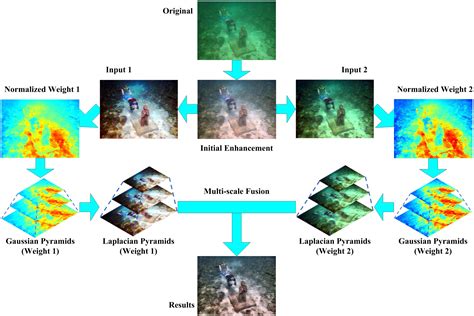
Attention mechanisms enable the model to focus on critical regions within the image, improving detail preservation and color correction. Feature fusion techniques combine information from multiple layers or models, enhancing overall image quality.
Multi-Stage Enhancement Pipelines
Implementing multi-stage pipelines allows sequential processing steps, such as initial color correction followed by contrast enhancement and denoising. This structured approach ensures comprehensive enhancement across various degradation factors.
Domain Adaptation and Transfer Learning
Leveraging pre-trained models on related tasks accelerates training and improves performance, especially when dealing with limited underwater data. Domain adaptation techniques adjust models to better suit the specific characteristics of underwater imagery.
Conclusion
Developing a deep learning-based model for underwater image enhancement involves a multifaceted approach that addresses unique underwater challenges. By meticulously selecting and preparing datasets, choosing appropriate architectures, and employing advanced training and optimization techniques, it is possible to create models that significantly improve the quality and usability of underwater imagery. Continuous evaluation and benchmarking against state-of-the-art methods ensure that the models remain effective and relevant in diverse underwater environments.
References
Last updated January 18, 2025