
DeepSeek and Its Impact on Edge Data Center Development
Exploring the Technical Innovations and GPU Requirements for Edge Deployments
Highlights
- Efficiency and Edge Optimization: DeepSeek models reduce computational footprint and energy usage by leveraging innovative quantization and distributed processing.
- GPU Requirements for Custom Training and Inference: Detailed guidelines on GPU configurations, precision formats, and optimization methods ensure cost-effective enterprise deployments.
- Impact on Edge Data Centers: Transitioning from centralized to edge AI has transformative effects on latency, scalability, and energy consumption in modern data centers.
Introduction
The advent of DeepSeek marks a significant milestone in the evolution of AI, particularly in the way advanced language and search models are built and deployed. Developed with a focus on efficiency and optimized for edge computing, DeepSeek not only revolutionizes generative AI but also paves the way for enhanced edge data center (Edge DC) architecture. This article delves into the technical aspects of DeepSeek, analyzing its impact on Edge DC development and providing a comprehensive examination of GPU requirements for both custom training and inference at the enterprise level.
DeepSeek Architectural Innovations
Overview
DeepSeek represents a paradigm shift in model architectures by prioritizing efficiency and resource optimization while retaining high performance. Its design incorporates cutting-edge quantization techniques, mixed precision operations, and a mixture of experts (MoE) architecture that selectively activates sub-networks. This selective activation drastically reduces the computational overhead, making DeepSeek models particularly well-suited for real-time inference and edge implementations.
Key Design Elements
The cornerstone of DeepSeek's efficiency lies in several innovative elements:
- Quantization Techniques: By utilizing lower-precision formats such as FP16, FP8, and 4-bit quantization, DeepSeek significantly lowers VRAM requirements while maintaining model fidelity during both training and inference.
- Mixed Precision Operations: The use of mixed precision not only accelerates computations by leveraging specialized GPUs with Tensor Core support but also cuts down energy usage, particularly valuable in edge computing scenarios.
- Dynamic Model Activation: The MoE strategy ensures that only the necessary components are engaged for a given task, reducing redundant calculations and improving overall efficiency.
- Large Contextual Capacity: The ability to handle extensive token sequences (up to 128,000 tokens) enables DeepSeek to process complex queries and data streams, further solidifying its practicality in distributed environments.
Impact on Edge Data Center Development
Redefining Infrastructure Needs
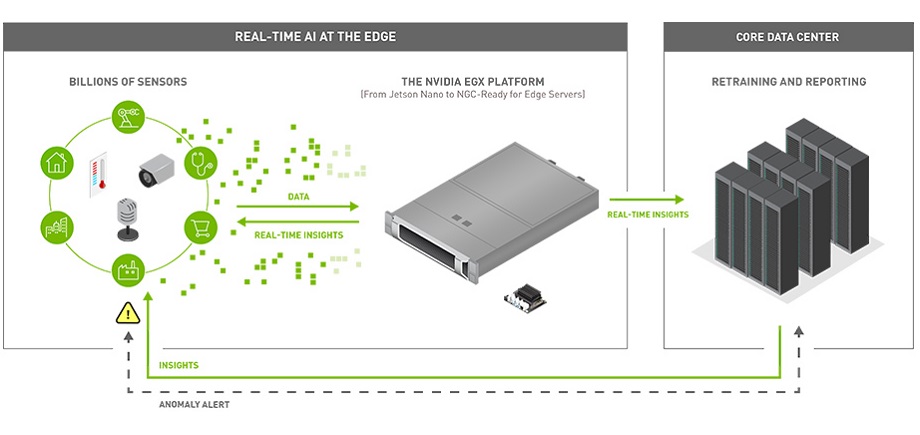
DeepSeek’s optimized model architecture significantly impacts traditional data center designs by shifting computational workloads from centralized hubs to distributed edge environments. This shift has a multitude of benefits:
Reduced Infrastructure Footprint
One of the most immediate benefits of deploying DeepSeek models at the edge is the reduced dependency on large, centralized data centers. By distributing the processing load to smaller, localized edge devices such as smartphones, IoT devices, and micro data centers, enterprises can minimize energy consumption and enhance system scalability.
Energy Efficiency and Latency Reduction
The edge computing paradigm facilitated by DeepSeek helps alleviate power constraints by lowering the energy required per task. Enterprises report reductions in energy consumption by up to 40% per inference operation, along with 50% lower GPU utilization. Reduced latency is achieved by processing data locally rather than routing it to distant data centers, thereby providing real-time responses vital for mission-critical applications.
Cost Efficiency and Scalability
Transitioning from centralized GPU-intensive environments to leaner edge deployments not only cuts hardware costs but also simplifies the cooling and maintenance challenges inherent to large-scale data centers. Moreover, distributed processing contributes significantly to scalable operations, enabling dynamic resource allocation as demand fluctuates.
GPU Requirements for DeepSeek Models
General Considerations
DeepSeek’s versatility extends across both training and inference, each of which poses distinct GPU requirements. While the training phase generally necessitates high-end GPUs with advanced capabilities, such as NVIDIA’s H100 or A100, inference can be effectively managed on lower-spec devices when combined with robust optimization techniques. Below, we analyze the technical GPU requirements for both scenarios.
Custom Training Requirements
Model Scale and GPU Power
Custom training of DeepSeek models, especially variants like DeepSeek-V3 with over 100 billion parameters, demands extensive computational resources. Enterprises endeavoring to fine-tune or develop custom iterations must invest in GPUs that can handle massive parallel computations and significant data throughput. High-end GPUs such as NVIDIA H100 or A100 are recommended due to their excellent support for mixed precision operations and Tensor Core optimizations.
Training Efficiency and GPU Hours
Despite its large scale, DeepSeek’s training process is remarkably efficient. It is reported that training DeepSeek-V3 required approximately 2.788 million GPU hours on specialized hardware. In this context, using algorithms like Parameter-Efficient Fine-Tuning (PEFT) and LoRA/QLoRA can substantially reduce memory and computational overhead, making the process more viable in constrained environments. However, such fine-tuned training implementations at the edge still need to account for higher VRAM demands and thermal considerations.
Optimization Techniques for Training
To maximize efficiency during training:
- Mixed Precision Training: Utilize FP16 or INT8 formats, which can reduce memory usage by nearly 50% without compromising accuracy, particularly on GPUs equipped with Tensor Cores.
- Model Parallelism: Distributing the model across multiple GPUs enables the handling of extremely large models by partitioning the computational load.
- Efficient Data Loading: Streamlining data pipelines to ensure that GPUs operate at optimum utilization levels will reduce idle times and improve throughput.
Inference Requirements
VRAM and Precision Considerations
Inference for DeepSeek models at the edge generally requires less computational power than training but still necessitates sufficient VRAM to handle large context windows and complex token generation tasks. Enterprise applications that deploy DeepSeek for real-time analytics or AIOps must consider the following:
- FP16 Precision: For full-precision inference, high-end GPUs may require between 80-100GB of VRAM to run complete models efficiently.
- 4-bit Quantization: When employing 4-bit quantized models, VRAM requirements can drop drastically to 20-25GB. This quantization reduces the computational load while maintaining a robust performance output.
- FP8 Implementation: Certain configurations leverage FP8 to strike an optimal balance between precision and efficiency, typically needing around 40-50GB of VRAM.
GPU Options for Inference
The choice of GPUs for inference varies based on the required performance and deployment scale:
- High-Performance Inference: For intensive inference tasks, NVIDIA A100/H100 GPUs are ideal due to their high throughput and excellent mixed precision performance.
- Mid-Range Options: NVIDIA RTX 4090 or RTX 6000 Ada provide robust performance for medium-scale deployments, particularly when combined with quantization techniques that reduce VRAM overhead.
- Edge Devices: In scenarios where cost and space constraints predominate, even GPUs with lower specifications can be utilized effectively through optimization strategies such as selective activation and offloading non-critical computations.
Inference Optimization Techniques
To achieve cost-effective and high-performing inference at the edge, enterprises can implement:
- Speculative Decoding: Enhancing generation throughput while reducing latency through efficient heuristics in token prediction.
- KV Cache Optimization: Streamlining the use of key-value caches during inference allows faster lookups and reduced memory consumption.
- Tensor Parallelism: For particularly large models, splitting inference tasks among multiple GPUs can optimize throughput even on devices not designed for heavy-duty processing.
Comparison Table: GPU Requirements for DeepSeek Models
| Deployment Type | GPU Model Recommendation | Precision Format | VRAM Requirement |
|---|---|---|---|
| High-End Training | NVIDIA H100 / A100 | Mixed Precision (FP16/INT8) | 80-100GB+ (for large models) |
| Custom Fine-Tuning | NVIDIA H100 / A100 / RTX 6000 Ada | FP16 with LoRA/QLoRA | Scaled by model size (1.5-2x inference VRAM) |
| Inference - Full Precision | NVIDIA A100 / H100 | FP16 | 80-100GB+ |
| Inference - Quantized | NVIDIA RTX 4090 / RTX 6000 Ada | 4-bit / FP8 | 20-50GB |
Enterprise Considerations for Edge Deployment
Cost-Benefit Analysis
The transition to edge computing, driven by DeepSeek’s efficient model design, holds significant financial and operational benefits for enterprises:
- Hardware Cost Reduction: Lower operational GPU hours and reduced VRAM consumption translate directly into cost savings.
- Operational Efficiency: Smaller, energy-efficient edge data centers minimize the need for extensive cooling and maintenance infrastructure, lowering the overall total cost of ownership.
- Enhanced Scalability: Distributed processing capabilities enable enterprises to quickly scale resources up or down based on demand, ensuring flexible and responsive operations.
Use Cases and Practical Applications
The technical innovations offered by DeepSeek facilitate a range of use cases in enterprise environments:
- Real-Time Analytics: Localized processing at the edge ensures that data analytics happen in near real-time, which is critical for industries such as finance and healthcare.
- Privacy-Preserving Applications: Sensitive data remains onsite, reducing reliance on centralized cloud storage and enhancing compliance with data privacy regulations.
- AIOps for Infrastructure Management: With powerful inference capabilities deployed at the edge, IT operations can benefit from real-time insights and automated decision-making, drastically reducing downtime.
- Remote and Resource-Constrained Environments: Edge deployments enable robust AI functionalities even where connectivity is limited, serving industries like telecommunications and remote monitoring.
Conclusion
DeepSeek has significantly influenced the landscape of AI, particularly by bolstering the shift from centralized data centers to distributed, edge-focused architectures. Its innovative design principles enable efficient training and inference while substantially reducing the required computational resources. With robust quantization strategies, mixed precision training, and a focus on distributed computing, DeepSeek empowers enterprises to deploy powerful AI capabilities directly at the edge. This not only enhances real-time processing and scalability but also results in considerable cost savings through reduced hardware and energy consumption.
The enterprise approach to GPU deployment for DeepSeek involves selecting the right GPU configurations—ranging from high-end H100/A100 units for custom training to cost-effective RTX series GPUs for inference—complemented by rigorous optimization techniques. As edge data centers become increasingly prevalent due to demands for low latency and heightened energy efficiency, DeepSeek's model innovations and hardware guidelines set a new industry standard for AI deployment.
References
- DeepSeek AI: A New Era in Generative AI Efficiency and Edge Computing - ThinkMarketingMagazine
- GPU Requirements Guide for DeepSeek Models - AIBPY
- DeepSeek Unleashes Smaller-Footprint Models for AIOps - Forrester
- GPU Hardware Requirements Guide for DeepSeek Models in 2025 - ProxPC
- Why DeepSeek AI Has Big Tech on Edge - AITHORITY
Recommended Queries
Last updated February 26, 2025