
Deforestation and Mining: Interrelations and Impacts
Exploring the multifaceted relationship between mining and forest loss
Key Insights
- Direct and Indirect Effects: Mining causes forest clearance for operations and stimulates ancillary developments that drive additional deforestation.
- Widespread Environmental Impact: Mining-related deforestation affects biodiversity, indigenous lands, and contributes significantly to carbon emissions and land degradation.
- Global and Regional Variations: Impacts vary by region and mineral type, with tropical forests being highly vulnerable due to increasing global demand for resources.
Understanding the Direct and Indirect Linkages
Direct Impacts of Mining
Mining operations have a tangible and observable impact on forest ecosystems by directly clearing vegetation. This immediate deforestation is primarily due to:
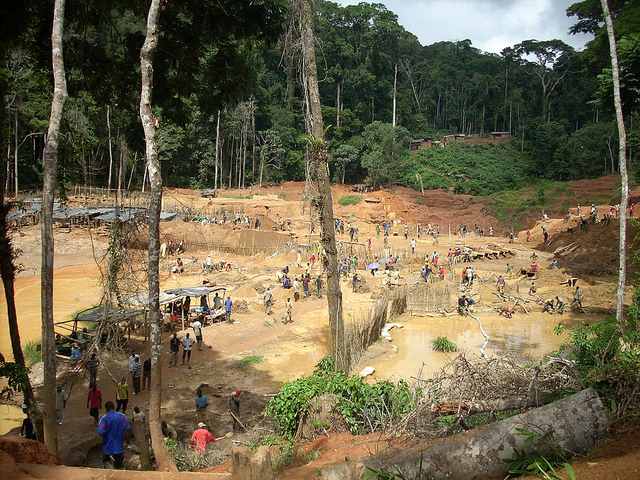
Land Clearing for Operations
To extract mineral resources, mining companies remove large portions of vegetation to create open pits, tailing storage facilities, and processing sites. These cleared areas are often extensive, permanently altering the local ecosystem and landscape.
Infrastructure Development
The establishment of roads, railways, energy generation facilities, and worker settlements is essential for the mining process. However, these supportive infrastructures contribute significantly to forest fragmentation. Roads and similar developments facilitate further human intrusion into once remote forest areas.
Indirect Impacts of Mining
Beyond the immediate clearing and development, mining spurs several indirect processes that have profound and far-reaching impacts on forested landscapes:
Economic and Settlement Expansion
Mining projects often attract an influx of people seeking employment and business opportunities. This migration typically results in the formation of new settlements and the expansion of existing ones. As communities grow around mining sites, forest areas are cleared further to accommodate housing, agriculture, and ancillary economic activities. In regions like the Congo Basin, the areas affected by settlements and agriculture far exceed the initial deforestation directly caused by mining facilities.
Infrastructural Ripple Effects
The development of infrastructure related to mining, such as transport networks, extends the deforestation footprint. Improved accessibility often leads to increased illegal logging, higher pressure on land for agricultural use, and further establishment of extraction-related industries. This chain reaction amplifies the forest loss well beyond the physical boundaries of the mining site.
Environmental Degradation and Ecosystem Disruption
Mining not only affects the physical structure of forests but also alters the fundamental ecological balance. The processes involved in mining—such as the contamination of soil, surface water, and groundwater—hamper natural forest regeneration. With polluted environments, subsequent reforestation efforts face significant challenges. Soil erosion, sinkholes, and water contamination reduce the viability of the forest ecosystem, hindering the recovery of natural vegetation.
Quantitative and Geographic Considerations
Extent of Forest Loss
Mining activities have led to significant deforestation both directly and indirectly. Studies highlight that:
- Direct deforestation includes the loss of millions of hectares of forest, with critical areas of primary tropical rainforest and protected regions being most affected.
- Indirect influences of mining, such as infrastructure expansion and settlement-driven agricultural development, may affect between 10% and 33% of the world's forests.
Regional Vulnerabilities
The impact of mining on deforestation varies markedly across different regions:
Tropical Rainforests
Tropical forests, such as those in the Amazon Basin, the Congo Basin, and Indonesia, are highly susceptible to mining activities. These regions face significant threats due to high biodiversity levels, the presence of indigenous populations, and global conservation priorities. In particular, mining for gold, coal, and other precious minerals has rapidly expanded in tropical regions, contributing not only to extensive tree clearance but also to long-term ecological degradation.
Country-Specific Trends
Though a global phenomenon, mining-related deforestation is concentrated in a limited number of countries. A significant percentage of global impacts emanates from a small number of nations. Countries with high demands for metals and minerals also tend to import these resources from regions far removed from the actual mining operations, thus complicating responsibility and regulation.
Mineral-Specific Impacts
The type of mineral extracted plays a crucial role in determining the intensity and spread of deforestation:
Gold and Coal Mining
Extraction of gold and coal is particularly damaging. These types of mining operations require extensive surface clearance and are strongly linked with infrastructure projects that foster additional deforestation. Moreover, the environmental pollutant outputs from gold and coal mining further hinder the surrounding natural habitats.
Other Mineral Resources
While the link between deforestation and mining is most pronounced with certain minerals, the overall demand for diverse mineral resources—especially in the context of urbanization and technological advancement—exacerbates land-use pressures across different ecosystems. This increased demand tends to promote both direct and indirect deforestation, linking resource extraction with larger global environmental challenges.
Environmental and Socioeconomic Consequences
Biodiversity and Ecosystem Disruption
Forests are among the richest ecosystems on Earth, hosting a vast array of species and playing a vital role in regulating the climate. Deforestation induced by mining leads to:
Loss of Habitat
As trees and other vegetation are cleared for mining, animal habitats are destroyed, leading to significant declines in biodiversity. Projects often encroach upon areas critical for the survival of endemic species, resulting in irrevocable ecological imbalances.
Carbon Emissions and Climate Change
Forests serve as major carbon sinks, absorbing CO2 from the atmosphere. Deforestation, particularly in tropical regions, diminishes these carbon sinks and contributes to increased global carbon emissions. Some studies have quantified these emissions, estimating that mining-related deforestation contributes tens of millions of tonnes of CO2 equivalents annually. This reinforces the feedback loop exacerbating climate change.
Human Health and Social Implications
The environmental consequences of deforestation extend to affecting human communities living near mining sites. Displaced indigenous populations, disrupted ecosystems, and contaminated water bodies are common outcomes:
Water and Soil Contamination
Chemicals used in the mining process, along with the erosion and sedimentation that follow deforestation, severely compromise soil quality and water resources. Such contamination poses significant health risks to local populations and degrades agricultural productivity.
Cultural and Social Displacement
Many forested areas are home to indigenous communities with deep cultural ties to the land. Mining-induced deforestation forces these communities to relocate, undermining traditional ways of life and leading to conflicts over land and resource rights.
Mitigation Strategies and Policy Considerations
Regulatory Frameworks and Sustainable Practices
Given the extensive environmental and social repercussions of mining-related deforestation, comprehensive regulatory approaches are imperative. Governments, industry stakeholders, and environmental organizations are exploring several strategies:
Environmental Impact Assessments (EIAs)
EIAs are crucial for understanding the potential environmental costs before mining projects commence. They help identify sensitive areas and propose mitigation measures. However, current practices often underestimate the indirect impacts, highlighting a need for more rigorous and holistic assessment protocols.
Restoration and Reforestation
In areas where mining has already caused significant deforestation, restoration and reforestation efforts are essential. Rehabilitating degraded lands not only helps sequester carbon but also contributes to restoring ecosystem balance. Successful reforestation projects depend on careful planning, including soil remediation and selection of native plant species resilient to post-mining conditions.
Integrated Land Use Planning
Strategically integrating mining activities within broader land management plans can reduce the indirect impacts on forests. This involves coordination between various governmental bodies to ensure that infrastructure and settlement development do not encroach excessively upon critical forested areas.
Innovative Approaches and Global Collaboration
Beyond the traditional regulatory frameworks, innovative and collaborative approaches are emerging to mitigate the intersecting challenges of mining and deforestation:
Technological Integration
Advanced technologies such as satellite monitoring, GIS mapping, and environmental sensors are increasingly being used to monitor deforestation in real time. These technologies allow for more responsive and precise management of environmental impacts, aiding both governmental agencies and non-governmental organizations.
International Agreements and Best Practices
Given the transboundary nature of environmental threats, international collaboration is vital. Agreements that promote sustainable mining, conservation financing, and shared technological resources help build resilience against deforestation. Such global partnerships ensure that measures are not isolated but part of a collective strategy towards sustainable resource extraction.
Comparative Analysis of Direct vs. Indirect Impacts
Nature of Deficiencies and Long-Term Implications
The following table provides a comparative view of the key differences between direct and indirect deforestation impacts due to mining:
| Aspect | Direct Impacts | Indirect Impacts |
|---|---|---|
| Primary Cause | Land clearing for mining sites and associated facilities | Expansion of infrastructure, settlements, and agriculture |
| Scope of Impact | Localized to the mine and nearby immediate area | Broad, affecting up to several kilometers around mining sites |
| Duration | Immediate and visible change in land cover | Long-term changes in land use and ecosystem dynamics |
| Environmental Concerns | Loss of habitat, soil erosion, direct biodiversity loss | Habitat fragmentation, altered hydrology, increased carbon emissions |
| Restoration Challenges | More straightforward reforestation in cleared areas | Complex ecological restoration requiring integrated land management |
Implications for Policy and Management
The distinct nature of direct and indirect impacts necessitates different policy responses. Direct impacts can be mitigated through targeted clearing restrictions and controlled mining zones. In contrast, indirect effects require broader strategies, including regional land use planning, enhanced environmental regulations, and long-term community engagement.
Assessing Future Trends and Challenges
Global Demand and Its Consequences
The burgeoning global demand for minerals driven by technological advancements and infrastructure requirements is expected to intensify mining activities. The following factors contribute to the challenge:
Increasing Demand for Green Technology
As economies strive to transition towards renewable energy sources and green technologies, the demand for metals such as lithium, cobalt, and rare earth elements is rising. This demand places additional pressure on forested regions, where environmentally sensitive mining operations are often located.
Pressure on Policy Frameworks
Rapid economic development in several countries, coupled with a growing appetite for natural resources, makes it challenging for policymakers to balance economic benefits with environmental protection. There is an urgent need to strengthen regulatory frameworks that can effectively manage both direct and indirect deforestation impacts.
Technological and Societal Adaptations
As awareness of the environmental costs associated with mining increases, both industry and society are moving towards more sustainable practices. Innovations in mining technology, improved environmental monitoring, and international collaborations represent positive steps. However, these efforts must be scaled up and integrated into a comprehensive strategy for forest conservation.
In-depth Case Studies and Examples
Suriname and the Congo Basin
In some regions, such as Suriname, mining has emerged as the primary driver of deforestation, surpassing traditional drivers like agriculture or cattle ranching. Similarly, in the Congo Basin, mining activities have initiated significant deforestation through both direct clearing and a surge in settlement-related land use changes. These examples highlight the importance of localized assessments and tailored policy interventions.
Brazil's Mining Impact
In Brazil, mining has been linked to deforestation extending as far as 70 kilometers from the actual mining sites. The expansive network of roads and settlements around the mining areas has accelerated deforestation and caused severe ecological disruption. The Brazilian example underscores the interconnection between mining operations and wider regional deforestation patterns.
Potential Solutions and Future Directions
Strengthening Governance and Monitoring
To mitigate the detrimental effects of mining-induced deforestation, strengthening governance structures is vital. Coordinated efforts among governments, industry stakeholders, and international bodies can lead to the development of comprehensive policies that address both immediate and extended impacts. Critical areas of focus include:
Enhanced Regulatory Oversight
Governments need to enforce robust regulatory frameworks that require detailed environmental impact assessments. Furthermore, monitoring compliance with restoration and reforestation commitments is crucial to ensure that mining companies operate sustainably.
Community and Indigenous Engagement
Local communities, especially indigenous groups, must be involved in the decision-making process. Their traditional knowledge and vested interest in forest conservation are invaluable for creating strategies that balance economic pursuits with environmental stewardship.
Innovations in Mining Practices
Progressive innovations such as low-impact mining techniques, reclamation technologies, and use of cleaner extraction methods can lessen deforestation footprints. Encouraging industries to adopt sustainable practices through incentives and stricter penalties is essential. Moreover, the integration of advanced monitoring systems can help in the timely identification of areas at risk of indirect deforestation.
Conclusion
In summary, mining and deforestation are intricately linked through a complex network of direct and indirect processes. Mining operations directly clear forests to establish extraction sites and infrastructure, while the associated economic activities and infrastructural developments spur further encroachment into previously untouched forested regions. The impacts include significant loss of biodiversity, degradation of ecosystems, and increased carbon emissions—all of which pose serious challenges for global environmental sustainability.
Mitigation efforts require a multi-pronged approach that integrates rigorous environmental impact assessments, reforestation initiatives, and sustainable mining practices. Strengthened governance, technological innovations, and active engagement of local communities, including indigenous peoples, are crucial to balance the need for natural resource extraction with the imperative of forest conservation. As global mineral demand rises, particularly driven by the adoption of green technologies, the urgency to refine current practices and policies cannot be overstated. The ability to implement effective land use planning and comprehensive regulatory measures will be essential in mitigating both the direct and indirect deforestation impacts linked to mining activities.
References
- Mining impacts affect up to 1/3 of global forest ecosystems - WWF
- Mining may contribute to deforestation more than previously thought - Mongabay
- Mining in the Congo rainforest causes more deforestation - CIFOR
- Effects of deforestation on humans and the environment - The Humane League
- Environmental impact of mining - Wikipedia
- Health and Environmental Effects · Mining the West - University of Utah Exhibits
Recommended Related Queries
Last updated February 20, 2025