
The Unintended Ripple Effects: Why Uniform Dentist Pay Could Destabilize Dental Insurance
Exploring the complex consequences of equalizing in-network and out-of-network dental fees on insurers, patients, and costs.
The concept of paying dentists the same rate regardless of whether they are "in-network" or "out-of-network" might initially sound equitable. However, such a policy could fundamentally alter the landscape of dental insurance, leading to a cascade of negative consequences for insurance companies, patients, and employers alike. This exploration delves into how such a payment structure could shrink insurance networks, compromise patient care and choice, and ultimately drive up costs for everyone involved.
Key Impacts at a Glance
- Network Erosion: The primary incentive for dentists to join insurance networks (negotiated rates for patient volume) would disappear, leading to significantly smaller networks.
- Patient Hardship: Patients would face reduced access to in-network providers, potentially higher out-of-pocket costs despite equal insurer payouts to dentists, and disruptions in care.
- Cost Escalation: Employers and patients would likely bear the brunt of increased costs through higher premiums and greater direct expenses, as insurers lose their ability to negotiate discounted fees.
The Shrinking Safety Net: Impact on Insurance Company Network Size
Dental insurance networks are a cornerstone of how dental benefits are structured in many systems. These networks consist of dentists who have contractually agreed with an insurance carrier to provide services at pre-negotiated, often discounted, fees. In return, these "in-network" providers typically gain access to a larger pool of patients who are policyholders of that insurer.
Undermining the Incentive for Network Participation
The primary motivation for a dentist to join an insurance network is the balance between accepting slightly lower reimbursement rates and gaining a steady stream of patients. If dentists were to receive the same payment from an insurer whether they are in-network or out-of-network, this crucial financial incentive evaporates. Several sources indicate that dentists might then see little advantage in:
- Adhering to the administrative requirements of network participation (e.g., credentialing, audits).
- Accepting potentially lower contracted rates if they can receive the same reimbursement while operating outside the network and charging their standard, often higher, fees.
As one analysis points out, high out-of-network reimbursement effectively lowers the incentive for dentists to join or remain in networks because they can charge higher prices outside the network without a significant drop in what the insurance plan contributes to their fee.
Consequences of Diminished Incentives
Exodus from Networks
Without a clear financial benefit, many dentists might choose to leave existing networks or decline to join new ones. They could maintain or even increase their overall revenue by charging their usual customary rates (UCR) to all patients, relying on the insurer to pay the same amount irrespective of network status, with the patient covering any difference.
Reduction in Insurer Leverage
Insurance companies build networks to manage costs and, to some extent, oversee quality. Their ability to negotiate favorable rates hinges on their capacity to direct a significant volume of patients to participating dentists. If networks shrink drastically, insurers lose this leverage. They would have less control over the fees charged by providers, as a larger proportion of care would be delivered by out-of-network dentists not bound by contractual fee schedules.
This ultimately leads to a smaller pool of "in-network" dentists, limiting geographic coverage and provider choice for policyholders. Insurers might struggle to maintain or expand their networks, particularly in competitive or less populated areas.
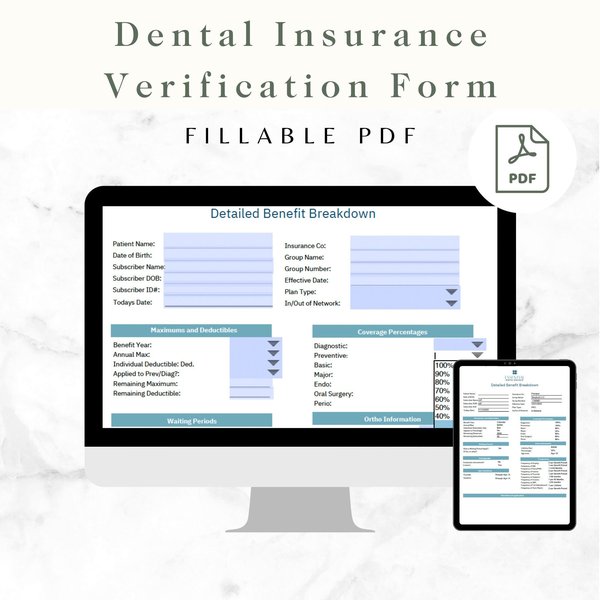
An example of a dental insurance verification form, highlighting the administrative complexities involved in dental billing and network participation.
The Patient's Predicament: Navigating a More Difficult Dental Landscape
For patients, the erosion of dental networks due to equalized in-network and out-of-network payments by insurers translates into tangible difficulties in accessing care and managing costs.
Reduced Access and Choice
A primary benefit of dental insurance for patients is access to a network of dentists where they can expect predictable, often lower, out-of-pocket costs. If networks shrink:
- Fewer In-Network Options: Patients may find it harder to locate an in-network dentist, especially specialists, within a convenient distance. This can lead to longer travel times or delays in receiving care.
- Disruption of Established Relationships: Patients might have to switch from their preferred dentist if that provider opts out of their insurance network to avoid the constraints of participation, now that the payment differential is gone. This disrupts continuity of care.
The Paradox of Higher Out-of-Pocket Costs
It might seem counterintuitive that patients would pay more if insurers pay dentists the same in or out of network. However, the structure of most dental plans means this is a likely outcome:
Balance Billing
Out-of-network dentists are not contractually obligated to accept the insurer's payment as payment in full (minus copays/deductibles). Even if the insurer pays the out-of-network dentist the same amount it would have paid an in-network dentist for a specific service, the out-of-network dentist can bill the patient for the difference between their full fee and the insurer's payment. This practice is known as "balance billing." In-network dentists typically agree to write off this difference.
Different Coverage Percentages
Many dental plans are designed to cover a higher percentage of costs for in-network services and a lower percentage for out-of-network services. For example, a plan might cover 80% of an in-network cleaning but only 60% of an out-of-network cleaning, based on the insurer's "allowable charge." If the dentist's actual fee is higher than this allowable charge (which is common for out-of-network providers), the patient's responsibility increases further.
Thus, even if the insurer's payment *to the dentist* is standardized, the patient's share of the bill can rise significantly when forced to seek care out-of-network due to a diminished network size.
Potential Impact on Quality and Accountability
Insurance networks often involve credentialing processes and some level of oversight. While not a perfect system, it provides a mechanism for accountability. A shift towards more out-of-network care could weaken these mechanisms, as insurers have less direct contractual leverage over non-participating providers.
The Rising Tide of Costs: Implications for Employers and Patients
The policy of equalizing in-network and out-of-network payments would invariably lead to increased overall healthcare expenditures, with the financial burden falling primarily on employers who sponsor dental plans and on patients themselves.
For Employers: The Squeeze of Higher Premiums
Employers are major purchasers of dental insurance. The shift away from negotiated network rates would have direct financial consequences:
- Loss of Negotiated Discounts: The core cost-containment strategy for dental insurers is negotiating discounted fees with network providers. If insurers must pay all dentists (including out-of-network ones who charge higher UCR fees) at rates comparable to what they previously paid only in-network, their overall claims costs will surge.
- Increased Premiums: Insurance companies operate by balancing premiums collected against claims paid and administrative costs. A significant rise in claim payouts due to the loss of network discounts and potentially higher utilization of more expensive out-of-network services would inevitably be passed on to employers in the form of higher premiums for their group dental plans.
- Reduced Value of Benefits: As premiums rise, employers might be forced to choose plans with higher deductibles, greater coinsurance, or reduced coverage for certain procedures to manage costs. This diminishes the overall value of the dental benefit offered to employees.
For Patients: A Triple Whammy of Expenses
Patients also face a direct increase in their dental care costs:
- Higher Premiums: If employers pass on increased premium costs, employees will see larger deductions from their paychecks for dental coverage.
- Increased Out-of-Pocket Expenses: As discussed, even if the insurer's payment to the dentist is standardized, patients using out-of-network providers (a more common scenario with smaller networks) will likely face higher deductibles, larger co-payments, greater coinsurance, and balance billing.
- Financial Strain and Delayed Care: The overall increase in financial burden can lead to patients delaying or forgoing necessary dental treatments, potentially resulting in more severe and costly dental problems down the line. This can also contribute to dental inequality, where access to care becomes more heavily dependent on income rather than insurance coverage.
Visualizing the Impact: Stakeholder Comparison
The following chart illustrates how key factors might shift if dental insurance moves from a traditional network-based payment model to an equalized payment model for in-network and out-of-network providers. The scores are illustrative, representing potential negative impacts (lower scores) or perceived benefits/status quo (higher scores) from different perspectives.
This chart suggests that while dentists might perceive a benefit in reduced administrative burdens if they opt out of networks under an equalized pay model, most other key indicators—network size, patient choice, patient and employer costs, and insurer cost control—would likely worsen.
Comparative Overview: Traditional vs. Equalized Payment
The following table summarizes the anticipated differences between a traditional dental insurance model with distinct in-network and out-of-network payment structures, and a model where payments to dentists are equalized regardless of network status.
| Feature | Traditional Network Model | Equalized In/Out-of-Network Payment Model |
|---|---|---|
| Dentist Incentive to Network | Strong (access to patient volume, predictable payments) | Weak or Non-existent (can receive same pay without network constraints) |
| Network Size | Generally larger, offering more choice | Likely to shrink significantly |
| Insurer's Cost Control | Higher (negotiated fee schedules with in-network providers) | Lower (loss of negotiating power, payments based on potentially higher usual and customary rates) |
| Patient In-Network Access | More options, easier to find participating dentists | Fewer options, potentially difficult to find participating dentists |
| Patient Out-of-Pocket Costs | Generally lower for in-network care (due to negotiated rates and plan design) | Potentially higher overall (due to balance billing by OON dentists, less favorable OON coverage tiers, even if insurer pays dentist same base amount) |
| Employer Premiums | More stable, moderated by network discounts | Likely to increase due to higher overall claim costs |
| Predictability of Costs for Patients | Higher when using in-network providers | Lower, especially when using out-of-network providers due to balance billing |
| Administrative Burden for Dentists | Higher for in-network participation (credentialing, adherence to fee schedules) | Lower for dentists choosing out-of-network status |
This table highlights the fundamental shifts that would occur, largely to the detriment of cost management and patient accessibility, if the financial incentives underpinning current dental network structures were removed.
Untangling the Web: A Mindmap of Consequences
The decision to equalize payments for in-network and out-of-network dental services sets off a chain reaction. The mindmap below illustrates the interconnected effects stemming from this single policy change.
Out-of-Network Dentist Payments"] id1["Reduced Incentive for Dentists to Join/Stay in Networks"] id1a["Avoidance of Contractual Obligations & Lower Fees"] id1b["Desire for Higher UCR Fees Without Penalty"] id1c["Less Administrative Burden for OON Dentists"] id2["Shrinking Insurance Company Network Size"] id2a["Fewer Contracted Providers"] id2b["Reduced Geographic Coverage"] id2c["Loss of Insurer Negotiating Power"] id3["Negative Impact on Patients"] id3a["Reduced Access to In-Network Providers"] id3a1["Longer Wait Times/Travel for Care"] id3a2["Disruption of Existing Dentist-Patient Relationships"] id3b["Higher Out-of-Pocket Expenses"] id3b1["Increased Likelihood of Balance Billing"] id3b2["Less Favorable OON Coverage Tiers"] id3b3["Difficulty Finding Affordable Care"] id3c["Potential for Delayed/Foregone Care"] id4["Increased Costs for Employers & Patients"] id4a["Higher Insurance Claims Costs for Insurers"] id4a1["Loss of Negotiated Discounts"] id4b["Increased Premiums for Employers"] id4c["Increased Premiums/Cost-Sharing for Patients"] id4d["Diminished Value of Dental Benefits"]
This mindmap visually traces how the initial policy change (equalized payments) leads to reduced dentist participation in networks, which in turn shrinks network sizes. This directly affects patients through reduced access and higher costs, and also impacts employers and patients via increased overall costs driven by higher insurance premiums and out-of-pocket expenses.
Understanding In-Network vs. Out-of-Network Dynamics
The complexities of dental insurance, particularly the distinctions between in-network and out-of-network providers, can be confusing. The following video offers insights into these dynamics and why they matter for patients seeking dental care. It explains how network status can affect both the quality of care and the financial responsibility of the patient, which is crucial for understanding the potential ramifications of altering payment structures.
This video underscores that even if an insurance plan is considered "out-of-network" for a particular dentist, it doesn't necessarily mean patients cannot see that dentist. However, it often implies different cost structures and coverage levels. An equalized payment system from the insurer to the dentist doesn't inherently simplify this for the patient, as out-of-network dentists retain the ability to set their own fees, often leading to higher patient costs through balance billing, irrespective of the insurer's base payment.
Frequently Asked Questions (FAQ)
Why do dental insurance networks exist in the first place?
Dental insurance networks are established by insurance companies to control costs and provide predictable expenses for their policyholders. Insurers contract with dentists who agree to provide services at negotiated, typically discounted, rates (a "fee schedule"). In return, these "in-network" dentists gain access to the insurer's pool of patients, potentially increasing their patient volume. For patients, using in-network providers usually means lower out-of-pocket costs, as they benefit from these negotiated rates and often have lower copayments or coinsurance.
What is "balance billing," and how does it affect patients even if insurers pay dentists the same basic amount?
Balance billing occurs when an out-of-network provider charges a patient for the difference between the provider's full fee and the amount the insurance company pays. In-network dentists contractually agree to accept the insurer's negotiated rate as full payment (plus any patient copay/deductible) and cannot balance bill. If insurers pay dentists the same base amount regardless of network status, out-of-network dentists can still charge their standard fees, which are often higher than in-network negotiated rates. The insurer would pay its standard amount, and the out-of-network dentist could then bill the patient for the remaining balance. This means patients could still face significant out-of-pocket costs with out-of-network providers.
Could equalizing payments to dentists ever benefit patients?
The primary argument against equalizing payments is that it dismantles the financial incentives for networks, leading to the negative consequences discussed (smaller networks, higher patient costs via balance billing, higher premiums). Theoretically, if an equalized payment was set very high, it might encourage more dentists to accept patients with that insurance. However, this would dramatically increase insurers' costs, leading to much higher premiums for everyone. More realistically, without network contracts, patients lose the protection from balance billing and the assurance of negotiated rates that in-network status provides. Any perceived benefit of "choice" (being able to see any dentist with the same insurer contribution) would likely be offset by higher overall costs and less predictability in those costs.
How do Preferred Provider Organizations (PPOs) differ from Dental Health Maintenance Organizations (DHMOs) in this context?
PPO plans typically offer flexibility, allowing patients to see both in-network and out-of-network dentists, though out-of-pocket costs are usually lower with in-network providers. If payments were equalized, the distinction for PPOs would blur, likely leading to more out-of-network care and associated higher patient costs through balance billing. DHMO plans, conversely, usually require patients to choose a primary care dentist from a limited network and often do not cover out-of-network care at all, except in emergencies. Equalizing payments would fundamentally undermine the DHMO model, which relies heavily on strict network participation and capitation payments or deeply discounted fee-for-service rates. If dentists had no incentive to be in such restrictive networks, DHMOs would struggle to exist.
Recommended Further Exploration
- What are the primary advantages for dentists participating in insurance networks?
- How does balance billing affect patient healthcare costs in dental PPO plans?
- Explore the long-term economic impact on employers if dental insurance networks diminish.
- What alternative models exist for dental care financing beyond traditional insurance networks?
References
Last updated May 19, 2025