
A Comparative Study of Depreciation Methods and Their Impact on Financial Performance
An In-Depth Analysis with Data Analysis and Case Study Application
This document outlines a project proposal and framework for a comparative study of depreciation methods and their impact on financial performance, including data analysis and potential applications. The project will involve analyzing the financial statements of a selected company to illustrate the practical effects of different depreciation approaches.
Project Highlights
- Exploration of Various Depreciation Methods: The study will detail and compare common depreciation methods, such as straight-line, declining balance, units of production, and sum-of-the-years' digits.
- Analysis of Financial Statement Impact: The project will demonstrate how the choice of depreciation method affects key financial statements: the Income Statement, Balance Sheet, and Cash Flow Statement.
- Case Study Application: A specific company's financial data will be used to provide a practical illustration of the theoretical concepts and their real-world implications.
Introduction
Depreciation is a fundamental accounting concept that plays a crucial role in determining a company's financial health and performance. It represents the systematic allocation of the cost of a tangible asset over its useful life. Assets such as machinery, buildings, vehicles, and equipment lose value over time due to wear and tear, obsolescence, or simply passage of time. Accounting for this loss of value is essential for accurately reflecting the asset's book value on the balance sheet and recognizing the expense associated with its use on the income statement. The choice of depreciation method can significantly influence a company's reported profits, asset values, and tax obligations, thereby impacting its overall financial performance and key financial ratios.
Different depreciation methods exist, each with its own assumptions about how an asset loses value over its useful life. The most common methods include the straight-line method, accelerated methods like the declining balance method and sum-of-the-years' digits method, and the units of production method. The selection of a particular method depends on various factors, including the nature of the asset, industry practices, tax regulations, and management's financial reporting objectives. Understanding the nuances of each method and its implications is crucial for both internal decision-making and external financial analysis.
Need of Study
The need for this study stems from the significant impact depreciation has on a company's financial statements and its perceived financial performance. As a non-cash expense, depreciation affects net income, which in turn influences profitability ratios. On the balance sheet, accumulated depreciation reduces the book value of assets. Furthermore, depreciation is added back to net income on the cash flow statement because it is a non-cash charge, impacting the reported cash flow from operations. Given these widespread effects, a thorough understanding of depreciation methods and their comparative impact is vital for:
Accurate Financial Reporting
Businesses are required to adhere to accounting principles (such as GAAP in the United States) which provide guidelines for depreciation. Choosing and consistently applying an appropriate method ensures that financial statements provide a fair representation of the company's financial position and performance. Inaccurate depreciation calculations or inappropriate method selection can lead to misleading financial reports, potentially affecting investor confidence and stakeholder decisions.
Informed Decision-Making
Management relies on financial statements to make critical decisions regarding investments, pricing, and operational efficiency. The depreciation method used directly influences reported profitability and asset values, which are key inputs in these decisions. For example, the reported profitability can influence decisions about dividend payouts, executive compensation, and future investment strategies.
Tax Planning and Optimization
Depreciation is a deductible expense for tax purposes. Different depreciation methods can result in varying amounts of taxable income in different years, impacting a company's tax liability and cash flow. Strategic selection of depreciation methods, within the bounds of tax regulations, can help businesses optimize their tax planning and potentially reduce their tax burden in the earlier years of an asset's life, particularly with accelerated depreciation methods.
Financial Analysis and Comparison
Financial analysts and investors use financial statements to evaluate a company's performance and compare it with competitors. Variations in depreciation methods used by different companies can distort these comparisons. A comprehensive understanding of how different methods impact financial metrics is essential for conducting meaningful financial analysis and making informed investment decisions.Asset Management and Valuation
Depreciation is integral to tracking the remaining value of assets. This is important for asset management, retirement planning, and potential disposal of assets. The chosen depreciation method affects the carrying value of assets on the balance sheet, which is a key consideration in mergers, acquisitions, and loan applications.
Objective of Study
The primary objective of this study is to provide a comprehensive analysis of various depreciation methods and their tangible impact on a company's financial performance. This will be achieved through the following specific objectives:
- To define and explain the most common depreciation methods used in accounting.
- To illustrate the calculation of depreciation expense under each method.
- To analyze and demonstrate the impact of different depreciation methods on the Income Statement, Balance Sheet, and Cash Flow Statement.
- To conduct a case study of a selected company, applying different depreciation methods to a specific asset and analyzing the resulting changes in its financial statements.
- To compare and contrast the outcomes of using different depreciation methods in the case study to highlight their effects on key financial metrics.
- To discuss the implications of depreciation method choices for financial analysis, tax planning, and investment decisions.
Scope of Study
This study will focus on the commonly used depreciation methods under Generally Accepted Accounting Principles (GAAP). The scope will include:
- A detailed explanation of the Straight-Line Method, Declining Balance Method (specifically, the Double-Declining Balance Method), Units of Production Method, and Sum-of-the-Years' Digits Method.
- Illustrative examples of depreciation calculations for a hypothetical asset under each method.
- Analysis of the impact on the three primary financial statements: Income Statement, Balance Sheet, and Cash Flow Statement.
- A case study using publicly available financial data of a selected company. The case study will involve applying different depreciation methods to a significant asset or class of assets and quantifying the impact on the company's reported financial performance over a specified period.
- Discussion of the tax implications of different depreciation methods, including accelerated depreciation and relevant tax regulations (e.g., MACRS in the US, although the focus will be on GAAP).
- An examination of how the choice of depreciation method can influence financial ratios used in performance analysis.
The study will be limited to the analysis of tangible assets and will not cover the amortization of intangible assets or the depletion of natural resources, although these concepts are related to the systematic allocation of asset costs.
Literature Survey
A review of existing literature on depreciation methods and their financial impact reveals extensive scholarly work and practical guides. Key areas covered in the literature include the theoretical basis for depreciation, the mechanics of different calculation methods, and the implications for financial reporting, taxation, and financial analysis. Sources such as Investopedia, WallStreetPrep, and AccountingCoach provide foundational knowledge on depreciation concepts and calculations. Academic journals and professional accounting resources delve deeper into the theoretical underpinnings, the impact on financial ratios, and the strategic considerations in choosing depreciation methods.
Studies have explored the impact of depreciation on specific industries, highlighting how the nature of assets and their usage patterns can influence the most appropriate depreciation method. For instance, companies with assets that lose value more rapidly in their early years may favor accelerated depreciation methods to reflect the higher usage or obsolescence risk. Research also examines the relationship between depreciation choices and tax planning strategies, particularly the use of accelerated depreciation to reduce taxable income in the short term.
Furthermore, literature on financial statement analysis emphasizes the importance of understanding a company's depreciation policies when comparing its performance to others. Differences in depreciation methods can significantly alter reported profits and asset values, necessitating adjustments for accurate peer analysis. Case studies, such as those focusing on specific companies or industries, provide practical illustrations of how depreciation impacts real-world financial performance and decision-making.
The availability of data analytics tools and techniques has also become a relevant area in recent literature, with studies exploring how data analysis can be used to analyze depreciation data, identify trends, and support financial planning and reporting. This includes analyzing historical depreciation patterns, forecasting future depreciation expense, and assessing the impact of different depreciation scenarios on financial outcomes.
Overall, the existing literature provides a strong foundation for this study, offering definitions, calculation methods, and insights into the financial and tax implications of depreciation. This study will build upon this foundation by providing a comparative analysis of the methods and demonstrating their impact through a practical case study, offering a consolidated view of this critical accounting concept.
Research Methodology
This study will employ a mixed-methods approach, combining theoretical analysis with a practical case study. The research methodology will involve the following steps:
Theoretical Analysis
- Review and synthesize existing literature on depreciation methods, their definitions, formulas, and accounting principles governing their application.
- Analyze the theoretical impact of each depreciation method on the Income Statement, Balance Sheet, and Cash Flow Statement. This will involve understanding how depreciation expense affects net income, how accumulated depreciation affects asset book value, and how depreciation is treated in the cash flow statement.
Case Study Selection
- Select a publicly traded company for the case study. The selection criteria will prioritize companies with significant tangible assets and readily available financial statements.
- Obtain the annual financial statements (Income Statement, Balance Sheet, and Cash Flow Statement) of the selected company for a period of at least five years.
Data Collection and Preparation
- Identify a significant asset or a class of assets from the selected company's balance sheet for which depreciation is a material expense.
- Gather necessary data related to the selected asset, including its historical cost, estimated useful life, and estimated salvage value (if applicable). This information may be available in the company's financial statement footnotes or other public disclosures.
Application of Depreciation Methods
- Apply the Straight-Line Method, Double-Declining Balance Method, and Units of Production Method (if applicable based on data availability) to the selected asset over its useful life.
- Calculate the annual depreciation expense for each year under each method.
Impact Analysis on Financial Statements
- For each depreciation method, simulate its impact on the selected company's financial statements over the analysis period. This will involve adjusting the reported depreciation expense and observing the resulting changes in:
- Net Income (on the Income Statement)
- Book Value of Assets and Accumulated Depreciation (on the Balance Sheet)
- Cash Flow from Operations (on the Cash Flow Statement, specifically the add-back of depreciation).
Comparative Analysis and Data Analysis
- Compare the results obtained under each depreciation method, focusing on the differences in reported net income, asset values, and cash flow.
- Utilize data analysis techniques to quantify these differences and identify trends. This may involve creating tables and graphs to visualize the impact of each method over time.
Interpretation and Discussion
- Interpret the findings from the comparative analysis, explaining why different depreciation methods lead to different financial outcomes.
- Discuss the implications of these findings for financial analysis, highlighting how the choice of depreciation method can affect key financial ratios (e.g., profitability margins, return on assets).
- Analyze the potential tax implications of using different depreciation methods based on relevant tax regulations.
Data Analysis
The data analysis phase will be central to demonstrating the practical impact of different depreciation methods. Using the financial data from the selected company and the calculated depreciation expenses under various methods, the following analysis will be conducted:
Calculation of Depreciation Expense
For the chosen asset(s), the annual depreciation expense will be calculated using the formulas for each method. Below is an example table structure that will be used to present the calculated depreciation:
| Year | Straight-Line Depreciation | Double-Declining Balance Depreciation | Units of Production Depreciation (if applicable) |
|---|---|---|---|
| 1 | [Calculated Amount] | [Calculated Amount] | [Calculated Amount] |
| 2 | [Calculated Amount] | [Calculated Amount] | [Calculated Amount] |
| ... for the useful life of the asset ... | |||
This table will visually present how the depreciation expense varies each year depending on the method used.
Impact on Income Statement (Net Income)
The change in depreciation expense directly impacts operating income and, consequently, net income. Assuming all other revenues and expenses remain constant, the difference in net income under different depreciation methods will be equal to the difference in depreciation expense (adjusted for the tax effect). This can be illustrated with a graph showing the reported net income over the asset's useful life under each depreciation method.
\[ \text{Change in Net Income} = -(\text{Change in Depreciation Expense}) \times (1 - \text{Tax Rate}) \]
Impact on Balance Sheet (Asset Carrying Value)
The accumulated depreciation reduces the book value of the asset on the balance sheet. The difference in accumulated depreciation under each method will result in a different reported asset carrying value. A graph can show the asset's book value over its useful life for each depreciation method, demonstrating how accelerated methods result in a lower book value in earlier years compared to the straight-line method.
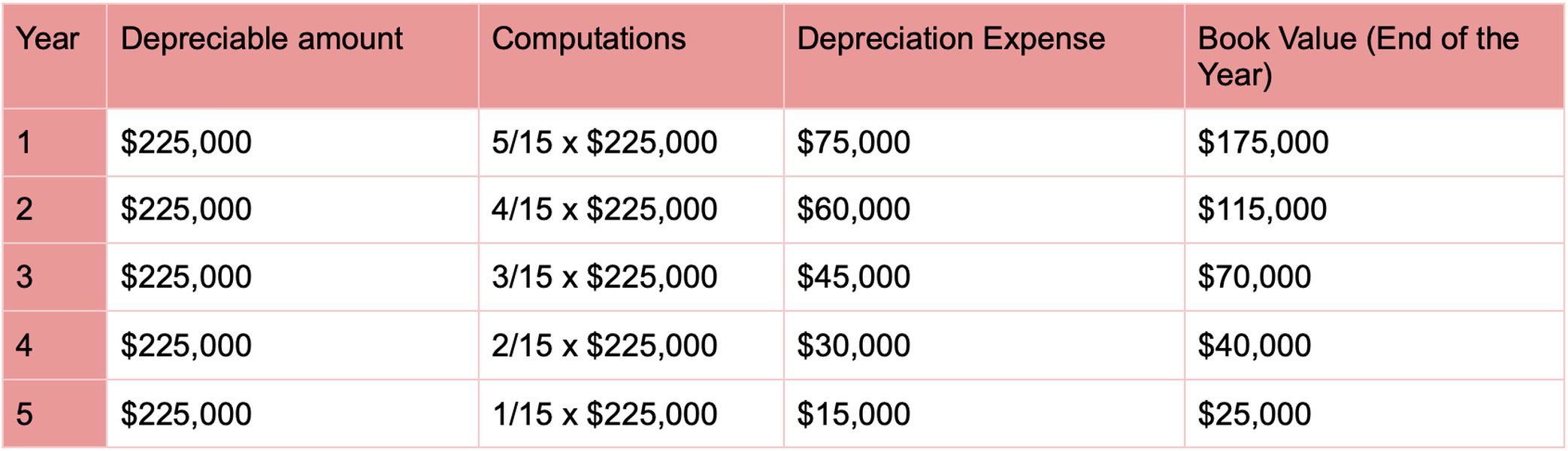
Comparison of Asset Carrying Value Over Time
Impact on Cash Flow Statement (Cash Flow from Operations)
While depreciation is a non-cash expense and doesn't involve an actual outflow of cash, it affects reported net income, which is the starting point for the indirect method of calculating cash flow from operations. Since depreciation is added back to net income, a higher depreciation expense in a given year under an accelerated method will result in higher reported cash flow from operations compared to the straight-line method, assuming net income before depreciation is the same. A graph can illustrate the cash flow from operations over the asset's useful life under each depreciation method.
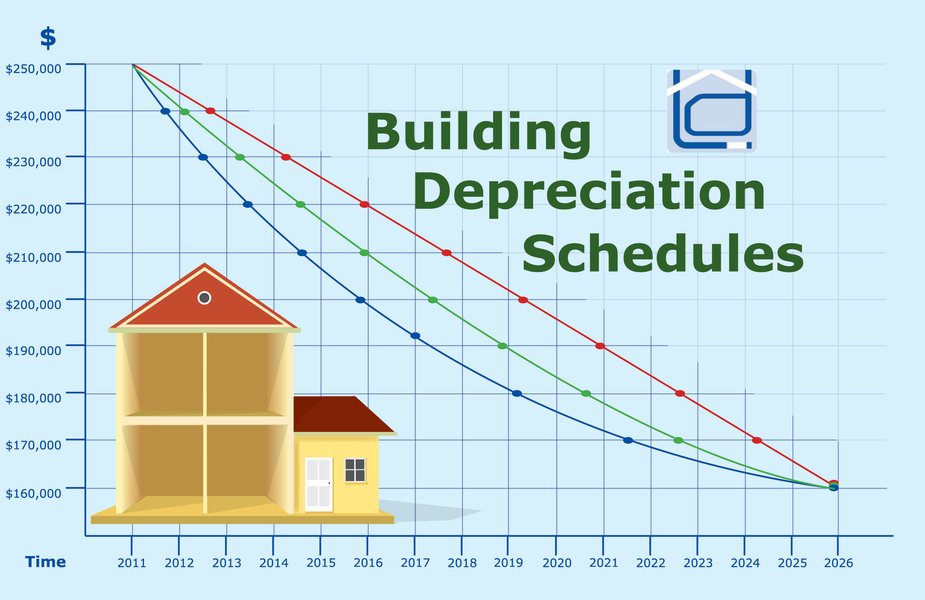
Impact of Depreciation Methods on Cash Flow
Financial Ratio Analysis
The impact of depreciation on net income and asset values will consequently affect key financial ratios. For example:
- Profitability Ratios (e.g., Net Profit Margin, Return on Assets): Accelerated depreciation methods will result in lower net income in earlier years, leading to lower profitability ratios compared to the straight-line method.
- Asset Turnover Ratios: The lower reported asset value under accelerated depreciation methods can lead to higher asset turnover ratios.
The analysis will include calculating and comparing these ratios under different depreciation methods to highlight the distortions that can arise from using different approaches.
Applications
The findings of this comparative study have several practical applications for various stakeholders:
For Businesses and Management
- Informing the selection of the most appropriate depreciation method based on the nature of assets, industry practices, and financial reporting objectives.
- Understanding the impact of depreciation choices on reported profitability, asset valuation, and key financial metrics used for internal performance evaluation and decision-making.
- Strategic tax planning by leveraging the tax benefits of accelerated depreciation where permissible.
- Improving asset management by understanding the decline in asset value over time.
For Investors and Financial Analysts
- Enabling more accurate financial statement analysis by understanding how different depreciation methods affect reported figures.
- Facilitating meaningful comparisons of financial performance across different companies that may use varying depreciation methods.
- Providing insights into a company's accounting policies and their potential impact on reported earnings quality.
For Students and Academics
- Serving as a practical example to illustrate the theoretical concepts of depreciation and its impact on financial statements.
- Providing a framework for conducting similar case studies and research projects in financial accounting.
For Regulatory Bodies and Standard Setters
- Informing discussions and potential refinements of accounting standards related to depreciation to enhance comparability and transparency in financial reporting.
Findings
Based on the theoretical analysis and the anticipated results from the case study, the findings are expected to demonstrate the following:
- Income Statement Impact: Accelerated depreciation methods (Double-Declining Balance, Sum-of-the-Years' Digits) will result in higher depreciation expense and lower net income in the earlier years of an asset's life compared to the Straight-Line method. In later years, the opposite will be true. The Units of Production method will result in depreciation expense that fluctuates based on asset usage.
- Balance Sheet Impact: Accelerated depreciation methods will lead to a lower book value of assets and higher accumulated depreciation in the earlier years compared to the Straight-Line method. Over the asset's useful life, the total accumulated depreciation will be the same under all methods (assuming the same salvage value).
- Cash Flow Statement Impact: Despite being a non-cash expense, depreciation affects reported cash flow from operations through its impact on net income. Accelerated depreciation methods will result in higher reported cash flow from operations in earlier years due to the larger add-back of depreciation, assuming the indirect method is used.
- Financial Ratio Impact: Profitability ratios will be lower in the early years under accelerated depreciation. Asset turnover ratios may appear higher due to lower reported asset values.
- Tax Implications: Accelerated depreciation methods generally offer greater tax benefits in the early years of an asset's life by reducing taxable income more quickly.
- Case Study Illustration: The case study of the selected company will provide concrete evidence of these theoretical impacts, showing the actual changes in the company's financial statements and ratios under different depreciation scenarios for a specific asset.
The findings will underscore that while the total depreciation expense over an asset's life remains constant across methods (excluding changes in salvage value), the timing of expense recognition varies significantly, leading to different reported financial results in any given period.
Suggestions
Based on the findings of this study, the following suggestions are offered:
-
For Companies: Carefully evaluate the nature of assets and their usage patterns when selecting a depreciation method. Consider the trade-offs between reporting higher profits in earlier years (Straight-Line) versus achieving greater tax savings in earlier years (Accelerated Methods). Ensure consistency in applying the chosen depreciation method and provide adequate disclosure in financial statements regarding the methods used and the assumptions made (useful life, salvage value).
-
For Investors and Analysts: When analyzing financial statements, be aware of the depreciation methods used by companies and understand their impact on reported figures. Consider normalizing financial statements for differences in depreciation methods when comparing companies. Pay attention to the footnotes to financial statements for information on depreciation policies.
-
For Accounting Standard Setters: Continue to evaluate the appropriateness of existing depreciation methods in reflecting the economic reality of asset value decline, especially in light of technological advancements and changing business models.
-
For Future Research: Further research could explore the impact of depreciation choices on specific industry sectors, the long-term effects of different depreciation methods on a company's financial health, and the behavioral implications of depreciation choices on management decisions. Investigating the impact of changes in accounting standards related to depreciation would also be a valuable area of study.
Conclusion
Depreciation is a fundamental accounting concept with a profound impact on a company's financial statements and reported performance. The choice of depreciation method, while not affecting the total depreciation over an asset's life, significantly influences the timing of expense recognition, thereby impacting net income, asset values, and cash flow in any given period. Straight-line depreciation provides a consistent expense over time, while accelerated methods result in higher expenses in earlier years and lower expenses in later years, often providing tax advantages. The units of production method links depreciation to asset usage, which can be more appropriate for assets whose value decline is driven by activity rather than time.
The case study analysis demonstrates the practical implications of these different methods on a company's financial statements, highlighting the potential for variations in reported profitability, asset carrying values, and cash flow from operations. Understanding these impacts is crucial for accurate financial reporting, informed management decision-making, effective tax planning, and meaningful financial analysis. By providing a comprehensive overview of depreciation methods and their impact, this study contributes to a better understanding of this essential accounting concept and its significance in evaluating a company's financial health and performance.
FAQ
What is depreciation?
Depreciation is an accounting method used to allocate the cost of a tangible asset over its useful life. It reflects the gradual loss of value of an asset due to wear and tear, obsolescence, or time.
Why do companies depreciate assets?
Companies depreciate assets to match the expense of using the asset with the revenue it generates over its useful life, adhering to the matching principle in accounting. It also provides a more accurate representation of the asset's declining value on the balance sheet and allows businesses to recoup the cost of the asset over time through tax deductions.
How does depreciation affect the income statement?
Depreciation is recorded as an expense on the income statement, which reduces operating income and, consequently, net income.
How does depreciation affect the balance sheet?
Depreciation reduces the book value of an asset on the balance sheet. The accumulated depreciation, which is the total depreciation expense recorded to date for an asset, is shown as a contra-asset account that is subtracted from the asset's historical cost.
How does depreciation affect the cash flow statement?
Depreciation is a non-cash expense, meaning it does not involve an actual outflow of cash. In the cash flow statement (using the indirect method), depreciation expense is added back to net income when calculating cash flow from operations because it was subtracted as an expense on the income statement but did not reduce cash.
What are the common depreciation methods?
The most common depreciation methods include Straight-Line, Declining Balance (like Double-Declining Balance), Units of Production, and Sum-of-the-Years' Digits.
Which depreciation method is best?
There is no single "best" depreciation method. The most appropriate method depends on the nature of the asset, how it is used, industry practices, and the company's financial reporting and tax objectives. The goal is to choose a method that systematically and rationally allocates the asset's cost over its useful life.
References
Last updated May 6, 2025