
Understanding the Crucial Role of Designated Listeners in Load Balancing
Unpacking how listeners enable efficient traffic distribution and application availability.
In the complex architecture of modern applications, ensuring high availability, scalability, and efficient traffic distribution is paramount. This is where load balancers play a critical role, acting as the front line for incoming requests. Central to the functionality of any load balancer is the concept of a "listener." A designated listener serves as the entry point, constantly monitoring for incoming client connection requests on a specified protocol and port. Without a listener, a load balancer cannot receive traffic, rendering it unable to distribute requests to backend servers.
Essential Insights into Load Balancer Listeners
- Traffic Reception: A listener is the primary component that actively "listens" for incoming network traffic on a configured port and protocol, serving as the initial point of contact for clients.
- Rule-Based Routing: Listeners are intrinsically linked with rules that dictate how incoming requests are evaluated and subsequently routed to specific target groups, enabling intelligent traffic management.
- Protocol Versatility: They support a wide range of protocols, including TCP, UDP, HTTP, and HTTPS, allowing load balancers to handle diverse application traffic.
The Core Function of a Listener
At its heart, a listener is a fundamental process within a load balancer that continuously checks for connection requests from clients. Imagine it as a vigilant doorman, stationed at a specific entrance (port) and understanding a particular language (protocol). When a client attempts to connect, the listener is the first to greet it.
The Listening Mechanism: Protocols and Ports
Every listener is configured with a specific protocol and port. This configuration determines the type of traffic the listener is designed to handle and on which network address it expects to receive that traffic.
- Protocol: This defines the communication method. Common protocols include HTTP, HTTPS, TCP, and UDP. For instance, an HTTP listener on port 80 will process standard web traffic, while an HTTPS listener on port 443 will handle secure web traffic, often offloading SSL/TLS encryption and decryption from the backend servers.
- Port: This is the specific numerical endpoint on the load balancer's IP address where the listener awaits connections. For example, web servers typically listen on port 80 for HTTP and 443 for HTTPS. Backend instances can often listen on a wider range of ports, from 1-65535.
Without at least one listener configured, a load balancer cannot receive any traffic from clients. This makes listeners an indispensable component in the load balancing ecosystem.
Listeners in the Context of Load Balancers
Load balancers, whether they are Application Load Balancers (ALB), Network Load Balancers (NLB), or Classic Load Balancers (CLB), all rely on listeners to function. The specific capabilities of a listener often depend on the type of load balancer it is associated with.
Application Load Balancer (ALB) Listeners
ALBs operate at Layer 7 (the application layer) of the OSI model, which allows for advanced routing capabilities. ALB listeners are highly intelligent and can evaluate incoming requests based on various application-level criteria.
- Content-Based Routing: ALB listeners can define rules to route requests to different target groups based on the content of the application traffic. This includes criteria like host headers, HTTP request methods, URL path patterns, and HTTP headers.
- HTTPS Offloading: A key feature of HTTPS listeners on ALBs is the ability to offload SSL/TLS encryption and decryption. This frees up backend application servers to focus solely on business logic, improving performance. If the targets need to decrypt the traffic themselves, a TCP listener on a Network Load Balancer might be used instead.
- HTTP/2 and WebSockets: ALBs natively support HTTP/2 with HTTPS listeners, enabling more efficient front-end connections. They also support WebSocket connections for persistent communication between clients and targets.
Network Load Balancer (NLB) Listeners
NLBs operate at Layer 4 (the transport layer) and are designed for extreme performance and static IP addresses. Their listeners are protocol-aware but do not inspect application-level content.
- TCP/UDP/TLS Protocols: NLB listeners primarily handle TCP, UDP, and TLS traffic. For TLS listeners, they can also offload encryption, similar to ALBs, but if encrypted traffic needs to pass through untouched to the targets, a TCP listener is preferred.
- Direct Traffic Forwarding: NLBs forward traffic directly to targets without decrypting it if a TCP listener is configured. This is crucial for scenarios where end-to-end encryption is required or when the application itself handles TLS termination.
- High Throughput: NLB listeners are optimized for very high throughput and low latency, making them suitable for performance-sensitive applications.
Classic Load Balancer (CLB) Listeners
CLBs are the older generation of load balancers, supporting both Layer 4 and Layer 7 capabilities, though less sophisticated than ALBs or NLBs.
- Basic Load Balancing: CLB listeners support TCP and UDP at Layer 4, and HTTP and HTTPS at Layer 7. They provide basic load balancing functionality.
- Backend Connection: After receiving a request, a CLB listener attempts to open a TCP connection to the backend instance on the configured port.
The Relationship Between Listeners, Rules, and Target Groups
A designated listener doesn't just receive traffic; it acts as the gateway to intelligent traffic routing. This is achieved through its close integration with listener rules and target groups.
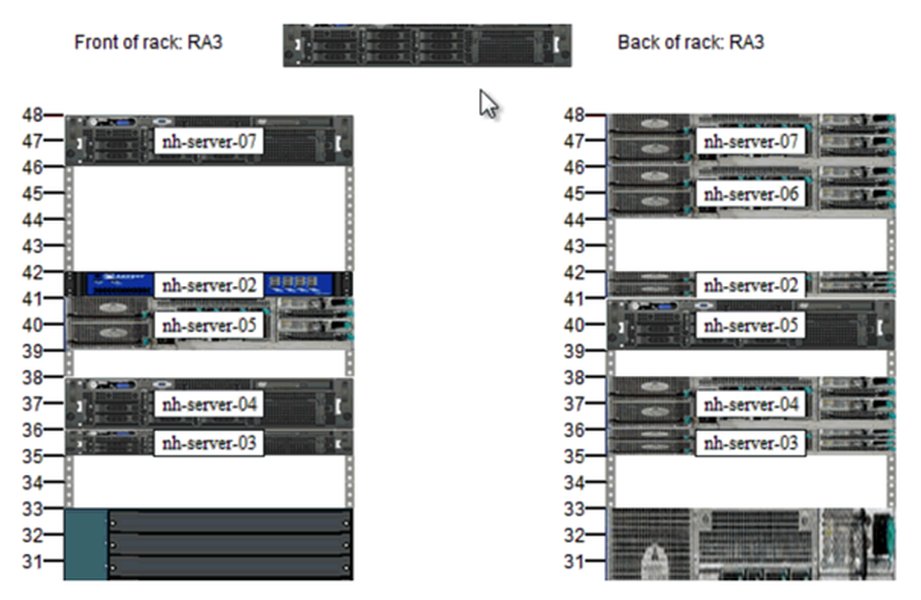 An illustration of typical data center components, including racks that would house load balancers and backend servers.
Listener Rules: Directing Traffic with Precision
For each listener, a default rule is always defined. Additionally, ALBs allow for the creation of multiple non-default rules. These rules are crucial for determining how the load balancer routes requests to registered targets.
- Rule Evaluation: When a load balancer receives a request, it evaluates the listener rules in priority order. The first rule whose conditions are met triggers its defined actions.
- Conditions: Rules can include various conditions, such as:
- Host header: Routing based on the domain name in the request.
- Path pattern: Routing based on specific URL paths (e.g., /images/* to an image server group).
- HTTP method: Routing based on the HTTP method (GET, POST, etc.).
- Source IP: Routing based on the client's IP address.
- HTTP header: Routing based on specific HTTP headers.
- Actions: Once a rule's conditions are met, the load balancer performs the specified actions. The most common action is to forward requests to a specific target group. Other actions can include redirecting requests or returning a fixed response.
This rule-based system enables highly granular control over traffic flow, supporting complex application architectures like microservices, where different services can be routed based on the request's content.
Target Groups: Destinations for Incoming Requests
A target group is a logical grouping of registered targets (e.g., EC2 instances, containers, IP addresses) that are designed to handle specific types of traffic. Listeners route requests to these target groups.
- Registration: Targets are registered with one or more target groups. A single target can be registered with multiple target groups, allowing it to serve different types of requests if necessary.
- Health Checks: Target groups are also configured with health checks to monitor the health and availability of the registered targets. The load balancer only forwards traffic to healthy targets.
- Protocol and Port: Each target group specifies the protocol and port number that the load balancer uses to communicate with the registered targets.
Real-World Implications and Use Cases
The concept of a designated listener is integral to various cloud and on-premise deployments, providing flexibility and control over traffic management.
Availability Group Listeners in Databases
In the context of database systems, such as SQL Server Always On Availability Groups, a "listener" serves a similar purpose. An availability group listener provides a single point of connection for client applications, abstracting the underlying database replicas. It consists of a DNS listener name, a listener port, and one or more IP addresses. This allows clients to connect to the availability group without needing to know which specific replica is currently the primary. Azure, for example, allows configuring a load balancer and an availability group listener for SQL Server Always On deployments.
Kafka Listeners
In distributed messaging systems like Apache Kafka, listeners enable Kafka brokers to accept connections from clients and other brokers. Kafka can be configured with multiple listeners to handle different types of traffic (e.g., external client traffic vs. internal inter-broker traffic), often leveraging different network interfaces and protocols (like SASL for security). The advertised.listeners property is crucial for clients to discover and connect to the correct broker endpoints.
Event Listeners in Programming
While conceptually different in implementation, the term "event listener" in programming paradigms (like Java or JavaScript) shares the core idea of "listening" for a specific occurrence. An event listener is a procedure or function that waits for an event (e.g., a mouse click, key press, network activity) to occur and then executes a predefined action. This highlights the broad applicability of the "listener" pattern in computing, where a component waits for a specific signal or request to trigger a response.
Configuring and Managing Listeners
Managing listeners involves defining their protocols, ports, associated rules, and target groups. Cloud providers like AWS and Oracle provide detailed documentation and interfaces for this configuration.
- Creation and Management: Listeners can be defined when creating a load balancer or added subsequently. They can be listed, details retrieved, and settings edited.
- Security Rules: When creating a listener, it is crucial to ensure that the virtual network's security rules allow the listener to accept incoming traffic on the specified port. This involves configuring inbound rules in security groups or network access control lists (NACLs).
- Idle Timeout: Listeners often have configurable idle timeouts, which define the maximum time allowed between successive receive or send operations during a request-response phase.
- SSL Certificates: For HTTPS/TLS listeners, deploying SSL server certificates is mandatory to enable encryption and decryption.
Comparative Analysis of Listener Capabilities
To further illustrate the distinctions between different listener types and their roles, let's consider a comparative analysis using a radar chart. This chart will highlight key characteristics and operational strengths.
This radar chart visually represents the comparative strengths of different load balancer listener types across various performance and functionality metrics. For instance, Application Load Balancer listeners excel in "Content-Based Routing" and "Flexibility with Rules" due to their Layer 7 capabilities, while Network Load Balancer listeners demonstrate superior "Raw Performance" and "Static IP Support" at Layer 4. Classic Load Balancer listeners offer a more generalized set of features, reflecting their foundational role in load balancing history. The scale for each metric is from 1 to 10, where higher values indicate stronger performance or greater capability in that area.
Key Differences Summarized
To further consolidate the understanding, here's a table summarizing the key distinctions and responsibilities of a load balancer listener in relation to other load balancer components.
| Component | Purpose | Key Characteristics | Interaction with Listener |
|---|---|---|---|
| Load Balancer | Distributes incoming traffic across multiple backend targets to ensure high availability and scalability. | Acts as a single point of contact for clients; can be Application, Network, or Classic type. | Hosts one or more listeners; traffic is first received by the load balancer through its listeners. |
| Listener | A process that checks for client connection requests on a specific protocol and port. | Defines the entry point for traffic; must be configured for the load balancer to receive requests. | Receives incoming traffic and evaluates it against defined rules to determine routing. |
| Listener Rules | Determine how the listener routes incoming requests to target groups based on conditions. | Consist of conditions (e.g., host, path, HTTP method) and actions (e.g., forward, redirect). | Applied by the listener in priority order to intelligently direct traffic to the appropriate target group. |
| Target Group | A logical grouping of registered backend targets (e.g., EC2 instances) that process requests. | Includes health checks for targets; defines protocol and port for load balancer-to-target communication. | The destination for requests forwarded by the listener (via its rules); registers the actual application servers. |
| Target | Individual backend servers or resources (e.g., EC2 instances, IP addresses) that serve the application. | The actual compute resource running the application code. | Registered with target groups; receives traffic from the load balancer as directed by the listener and its rules. |
| Security Group | Acts as a virtual firewall for your instances to control inbound and outbound traffic. | Stateful; rules applied at the instance level. | Must allow traffic on the ports configured for the listener, ensuring network accessibility. |
Frequently Asked Questions
What is a load balancer listener?
Why is a listener necessary for a load balancer?
What is the difference between a listener and a target group?
Can a single load balancer have multiple listeners?
What are listener rules?
Conclusion
The designated listener is a foundational element in load balancing architectures, serving as the critical interface between client requests and backend application services. By configuring listeners with specific protocols and ports, and by associating them with intelligent routing rules and target groups, organizations can effectively manage traffic flow, enhance application availability, and ensure optimal performance. Whether in cloud environments like AWS, Oracle, or Azure, or within on-premise solutions involving databases like Oracle RAC or messaging systems like Kafka, the listener's role in enabling scalable and resilient application delivery remains paramount. Understanding its purpose and interplay with other load balancing components is essential for designing robust and efficient distributed systems.
Recommended Further Exploration
- How do Application Load Balancers use listener rules for microservices architectures?
- What are the security implications of HTTPS listeners and SSL offloading on load balancers?
- Compare the performance characteristics of Network Load Balancer listeners versus Application Load Balancer listeners.
- How do listeners contribute to high availability and fault tolerance in distributed systems?
References
 docs.aws.amazon.com
docs.aws.amazon.com
docs.aws.amazon.com
docs.aws.amazon.com
 docs.amazonaws.cn
docs.aws.amazon.com
Last updated May 21, 2025