
Determining the Grammatical Number of Free Relative Clauses in English
A Comprehensive Guide to Understanding and Applying Number Agreement
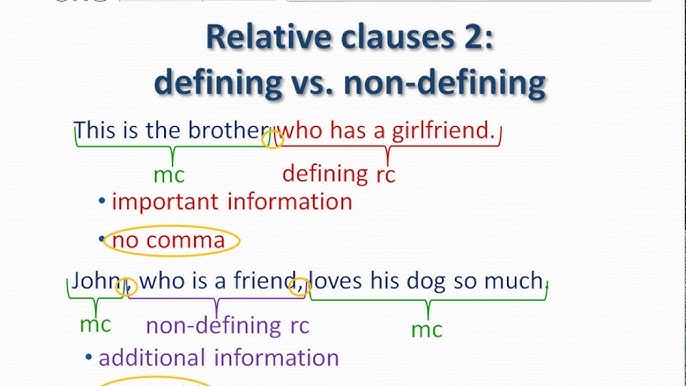
Key Takeaways
- Identify the Free Relative Clause: Recognize clauses introduced by words like "what," "whoever," or "whatever" that function as noun phrases.
- Analyze Internal Agreement: Examine the verb within the clause to determine if it implies a singular or plural subject.
- Contextual Role in the Sentence: Understand how the clause functions (e.g., subject, object) within the larger sentence to ensure correct number agreement.
Introduction to Free Relative Clauses
Free relative clauses, also known as nominal relative clauses or fused relatives, are integral components of English grammar that serve as noun phrases within sentences. Unlike typical relative clauses that modify a specific noun, free relative clauses stand independently, fulfilling roles such as subject, object, or complement. They are introduced by wh-words like "what," "whoever," "whatever," "whichever," and "wherever." Understanding the grammatical number of these clauses—whether they are singular or plural—is essential for ensuring subject-verb agreement and overall sentence coherence.
Understanding the Structure of Free Relative Clauses
Components and Functionality
At their core, free relative clauses consist of a wh-word followed by a subject and a verb. These clauses act as single units within a sentence, taking on roles typically assigned to noun phrases. For instance, in the sentence "What you did was impressive," the clause "What you did" functions as the subject.
Wh-Words Commonly Introducing Free Relative Clauses
- What: Often refers to things or actions.
- Whoever: Refers to people.
- Whatever: Refers to things or actions without specificity.
- Whichever: Refers to a choice among options.
- Wherever: Refers to places.
Steps to Determine the Grammatical Number
1. Identify the Free Relative Clause
Begin by locating the clause within the sentence. Look for clauses introduced by wh-words such as "what," "whoever," "whatever," etc. Confirm that the clause functions as a noun phrase by checking if it serves as the subject, object, or complement.
Example: In "Whatever you decide will affect the outcome," "Whatever you decide" is the free relative clause acting as the subject.
2. Analyze the Internal Structure of the Clause
Examine the verb within the free relative clause to determine if it indicates a singular or plural subject. The verb's number agreement offers insights into the implied noun's number within the clause.
Example: "What she says matters." Here, "says" is singular, indicating that "what she says" is treated as a singular entity.
3. Consider the Clause's Role in the Larger Sentence
Understand how the free relative clause interacts with the rest of the sentence. If the clause serves as the subject, object, or complement, its grammatical number will influence, and be influenced by, the main verb's agreement.
Example: "What he has done are commendable actions." The clause "What he has done" is accompanied by the plural verb "are," suggesting a plural interpretation based on the predicate "commendable actions."
Detailed Analysis of Number Agreement
Singular vs. Plural Agreement
The grammatical number of a free relative clause is primarily determined by the implied meaning and the internal verb agreement within the clause. Here's how to navigate singular and plural agreements:
Singular Agreement
Use singular verbs when the clause refers to a single entity, concept, or action. This often applies when the wh-word leads to a singular interpretation.
- Example: "What you said is important." The clause "What you said" refers to a single statement, hence the singular verb "is."
- Example: "Whoever arrives first gets the prize." "Whoever arrives first" is treated as one person, leading to the singular verb "gets."
Plural Agreement
Employ plural verbs when the clause clearly refers to multiple entities or items. When the internal structure implies plurality, the verb reflects that number.
- Example: "What books he has written haven't been sold well." Here, "what books he has written" refers to multiple books, necessitating the plural verb "haven't."
- Example: "Whatever challenges they face are part of the process." The plural verb "are" aligns with the multiple challenges implied.
Default Patterns and Context Dependency
In instances where the number is ambiguous, default to singular agreement, especially when referring to abstract or undefined concepts. Context plays a crucial role in determining the appropriate number.
- Example: "Whatever happens next is out of our control." Despite potential multiple occurrences, the singular verb "is" is used as the outcome is considered as a single event.
- Example: "What matters most is the intention behind the action." The focus on intention, a singular concept, leads to the singular verb "is."
Common Pitfalls and Ambiguities
Ambiguous Number Interpretations
Free relative clauses can sometimes be ambiguous in terms of number, leading to uncertainty about whether to use a singular or plural verb. This ambiguity often arises when the clause could logically refer to either singular or multiple entities based on context.
- Example: "What they want is a better future." Here, "What they want" could be interpreted as a single collective desire, hence the singular verb "is."
- Example: "What they want are the rewards they deserve." In this case, the predicate "the rewards" suggests a plural interpretation, justifying the plural verb "are."
Neutrality of Wh-Words
Wh-words like "what" are neutral and do not inherently dictate the number of the clause. It's the internal verb and the implied meaning that determine whether the clause is singular or plural.
- Example: "What you need is a good strategy." The neutral "what" is clarified by the singular verb "is."
- Example: "What tools they bring are essential for the project." Here, "are" indicates that "tools" is plural.
Strategies for Ensuring Correct Number Agreement
Rephrasing for Clarity
When faced with ambiguous free relative clauses, consider rephrasing the sentence to eliminate uncertainty. This can involve specifying the number explicitly or restructuring the sentence to clarify the intended meaning.
- Original: "Whoever attends the meeting will receive a certificate."
- Rephrased: "Each person who attends the meeting will receive a certificate."
Contextual Clues
Leverage contextual information within the sentence or surrounding text to infer the correct number. Look for nouns, pronouns, or other indicators that signal singularity or plurality.
- Example: "What makes them unique are their diverse backgrounds." The presence of "diverse backgrounds" suggests plurality.
- Example: "What concerns me is the lack of progress." The singular noun "lack" points to a singular verb.
Consistency in Agreement
Maintain consistency in subject-verb agreement throughout the sentence to avoid confusion. Ensure that once the number is determined based on the clause's significance, it remains consistent in related verbs and pronouns.
- Example: "Whatever decision she makes will be respected by all."
- Example: "Whoever completes the tasks are eligible for rewards." (Note: This example should use "is" to agree with "whoever," but it's included here as a common error to be aware of.)
Practical Applications and Examples
Subject Position
When a free relative clause functions as the subject of a sentence, its number directly affects the main verb's form.
- Singular: "What she believes is her conviction."
- Plural: "What documents they submitted are under review."
Object Position
In cases where the free relative clause serves as the object, the main verb's agreement is influenced by the clause's function within the sentence.
- Singular: "I appreciate what you did was helpful."
- Plural: "They acknowledged what they received were numerous gifts."
Complement Position
When functioning as a complement, free relative clauses align their number with the subject or predicate present in the sentence.
- Singular: "Her main concern is what the future holds."
- Plural: "Their primary focus are what they can achieve together."
Advanced Considerations
Specificity vs. Generality
The specificity of the reference within a free relative clause can influence its grammatical number. Specific references often lead to clear singular or plural interpretations, while general references may default to singular for abstraction.
- Specific: "What issues the committee addresses are complex."
- General: "Whatever you choose is fine with me."
Nominal Properties and Syntactic Roles
Understanding that free relative clauses behave like noun phrases allows for a deeper analysis of their syntactic roles, further aiding in determining their number.
-
Example: "Whatever strategy you implement determines the outcome." Here, "Whatever strategy you implement" functions syntactically as a noun phrase, guiding the singular verb "determines."
-
Example: "Whoever are responsible for the error should rectify it." (Note: Proper agreement should be "Whoever is," highlighting the importance of syntactic analysis.)
Conclusion
Determining the grammatical number of free relative clauses in English involves a nuanced analysis of both the internal structure of the clause and its role within the larger sentence context. By identifying the free relative clause, analyzing the internal verb agreement, and considering the clause's syntactic function, one can accurately ascertain whether the clause is singular or plural. While certain instances may present ambiguities, applying clear strategies such as rephrasing for clarity and leveraging contextual clues can ensure precise subject-verb agreement, thereby enhancing the overall grammatical correctness of the sentence.
References
Last updated January 27, 2025