
The DevOps Revolution: Mastering the Integration of Development and Operations
A comprehensive breakdown of the DevOps methodology from fundamental principles to advanced implementation techniques
Essential DevOps Highlights
- DevOps bridges the gap between development and operations teams through cultural transformation, automation, and continuous processes
- The complete DevOps lifecycle encompasses eight key stages: planning, coding, building, testing, releasing, deploying, operating, and monitoring
- Successful implementation requires mastering both technical skills (CI/CD, Infrastructure as Code) and cultural practices (collaboration, shared responsibility)
Understanding DevOps: Fundamentals and Principles
DevOps represents the fusion of "Development" and "Operations" – a set of practices that combines software development and IT operations to shorten the systems development lifecycle while delivering features, fixes, and updates more frequently and reliably. More than just a methodology, DevOps represents a cultural shift that breaks down traditional silos between teams.
Core DevOps Principles
At its foundation, DevOps is built on several key principles:
- Collaboration: Creating a culture where development and operations teams work together with shared responsibility
- Automation: Automating repetitive tasks to increase efficiency and reduce human error
- Continuous Integration: Regularly merging code changes into a central repository with automated builds and tests
- Continuous Delivery: Ensuring software can be released reliably at any time
- Continuous Monitoring: Tracking application performance and gathering user feedback
- Infrastructure as Code: Managing infrastructure through code rather than manual processes
The benefits of DevOps include faster time-to-market, improved product quality, enhanced team collaboration, increased efficiency, and better adaptation to changing business needs. Organizations implementing DevOps report 24× faster recovery from failures and 22% less time spent on unplanned work and rework.
The DevOps Lifecycle: A Step-by-Step Breakdown
The DevOps lifecycle consists of eight interconnected stages that form a continuous loop of improvement and delivery:
1. Planning
The DevOps journey begins with collaborative planning between development, operations, and business stakeholders.
Key Activities:
- Define project requirements, goals, and quality criteria
- Create user stories and acceptance criteria
- Prioritize features based on business value
- Establish timelines and iteration cycles
Tools:
- Jira, Trello, Asana for project management
- Confluence, Notion for documentation
- Miro, Lucidchart for visualization
2. Coding
Developers write code in small, manageable increments that can be frequently integrated and tested.
Key Activities:
- Write code following agreed-upon standards and practices
- Implement features based on user stories
- Frequently commit code to version control
- Conduct code reviews
Tools:
- Git for version control
- IDEs like VS Code, IntelliJ
- GitHub, GitLab, Bitbucket for repository management
3. Building
Code is compiled, integrated, and prepared for testing in automated build processes.
Key Activities:
- Compile code and create builds
- Run unit tests
- Perform static code analysis
- Create artifacts for deployment
Tools:
- Jenkins, CircleCI, Travis CI for continuous integration
- Maven, Gradle for build automation
- SonarQube for code quality analysis
4. Testing
Comprehensive automated testing ensures software quality and functionality.
Key Activities:
- Execute automated tests (unit, integration, functional)
- Perform performance and security testing
- Conduct user acceptance testing
- Identify and fix defects
Tools:
- Selenium, Appium for automated testing
- JUnit, TestNG for unit testing
- JMeter, Gatling for performance testing
- OWASP ZAP for security testing
5. Releasing
Prepare and package software for deployment with proper versioning and documentation.
Key Activities:
- Version the software release
- Create release notes
- Prepare deployment plans
- Get necessary approvals
Tools:
- Artifactory, Nexus for artifact management
- GitHub Releases, GitLab Releases
- Docker for containerization
6. Deploying
Automate the deployment process to various environments with minimal manual intervention.
Key Activities:
- Deploy to staging and production environments
- Configure application settings
- Monitor deployment process
- Implement rollback mechanisms if needed
Tools:
- Kubernetes for orchestration
- Ansible, Puppet, Chef for configuration management
- AWS CodeDeploy, Azure DevOps, Google Cloud Deploy
- Terraform for infrastructure provisioning
7. Operating
Manage the production environment and ensure system stability and reliability.
Key Activities:
- Maintain system availability
- Perform routine maintenance
- Implement security patches
- Scale resources as needed
Tools:
- Kubernetes, Docker Swarm for container orchestration
- AWS, Azure, Google Cloud for cloud infrastructure
- Terraform, CloudFormation for infrastructure management
8. Monitoring
Continuously monitor system performance and gather feedback for improvements.
Key Activities:
- Track application and infrastructure metrics
- Set up alerts for anomalies
- Collect and analyze logs
- Gather user feedback
Tools:
- Prometheus, Grafana for monitoring
- ELK Stack (Elasticsearch, Logstash, Kibana) for logging
- Datadog, New Relic for application performance monitoring
- PagerDuty for incident management
Core DevOps Practices: The Technical Framework
Continuous Integration (CI)
Continuous Integration involves automatically integrating code changes from multiple contributors into a shared repository. Each integration triggers automated tests to validate changes, ensuring early detection of integration issues.
Continuous Delivery/Deployment (CD)
Continuous Delivery ensures software is always in a deployable state through automated testing and integration. Continuous Deployment takes this further by automatically deploying all code changes to production after passing through the pipeline.
Infrastructure as Code (IaC)
IaC manages infrastructure through code instead of manual processes, treating servers, databases, networks, and other infrastructure as software. This approach ensures consistency, reduces configuration drift, and enables version control for infrastructure changes.
Microservices Architecture
Breaking down applications into loosely coupled, independently deployable services allows teams to develop, deploy, and scale components independently, enabling faster iterations and better fault isolation.
Shift-Left Security (DevSecOps)
Integrating security practices early in the development process ("shifting left") ensures security is built in rather than bolted on. This approach makes security a shared responsibility across development, operations, and security teams.
DevOps Maturity Assessment: Evaluating Your Implementation
Understanding your organization's DevOps maturity level helps identify areas for improvement and create a strategic roadmap. Below is a radar chart that illustrates the six key dimensions of DevOps maturity:
This chart helps visualize how organizations progress through various stages of DevOps maturity across different dimensions. Elite organizations excel in all areas, while organizations at earlier stages may have strengths in some dimensions but need improvement in others.
Tools for Each Stage of the DevOps Lifecycle
Selecting the right tools for each stage of the DevOps lifecycle is crucial for successful implementation. The table below provides a comprehensive overview of popular tools for each stage:
| Lifecycle Stage | Popular Tools | Function | Integration Points |
|---|---|---|---|
| Planning | Jira, Trello, Azure Boards | Project management, backlog tracking, sprint planning | Git repositories, CI/CD pipelines |
| Coding | VS Code, Git, GitHub, GitLab | Code editing, version control, code review | CI tools, testing frameworks |
| Building | Jenkins, CircleCI, Travis CI, Maven | Automated builds, continuous integration | Testing tools, artifact repositories |
| Testing | Selenium, JUnit, SonarQube, Cucumber | Automated testing, quality assurance | CI servers, deployment tools |
| Releasing | Nexus, Artifactory, Docker Hub | Artifact management, versioning | Deployment tools, CI/CD pipelines |
| Deploying | Kubernetes, Ansible, Terraform, AWS CodeDeploy | Automated deployment, configuration management | Monitoring tools, cloud platforms |
| Operating | Docker, Kubernetes, AWS/Azure/GCP | Infrastructure management, scaling | Monitoring tools, security tools |
| Monitoring | Prometheus, Grafana, ELK Stack, Datadog | Performance monitoring, logging, alerting | Operating tools, incident management systems |
The integration of these tools creates a seamless pipeline that enables teams to develop, test, deploy, and monitor applications efficiently and reliably.
DevOps Implementation: From Theory to Practice
Implementing DevOps in an organization requires a systematic approach that addresses both technical and cultural aspects. Here's a step-by-step guide to successful DevOps implementation:
Step 1: Assess Current State
Evaluate your organization's current processes, tools, culture, and skills to identify gaps and opportunities for improvement.
Step 2: Define Clear Objectives
Establish specific, measurable goals for your DevOps implementation, such as reducing deployment time, increasing deployment frequency, or improving software quality.
Step 3: Build Cross-Functional Teams
Create teams that include members from development, operations, QA, and security to foster collaboration and shared responsibility.
Step 4: Start Small and Iterate
Begin with a pilot project or a single application to test and refine your DevOps practices before scaling across the organization.
Step 5: Implement Automation
Identify repetitive, manual processes that can be automated, starting with continuous integration and build automation.
Step 6: Establish CI/CD Pipeline
Set up a continuous integration and continuous delivery pipeline to automate the software delivery process.
Step 7: Adopt Infrastructure as Code
Implement IaC practices to manage infrastructure through code, ensuring consistency and repeatability.
Step 8: Integrate Security (DevSecOps)
Incorporate security practices throughout the development lifecycle rather than as a separate phase.
Step 9: Implement Monitoring and Feedback
Set up comprehensive monitoring and feedback mechanisms to continuously improve processes and applications.
Step 10: Foster a Learning Culture
Encourage continuous learning, experimentation, and improvement through regular retrospectives, knowledge sharing, and training.
The DevOps Ecosystem: A Comprehensive Mind Map
The DevOps ecosystem encompasses various elements, from cultural aspects to technical practices and tools. This mind map provides a visual representation of the key components of the DevOps ecosystem:
This mind map illustrates how the various components of DevOps interconnect and work together to create a comprehensive ecosystem that supports efficient software delivery.
Mastering DevOps: Expert Video Guide
For a comprehensive understanding of DevOps implementation from experts in the field, the following video provides valuable insights and practical guidance:
This video by TechWorld with Nana provides a step-by-step roadmap for transitioning into DevOps, highlighting the critical skills and knowledge areas needed to succeed in the field. The guide covers essential topics like version control, CI/CD pipelines, containerization, and cloud platforms, making it an excellent resource for both beginners and professionals looking to enhance their DevOps expertise.
DevOps Visual Resources: Tools and Implementation
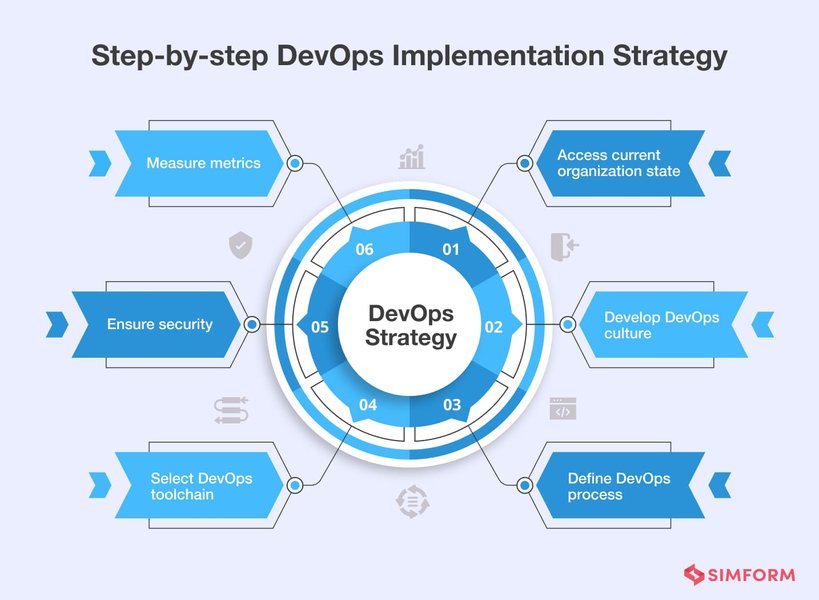
A strategic approach to implementing DevOps in organizations
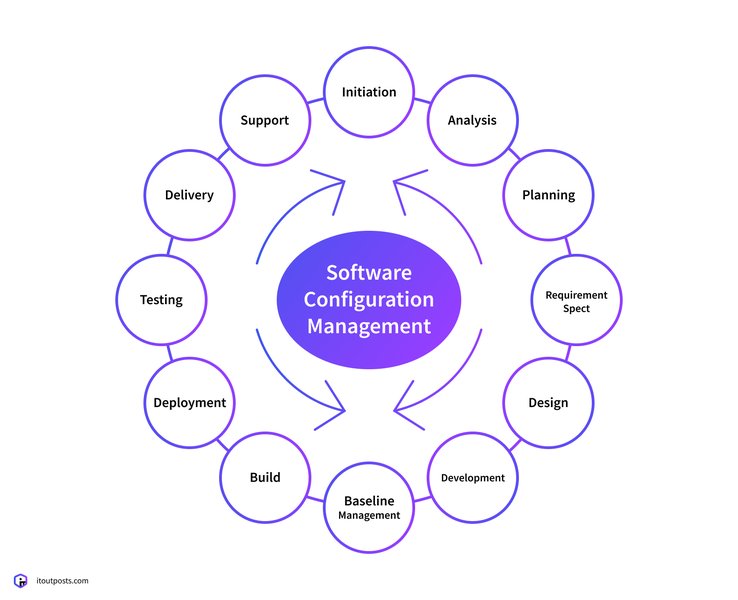
Top configuration management tools used in DevOps environments
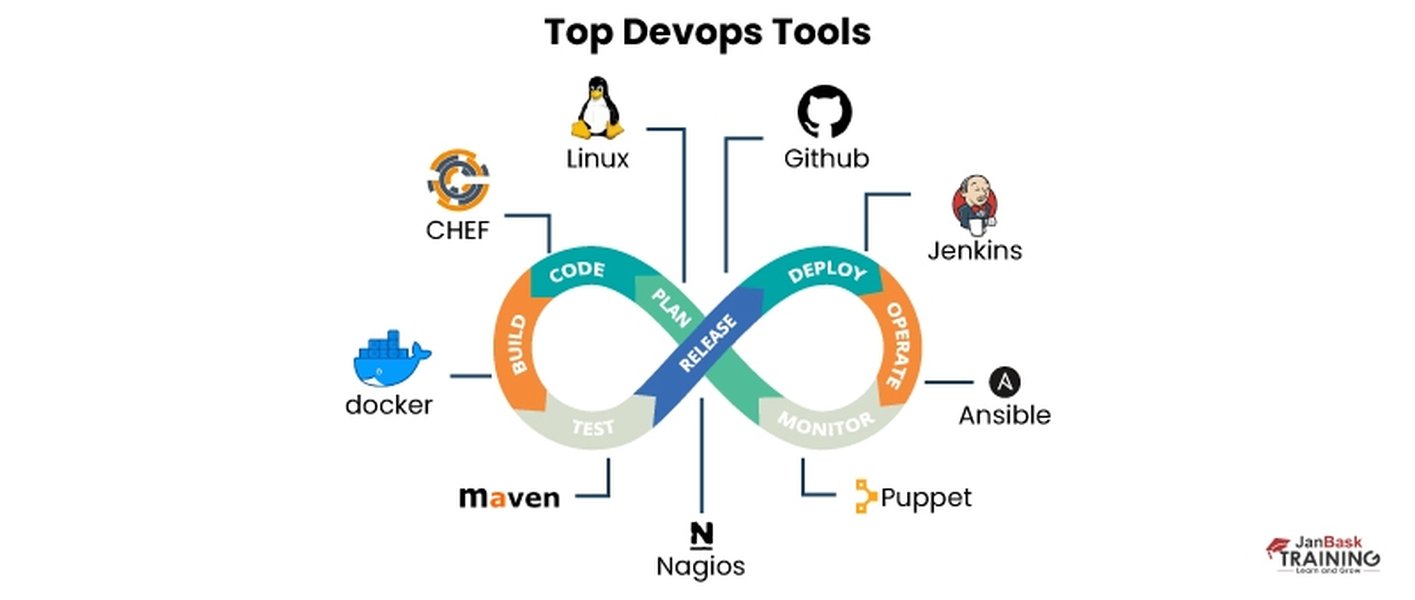
Essential DevOps tools and technologies for modern software delivery
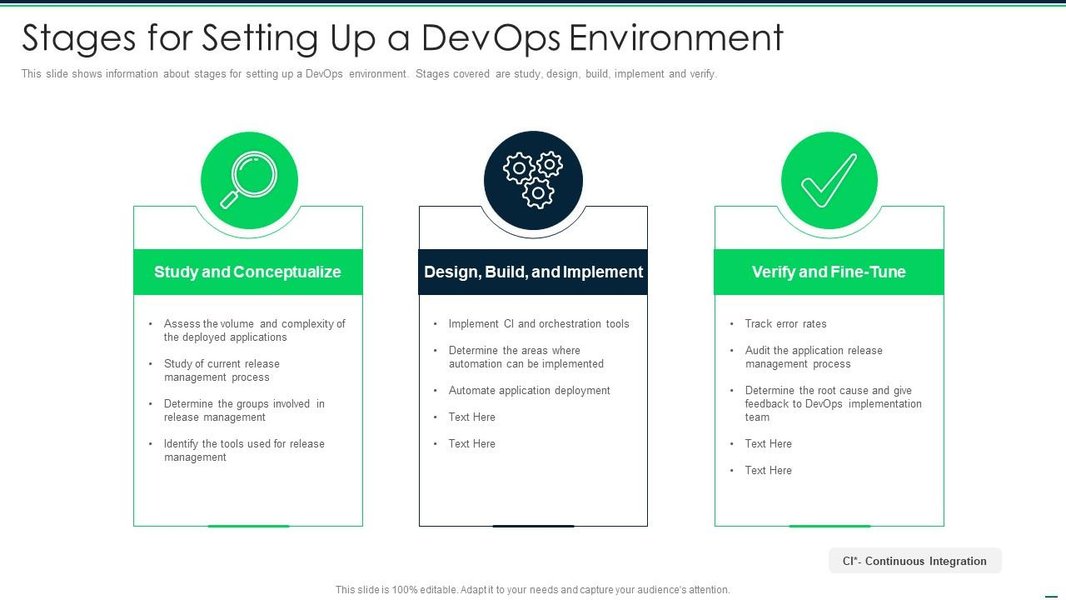
Stages and tools for setting up a comprehensive DevOps environment
These visual resources illustrate the various tools, stages, and implementation strategies involved in creating a robust DevOps environment. They highlight the interconnected nature of DevOps components and provide a visual guide to understanding the toolchain and processes involved in modern software delivery.
Common Challenges and Solutions in DevOps Implementation
Cultural Resistance
Transitioning to DevOps often faces resistance from teams accustomed to traditional siloed approaches. Address this by fostering a culture of collaboration, providing clear communication about the benefits, and celebrating small wins to demonstrate value.
Skill Gaps
DevOps requires diverse skills across development, operations, security, and automation. Invest in training and upskilling programs, hire strategically to fill gaps, and consider partnering with external experts during the transition period.
Legacy Systems
Integrating legacy systems into a DevOps pipeline can be challenging. Start by containerizing applications where possible, implement APIs for integration, and consider a phased approach to modernization rather than a complete overhaul.
Tool Sprawl
The abundance of DevOps tools can lead to fragmentation and inefficiency. Develop a cohesive toolchain strategy, standardize tools across teams where appropriate, and focus on integration capabilities when selecting new tools.
Security Concerns
Faster delivery shouldn't compromise security. Implement DevSecOps practices to integrate security throughout the pipeline, automate security testing, and ensure security teams are involved early in the development process.
Frequently Asked Questions
References
- How to start DevOps - Atlassian
-
DevOps Tutorial - Microsoft Azure
- DevOps Roadmap 2025 - DevToDevOps
- The Ultimate DevOps Roadmap for 2025 - KodeKloud
- DevOps Roadmap - Step by Step Guide to become a DevOps Engineer
- DevOps Tutorial: A Step-by-Step Guide for Beginners in 2025 - Edureka
- DevOps Tutorial - GeeksforGeeks
- DevOps Tutorial For Beginners - MindMajix
Recommended Searches
Last updated April 4, 2025