
Navigating the Path to an ADHD Diagnosis: A Comprehensive Guide for Adults
Understanding the Symptoms, Diagnostic Process, and What to Expect on Your Journey
Key Insights into ADHD Diagnosis
- Comprehensive Evaluation is Essential: Diagnosing ADHD in adults requires a multi-faceted approach, combining thorough clinical interviews, historical reviews, and standardized rating scales, as no single test can definitively diagnose the condition.
- Symptoms Persist from Childhood: A key diagnostic criterion for adult ADHD is the presence of symptoms from childhood, even if they were not formally recognized or diagnosed at that time.
- Professional Expertise is Crucial: Seeking a healthcare provider with specialized experience in adult ADHD is vital for an accurate diagnosis, as symptoms can be subtle or masked by coping mechanisms.
If you suspect you might have Attention-Deficit/Hyperactivity Disorder (ADHD) as an adult, you're not alone. Many individuals go undiagnosed for years, often developing coping strategies that mask their symptoms. Understanding how to determine if you have ADHD involves a structured process, starting with recognizing common symptoms and leading to a comprehensive evaluation by a qualified healthcare professional.
Understanding Adult ADHD: Beyond Childhood Stereotypes
The Evolving Presentation of ADHD Symptoms in Adulthood
ADHD is a neurodevelopmental condition that typically begins in childhood, affecting attention span, emotional regulation, focus, organization, impulse control, and memory. While often associated with hyperactive children, ADHD symptoms can manifest differently and less obviously in adults. Untreated ADHD can significantly impact various aspects of daily life, including work performance, personal relationships, and overall well-being. Recognizing these signs is the first step toward seeking an evaluation.
In adults, hyperactivity may present as extreme restlessness or an internal feeling of being "driven by a motor," rather than overt physical activity. Impulsivity can lead to risky behaviors, frequent job changes, or relationship issues. Inattentiveness might show up as difficulty focusing on tasks, poor organizational skills, or frequently misplacing items. It's important to remember that everyone experiences some of these behaviors occasionally, but for individuals with ADHD, these symptoms are more severe, frequent, and persistent, significantly interfering with daily life across multiple settings for at least six months.
Common Symptoms of Adult ADHD
Adult ADHD symptoms can be broadly categorized into inattentiveness, hyperactivity, and impulsivity. However, the specific manifestation can vary greatly among individuals. Here's a detailed look at common signs:
- Difficulty Focusing and Inattention: This is a hallmark symptom. You might find yourself easily distracted, overlooking important details, struggling to listen effectively in conversations, or having trouble completing tasks or projects. Starting new tasks before finishing old ones is also common.
- Disorganization and Time Management Issues: Chronic disorganization, difficulty managing time, often running late, and struggling with planning and prioritization are frequent complaints. You might find it hard to keep appointments or perform daily tasks efficiently.
- Restlessness and Hyperactivity: While less overtly physical than in children, adults with ADHD often experience an internal restlessness, fidgeting with hands or feet, or having difficulty staying seated in situations where it's expected.
- Impulsivity: This can manifest as making hasty decisions, interrupting others frequently, having trouble waiting your turn, or engaging in risky behaviors without fully considering the consequences.
- Emotional Dysregulation: Many adults with ADHD struggle with emotional control, leading to a short temper, low frustration tolerance, or being easily overwhelmed and stressed. Anxiety and mood swings are also common.
- Memory Problems: Forgetfulness, misplacing items, and difficulty recalling details are often reported.
- Relationship Concerns: Strained personal and professional relationships due to symptoms like poor listening, impulsivity, or disorganization are a common consequence.
- Hyperfocus: Ironically, some individuals with ADHD can exhibit "hyperfocus" — intense concentration on tasks they find stimulating or interesting, sometimes to the exclusion of everything else.
It's crucial to understand that the presence of a few symptoms does not automatically mean an ADHD diagnosis. The severity, persistence, and impact of these symptoms on your daily functioning are what healthcare professionals assess.
The Multi-Step Diagnostic Journey for Adults
A Collaborative Process with Healthcare Professionals
There is no single test for ADHD. The diagnostic process for adults is comprehensive, involving several steps and gathering information from multiple sources. It's a collaborative effort between you and a qualified healthcare provider, such as a psychologist, psychiatrist, or a primary care provider with expertise in ADHD. The goal is to determine if your symptoms align with the diagnostic criteria outlined in the Diagnostic and Statistical Manual of Mental Disorders (DSM-5) and to rule out other conditions that might mimic ADHD symptoms.
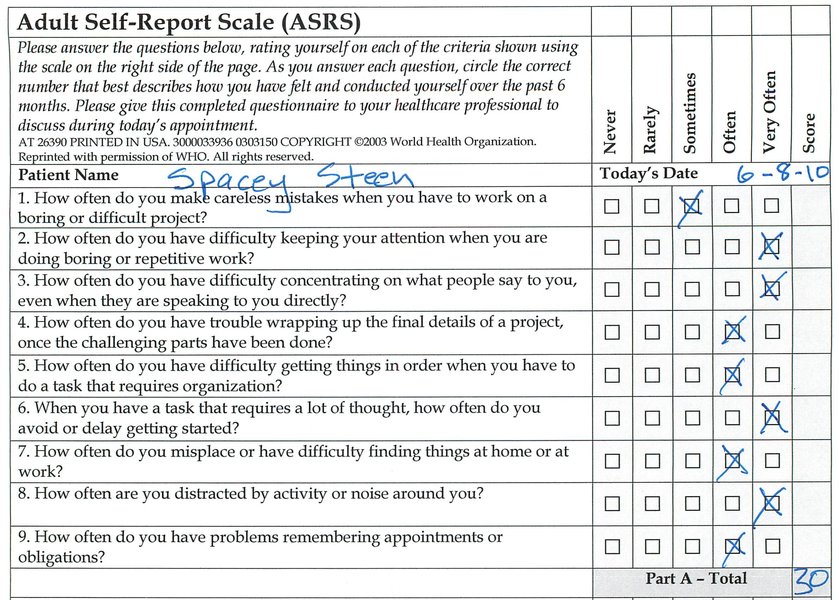
Understanding the extensive documentation and assessment forms crucial for an accurate diagnosis.
Initial Consultation and Screening
The first step is to talk with a healthcare provider about your concerns. This initial interview will help determine if ADHD symptoms may be contributing to your social, emotional, behavioral, or work challenges. Online ADHD questionnaires, such as the Adult Self-Report Scale (ASRS-v1.1) Symptom Checklist, can be a useful starting point to assess your symptoms, but they are not diagnostic tools. These self-assessments can provide insight and prepare you for a more informed conversation with a professional. The ASRS-v1.1, for instance, is an 18-item questionnaire designed to assess ADHD symptoms in adults and is often used for screening and monitoring.
Comprehensive Diagnostic Interview
A thorough diagnostic interview is central to the process. Your clinician will ask about your personal, medical, and psychiatric history from childhood to the present. It's important to be honest and detailed, as symptoms must have been present from childhood for an adult ADHD diagnosis to be confirmed, even if they were never formally recognized. The clinician will look at how the symptoms affect various aspects of your life, including work, relationships, and daily activities.
Gathering Information from Multiple Sources
Since self-reported perceptions can be subjective, healthcare providers often gather information from independent sources. This might include spouses, close relatives, employers, or colleagues who can provide insights into your behaviors and their impact. For adults, it's particularly important to establish if ADHD behaviors were present during childhood, which is why input from someone who knew you well as a child (e.g., parents or guardians) is invaluable.
Utilizing Standardized Rating Scales and Assessments
Healthcare professionals use various standardized rating scales and questionnaires to evaluate symptoms systematically. These tools, such as the ASRS, Conners Rating Scale, or Barkley Adult ADHD Rating Scale (BAARS-IV), align with DSM criteria and help quantify symptom severity across different domains. While these scales are based on self-reported perceptions, they provide objective data points for the clinician.
Medical Examination and Ruling Out Other Conditions
A medical examination is an important part of the diagnostic process. This helps rule out other medical conditions, such as thyroid problems or seizure disorders, which can cause symptoms that resemble ADHD. Physical examinations cannot confirm an ADHD diagnosis, but they are crucial for eliminating alternative explanations for your symptoms. Many ADHD symptoms can also overlap with other mental health conditions like anxiety, depression, or personality disorders, making a differential diagnosis critical for accurate treatment planning.
Dr. Sanil Rege explains the clinical evaluation of Attention Deficit Hyperactivity Disorder (ADHD) in adults, emphasizing the cognitive aspects and the thoroughness required for an accurate diagnosis.
This video provides an excellent overview of how healthcare professionals approach the diagnosis of ADHD in adults, highlighting that it's a disorder of cognition involving attention and concentration issues. Dr. Rege's explanation underscores the importance of a comprehensive clinical evaluation, which goes beyond simple checklists to delve into a person's psychiatric history and current mental state. This aligns with the multi-faceted approach necessary for ruling out other conditions and ensuring an accurate diagnosis, which is crucial for effective treatment.
Diagnostic Criteria and Challenges
Navigating the Nuances of Adult ADHD Diagnosis
For a diagnosis of ADHD in adults, the DSM-5 criteria require that an individual exhibit five or more symptoms of inattention, or five or more symptoms of hyperactivity and impulsivity, that have been present for at least six months. These symptoms must be inappropriate for the individual’s developmental level, cause significant daily disruption, and must have been present before age 12. The challenge in diagnosing adults often lies in the fact that many have learned to mask their symptoms or developed coping mechanisms over the years, making them less obvious during an assessment.
Types of ADHD Presentations
Based on the predominant symptoms, ADHD is categorized into three main presentations:
- Predominantly Inattentive Presentation: Individuals primarily exhibit symptoms of inattention (e.g., difficulty focusing, disorganization, forgetfulness).
- Predominantly Hyperactive-Impulsive Presentation: Individuals primarily exhibit symptoms of hyperactivity and impulsivity (e.g., restlessness, fidgeting, interrupting others, difficulty waiting).
- Combined Presentation: Individuals meet the criteria for both inattentive and hyperactive-impulsive symptoms.
It's important to note that the specific presentation can change over a person's lifetime. For instance, hyperactivity may decrease in noticeable ways as a person ages, while inattention or impulsivity might persist.
The Importance of a Qualified Professional
Finding a clinician with expertise in adult ADHD is paramount. This ensures a thorough evaluation that considers the complexities of adult symptom presentation and differentiates ADHD from other conditions. Referrals from your primary care doctor, hospital or university centers, or support group members can be good starting points for finding such a specialist.
This radar chart illustrates the typical perceived severity of various ADHD symptoms across different life domains for adults. The inner circle represents a lower impact, while the outer circle indicates a higher impact. This visual helps to understand how ADHD symptoms can manifest and affect an individual's life.
The Impact of an ADHD Diagnosis
Transforming Challenges into Opportunities
Receiving an ADHD diagnosis as an adult can be life-changing. It provides clarity and a framework for understanding lifelong challenges that may have previously been attributed to personal failings. While there is no cure for ADHD, an accurate diagnosis is the first step toward developing effective management strategies and improving quality of life. Treatment often involves a combination of medication, therapy (such as cognitive-behavioral therapy), and lifestyle adjustments.
Untreated ADHD, especially when severe, can lead to a higher risk for various issues, including injuries due to impulsivity and inattention, academic or work underachievement, and strained relationships. Conversely, with proper diagnosis and treatment, individuals with ADHD can learn to manage their symptoms, harness their strengths, and achieve their personal and professional goals.
Benefits of Diagnosis and Treatment
A formal diagnosis offers several benefits:
- Self-Understanding: Gaining a deeper understanding of your own behaviors, thought patterns, and emotional responses.
- Validation: Realizing that your struggles are not due to a lack of effort or character, but a neurobiological condition.
- Access to Support: Opening doors to professional help, including therapy, medication, and coaching, tailored to ADHD.
- Improved Functioning: Developing strategies to better manage daily tasks, improve focus, and enhance relationships.
- Reduced Co-occurring Conditions: Addressing ADHD can sometimes alleviate symptoms of co-occurring conditions like anxiety and depression.
Key Steps in the Diagnostic Process at a Glance
To summarize the pathway to diagnosis:
| Step | Description | Purpose |
|---|---|---|
| 1. Initial Consultation | Discuss concerns with a healthcare provider (GP, psychiatrist, psychologist). | To determine if symptoms warrant further evaluation. |
| 2. Comprehensive Interview | Detailed discussion of personal, medical, and psychiatric history, including childhood symptoms. | To gather thorough information about symptom patterns and impact. |
| 3. Information Gathering | Input from family members, spouses, or close contacts who knew you as a child. | To corroborate symptom history and provide external observations. |
| 4. Standardized Assessments | Completion of validated rating scales (e.g., ASRS-v1.1) to quantify symptoms. | To objectively assess symptom severity and align with diagnostic criteria. |
| 5. Medical Evaluation | Physical examination and possibly blood tests. | To rule out other medical conditions mimicking ADHD symptoms. |
| 6. Differential Diagnosis | Assessment to distinguish ADHD from other mental health conditions. | To ensure accurate diagnosis and appropriate treatment. |
| 7. Formal Diagnosis & Feedback | Based on all gathered information, a professional makes a formal diagnosis and discusses findings. | To provide clarity, validate experiences, and outline next steps for management. |
Frequently Asked Questions (FAQ)
Is there a quick online test to diagnose ADHD?
Do I need to have had ADHD symptoms since childhood to be diagnosed as an adult?
What kind of professional can diagnose ADHD in adults?
Can ADHD symptoms in adults be confused with other conditions?
What should I do after receiving an ADHD diagnosis?
Conclusion
Discovering whether you have ADHD as an adult is a significant journey that requires a thorough, multi-step diagnostic process. It begins with acknowledging your symptoms and seeking the guidance of a qualified healthcare professional. While the path may seem daunting, an accurate diagnosis provides invaluable clarity, leading to effective management strategies that can profoundly improve your daily functioning and overall quality of life. Embracing this understanding is the first crucial step toward navigating life with ADHD more effectively and living a more fulfilling life.
Recommended Further Exploration
- What are the specific challenges of predominantly inattentive ADHD in adults?
- Explore the various treatment options available for adult ADHD.
- Discover effective coping strategies and executive function support for adults with ADHD.
- How does undiagnosed ADHD impact adult relationships and what can be done?
References
Last updated May 21, 2025