
Diffusion and Osmosis in Living Organisms
Understanding how molecules move and interact in biological systems
Key Insights
- Definition and Mechanism: Diffusion is the passive movement of molecules down a concentration gradient, leading to equilibrium.
- Examples in Life: Oxygen and carbon dioxide exchange, nutrient absorption in the intestine, and uptake in plant roots exemplify diffusion in organisms.
- Essential Concepts: Important terms include solute, solvent, concentration gradient, and solution, with increasing temperature accelerating molecular movement.
1. Definition of Diffusion
Diffusion is a fundamental process occurring in both living and non-living systems. It is defined as the net movement of molecules from a region of higher concentration to an area of lower concentration, driven by the inherent random motion of particles. This process continues until an equilibrium is reached, meaning that the concentration of molecules becomes uniform throughout the medium. Diffusion is vital in many biological processes because it allows essential molecules to be transported without the expenditure of energy, which is why it is characterized as a passive process.
2. Three Examples of Diffusion in Living Organisms
A. Oxygen and Carbon Dioxide Exchange in the Lungs
In the respiratory system, diffusion plays a critical role in gas exchange. The alveoli in the lungs have a high concentration of oxygen compared to the blood in the surrounding capillaries. Due to this concentration gradient, oxygen diffuses from the alveoli into the bloodstream, where its concentration is lower. Simultaneously, carbon dioxide, a waste product of cellular metabolism, moves from the blood (where its concentration is higher) into the alveoli to be expelled during exhalation. This bidirectional diffusion ensures that vital respiratory gases are effectively exchanged to support cellular functions.
B. Nutrient Absorption in the Digestive System
After food is digested, nutrients must be absorbed into the bloodstream to be distributed throughout the body. In the small intestine, digested molecules such as glucose and amino acids are present in higher concentrations. They diffuse across the intestinal epithelium, moving into the blood where their concentration is lower. This diffusion process enables the efficient uptake of nutrients without requiring active transport mechanisms, although in some cases, additional energy-dependent transporters may supplement the process.
C. Water and Nutrient Uptake in Plant Roots
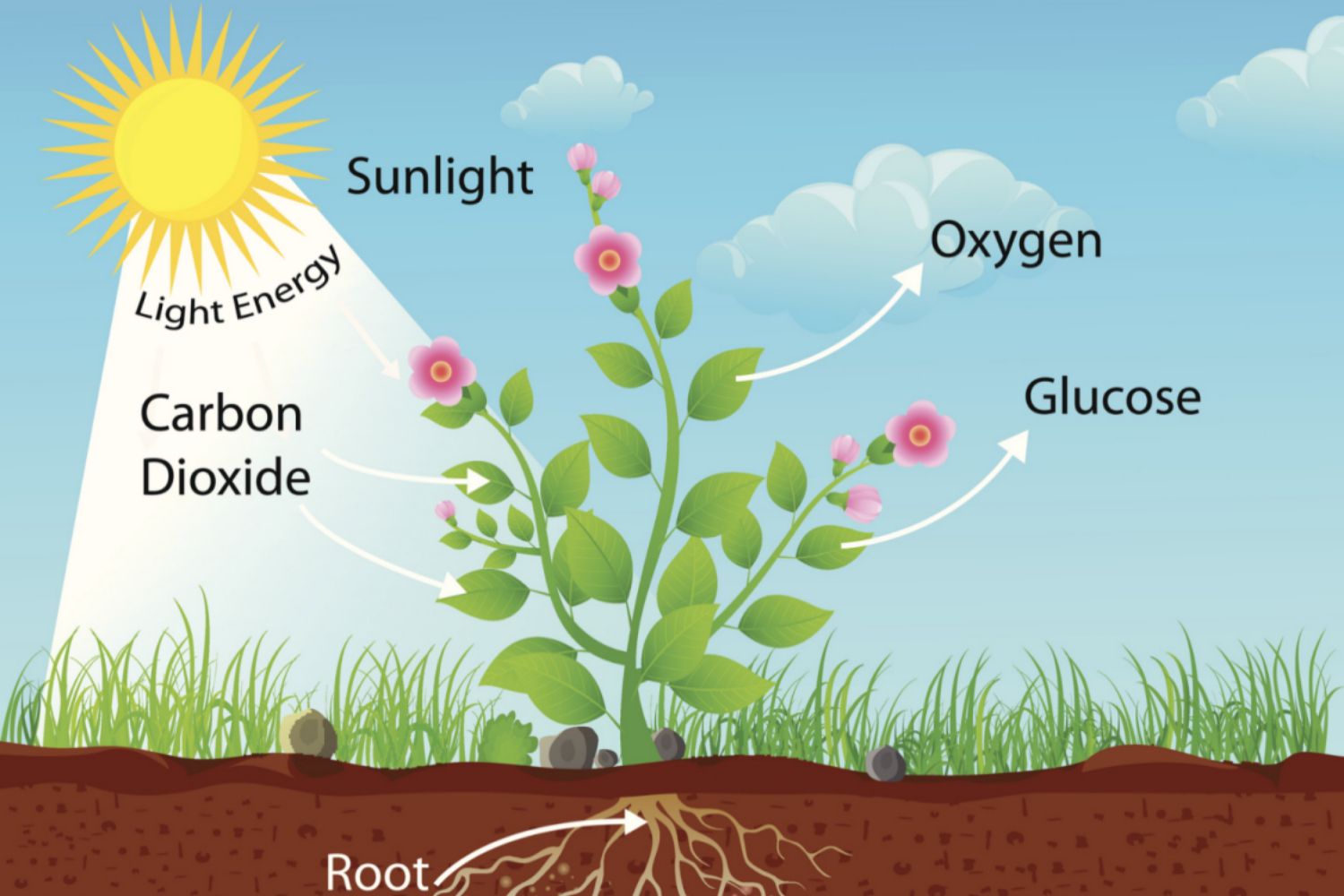
Plants rely on the diffusion of water and dissolved nutrients from the soil into root cells. In the soil surrounding the roots, water along with essential minerals and ions are generally present at higher concentrations. Due to the concentration gradient, these substances diffuse through cell membranes into the root cells. This process is pivotal for the plant’s uptake of water and nutrients, which are necessary for processes like photosynthesis and growth.
Table of Molecules Involved in Diffusion
| Molecule | Example of Diffusion Process | Role in the Organism |
|---|---|---|
| Oxygen (O₂) | Lung alveoli to bloodstream | Supports cellular respiration |
| Carbon Dioxide (CO₂) | Bloodstream to alveoli | Removal of metabolic waste |
| Glucose | Intestine to bloodstream | Energy source for cellular metabolism |
| Water (H₂O) | Soil to plant root cells | Maintains cell turgor and nutrient transport |
3. Definitions of Key Terms
Solute
A solute is a substance that is dissolved in a solvent to form a solution. In biological contexts, solutes can include a wide range of molecules such as salts, sugars, ions, and proteins. The behavior and concentration of solutes play a crucial role in various diffusion processes. For instance, the movement of solutes across cell membranes is essential for nutrient uptake and waste removal.
Solvent
A solvent is the medium in which solutes are dissolved to form a solution. Water is the most common solvent in biological systems, earning it the title of the "universal solvent." Its ability to dissolve a wide variety of substances is fundamental to the biochemistry of life, allowing the essential molecules to be transported and utilized throughout the organism.
Concentration Gradient
A concentration gradient refers to the variation in the concentration of a substance across a specific space. It is the driving force behind diffusion. When two regions have different concentrations of a particular molecule, diffusion occurs as molecules naturally move from the region of higher concentration to that of lower concentration until equilibrium is established. This gradient is a key factor in determining the direction and rate of diffusion.
Solution
A solution is a homogeneous mixture composed of two or more substances. In a typical solution, the solute is uniformly distributed within the solvent. Biological examples of solutions include blood plasma, where various proteins, ions, and other molecules are evenly distributed in water, and the cytosol within cells which contains multiple dissolved substances necessary for cellular processes.
4. Effect of Increased Temperature on Particles
Temperature plays a key role in the movement and energy of particles. When the temperature is increased, the kinetic energy of particles in a gas or in a solution also increases. This enhanced kinetic energy results in faster movement of molecules. In the context of diffusion, this means that the rate of diffusion accelerates as the temperature rises. The reason behind this is that the hotter temperature causes molecules to move more vigorously and collide with one another more frequently, thereby facilitating a quicker and more efficient diffusion process. This effect is observable in both gases, where increased temperature leads to more rapid particle dispersion, and in solutes, where the dissolved particles move faster, enhancing the movement across concentration gradients.
5. Differentiation Between Diffusion and Osmosis
Although diffusion and osmosis are closely related processes, they have distinct differences. Both involve the movement of molecules from areas of higher concentration to areas of lower concentration, yet they operate under different conditions and often involve different types of molecules.
Diffusion
Diffusion is the overall process in which molecules move from a region of higher concentration to one of lower concentration. This process does not require the presence of a semi-permeable membrane and applies to a broad range of molecules including gases, solutes, and other small particles. It is governed largely by the concentration gradient and the kinetic energy of the molecules, with no direct requirement for energy input, making it a passive process.
Osmosis
Osmosis is a specialized form of diffusion that specifically involves the movement of water molecules. Unlike general diffusion, osmosis requires a semi-permeable membrane that allows the passage of water but restricts many solutes. In osmosis, water molecules move from an area where they are in higher concentration (or where the water potential is higher) to an area where they are in lower concentration (or where the water potential is lower). This process is essential in maintaining cellular homeostasis, controlling cell volume, and regulating the internal environment of cells.
Comprehensive Analysis and Synthesis
Integrating the Concepts
Diffusion is integral to the survival and functionality of living systems. By understanding diffusion, one appreciates how the basic principle of movement from a higher concentration area to a lower concentration area governs a wide array of physiological processes. For example, in the lungs, the efficient exchange of oxygen and carbon dioxide through diffusion enables cells to receive oxygen for metabolism while efficiently eliminating carbon dioxide, a metabolic waste.
Within cells, the movement of small molecules such as oxygen, glucose, and various ions is largely dependent on the principle of diffusion. The cell membrane, while selectively permeable, permits these molecules to move freely along a concentration gradient, assisting in the regulation of intracellular processes. The impact of increased temperature on diffusion is another critical aspect, as it directly correlates to the rate at which these essential molecules are delivered where needed.
The definitions of key terms—solute, solvent, concentration gradient, and solution—are foundational in comprehending these processes. For instance, understanding that a solution is a homogeneous mixture with the solute uniformly distributed in the solvent helps explain the behavior of these mixtures in biological contexts. Similarly, the distinction between diffusion and osmosis is crucial when analyzing processes such as water uptake in plant cells versus nutrient absorption in animal cells. Osmosis, being a specific subset of diffusion, showcases the selective movement of water across membranes, illustrating how the specificity of movement mechanisms supports the functionality of cells.
Applied Biological Context
The examples discussed not only highlight the physical principles behind diffusion but also emphasize its biological importance. In the context of human physiology, the alveoli in the lungs act as dynamic sites where diffusion facilitates the exchange of gases critical for respiration. In the digestive system, molecules such as glucose rely on diffusion to move from the gut to blood vessels for energy distribution. Similarly, plant cells harness diffusion through root structures to maintain hydration and nutrient intake essential for growth and photosynthesis.
It is important to note that while diffusion is a passive process, some biological systems augment diffusion with specialized transport mechanisms when the concentration gradient alone is not sufficient to meet cellular demands. Nonetheless, the core principles remain the same – molecules always move to achieve equilibrium, which is a concept central to both diffusion and osmosis.
Additionally, environmental factors such as temperature play a pivotal role in modulating the efficiency of diffusion. Warmer temperatures increase molecular motion, thus enhancing diffusion rates. This principle is not only a fundamental concept in biological systems but also extends to many chemical reactions and processes in nature.
Conclusion
In summary, diffusion is the passive movement of molecules from an area of higher to lower concentration, driven by the kinetic energy of particles and the existing concentration gradient. It is a fundamental process in living organisms, facilitating critical functions such as gas exchange in the lungs, nutrient absorption in the intestines, and water uptake in plant roots. Key concepts like solute, solvent, concentration gradient, and solution underpin our understanding of these processes, while the effect of temperature on diffusion further illustrates how physical conditions influence biological activities. Diffusion differs from osmosis in that osmosis specifically deals with the movement of water through a semi-permeable membrane, emphasizing the selective nature of water transport in biology. Collectively, these processes highlight the intricate balance maintained within living cells and organisms to support life.
References
- Question Discussion - Brainly
- Examples of Diffusion in Organs - The Classroom
- Diffusion Overview - Biology Simple
- Diffusion Examples - Examples.com
- Diffusion in Biology - BYJU'S
Recommended Related Queries
Last updated February 24, 2025