
Unlocking the Potential: Launching a Digital Babysitting Empire
Navigate the burgeoning childcare market with innovative digital solutions and strategic execution.

- 1.The Digital Transformation of Childcare
- 2.Building Your Digital Babysitting Platform: Key Steps
- 3.Ensuring Trust and Safety: The Foundation of Success
- 4.Marketing and Growth Strategies for "Degita"
- 5.Financial Projections and Investment
- 6.Embracing Innovation: Virtual Babysitting
- 7.FAQ: Your Digital Babysitting Startup Journey
- 8.Conclusion: A Future of Connected Care
- 9.Recommended Further Exploration
- 10.Referenced Search Results
- Digital Dominance: Modern babysitting startups thrive on technology, leveraging apps for seamless booking, vetted caregivers, and secure payments to meet growing demands.
- Trust & Transparency: Robust background checks, certifications, in-app communication, and transparent rating systems are crucial for building parental confidence and ensuring child safety.
- Strategic Growth: Focus on a Minimum Viable Product (MVP) with core features, iterate based on feedback, and scale through targeted marketing and niche service offerings.
The concept of a "babysitting startup degita" points towards a digital-first approach to childcare, where technology bridges the gap between parents seeking reliable care and qualified caregivers. This burgeoning market, fueled by busy working parents and evolving lifestyle needs, presents a significant opportunity for innovation. A successful digital babysitting startup, whether named "Degita" or something similar, will integrate sophisticated technological solutions with a strong emphasis on trust, safety, and convenience.
The Digital Transformation of Childcare
The traditional model of finding babysitters through word-of-mouth or local listings is rapidly being augmented, and in many cases, replaced by digital platforms. These platforms offer unparalleled accessibility, efficiency, and a layer of security that was previously difficult to achieve. The core appeal lies in the ability to instantly connect, verify, and manage childcare arrangements through a few taps on a smartphone.
Core Features of a Modern Babysitting Platform
To establish a competitive and successful digital babysitting service, several key features are indispensable. These features cater to both parents and caregivers, ensuring a smooth and trustworthy experience for all parties involved.
Seamless Booking and Scheduling
A primary driver for parents using digital platforms is the ease of booking. This includes:
- On-Demand and Scheduled Options: Allowing parents to book a sitter for immediate needs or to schedule appointments weeks in advance.
- Real-Time Availability: Sitters can update their schedules, making it easy for parents to see who is available when they need care.
- Calendar Integration: For both parents and sitters, integrating with personal calendars can prevent conflicts and streamline planning.
Comprehensive Caregiver Vetting and Verification
Trust is paramount in childcare. Digital platforms must implement stringent verification processes:
- Background Checks: Mandatory, thorough background checks (e.g., through services like Checkr) are essential to ensure the safety of children.
- Certifications: Verification of CPR, first aid, and any specialized childcare training.
- Profile Verification: Ensuring the identity and qualifications of caregivers match their profiles.
- Community Reviews and Ratings: A system where parents can leave reviews and ratings for sitters, fostering transparency and accountability.
Intuitive Mobile Applications
The user experience for both parents and sitters must be intuitive and feature-rich. This includes:
- User-Friendly Interface: Easy navigation for searching, booking, and managing services.
- Geolocation-Based Search: Allowing parents to find sitters nearby or in a specific area.
- In-App Communication: Secure messaging between parents and sitters for updates and instructions.
- Secure Payment Systems: Integration with reliable payment gateways (like Stripe or PayPal) for seamless and secure transactions.
The bar chart above illustrates the perceived importance of various features for a successful digital babysitting startup, emphasizing trust and efficiency.
Building Your Digital Babysitting Platform: Key Steps
Launching a digital babysitting startup requires a well-thought-out strategy, from initial ideation to sustained growth. The journey involves several critical phases, each demanding careful planning and execution.
Market Research and Business Planning
Before any development begins, a deep dive into the market is crucial. This includes understanding the target audience, identifying competitors, and defining a unique value proposition.
Identifying Your Niche
The childcare market is vast. Specializing can help differentiate your service:
- On-Demand Local Services: Connecting parents with sitters in their immediate vicinity for last-minute or scheduled care.
- Virtual Babysitting: Offering remote supervision via video calls, often for older children who need companionship or activity guidance while parents are busy elsewhere.
- Specialized Care: Focusing on sitters with expertise in caring for children with special needs, or those offering specific educational activities.
Developing a Robust Business Plan
A comprehensive business plan will outline your path to success:
- Revenue Streams: Typically, commissions per booking (e.g., 15-20%) from parents or sitters, subscription models, or premium features.
- Cost Analysis: Estimating development costs (ranging from $30,000 for an MVP to $150,000+ for a full-featured app), marketing expenses, and operational overheads.
- Legal Structure and Compliance: Registering as an LLC, obtaining necessary insurance for liability, and ensuring compliance with local childcare regulations and data privacy laws (e.g., GDPR, CCPA).
Platform Development and Technology Stack
The technology behind your platform is its backbone. Investing in a scalable and secure architecture is vital.
Minimum Viable Product (MVP) Approach
Starting with an MVP allows for faster market entry and valuable user feedback:
- Core Features for MVP: Focus on user registration (for both parents and sitters), profile creation, search and filter options, basic booking functionality, in-app messaging, and secure payment processing.
- Development Timeline: An MVP can typically be developed within 3-6 months with a dedicated team.
Choosing the Right Technology
Consider cross-platform development for broader reach and cost efficiency:
- Front-End: React Native or Flutter for iOS and Android apps.
- Back-End: Node.js or Firebase for scalability and real-time capabilities.
- Database: Cloud-based solutions like AWS or Google Cloud for robust data management.
- Security: Implement robust security measures to protect sensitive user data, adhering to standards similar to HIPAA for child-related information.
Ensuring Trust and Safety: The Foundation of Success
For any childcare service, trust and safety are non-negotiable. Digital platforms have the unique ability to integrate robust mechanisms to build and maintain this trust.
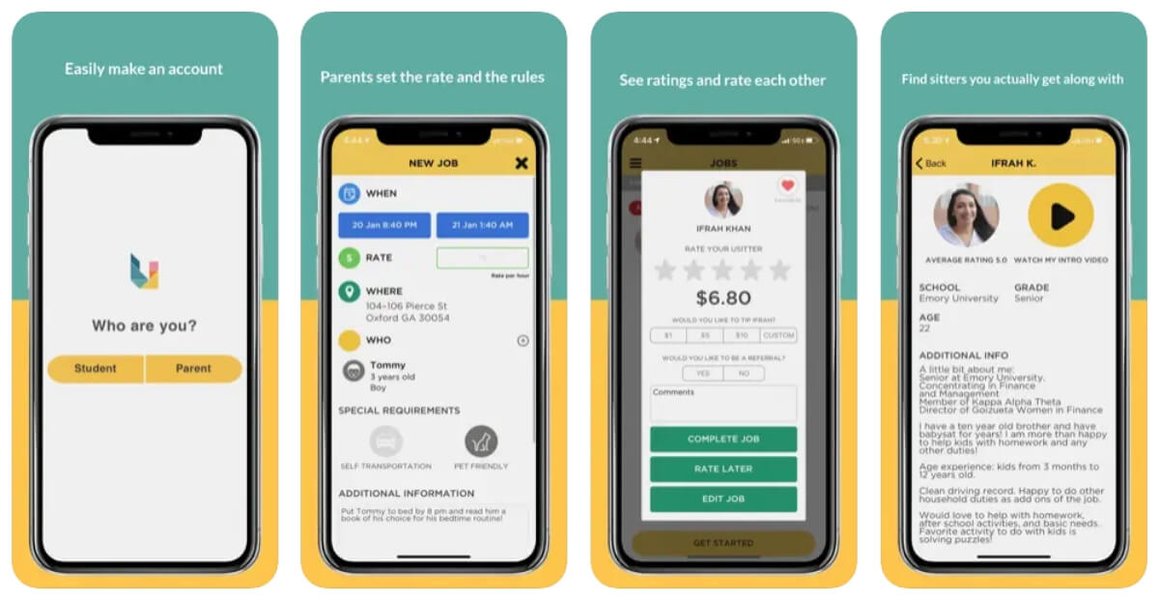
An example of a user interface for a babysitting application, highlighting ease of use and professional design.
Vetting and Ongoing Monitoring
Beyond initial background checks, continuous efforts are needed to ensure caregiver quality.
Rigorous Screening Protocols
- Multi-Layered Background Checks: Including criminal record checks, sex offender registries, and driving record checks.
- Interview Process: In-person or video interviews to assess personality, experience, and commitment.
- Reference Checks: Contacting previous employers or clients to verify experience and reliability.
In-App Safety Features
- Real-Time Tracking: Optional GPS tracking during bookings for peace of mind.
- Emergency Buttons: Quick access to emergency services or designated contacts within the app.
- Transparent Profiles: Detailed caregiver profiles including verified experience, reviews, and a photo.
Legal and Ethical Considerations
Operating a childcare service, especially digitally, requires careful navigation of legal and ethical landscapes.
- Data Privacy: Adhering to strict data protection regulations to safeguard personal information of both parents and children.
- Liability Insurance: Essential for protecting the business from potential legal claims.
- Compliance with Childcare Laws: Understanding and complying with local, state, and national regulations concerning childcare services.
Marketing and Growth Strategies for "Degita"
Once the platform is developed and safety measures are in place, effective marketing is key to attracting users and scaling the business.
This mindmap illustrates key growth areas and strategies for a digital babysitting startup, from marketing to monetization.
Digital Marketing Tactics
Leveraging digital channels is crucial for reaching your target audience.
Search Engine Optimization (SEO) and Content Marketing
Creating valuable content that addresses parents' childcare concerns and optimizing your website/app store listings for relevant keywords will improve visibility.
Social Media Engagement
Utilizing platforms where parents congregate (e.g., Facebook groups for parents, Instagram) to build community, share valuable content, and promote your services.
Local Partnerships
Collaborating with local schools, daycare centers, parenting groups, and community organizations to reach potential users.
Building a Community and Trust
Beyond marketing, fostering a sense of community and trust is essential for long-term success.
- Referral Programs: Encouraging existing users to refer new parents and sitters with incentives.
- Feedback Mechanisms: Actively soliciting and responding to user feedback to continuously improve the platform.
- Dedicated Support: Providing excellent customer service to address any issues or concerns promptly.
Financial Projections and Investment
Understanding the financial landscape is critical for attracting investment and ensuring sustainability.
The radar chart visualizes the potential strengths and challenges for a digital babysitting startup, emphasizing strong market demand and safety requirements.
Funding and Investment
Securing funding can accelerate growth and allow for more robust development.
- Bootstrapping: Starting with minimal external capital, relying on initial revenue to fund growth.
- Seed Investment: Seeking investment from angel investors or venture capitalists, particularly those specializing in edtech or childcare.
- Crowdfunding: Engaging the community to raise initial capital and build early adopters.
Potential Revenue and Profitability
The childcare market is projected to grow significantly, offering substantial earning potential.
- Annual Revenue Potential: Successful platforms can achieve significant annual revenues, with examples citing $150M+ for leading babysitting apps.
- Founder Earnings: Founders can expect annual earnings ranging from $50,000 to $200,000+, depending on the scale and success of the platform.
Below is a table summarizing key aspects of developing a digital babysitting startup:
| Aspect | Description | Importance Level (1-5) |
|---|---|---|
| Market Research | Understanding demand, competition, and target niche. | 5 |
| Business Plan | Outlining revenue, costs, and legal structure. | 5 |
| MVP Development | Building core features for early market entry. | 4 |
| Caregiver Vetting | Ensuring safety through background checks and certifications. | 5 |
| User Experience (UX) | Designing intuitive apps for parents and sitters. | 4 |
| Secure Payments | Integrating reliable and safe transaction systems. | 4 |
| Marketing Strategy | Promoting the platform to attract users. | 4 |
| Legal Compliance | Adhering to childcare laws and data privacy regulations. | 5 |
| Customer Support | Providing timely assistance and building trust. | 3 |
| Scalability | Designing the platform for future growth and expansion. | 4 |
This table highlights the crucial components and their importance in establishing a successful digital babysitting startup.
Embracing Innovation: Virtual Babysitting
The rise of remote work and digital interaction has opened doors for new childcare models, including virtual babysitting. This innovative approach can complement traditional services or stand as a niche offering.
This video features the founder of Sitter Stream discussing virtual babysitting and its benefits, offering insight into an emerging trend in childcare.
The video above provides valuable context on virtual babysitting, a rapidly evolving segment within the digital childcare market. It highlights how platforms like Sitter Stream are addressing the need for remote supervision and engagement for children. Virtual babysitting can involve a caregiver interacting with children through video calls, assisting with homework, reading stories, playing games, or simply providing a supervised presence while parents are occupied. This model is particularly relevant for families with older children or those seeking flexible, cost-effective solutions. Incorporating virtual babysitting as a service offering can broaden a startup's market appeal and address a diverse range of parental needs.
FAQ: Your Digital Babysitting Startup Journey
What is the primary focus of a "babysitting startup degita"?
What are the essential features for a digital babysitting app?
How important is caregiver vetting for these startups?
What are the potential costs involved in developing such a platform?
How can a digital babysitting startup monetize its services?
Conclusion: A Future of Connected Care
The landscape of childcare is evolving, with digital platforms like the envisioned "Degita" leading the charge. By combining technological innovation with an unwavering commitment to safety and convenience, these startups are poised to redefine how families access and manage childcare services. Success in this domain hinges on understanding market needs, building a trustworthy platform, and executing a strategic growth plan, ensuring that every child receives the care they need, and every parent finds the peace of mind they deserve.
Recommended Further Exploration
- In-depth guide to building a childcare marketplace app
- Innovative features for on-demand babysitting apps
- Legal and compliance considerations for digital childcare services
- Marketing strategies for parenting tech startups
