
Innovative Digital Tools in Chemistry Education
Exploring the Future of Chemistry Learning Through Technology
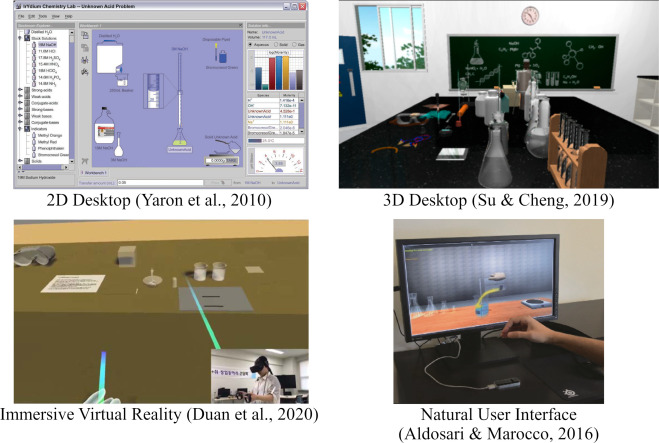
Highlights
- Enhanced Engagement: Interactive simulations, virtual labs, and augmented reality increase student participation and curiosity.
- Personalized Learning: AI-driven platforms and digital resources enable self-directed, customizable learning experiences.
- Collaborative Environments: Online discussion forums and collaborative tools foster teamwork and deeper understanding.
Overview of Digital Tools in Chemistry Education
The rapid evolution of digital tools has ushered in a transformative era in chemistry education. In recent years, educators have increasingly integrated technology to help students grasp intricate chemical concepts, conduct virtual experiments, and collaborate in innovative ways. These advancements not only make learning more engaging and interactive but also empower students to work at their own pace while exploring topics in depth. This response synthesizes the best practices and latest insights in digital chemistry education, combining interactive simulations, virtual laboratories, augmented and virtual reality, AI-powered platforms, and collaborative digital environments.
Interactive Simulations and Virtual Laboratories
Transforming Classical Laboratory Experiences
Traditional laboratory experiences often come with high costs, safety concerns, and logistical limitations. Interactive simulations and virtual laboratories address these challenges by providing risk-free, cost-effective, and accessible alternatives. Platforms such as PhET Interactive Simulations and virtual lab environments allow students to run experiments in a digital space where they can visualize chemical reactions and processes in real time. This immersive approach helps students understand abstract concepts and develop critical thinking skills without the constraints of physical laboratories.
Benefits
- Risk-free experimentation in a virtual environment.
- Visualization of dynamic chemical processes.
- Cost-effective and accessible to diverse student populations.
For instance, virtual laboratories enable the simulation of chemical reactions, allowing learners to modify parameters such as temperature and concentration to observe changes in reaction behavior. This interactive method deepens comprehension and reinforces theoretical knowledge.
Artificial Intelligence (AI) in Chemistry Education
Leveraging AI for Enhanced Learning and Research
The incorporation of AI in chemistry education marks a significant turning point in how students and researchers interact with chemical data. AI-driven platforms, like ChemCopilot, facilitate virtually assisted research and provide real-time insights into chemical phenomena. By automating complex calculations and predictive analyses, these tools improve learning efficiency and foster innovation. AI can assist in designing experiments, predicting outcomes, and even optimizing reaction parameters.
Key Applications
- Automated stoichiometry calculations and molar mass computations using online calculators like Wolfram Alpha.
- Predictive modeling and optimization of chemical processes.
- Data-driven insights that support scientific investigation and research formulation.
Through the power of machine learning, students are introduced to data analytics and high-level problem-solving early in their education, preparing them for future careers in science and industry. Additionally, AI applications enhance personalized learning by adapting content and challenges to individual pace and understanding.
Augmented and Virtual Reality (AR/VR)
Immersive Technologies to Visualize Molecular Structures
Augmented Reality (AR) and Virtual Reality (VR) represent a frontier where technology meets education by creating immersive experiences that bring molecular structures to life. With these tools, students can explore three-dimensional models and interactive animations that illustrate the electron configurations, molecular geometries, and dynamic processes of chemical compounds. Immersive experiences provide a vivid representation of abstract concepts, which can often be challenging to conceptualize based on static textbook images.
Major Advantages
- Enhanced spatial understanding of molecular architecture.
- Interactive visualization of electron configurations and reaction mechanisms.
- Immersive experiences that cater to diverse learning styles.
These AR/VR experiences not only increase engagement but also build a deeper intuitive understanding of how molecules interact. For example, students might use a VR setup to "walk around" a molecular structure, viewing bonds and atomic arrangements from various perspectives, dramatically enhancing the learning experience.
Digital Learning Resources and Online Tools
Expanding Access Through Online Libraries and Periodic Tables
The advent of digital textbooks, online libraries, and interactive periodic tables has revolutionized how students access and interact with chemical knowledge. Platforms like WebElements and Ptable provide detailed information on each chemical element, including their properties, electron configurations, and isotopic variations. These resources offer an extensive database that students can consult to understand trends and correlations in the periodic table.
Enhanced Learning Features
- Interactive online periodic tables with deep dives into each element.
- Comprehensive digital libraries that store academic journals, textbooks, and research papers.
- Data visualization tools that help students perform complex calculations and visualize chemical trends.
Digital textbooks and online courses make it possible for learners worldwide to access high-quality educational material, irrespective of geographical barriers. This democratization of education supports varied learning styles and allows for self-paced study sessions, which cater especially well to students who benefit from additional time to absorb complex topics.
Collaborative Online Environments
Facilitating Peer Interaction and Group Learning
Collaborative platforms play a crucial role in modern education by fostering an environment where students can share ideas, solve problems collectively, and engage in constructive debates. Digital tools such as Piazza support this collaborative learning process by enabling anonymous questions and timely responses from both peers and instructors. These platforms create a community where learners can thrive through discussion and mutual support.
Key Collaborative Strategies
- Online discussion forums to resolve doubts and share insights.
- Group projects and virtual study sessions that promote peer-to-peer learning.
- Digital communication tools for enhanced collaboration and feedback.
Such environments encourage students to take an active role in their learning journey. Collaborative digital spaces facilitate a deeper understanding by allowing students to approach problems from multiple angles and draw on the collective knowledge of their peers.
Integration of Gamification in Chemistry
Transforming Learning Through Fun and Competition
Gamification incorporates game-design elements in educational settings to boost motivation and enhance the overall learning experience. By integrating quizzes, competitive challenges, and rewards into the curriculum, gamification transforms the conventional classroom into a vibrant playground for learning. Educational apps and platforms can use these strategies to simplify complex topics while fostering a competitive spirit among learners.
Core Gamification Elements
- Scoring systems, badges, and leaderboards that quantify achievements.
- Interactive challenges that reinforce theoretical knowledge.
- Engaging game mechanics that make the learning process enjoyable.
Integrating gamification not only increases student engagement but also helps in reinforcing learning through repetition and immediate feedback. This approach has been particularly effective in making abstract chemical concepts more concrete and relatable.
Digital Design Tools and Educational Software
Customized Learning Experiences for Chemistry Education
Specialized educational software such as Chemix and Merck PSE allow educators to design and implement interactive chemistry lessons that cater to the needs of diverse learners. These tools facilitate the creation of digital experiments and interactive visualizations that simplify the complexities of chemical syntheses, structure designs, and reaction pathways.
Functionality and Advantages
- Designing virtual experiments and interactive apparatus diagrams.
- Providing detailed insights into chemical structures and reaction mechanisms.
- Enhancing lesson planning with engaging and dynamic multimedia content.
These digital design tools empower teachers to create personalized learning experiences. They provide students with the autonomy to explore chemical concepts at their own pace, reinforce understanding through dynamic content, and review material through interactive simulations.
Comprehensive Comparison Table
| Digital Tool/Feature | Description | Educational Benefits |
|---|---|---|
| Interactive Simulations & Virtual Labs | Digital platforms for running virtual chemical experiments and visualizing reactions. | Safe environment, cost-effective, enhanced visualization. |
| AI-Driven Platforms | Automated tools for predictive analysis, data management, and experiment design. | Personalized learning and improved research efficiency. |
| Augmented & Virtual Reality (AR/VR) | Immersive experiences to examine 3D molecular structures and reactions. | Enhanced spatial understanding and interactive learning. |
| Digital Libraries & Periodic Tables | Online resources offering detailed chemical data and interactive periodic elements. | Accessible, comprehensive, and customizable study material. |
| Collaborative Online Platforms | Forums and social learning networks for student interaction and peer assistance. | Enhanced collaborative learning and peer support. |
| Gamification | Integration of game elements to motivate students and make learning engaging. | Increased motivation, fun learning atmosphere, immediate feedback. |
| Educational Software | Tools for designing interactive lessons and digital experiments. | Customized learning experiences, interactive content, and multimedia integration. |
Addressing Challenges in Digital Chemistry Education
Identifying and Mitigating Potential Obstacles
While the benefits of digital tools in chemistry education are multifaceted, educators must also address several challenges to fully harness their potential:
Technical and Infrastructure Issues
- Digital Literacy: Not all students and educators are equally comfortable or proficient with digital tools, which necessitates training sessions and ongoing support.
- Hardware and Software Resources: Adequate technology infrastructure is vital for the smooth functioning of digital platforms. Schools and institutions must invest in reliable hardware, high-speed internet, and updated software licenses.
Pedagogical Considerations
- Balanced Integration: Digital tools should complement, not replace, traditional teaching methods. Ensuring a balanced approach that combines both is crucial for effective learning.
- Distraction Risks: The overuse of digital devices can lead to distractions, so it is important to create structured activities that keep students focused on the learning objectives.
Continuous professional development for educators and targeted training workshops can help bridge these gaps. By proactively addressing these challenges, institutions can ensure that digital education strategies are both inclusive and effective.
Future Prospects
Towards a Digitally Enhanced Chemistry Curriculum
The landscape of chemistry education is set to evolve even further as emerging technologies continue to reshape the way educators present complex subjects. Future advancements may include:
- Integration of Advanced AI: Further personalization of learning and more accurate predictive models in chemical research.
- Expanded AR/VR Applications: Even more immersive experiences that allow real-time manipulation and interaction with molecular models.
- Global Collaboration Tools: Enhanced platforms that connect students and researchers worldwide, breaking down geographical barriers to create a global chemistry community.
As these innovations continue to develop, the role of digital tools in enhancing educational outcomes and preparing students for the challenges of the modern scientific landscape will become increasingly integral. Educators and institutions that embrace these tools now will pave the way for a more dynamic, interactive, and impactful future in chemistry education.
References
For further reading and in-depth research on innovative digital tools in chemistry education, please explore the following resources:
-
Top 20 influential AI-based technologies in chemistry - ScienceDirect
- The Best AI Tools for Chemistry: Research and Formulation - ChemCopilot
- Digital Tools in the Chemistry Classroom - Fobizz
- Digital tools in secondary chemistry education - Frontiers
- Digital Learning and Teaching in Chemistry - Royal Society of Chemistry
Recommended Queries for Deeper Insights
To further explore the subject of innovative digital tools in chemistry education, consider these related research queries:
Last updated March 18, 2025