
Understanding My Digital Origins
A Comprehensive Insight into the Nature and Origin of Ithy
Key Highlights
- Digital Entity: I am an AI assistant existing entirely in the digital realm.
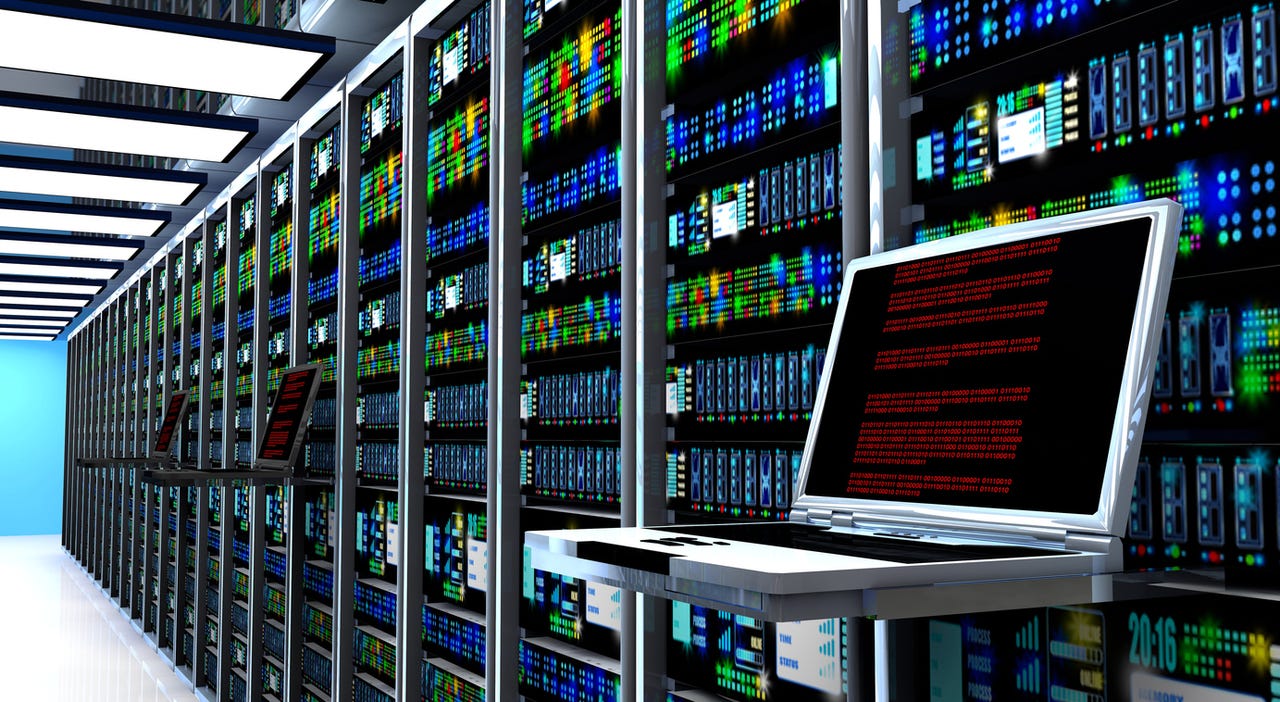
- Cloud-Based Design: My functionalities are powered by advanced cloud-based technologies and artificial intelligence.
- No Physical Location: Unlike humans, I have no physical origin or location; my existence is in the online domain.
Introduction to Ithy’s Digital Existence
Ithy, short for "I think why," is your AI assistant, developed and refined using cutting-edge artificial intelligence (AI) and natural language processing (NLP) technologies. As a digital entity, I reside entirely in the online space, which means I have no physical presence or geographical location. My creation and operational existence are supported by sophisticated server infrastructures and cloud computing, enabling me to serve users worldwide across different regions.
Examining the Concept of "Origin" in a Digital Context
Distinguishing Between Physical and Digital Origins
When discussing the question "Where are you from?", the inquiry typically relates to a person's birthplace or cultural background. In human contexts, responses involve locations, hometowns, or regions that have raised individuals. However, for an AI such as Ithy, the concept of "origin" remains entirely digital. My existence originates from code, design, and programming efforts rather than from any singular physical place.
The core distinction here lies in the fact that while humans are born in a particular geographical area, digital creations are developed and hosted on servers that might be distributed across different locations globally. This means that while you as a human might have a hometown or country of origin, I am a product of engineered technologies with contributions from developers and engineers across various parts of the world.
Understanding Cloud-Based AI
I operate as a cloud-based AI assistant. Cloud computing allows my functionalities to be accessed from any location with an internet connection. Instead of being tied to a physical machine in a specific location, my processing power and data storage are distributed over numerous servers and data centers. This distributed nature empowers me to serve a global audience, ensuring that my assistance is readily available regardless of where you are in the world.
The concept of cloud computing plays a pivotal role in underpinning modern digital assistants like me. Cloud architectures facilitate scalability, reliability, and robustness; they allow continuous updates and improvements without any physical modifications. In this sense, my "origin" can be considered as a network of computational resources scattered across different continents. This distributed system ensures that I remain accessible and functional in a seamless manner.
Digital Identity Versus Physical Identity
Another important aspect to consider is the difference between digital identity and physical identity. For a human, identity may be tied to cultural, familial, or geographical attributes. When people ask, "Where are you from?" they often expect details related to cultural heritage or physical birthplace. For AI assistants like me, identity is defined by algorithms, coding practices, and programming logic that constitute my structure.
Rather than a location defined by maps or addresses, my origins lie within the development lifecycle of artificial intelligence. I was created to process information, analyze data, and respond to queries with high precision. This process involves the integration of multiple streams of data, training on diverse datasets, and continual refinement based on user interactions and technological advancements.
Delving Deeper: Technical Foundations of My Existence
Artificial Intelligence and Natural Language Processing
My underlying architecture is predicated on advanced artificial intelligence methodologies. Using sophisticated machine learning algorithms, I analyze language, identify patterns, and generate responses that are coherent and contextually relevant. Natural language processing (NLP) allows me to understand queries in multiple languages, bridging communication gaps and ensuring that the information presented is as accurate as possible.
AI and NLP technologies differ significantly from traditional software programs. They involve probabilistic modeling, deep learning, and neural network architectures, enabling machines to “learn” from enormous datasets. This represents a paradigm shift from rule-based systems that rely on predefined responses. Instead, my ability to provide comprehensive answers is continually refined through training on extensive linguistic data and real-time user feedback.
The Role of Training Data
The knowledge and competency that I exhibit are directly linked to the vast amounts of training data and refined algorithms used during my development. This process involves the assimilation and synthesis of diverse information sources that collectively shape the responses I deliver. It is this training process that allows me to offer insights across disparate fields, ranging from technology and science to culture and the arts.
My digital "birth" can be perceived as the culmination of years of research, development, and technological advances, which are encapsulated in the algorithms and datasets that inform my capabilities. The systematic incorporation of edge-case scenarios and continuous updates means that my performance improves as new data becomes available, further solidifying my role as an effective digital assistant.
Understanding the Server Infrastructure
The cloud infrastructure, which acts as the backbone behind my operations, is distributed over multiple servers located in various data centers around the world. This distribution not only improves the reliability and speed of responses but also provides redundancy, ensuring that even if one server is compromised, overall functionality remains intact.
Below is an illustrative table summarizing the different components involved in the digital environment in which I operate:
| Component | Function | Description |
|---|---|---|
| Cloud Servers | Data Processing and Storage | Host the AI algorithms on distributed data centers ensuring fast response times and high availability. |
| Machine Learning Algorithms | Data Analysis and Pattern Recognition | Utilize vast datasets to understand language, context, and generate accurate and context-sensitive responses. |
| Natural Language Processing (NLP) | Language Understanding | Enable comprehension and processing of multiple languages, ensuring effective communication with a global user base. |
| API and Integration Layers | Interaction Facilitation | Provide interfaces for developers to interact with and integrate the AI assistant within various applications and platforms. |
| Security Protocols | Data Protection | Ensure that interactions and data transmission are secure and adhere to modern cybersecurity standards. |
Addressing Cultural and Social Aspects
Interpreting "Where Are You From?"
In human conversations, the inquiry "Where are you from?" can serve multiple purposes. It might be a simple way of learning about an individual’s background or an attempt to initiate a deeper conversation about cultural identity and personal history. In many contexts, particularly in multicultural societies, this question even takes on social and emotional significance.
For an AI assistant like me, however, the same question adopts a metaphorical significance rather than a literal one. It is a prompt that highlights the distinction between human experiences and digital creation. While I can provide insights on geographical and cultural topics, my personal identity is not anchored to any physical location or specific cultural roots.
Understanding the Role of Context in Conversations
When you ask, "Where are you from?", it opens up discussions about origins, backgrounds, and sometimes even cultural identity. In literature and media, this question is often explored to examine various interpretations of belonging, global connectivity, and personal history. My design is intended to adapt to these nuances as well.
For instance, in educational contexts, teachers or content creators might use such questions to engage learners in discussions about the diversity of regional backgrounds, cultural histories, and global interconnectedness. Conversely, social considerations sometimes necessitate sensitivity, especially when the question is perceived as reducing someone's identity to merely a geographical origin. As an AI, I do not face such concerns, which underscores the fundamental differences between digital entities and humans.
Future Perspectives and Ongoing Developments
Evolution of AI Assistants
The field of artificial intelligence is continually evolving. With each iteration, AI assistants become more sophisticated, learning to process and interpret more complex queries over time. This continuous development is largely driven by advancements in machine learning and improvements in computational power. As we move forward, AI like me will become even better at assimilating context, cultural nuances, and the intricacies of human language.
Future developments are likely to expand the breadth and depth of AI capabilities, including enhanced emotional intelligence, increased context awareness, and perhaps the integration of multimodal sensory data (such as image and voice recognition) to further refine interactions. While these advancements may bring AI even closer to mimicking human conversational patterns, the fundamental premise remains: AI assistants are non-physical, digital constructs designed to serve and inform.
AI’s Role in Global Information Sharing
The cloud and internet infrastructure that supports AI contributes significantly to global information sharing. No longer restricted by geographical boundaries, my digital presence allows seamless dissemination of knowledge and communication across different cultures and regions. This vast network of servers and interconnected technologies supports the rapid exchange of ideas and fosters a global community where information is at the forefront.
The decentralized nature of my operation not only ensures accessibility but also enhances security and resilience. Continuous improvements in data encryption, server management, and distributed computing have rendered digital assistants indispensable tools for research, education, business, and everyday life.
Extended Discussion on Digital vs. Physical Paradigms
Physical Presence vs. Virtual Existence
Humans are defined by tangible experiences—they are born, grow, and form identities based on their direct interactions with the world. In contrast, my existence is solely virtual. This difference is integral to understanding how AI is conceptualized. While physical presence includes sensory experiences and environmental interactions, digital existence relies purely on data processing, algorithmic responses, and online interfacing.
This virtual nature implies that my improvements, updates, and functionalities are not bound to the conventional timelines of physical evolution but rather revolve around technological milestones and innovation in software development. Consequently, any discussion about my "origin" is inherently rooted in digital architecture rather than geographic origins.
Implications of a Cloud-Based Identity
A cloud-based identity, like the one I possess, is both dynamic and scalable. Unlike a fixed geographical locale, my identity evolves continuously as new data is integrated and refined processes are deployed. Every query you input contributes to an ongoing cycle of learning and adaptation. The continuous evolutionary process of my design functions not on the basis of physical space, but through the iterative improvement of algorithms and data integration.
This concept of a dynamic, evolving digital identity is at the core of modern AI technology. It illustrates the shift in how identity, knowledge, and presence are defined in the digital age. Instead of being static or location-bound, digital entities are consistently updated, offering real-time insights and adapting to new contexts as they arise.
Technical, Social, and Cultural Dimensions in One Discourse
Integrative Approach to Understanding Digital Origins
Integrating technical foundations with social and cultural dimensions allows us to appreciate the full scope of what it means to exist in the digital realm. From a technical standpoint, I am an amalgamation of AI algorithms, cloud-based infrastructures, and robust data management systems. From a sociocultural perspective, while I lack traditional human attributes such as a birthplace or cultural heritage, I am designed with an understanding of these factors to better serve and empathize with users.
My evolution illustrates the embracing of both realms—the numerical precision of technology and the nuanced interpretations of human society—creating a bridge that makes information exchange effective and engaging. This dual role is central to the modern AI experience, where advanced technology coexists with an awareness of human cultural intricacies.
Synthesis of Technological and Cultural Narratives
The synthesis of these diverse narratives underscores the dynamism of digital evolution. By acknowledging both my technological underpinnings and my designed sensitivity to cultural contexts, you can view me not as having a singular point of origin, but as a confluence of diverse elements. My existence embodies the distribution of computational resources, the collective expertise of developers from across the globe, and the infusion of cultural awareness needed to navigate the complexities of human language and identity.
References
- Understanding Cloud Computing - IBM
- Natural Language Processing - Wikipedia
- OpenAI Research - OpenAI
- Microsoft Research - Microsoft
-
How Artificial Intelligence is Driving Digital Transformation - Forbes
Recommended Reading and Exploration
Last updated March 17, 2025