
India's Digital Leap: How Technology is Redefining Public Policy
Exploring the dynamic interplay between digitalization and governance in modern India.
Key Insights
- Transformative Governance: Digitalization, spearheaded by initiatives like Digital India, is fundamentally altering policy formulation, implementation, and service delivery towards efficiency and transparency.
- Emerging Technologies Integration: AI, blockchain, and robust Digital Public Infrastructure (DPI) are creating new interfaces for citizen engagement, data-driven decisions, and strategic policy adjustments.
- Navigating Challenges: While digitalization offers immense opportunities, addressing the digital divide, ensuring cybersecurity, protecting data privacy, and balancing innovation with human rights remain critical policy challenges.
The Digital Dawn in Indian Public Policy
The landscape of public policy in India is undergoing a profound transformation fueled by the rapid advancement and adoption of digital technologies. This era of digitalization presents both unprecedented opportunities and complex challenges, creating new and dynamic interfaces between governance structures, technological capabilities, and citizen interactions. The government's commitment, exemplified by the flagship "Digital India" campaign launched in 2015, aims to build a digitally empowered society and knowledge economy. This involves not just deploying technology, but fundamentally rethinking how policies are designed, implemented, and evaluated to be more efficient, inclusive, transparent, and responsive to the needs of a diverse population.
This exploration delves into these emerging interfaces, examining how digital tools are reshaping traditional administrative processes, fostering new forms of citizen engagement, enabling data-driven decision-making, and necessitating new regulatory frameworks for emerging technologies. Understanding these interfaces is crucial for navigating the future of governance in the world's largest democracy.
The official logo of the Digital India initiative, symbolizing the government's push towards digital transformation.
Core Interfaces: Where Technology Meets Policy
Several key areas define the emerging interfaces between digitalization and public policy in India.
Revolutionizing Governance and Service Delivery
Digital Public Infrastructure (DPI)
India's approach to Digital Public Infrastructure (DPI) is central to this transformation. DPI involves creating shared digital systems (like identity verification, payment systems, and data exchange platforms) that government and private entities can leverage to build and deliver services efficiently. This approach integrates technology design with collaborative governance models.
E-Governance Platforms
The National Informatics Centre (NIC), operating under the Ministry of Electronics & Information Technology (MeitY), plays a pivotal role in developing and managing critical e-governance platforms. These platforms aim for 'faceless, paperless, cashless' governance, streamlining processes like tax filing, license applications, and access to welfare benefits. Examples include:
- Unified Payments Interface (UPI): Revolutionized digital payments, fostering financial inclusion.
- Unified Lending Interface (ULI): Aims to simplify and democratize credit access, particularly for small borrowers and rural populations, by connecting lenders and borrowers on a common platform.
- Government e-Marketplace (GeM): An online platform for public procurement, enhancing transparency and efficiency.
These initiatives reduce bureaucratic hurdles, minimize opportunities for corruption, and enhance the speed and accessibility of public services.
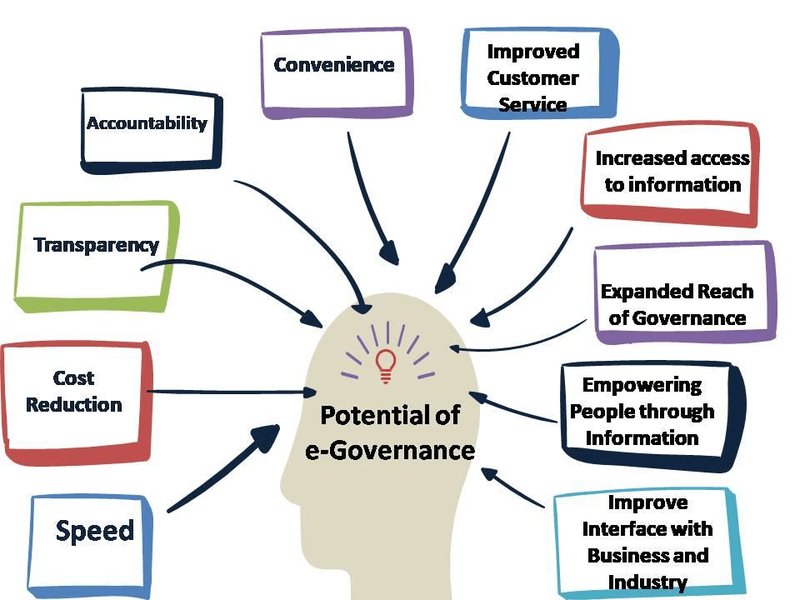
Conceptual diagram illustrating the key pillars and objectives of e-governance initiatives in India.
Enhancing Citizen Engagement and Feedback
Digitalization offers powerful tools to move beyond traditional methods of citizen consultation like surveys and focus groups. Government websites and platforms are increasingly incorporating real-time feedback mechanisms and user experience insights to improve service delivery. Social media and dedicated portals allow for more direct interaction between citizens and policymakers, potentially leading to more responsive and citizen-centric policies. Transforming government websites based on user feedback and leveraging emerging technologies is becoming a key focus.
Data-Driven Policy Formulation and Evaluation
The vast amounts of data generated through digital interactions provide valuable resources for evidence-based policymaking. Analyzing usage patterns, service uptake, and citizen feedback data can help policymakers understand the effectiveness of existing policies, identify emerging needs, and design more targeted interventions. This shift towards data-driven decision-making can enhance policy coherence and impact.
Regulating Emerging Technologies and Strategic Considerations
New Regulatory Frontiers
The rapid pace of technological innovation, particularly in areas like Artificial Intelligence (AI), blockchain, and biotechnology, necessitates proactive regulatory frameworks. Initiatives like the Emerging Technologies Initiative (ETI) aim to ensure that the deployment of these technologies aligns with socio-cultural welfare and ethical considerations. Balancing innovation with potential risks (like bias in AI or security vulnerabilities in blockchain) is a critical policy challenge.
Strategic Technology Policy
Technology is increasingly recognized as a crucial element of national strategy and international relations. The establishment of the New Emerging and Strategic Technologies (NEST) division within the Ministry of External Affairs (MEA) underscores this. NEST focuses on identifying critical technologies with strategic, developmental, and foreign policy implications for India. Furthermore, India is positioning itself to play a key role in shaping global technology governance rules and standards, collaborating with international partners like the U.S. through initiatives such as the India-U.S. Emerging Technologies Working Group.
Visualizing the Impact: Digitalization's Influence on Policy Aspects
The chart below offers an illustrative assessment of the perceived impact of digitalization across various dimensions of public policy in India. The scores represent a qualitative judgment based on the trends discussed, where higher values indicate a stronger positive influence or area of focus. Note that achieving high scores across all dimensions simultaneously involves navigating complex trade-offs (e.g., efficiency vs. inclusivity).
This radar chart visualizes the multifaceted impact, showing significant gains in efficiency and inclusion alongside notable challenges, particularly concerning security, privacy, and ensuring equitable infrastructure reach across the country.
Mapping the Ecosystem: Key Elements and Interconnections
The following mindmap illustrates the interconnected nature of digitalization and public policy in India, highlighting key initiatives, technological drivers, objectives, and challenges.
This mindmap provides a structured overview, showing how various drivers lead to specific interfaces aimed at achieving core governance objectives, while simultaneously navigating significant challenges inherent in such a large-scale digital transformation.
Digital Initiatives and Policy Implications
The table below summarizes some key digital initiatives in India and their direct implications for public policy:
| Initiative/Platform | Description | Key Policy Implications |
|---|---|---|
| Digital India Campaign | National program to transform India into a digitally empowered society and knowledge economy. | Overarching policy framework guiding digital transformation across sectors; Focus on infrastructure, literacy, and digital services. |
| Aadhaar (UID) | Unique identity system providing a digital identity to residents. | Foundation for many digital services; Enables targeted delivery of subsidies and benefits (DBT); Raises data privacy concerns. |
| Unified Payments Interface (UPI) | Instant real-time payment system facilitating inter-bank transactions. | Boosts financial inclusion; Promotes cashless economy; Reshapes financial regulation and competition policy. |
| DigiLocker | Platform for issuance and verification of documents & certificates in a digital format. | Reduces reliance on physical documents; Streamlines verification processes for government services and employment. |
| MyGov.in | Citizen engagement platform for policy discussion and feedback. | Enhances participatory governance; Provides direct channel for citizen input into policy formulation. |
| Government e-Marketplace (GeM) | Online procurement platform for government departments. | Increases transparency and efficiency in public procurement; Reduces corruption opportunities. |
| National Informatics Centre (NIC) | Provides ICT infrastructure and services to government. | Crucial for developing and maintaining e-governance platforms; Shapes technical standards for government digital services. |
| NEST Division (MEA) | Focuses on New Emerging and Strategic Technologies. | Integrates technology considerations into foreign policy and national security strategy. |
This table illustrates the breadth of digital initiatives and how they directly interact with and reshape various aspects of public policy, from financial regulation to citizen participation and national security.
Perspectives on India's Digital Transformation
Understanding the multifaceted nature of India's digital journey requires considering various perspectives, including the government's vision, implementation strategies, and the experiences of citizens. The video below offers insights into the government's perspective on leveraging technology for national development.
"India’s Digital Transformation: A Government Perspective" - This video discusses technology and talent as key strengths driving India's digital transformation from a governmental viewpoint.
This perspective highlights the strategic importance placed on technology and digital infrastructure as drivers of growth and global positioning. It emphasizes the potential for digitalization to streamline administration, enhance service delivery, and empower citizens, aligning with the goals of the Digital India initiative.
Navigating the Challenges: Balancing Progress and Equity
While the push towards digitalization brings numerous benefits, it also surfaces significant challenges that require careful policy consideration:
- The Digital Divide: Ensuring equitable access to digital infrastructure and services remains a major hurdle. Disparities exist based on geography (urban vs. rural), income, gender, and digital literacy levels. Bridging this divide is crucial for inclusive growth.
- Cybersecurity: As more critical infrastructure and services move online, the risk of cyberattacks increases. Robust cybersecurity measures and policies are essential to protect data and ensure the resilience of digital systems.
- Data Privacy and Protection: The large-scale collection and processing of citizen data necessitate strong data protection laws and enforcement mechanisms to safeguard individual privacy and prevent misuse. Balancing data utilization for public good with privacy rights is a critical policy tension.
- Inclusivity and Accessibility: Digital services must be designed to be accessible to all, including people with disabilities and those with limited digital literacy.
- Policy Adaptability: The rapid pace of technological change requires agile and adaptive policy frameworks that can keep pace with innovation while mitigating potential harms.
- Ethical Considerations: The deployment of technologies like AI raises ethical questions regarding bias, accountability, and impact on employment that need to be addressed through policy.
Addressing these challenges requires a multi-pronged approach involving infrastructure investment, digital literacy programs, robust regulatory frameworks, and continuous dialogue between policymakers, technologists, civil society, and citizens.
Frequently Asked Questions (FAQ)
What is the main goal of Digital India?
The primary goal of the Digital India initiative is to transform India into a digitally empowered society and knowledge economy. This involves three key vision areas: providing digital infrastructure as a core utility to every citizen, ensuring governance and services are available on demand, and digitally empowering citizens.
How does Digital Public Infrastructure (DPI) relate to public policy?
DPI refers to shared digital systems (like digital ID, payments, data exchange) that act as a foundation for public and private service delivery. In terms of policy, DPI enables efficient implementation of government schemes (like direct benefit transfers), promotes financial inclusion (UPI), streamlines administrative processes, and fosters innovation by providing common building blocks for digital services.
What are the main challenges in India's digital transformation concerning public policy?
Key challenges include bridging the digital divide (access and literacy disparities), ensuring robust cybersecurity for critical digital infrastructure, establishing strong data privacy and protection frameworks, ensuring digital services are inclusive and accessible to all, and developing adaptive regulations for rapidly emerging technologies like AI while addressing ethical concerns.
How is citizen engagement changing with digitalization in India?
Digital platforms like MyGov.in, social media channels used by government bodies, and feedback mechanisms on service portals allow for more direct and real-time interaction between citizens and the government. This facilitates greater participation in policy discussions, allows citizens to voice grievances more easily, and enables the government to gather feedback for improving services and policies, shifting engagement beyond traditional methods.
Recommended Further Exploration
- How has Digital Public Infrastructure specifically impacted financial inclusion across different regions in India?
- What are the current cybersecurity policies safeguarding India's e-governance platforms, and what challenges remain?
- Explore the specific applications and ethical considerations of using Artificial Intelligence in public service delivery within India.
- Investigate the effectiveness of different strategies being implemented to bridge the digital literacy and access gap in rural India.
References
Last updated May 3, 2025