
A Prehistoric Parisian Feast: Dinosaurs in the City of Lights
An Artistic Exploration of Mesozoic Majesty Meets French Cuisine in Woodblock Style
Highlights
- Dino Delights in Paris: Imagine a charming Parisian restaurant, like Ristorante Dino in the 16th arrondissement, transformed to host a unique clientele – magnificent dinosaurs enjoying fine French and Italian cuisine.
- Artistic Fusion: Woodblock & Dinosaurs: This concept blends the ancient world of dinosaurs with the traditional Japanese Ukiyo-e woodblock printing technique, creating a visually striking and historically rich aesthetic.
- Beyond the Roar: Cultivating Cultural Connections: The idea sparks a fascinating dialogue between paleontological wonder and human artistic expression, offering a fresh perspective on both.
The vision of dinosaurs dining at a Parisian restaurant, rendered in the distinctive woodblock style, presents a captivating blend of the prehistoric and the elegant. This imaginative scenario marries the awe-inspiring grandeur of dinosaurs with the sophisticated charm of French culture, all through the lens of a classic artistic medium. It's a concept that is both whimsical and artistically compelling, inviting us to ponder the possibilities of such an encounter.
Conceiving the Scene: Dinosaurs at a Parisian Eatery
To truly envision dinosaurs dining in Paris, one must consider the ambiance of such an establishment. Paris is renowned for its diverse culinary scene, from quaint bistros to upscale restaurants. A place like Ristorante Dino, a well-regarded Italian restaurant in the 16th arrondissement, known for its fresh ingredients and warm atmosphere, could serve as an ideal setting. Similarly, the "Paris Dinosaurs" group, an informal dining club of ex-Paris bureau hands, often dines at various city restaurants, including floating ones on the Seine, which further fuels the imagination of such a unique gathering.
Choosing the Right Parisian Setting
For our imagined scene, the restaurant would need to accommodate its extraordinary guests. Picture large, open spaces, perhaps with an outdoor terrace overlooking a classic Parisian street or even the Seine, allowing for the sheer scale of creatures like a Triceratops or a Diplodocus to be appreciated. The menu, while retaining its French or Italian essence, might subtly incorporate "prehistoric" twists, perhaps with dishes named after famous fossil sites or dinosaur species.
Some restaurants in Paris have even incorporated dinosaur themes in different contexts. For instance, the Café de la Jatte in Neuilly, a suburb just outside Paris, is known for a dinosaur hanging from its ceiling, offering a quirky blend of dining and prehistoric imagery. While not a full-blown dinosaur restaurant like some themed establishments, it illustrates the playful integration of these ancient creatures into modern settings.
An artistic representation of a contemporary restaurant environment.
The Dinosaurs as Patrons
Each dinosaur species would bring its unique characteristics to the dining experience. A towering Brachiosaurus might gently graze on the foliage outside, its long neck peering into the restaurant. A T-Rex, perhaps surprisingly refined, could be delicately handling a oversized fork with a clawed hand, its formidable jaws ready for a gourmet bite. Smaller, more agile dinosaurs like Velociraptors might be perched on high stools, observing the human staff with intelligent, curious eyes.
The Art of Woodblock: A Unique Aesthetic
The woodblock printing style, particularly Ukiyo-e from Japan, is characterized by its bold outlines, flat areas of color, and often dramatic compositions. Applying this style to a scene of dinosaurs in Paris would create a visually arresting image. The strong lines would emphasize the formidable forms of the dinosaurs, while the limited color palette often used in woodblock prints could lend an air of timelessness and artistic depth to the scene.
Techniques and Characteristics of Woodblock Prints
Woodblock printing involves carving a design into a block of wood, inking the raised areas, and then pressing paper onto the block to transfer the image. For multi-colored prints, multiple blocks are used, one for each color. This meticulous process results in images with distinct qualities:
- Strong Outlines: The carved lines define the forms sharply.
- Flat Color Fields: Colors are typically applied in solid, unmodulated areas, creating a graphic quality.
- Emphasis on Composition: Artists often use strong diagonals, unusual perspectives, and dynamic arrangements.
- Textural Qualities: The grain of the wood can sometimes be visible, adding a subtle texture to the print.
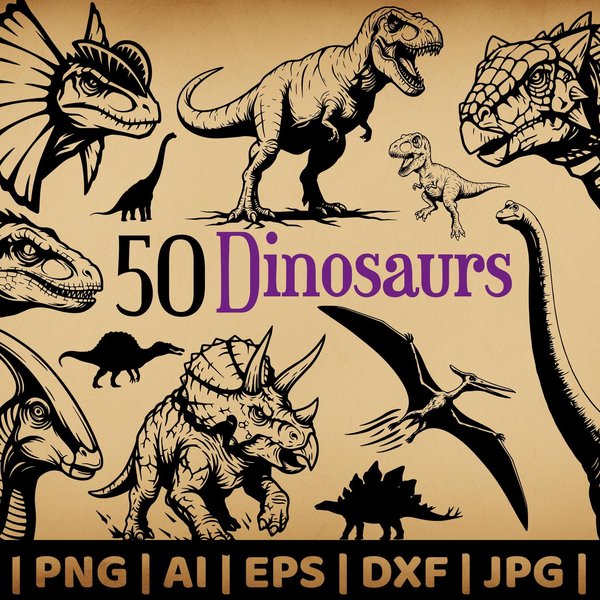
A visual example of a dinosaur depicted in woodblock print style.
Bringing Dinosaurs to Life Through Woodblock
Imagine a scene with a massive Tyrannosaurus Rex, rendered with thick, bold lines, its powerful silhouette dominating the frame, perhaps contrasting with the delicate ironwork of a Parisian balcony. The intricate details of Parisian architecture – the ornate facades, the elegant streetlights, the bustling café tables – would be simplified and stylized, characteristic of woodblock art, to create a harmonious background for the prehistoric guests. The Seine could be depicted with the iconic "Great Wave" style, reimagined with a lurking marine reptile or a playful Pterodactyl soaring above.
Thematic Depths: Why Dinosaurs in Paris?
The juxtaposition of dinosaurs and Paris is more than just a whimsical thought; it delves into themes of time, nature versus civilization, and the enduring human fascination with the ancient world. Paris, a city steeped in history and culture, serves as a poignant backdrop for creatures that once roamed the Earth millions of years ago. This concept also subtly touches upon paleoart, which is any original artistic work that attempts to depict prehistoric life according to scientific evidence. Early paleoartists like Benjamin Waterhouse Hawkins created the first life-size sculptures of dinosaurs, influencing how these creatures were visualized for generations.
The Museum Connection
Paris is home to the Natural History Museum (Muséum National d'Histoire Naturelle), which houses significant dinosaur collections, including the impressive Hall of Evolution and the gallery of comparative anatomy with dinosaur skeletons. This provides a tangible link between the city and prehistoric life, making the imagined dining scene a humorous extension of the museum's exhibits.
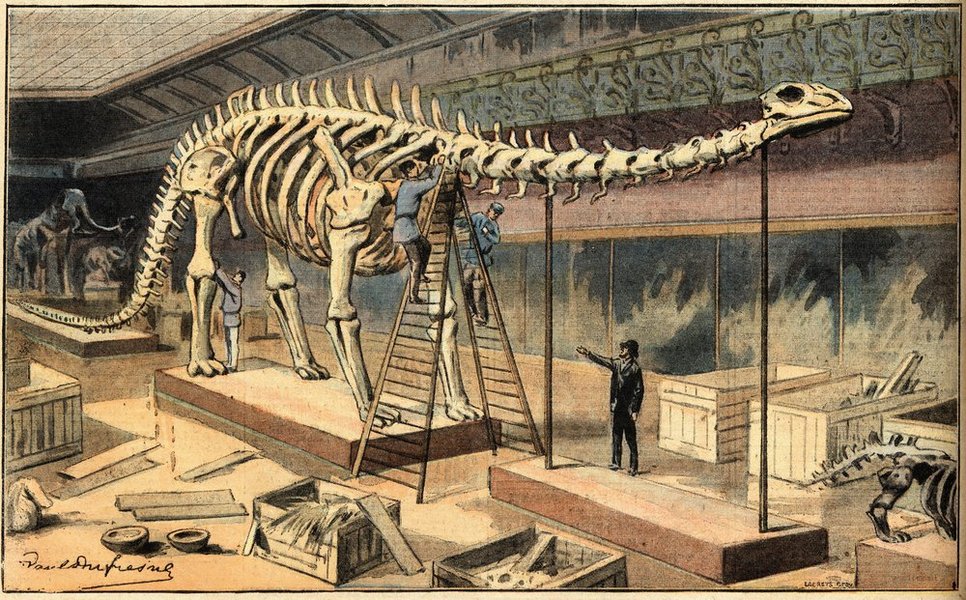
An engraving showcasing a Diplodocus fossil within the Natural History Museum of Paris.
Cultural and Historical Echoes
The idea also taps into the rich history of art depicting dinosaurs. From early scientific illustrations to modern interpretations, artists have consistently sought to capture the majesty and mystery of these creatures. The woodblock style adds another layer, referencing a powerful artistic tradition known for its ability to convey both grandeur and narrative. The combination of traditional art forms and modern themes can create unexpected and delightful results, much like how ancient rock art found near dinosaur footprints in Brazil shows an enduring human connection to these megafauna.
Artistic Elements and Creative Interpretations
Creating such an image would involve careful consideration of several artistic elements. The perspective, the color palette, and the level of detail would all contribute to the overall impact.
Compositional Choices
A panoramic view might capture several dinosaurs interacting within the restaurant setting, or a close-up could focus on a single dinosaur's expressive "face" as it savors a dish. The lighting could be soft and romantic, typical of Parisian evenings, casting dramatic shadows that enhance the forms of the dinosaurs. The human element, perhaps a bewildered waiter or an amused chef, would add a touch of humor and scale.
This radar chart visually compares the concept of "Dinosaur Dining in Paris (Woodblock Style)" against "Traditional Paleoart" and "Modern Themed Restaurants" across various attributes. It highlights how the imagined scenario excels in whimsy, visual impact, and narrative potential, while being less focused on strict historical accuracy compared to traditional paleoart. Its technical difficulty for artistic execution is also considered moderate to high, given the stylized nature and multiple elements. This chart illustrates the unique position of this artistic concept at the intersection of historical reference, imaginative storytelling, and distinct visual style.
Embracing the Whimsical
The beauty of this concept lies in its inherent whimsy. It's a playful departure from reality that allows for creative freedom. A Brontosaurus might be seen attempting to fit into a tiny cafe chair, or a group of raptors could be engaged in a sophisticated debate over a wine list. This lighthearted approach ensures the image remains engaging and memorable.
| Element | Description | Woodblock Style Adaptation |
|---|---|---|
| Dinosaurs | Various species (T-Rex, Triceratops, Brachiosaurus, etc.) as patrons. | Bold, clean outlines; flat color fills; dramatic poses. |
| Parisian Restaurant | Charming cafe or fine dining establishment, possibly overlooking the Seine. | Simplified architectural details; iconic landmarks (Eiffel Tower, Notre Dame) in background; distinct window/door patterns. |
| Human Elements | Waiters, chefs, or bewildered bystanders reacting to the unusual guests. | Stylized figures, perhaps in traditional Parisian attire, conveying surprise or amusement. |
| Atmosphere/Lighting | Evening ambiance, soft lighting, warm interiors. | Strong contrasts between light and shadow; use of warm hues; stylized light sources (lamps, candles). |
| Food & Drink | French or Italian cuisine, potentially comically oversized for the dinosaurs. | Simplified forms of plates, cutlery, and food; vibrant color splashes for food. |
| Composition | Dynamic arrangement of figures and setting to create visual interest. | Asymmetrical balance; strong diagonals; varied scales of elements to emphasize grandeur. |
This table outlines the essential elements and how they could be translated into the woodblock print style, ensuring that the final image is cohesive and visually appealing while retaining the core concept of dinosaurs enjoying a meal in the heart of Paris.
The Intersection of Art and Imagination
The creation of such an image serves as a powerful example of how art can transcend boundaries, bringing together disparate concepts to form something entirely new and exciting. It challenges us to look at both history and art with fresh eyes, recognizing the beauty in unexpected combinations. The enduring appeal of dinosaurs, coupled with the timeless allure of Parisian culture and the distinct aesthetic of woodblock printing, guarantees an image that is both thought-provoking and visually delightful.
For a visual understanding of the artistry involved in creating dinosaur-themed wooden pieces, similar to the concept of a woodblock print, consider this video detailing the carving of a T-Rex skull:
An artisan intricately carving a T-Rex skull from wood, showcasing the dedication and precision that can go into wooden art, similar to the detail required for effective woodblock prints.
This video provides an excellent insight into the dedication and craftsmanship required for creating intricate wood-based art. While it showcases carving a 3D skull, the principles of detailed work and understanding of form are analogous to the precision needed for effective woodblock printing, especially when depicting complex subjects like dinosaurs. The meticulous effort to bring the T-Rex skull to life in wood echoes the careful planning and execution that would be necessary to render a detailed dinosaur scene in a woodblock print, emphasizing the textures and forms that the medium can achieve.
FAQ
What is woodblock printing?
Are there real dinosaur-themed restaurants?
What is paleoart?
Where can one see dinosaur exhibits in Paris?
Conclusion
The concept of dinosaurs dining in a Parisian restaurant, immortalized in the woodblock style, offers a captivating blend of imagination, art, and cultural homage. It is a testament to the enduring appeal of these ancient creatures and the timeless charm of Paris, all filtered through a rich artistic tradition. Such an image would undoubtedly spark wonder and delight, bridging millions of years of history with a single, evocative scene.
Recommended Queries
- Explore the fascinating history and evolution of paleoart.
- Discover how Japanese Ukiyo-e woodblock prints influenced Western art movements.
- Learn about the diverse world of themed restaurants and immersive dining experiences.
- Investigate the symbolism and cultural significance of dinosaurs in contemporary art and media.
References
 wordsonwoodcuts.blogspot.com

Last updated May 21, 2025