
Unpacking Director Acquittals: The Elusive Case of Conflicts in Sub-Subcontracting Fraud
Exploring legal precedents in the UK, Australia, and NZ for director acquittals in complex fraud scenarios.
Navigating the complex intersection of corporate governance, criminal law, and procurement reveals intricate challenges, particularly concerning director liability. You've asked specifically about cases where directors were acquitted of conspiracy to defraud, with the acquittal linked to concealed conflicts of interest within sub-subcontracting arrangements, focusing on the UK, Australia, or New Zealand. While the legal frameworks in these jurisdictions heavily regulate director conduct and conflicts of interest, finding documented case law matching this precise scenario is challenging.
Key Takeaways
- Specific Case Rarity: Documented cases precisely matching the query (director acquitted of conspiracy to defraud specifically due to concealed conflict of interest in sub-subcontracting) within the UK, Australia, or New Zealand were not identified in the available authoritative sources.
- Closest Precedents: The acquittal of Australian director Paul Dougas on charges of conspiracy to bribe offers a relevant parallel, underscoring the high evidential burden needed to prove conspiracy against company directors, even if the context differs slightly.
- Regulatory Emphasis: Both UK and Australian legal systems place significant emphasis on directors' duties to avoid conflicts of interest and act honestly, particularly within procurement and contracting, making concealment a high-risk activity, even if specific acquittal cases aren't readily cited.
The Landscape of Director Liability and Acquittals
Understanding Conspiracy to Defraud
Conspiracy to defraud is a serious criminal offence involving an agreement between two or more people to dishonestly deprive another person of something belonging to them or to which they are entitled. In the corporate context, this often involves directors or senior managers using their position to orchestrate fraudulent schemes.
In Australia, for instance, conspiracy to defraud can be prosecuted under federal law, such as the Criminal Code Act 1995 (Cth). Proving such a conspiracy requires demonstrating not only the agreement but also the dishonest intent of the parties involved. The complexity of corporate structures and subcontracting chains can make gathering unequivocal evidence challenging for prosecutors.
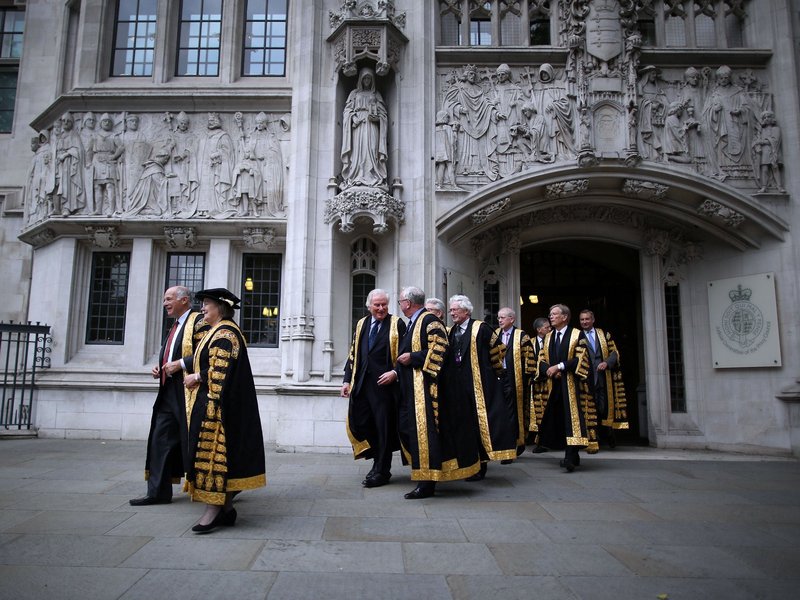
Legal proceedings require a high standard of proof, particularly in complex conspiracy cases.
Conflicts of Interest in Subcontracting
The Nature of the Risk
Subcontracting involves a main contractor delegating parts of their contractual obligations to a third party. Sub-subcontracting extends this delegation further down the chain. Conflicts of interest can arise if a director of the main contracting company (or an intermediary subcontractor) has an undisclosed personal interest (financial or otherwise) in a sub-subcontractor being awarded work. This concealment can potentially constitute fraud if it leads to inflated costs, substandard work, or other actions detrimental to the company or the ultimate client, driven by the director's hidden agenda.
Regulatory Oversight
Both the UK and Australia have frameworks demanding transparency:
- United Kingdom: The Procurement Act 2023 explicitly requires contracting authorities to manage conflicts of interest during procurement. Government guidance exists to help organisations identify, prevent, and remedy such conflicts. Furthermore, common law principles and specific contract terms govern subcontracting relationships, emphasizing the main contractor's ultimate responsibility. Failure to disclose a conflict could breach director's duties under the Companies Act 2006.
- Australia: The Corporations Act 2001 (Cth) imposes strict duties on directors, including the duty to act in good faith, in the best interests of the company, and to avoid conflicts of interest. Regulators like the Australian Securities and Investments Commission (ASIC) actively pursue directors for breaches, including dishonest use of position or failure to disclose interests.
Relevant Case Insights (Though Not Exact Matches)
While no cases fit the precise query, examining related acquittals and regulatory actions provides valuable context.
The Paul Dougas Acquittal (Australia)
Paul Dougas, former head of the engineering and infrastructure company Sinclair Knight Merz (later acquired by Jacobs), faced charges of conspiracy to bribe foreign officials related to overseas aid projects. In April 2022, he was acquitted. Although the charge was conspiracy to *bribe*, not defraud via a conflict of interest in sub-subcontracting, the case is significant because:
- It involved a high-profile director of a major contracting firm.
- The charge was conspiracy, requiring proof of an agreement and intent.
- The acquittal highlights the difficulties prosecutors face in proving such complex white-collar crime cases beyond a reasonable doubt, often due to evidential challenges.
The Harold Mitchell Case (Australia)
Harold Mitchell, a former director of Tennis Australia, faced civil proceedings brought by ASIC alleging breaches of his director's duties, including claims related to the negotiation of broadcast rights. In 2020, the Federal Court found Mitchell had breached his duties but criticized ASIC for pursuing unsubstantiated "conspiracy theories" against him. This case is relevant as:
- It involved allegations against a director concerning potential conflicts and misuse of position.
- It shows regulatory scrutiny of director conduct in commercial dealings.
- It illustrates that even where duties are breached, proving a coordinated, dishonest conspiracy can be a separate and higher bar that regulators may fail to meet.

Modern court buildings like the Manchester Civil Justice Centre handle complex civil and corporate cases.
Other Acquittals in Fraud Cases
General news reports mention acquittals in various fraud contexts, which, while not meeting the specific criteria of your query, demonstrate that acquittals in complex financial crime cases do occur:
- Cleanserve Integrated Energy Solutions (Nigeria): The Chairman and MD/CEO were acquitted of fraud charges in 2025.
- COVID-19 Testing Fraud (USA): Lab owners were acquitted in a $40 million fraud case.
- Land Fraud Case (Kenya): A suspended judge and former NSSF boss were acquitted of conspiracy to defraud.
These examples underscore that factors like insufficient evidence, procedural issues, or successful defence strategies can lead to acquittals, even when significant fraud is alleged.
Visualizing the Legal Concepts
Mindmap: Director Liability in Subcontracting
This mindmap illustrates the interconnected concepts surrounding director duties, conflicts of interest, subcontracting, and the potential for conspiracy charges or acquittals.
Factors Influencing Acquittal Risk in Complex Fraud Cases
Radar Chart Analysis
While specific case data is limited, we can visualize the perceived importance of various factors that might influence the likelihood of an acquittal in complex corporate fraud or conspiracy cases involving directors. This chart presents a hypothetical assessment based on legal principles and common challenges in white-collar prosecutions. Higher scores indicate a greater potential influence favouring acquittal.
This chart suggests that factors like the complexity of the deals (making intent harder to prove), robust disclosure practices by the director (countering concealment claims), and a strong defence strategy often weigh heavily in potential acquittals. Conversely, strong prosecution evidence and clear proof of dishonest intent significantly reduce acquittal chances.
Key Legal Concepts and Regulations
Summary Table
This table summarizes some of the core legal principles and regulations relevant to director conduct, conflicts, and subcontracting in the UK and Australia.
| Concept / Regulation | Jurisdiction | Description | Relevance |
|---|---|---|---|
| Conspiracy to Defraud | UK / Australia | An agreement between two or more persons to dishonestly deprive another of something by deceit or other fraudulent means. Requires proof of agreement and dishonest intent. | The primary charge discussed in the query. High burden of proof for prosecution. |
| Director's Duty to Avoid Conflicts of Interest | UK (Companies Act 2006, s.175) / Australia (Corporations Act 2001, s.182-183, s.191) | Directors must avoid situations where their personal interests conflict, or may potentially conflict, with the interests of the company. Disclosure requirements apply. | Central to the query. Concealed conflicts breach this duty and can underpin fraud allegations. |
| Director's Duty to Act Honestly / In Good Faith | UK (Companies Act 2006, s.172) / Australia (Corporations Act 2001, s.181) | Directors must act in a way they consider, in good faith, would be most likely to promote the success of the company (UK) or in the best interests of the corporation (Australia). | A foundational duty. Actions involving concealed conflicts often breach this duty. |
| Procurement Act 2023 | UK | Modernises public procurement rules, including specific requirements for contracting authorities to identify and manage conflicts of interest. | Highlights the regulatory focus on preventing conflicts in contracting contexts. |
| Main Contractor Liability for Subcontractors | UK / Australia (Common Law & Contract) | Generally, the main contractor remains liable to the client for the performance of the entire contract, including work delegated to subcontractors. | Relevant as it shows the oversight responsibility, making director conduct regarding subcontractor selection critical. |
Context from a US Case: Acquittal in JEA Fraud Trial
While outside the requested jurisdictions (UK, AU, NZ), the outcome of the JEA federal trial in the US offers a glimpse into the dynamics of corporate fraud trials involving multiple executives.
In this case (reported March 2024), involving alleged conspiracy and fraud related to a potential sale of the Jacksonville Energy Authority (JEA), the former CEO Aaron Zahn was found guilty. However, the co-defendant, former CFO Ryan Wannemacher, was found *not guilty* on the same charges of conspiracy and wire fraud. This video reports on the verdict delivery.
Relevance & Limitations: This case demonstrates that even within the same alleged conspiracy, juries can reach different verdicts for different individuals based on the specific evidence presented against each. It highlights that proving participation and intent for *each* alleged co-conspirator is crucial. While it shows an acquittal in a complex corporate conspiracy/fraud case, it's important to note this is a US case, and the specific reasons for the CFO's acquittal (which are not detailed in depth in typical news reports) might not relate directly to conflicts of interest in sub-subcontracting.
Frequently Asked Questions (FAQ)
What legally constitutes 'conspiracy to defraud'? +
Conspiracy to defraud involves an agreement between two or more individuals to use dishonest means with the intention of causing financial loss or prejudice to another party, or gaining a benefit for themselves. Key elements that prosecutors must prove include the existence of an agreement, the participation of the accused, and the dishonest intent behind the agreed course of action. It doesn't necessarily require the planned fraud to be successful or even attempted.
Why are conflicts of interest so significant in subcontracting? +
In subcontracting, decisions about who gets awarded work, at what price, and under what terms should be based on the best interests of the contracting company and its client. A concealed conflict of interest (e.g., a director having a hidden stake in a subcontractor) compromises this principle. It can lead to biased decision-making, potentially resulting in inflated costs, poor quality work, selection of unqualified parties, and damage to the company's reputation. Legally, it's often a breach of the director's fiduciary duties and can form the basis of fraud allegations if dishonest intent is present.
What are the main challenges in prosecuting directors for conspiracy? +
Prosecuting directors for conspiracy faces several hurdles:
- Proving Agreement: Direct evidence of an explicit agreement (like emails or recordings) is often rare. Prosecutors may rely on circumstantial evidence to infer an agreement, which can be challenged.
- Proving Intent: Demonstrating that each director acted with dishonest intent, rather than merely exercising poor judgment or negligence, is critical and often difficult.
- Complexity: Corporate structures, complex transactions, and long subcontracting chains can obscure individual actions and make it hard to pinpoint specific responsibility and intent.
- Access to Evidence: Key evidence might be internal to the company, potentially deleted, or protected by legal privilege.
- Director Defences: Directors may argue they relied on advice, were unaware of certain facts, or acted in what they genuinely believed were the company's interests.
Are there significant differences between UK, Australian, and NZ law on director duties and fraud? +
While all three jurisdictions derive from a common law tradition and share core principles regarding director duties (e.g., duty of care, duty to act in good faith, duty to avoid conflicts), there are differences in specific legislation, enforcement approaches, and case law interpretations.
- UK: Director duties are primarily codified in the Companies Act 2006. Procurement is heavily regulated, now under the Procurement Act 2023. Enforcement involves bodies like the Serious Fraud Office (SFO).
- Australia: Director duties are codified in the Corporations Act 2001 (Cth). ASIC is a proactive corporate regulator bringing both civil penalty proceedings and criminal referrals. Criminal conspiracy charges fall under state or federal criminal codes.
- New Zealand: Director duties are outlined in the Companies Act 1993. While principles are similar, specific statutory wording and enforcement priorities by agencies like the Serious Fraud Office (SFO NZ) might differ.
Generally, the fundamental obligations regarding honesty and conflicts of interest are broadly similar, but the exact statutory language, penalties, and enforcement landscape vary.
References
- Guidance: Conflicts of Interest (HTML) - GOV.UK
- Subcontracting | Legal Guidance | LexisNexis UK
- Former chief of foreign aid contractor acquitted of bribery blasts police over investigation - The Guardian
- Harold Mitchell breached director duties but judge roasts ASIC - AFR
- Subcontracts | Practical Law - Thomson Reuters UK
- Subcontracting under construction contracts - Pinsent Masons
- Court acquits Cleanserve’s Chair, Managing Director of fraud charges - Premium Times NG
-
CDPP prosecutes former company director for stealing, fraud and dishonesty - CDPP (Australia)
Recommended Reading
 assets.publishing.service.gov.uk
Last updated April 16, 2025