
Unraveling the Mystery: Why Your Dishwasher and Garbage Disposal Act Up Together
A comprehensive guide to diagnosing and resolving co-occurring kitchen appliance issues.
Key Insights into Interconnected Kitchen Appliance Problems
- Shared Electrical Circuitry: In many homes, the dishwasher and garbage disposal are powered by the same electrical circuit, often connected to a single GFCI outlet under the sink. This makes shared electrical issues, such as a tripped breaker or GFCI, a primary suspect when both units malfunction simultaneously.
- Intertwined Drainage Systems: The dishwasher typically drains into the garbage disposal. A blockage within the disposal or its associated drain lines can directly impede the dishwasher's ability to drain, leading to standing water and other drainage problems.
- Common Troubleshooting Steps: Initial fixes for co-occurring issues often involve checking the disposal's reset button, inspecting and resetting GFCI outlets, and verifying the circuit breaker. Addressing these electrical and mechanical basics can frequently resolve the problem without professional intervention.
It's certainly unsettling when two essential kitchen appliances like your dishwasher and garbage disposal decide to stop working in tandem. This simultaneous malfunction is a strong indicator that they are connected in a way that affects their shared operation. Indeed, there's a significant link between these two appliances, primarily through their electrical supply and drainage systems. Understanding this relationship is crucial for effective troubleshooting.
The Interconnected Nature of Your Kitchen Appliances
The operational harmony of your kitchen often relies on the seamless interaction between appliances. When your dishwasher and garbage disposal both experience issues, it's not usually a coincidence. Their functional interdependence, particularly concerning power and drainage, means that a problem in one area can easily cascade and affect the other.
Shared Electrical Pathways: A Common Culprit
In a significant number of residential setups, the dishwasher and garbage disposal are designed to share a single electrical circuit. This often involves a dedicated circuit breaker in your home's electrical panel and, frequently, a Ground-Fault Circuit Interrupter (GFCI) outlet located under your kitchen sink. This shared electrical lineage means that if one appliance draws too much power, or if there's an electrical fault, both units can be affected.
Understanding GFCI Outlets and Circuit Breakers
A GFCI outlet is a safety device designed to protect against electrical shock. If it detects an imbalance in the electrical current, indicating a potential ground fault, it will trip, cutting off power to the connected appliances. Similarly, a circuit breaker acts as a safety mechanism, tripping and cutting power to a circuit if it becomes overloaded or experiences a short circuit.
If your dishwasher and disposal suddenly lose power, checking the GFCI outlet (it will usually have "reset" and "test" buttons) and the corresponding circuit breaker in your electrical panel should be your first step. A simple reset can often restore power to both appliances. If the breaker continues to trip, or if the GFCI immediately trips again after being reset, it suggests a more persistent electrical issue or an overloaded circuit.
The Drainage Connection: A Plumbing Partnership
Beyond electrical connections, the dishwasher and garbage disposal also share a critical plumbing link: the dishwasher's drain hose typically connects directly to the garbage disposal. This design allows the dishwasher to discharge its wastewater and food particles into the disposal, which then grinds them up and sends them down the main drain line.
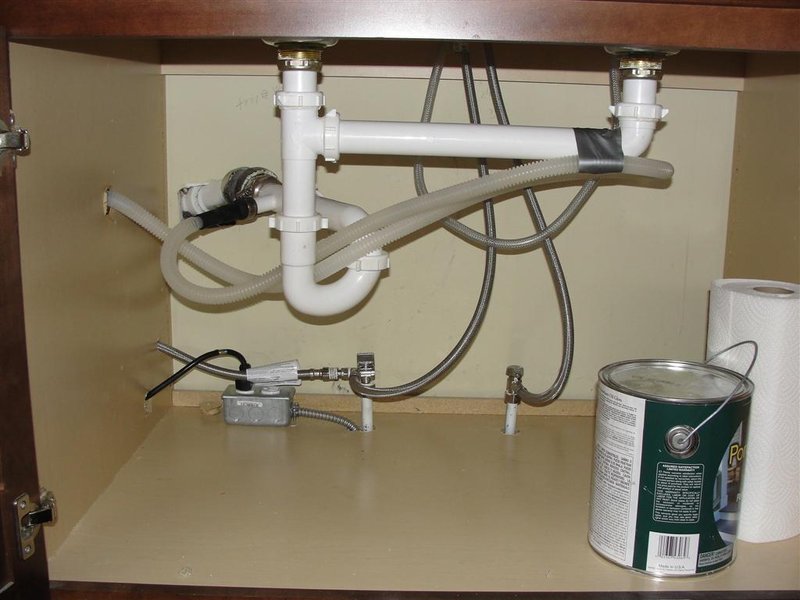
A typical dishwasher drain hose connected to a garbage disposal, often with a high loop for proper drainage.
This plumbing connection means that a problem with the garbage disposal's drainage can directly impact the dishwasher. If the disposal is clogged, jammed, or simply not functioning efficiently, the dishwasher's dirty water may not be able to drain properly, leading to standing water in the bottom of the dishwasher or even backflow into the sink.
The Role of the Dishwasher Drain Plug
A common issue, especially after a new garbage disposal installation, is a forgotten drain plug. When a new disposal is installed, it comes with a knockout plug in the dishwasher drain inlet that needs to be removed. If this plug is not removed, the dishwasher's water will have nowhere to go, causing it to back up.
Diagnosing the Shared Malfunction: A Step-by-Step Approach
When both appliances fail, a systematic approach to troubleshooting is essential. Here's a breakdown of common causes and what you can do:
Electrical Power Interruption
The most immediate and common cause for both units failing simultaneously is a loss of electrical power. This is where you start your investigation.
Checking the GFCI Outlet
Locate the GFCI outlet under your sink or in a nearby kitchen location. Press the "Reset" button firmly. If it clicks and stays in, try turning on your dishwasher and disposal again. If it immediately trips or doesn't reset, there might be an electrical fault or overload on that circuit. Sometimes, other appliances plugged into the same circuit (like a toaster) might have tripped the GFCI.
Inspecting the Circuit Breaker
Head to your home's main electrical panel. Identify the breaker labeled for your kitchen, or specifically for the dishwasher/disposal. If it's in the "off" position or in an intermediate "tripped" position (usually halfway between "on" and "off"), switch it completely "off" and then back "on." If the breaker trips again instantly, there's a serious electrical issue that likely requires a licensed electrician.
Power Cord and Outlet Verification
Ensure both the dishwasher and garbage disposal are securely plugged into their respective outlets. While less common for both to come unplugged simultaneously, it's a quick check. If the disposal is hardwired, ensure the wiring connections are secure (only for those comfortable and knowledgeable in electrical work, always turn off power at the breaker first).
Garbage Disposal Blockage or Jam
A jammed garbage disposal can be a twofold problem: it can cause the disposal itself to stop working and can also prevent the dishwasher from draining properly.
Resetting the Garbage Disposal
Most garbage disposals have a small red or black reset button on the bottom of the unit. If the disposal is humming but not grinding, or is completely unresponsive, press this button. Allow the unit a few minutes to cool down if it overheated before attempting to reset.

Locating the reset button and hex key access hole on the bottom of a garbage disposal unit.
Clearing a Jam
If the disposal hums but doesn't spin, it's likely jammed. Always ensure the power is off at the breaker before proceeding. Insert an Allen wrench (typically 1/4 inch, often included with the disposal) into the hexagonal hole at the very center of the bottom of the disposal. Turn the wrench back and forth to loosen the impellers. Once freed, remove any obstruction with tongs or pliers (never your hand!). Then, press the reset button and test the disposal.
Addressing Clogs
A clogged drain line connected to the disposal can prevent both units from functioning correctly, especially the dishwasher's drainage. If water is backing up into your sink or dishwasher, the clog might be in the disposal itself, the P-trap, or the drain hose connecting the dishwasher to the disposal. Cleaning the drain hose and checking for kinks is a vital step.
Dishwasher-Specific Drainage Issues
Even with a working disposal, the dishwasher might still have drainage problems if its own internal components or connections are compromised.
Checking the Dishwasher Filter and Air Gap
A dirty dishwasher filter or a clogged air gap (a small cylindrical device on your sink counter) can prevent proper drainage. Clean the filter at the bottom of your dishwasher and inspect the air gap for blockages. The air gap allows air into the drain line, preventing siphoning and backflow.
Inspecting the Drain Hose for Kinks or Clogs
The drain hose from the dishwasher to the disposal can become kinked or clogged with food particles. Ensure it's properly routed, usually with a "high loop" to prevent backflow. Disconnecting and clearing the hose might be necessary if other solutions fail.
Troubleshooting Matrix: Common Issues and Solutions
Here's a quick reference table to help you identify and address the most frequent co-occurring problems between your dishwasher and garbage disposal.
| Symptom | Potential Cause | Recommended Action |
|---|---|---|
| Both appliances unresponsive (no sound, no power) | Tripped GFCI outlet | Locate GFCI under sink or nearby, press "Reset" button. |
| Both appliances unresponsive (no sound, no power) | Tripped circuit breaker | Check electrical panel, toggle breaker for kitchen/dishwasher/disposal off then on. |
| Garbage disposal hums but doesn't spin; dishwasher doesn't drain | Garbage disposal jam/overload | Press disposal reset button. Use Allen wrench to clear jam. Turn off power, clear obstruction. |
| Dishwasher won't drain; disposal works normally | Garbage disposal drain plug (new install) | Turn off power. Check for and remove the knockout plug inside the disposal's dishwasher inlet. |
| Dishwasher won't drain; disposal works normally | Clogged dishwasher drain hose | Check hose for kinks. Disconnect and clear any clogs from the drain hose. |
| Dishwasher won't drain; disposal works normally | Clogged air gap or dishwasher filter | Clean the air gap on the sink and the dishwasher's internal filter. |
| Frequent tripping of breaker/GFCI when using both | Overloaded circuit | Avoid running both simultaneously. Consult an electrician to assess circuit capacity. |
Operational Best Practices and Preventive Measures
While fixing current issues is important, understanding how to prevent future problems can save you a lot of hassle. Proper usage and maintenance for both your dishwasher and garbage disposal can extend their lifespan and ensure smooth operation.
Can You Run Both Simultaneously?
The general consensus is that while it's often possible to run both your dishwasher and garbage disposal at the same time, it's not always recommended, especially if they share a circuit. Running both can lead to an overloaded circuit, causing the breaker or GFCI to trip. Moreover, if the disposal is already working hard, adding the dishwasher's wastewater can exacerbate drainage issues.
Many experts advise running the dishwasher first, allowing it to complete its cycle, and then using the garbage disposal as needed. This minimizes the simultaneous demand on both the electrical circuit and the shared drain line.
Maintaining Optimal Performance
For the Garbage Disposal:
- Cold Water is Key: Always run cold water while using the disposal and for about 30 seconds afterward. Cold water helps to solidify grease and food particles, allowing them to be ground more easily and flushed away.
- Avoid Certain Foods: Do not put fibrous materials (celery, corn husks), starchy foods (potato peels, pasta, rice), grease, coffee grounds, or large bones down the disposal. These can cause jams and clogs.
- Regular Cleaning: Grind small amounts of ice cubes, followed by citrus peels, to clean the blades and keep the disposal smelling fresh.
For the Dishwasher:
- Scrape, Don't Rinse: Scrape large food particles off plates before loading them into the dishwasher. Excessive food debris can clog the filter or the drain line.
- Clean the Filter Regularly: Many modern dishwashers have removable filters at the bottom. Clean these periodically to prevent blockages and ensure efficient draining.
- Use Appropriate Detergent: Use only dishwasher-specific detergent in the recommended quantity. Too much detergent can create excessive suds, leading to drainage issues.
Visualizing Common Problems and Solutions
To further illustrate the commonalities and complexities of troubleshooting these kitchen appliances, here is a radar chart. This chart provides an opinionated analysis of the typical "difficulty" and "frequency" of various issues, along with the "impact" they have on your kitchen functionality. Higher values indicate more common, more difficult, or higher impact problems.
This chart visually demonstrates that while issues like a tripped GFCI or a jammed disposal are relatively common, fixing them is often straightforward. However, an overloaded electrical circuit, while less frequent, can be more complex to resolve and often requires professional help due to its higher "difficulty to fix" and "impact on kitchen functionality." The presence of a drain plug not removed during a new installation also highlights a high impact and moderately frequent issue that is relatively easy to fix.
When to Call a Professional
While many co-occurring dishwasher and garbage disposal issues can be resolved with DIY troubleshooting, there are instances where professional help is warranted. If you've tried the common fixes and the problem persists, or if you're uncomfortable performing any of the steps, it's best to call a qualified plumber or electrician.
Specific scenarios that signal a need for professional assistance include:
- The circuit breaker continues to trip immediately after being reset, indicating a short circuit or persistent overload.
- The GFCI outlet will not reset, suggesting an internal fault or wiring problem.
- The garbage disposal makes no noise or motion after checking the reset button and power supply, which could point to a motor failure.
- You detect burning smells or visible sparks from either appliance or their electrical connections.
- There's a significant water leak that you cannot locate or stop.
- You suspect a major clog in the main drain line beyond the P-trap that you cannot clear.
Frequently Asked Questions
Can I use my dishwasher if my garbage disposal is broken?
What if my garbage disposal just hums but doesn't spin?
Why did my dishwasher stop draining after I installed a new garbage disposal?
Is it safe to run both the dishwasher and garbage disposal at the same time?
Conclusion
The simultaneous malfunction of your dishwasher and garbage disposal points to a fundamental shared dependency, most often related to their electrical supply or drainage connection. By systematically checking the GFCI outlet, circuit breaker, and the garbage disposal's reset button and internal mechanisms, you can resolve many common issues. Understanding their plumbing link—especially the drain hose connection and potential for a forgotten drain plug—is also vital for successful troubleshooting. Regular maintenance and mindful operation can prevent these appliances from acting improperly together, ensuring your kitchen remains a hub of seamless functionality. When in doubt or faced with persistent problems, don't hesitate to consult a qualified professional.
Recommended Further Exploration
- How to prevent common garbage disposal jams and clogs?
- Understanding GFCI outlets and kitchen electrical safety.
- What are the best practices for dishwasher maintenance and drainage?
- When is it time to replace a failing garbage disposal or dishwasher?