
How to Dispute an Error on a Credit Report
A Comprehensive Guide to Ensuring Your Credit Accuracy
Key Takeaways
- Understand Your Credit Report: Familiarize yourself with the different sections and types of information contained in your credit report.
- Document Every Detail: Collect all necessary documents that support your dispute to strengthen your case.
- Follow Up Diligently: Ensure that the credit bureaus address your dispute promptly and accurately by keeping track of all communications.
1. Understanding Your Credit Report
What is a Credit Report?
A credit report is a detailed record of an individual's credit history, compiled by credit bureaus such as Experian, TransUnion, and Equifax. It includes personal information, credit accounts, credit inquiries, public records, and collections. Lenders and financial institutions use credit reports to assess creditworthiness when individuals apply for loans, credit cards, or other financial products.
Sections of a Credit Report
Understanding the various sections of your credit report is crucial in identifying and disputing errors effectively. The main sections include:
- Personal Information: Includes your name, address, Social Security number, date of birth, and employment information.
- Credit Accounts: Details of your credit cards, mortgages, auto loans, and other credit accounts, including account status and payment history.
- Credit Inquiries: Lists of entities that have accessed your credit report, both hard inquiries (those tied to credit applications) and soft inquiries (those not tied to credit applications).
- Public Records: Information about bankruptcies, foreclosures, liens, and judgments.
- Collections: Details of any debts that have been sent to collection agencies.
2. Identifying Errors on Your Credit Report
Common Errors to Look For
Credit report errors can significantly impact your credit score and overall financial health. Common errors include:
- Incorrect Personal Information: Misspelled names, wrong addresses, or incorrect Social Security numbers.
- Duplicate Accounts: Multiple entries for the same credit account.
- Incorrect Account Status: Accounts marked as delinquent or closed when they are not.
- Fraudulent Accounts: Accounts opened in your name without your authorization.
- Incorrect Credit Limits or Balances: Discrepancies in the reported credit limit or current balance.
- Outdated Information: Negative information that should no longer appear on your report, such as old late payments.
How to Spot Errors
Regularly reviewing your credit reports from all three major credit bureaus is essential. Obtain free copies of your credit reports annually through AnnualCreditReport.com. Carefully compare the information across all reports and against your personal records to identify any discrepancies or inaccuracies.
3. Gathering Necessary Documentation
Essential Documents for Your Dispute
Compiling the right documentation is vital to support your dispute. The following documents are typically required:
- Credit Report Copies: Highlight the errors you have identified on each credit report.
- Proof of Identity: Copies of your driver's license, Social Security card, or other identification documents.
- Supporting Evidence: Documentation that verifies the correct information, such as bank statements, payment confirmations, or correspondence with creditors.
- Dispute Forms: Some credit bureaus provide specific forms for filing disputes, which can usually be found on their official websites.
Organizing Your Documentation
Ensure that all documents are well-organized and clearly labeled. Create copies of your credit reports and highlight the specific errors. Assemble all supporting documents in a logical order to present a coherent case to the credit bureaus.
4. Drafting a Dispute Letter
Elements of an Effective Dispute Letter
Writing a clear and concise dispute letter is crucial for a successful resolution. Your dispute letter should include:
- Your Personal Information: Full name, address, Social Security number, and date of birth.
- Identification of Errors: Specific details about each error, including itemized references from your credit report.
- Explanation and Evidence: A brief explanation of why the information is incorrect and copies of supporting documents.
- Desired Outcome: A clear statement of what you are requesting, such as the removal or correction of specific information.
- Contact Information: Provide a phone number and email address where you can be reached for further communication.
Sample Dispute Letter Structure
<Your Name>
Your Address
City, State, ZIP Code
Email Address
Phone Number
Date

<Credit Bureau Name>
Address
City, State, ZIP Code

Subject: Dispute of Inaccurate Information on Credit Report

Dear <Credit Bureau Name>,

I am writing to dispute the following information in my credit report. I have highlighted the items I dispute and have enclosed copies of relevant documents supporting my position.

1. <Item 1: Describe the error>
Explanation: <Provide a brief explanation and reference supporting documents>

2. <Item 2: Describe the error>
Explanation: <Provide a brief explanation and reference supporting documents>

Please investigate these matters and correct the disputed items as soon as possible. I appreciate your prompt attention to this matter.

Sincerely,

<Your Name>
5. Submitting Your Dispute
Submitting Online, by Mail, or by Phone
You can submit your dispute through various channels:
- Online: Visit the credit bureau's official website to file a dispute electronically. This method is usually the fastest.
- By Mail: Send your dispute letter along with copies of supporting documents via certified mail with a return receipt requested. This provides proof of delivery.
- By Phone: Some credit bureaus allow disputes to be filed over the phone, but it's advisable to follow up in writing to ensure documentation.
Contact Information for Major Credit Bureaus
| Credit Bureau | Address | Website | Phone Number |
|---|---|---|---|
| Experian | P.O. Box 4500, Allen, TX 75013 | experian.com | 1-866-200-4020 |
| TransUnion | P.O. Box 2000, Chester, PA 19016 | transunion.com | 1-800-916-8800 |
| Equifax | P.O. Box 740256, Atlanta, GA 30374-0256 | equifax.com | 1-866-349-5191 |
6. Following Up on Your Dispute
Tracking the Status of Your Dispute
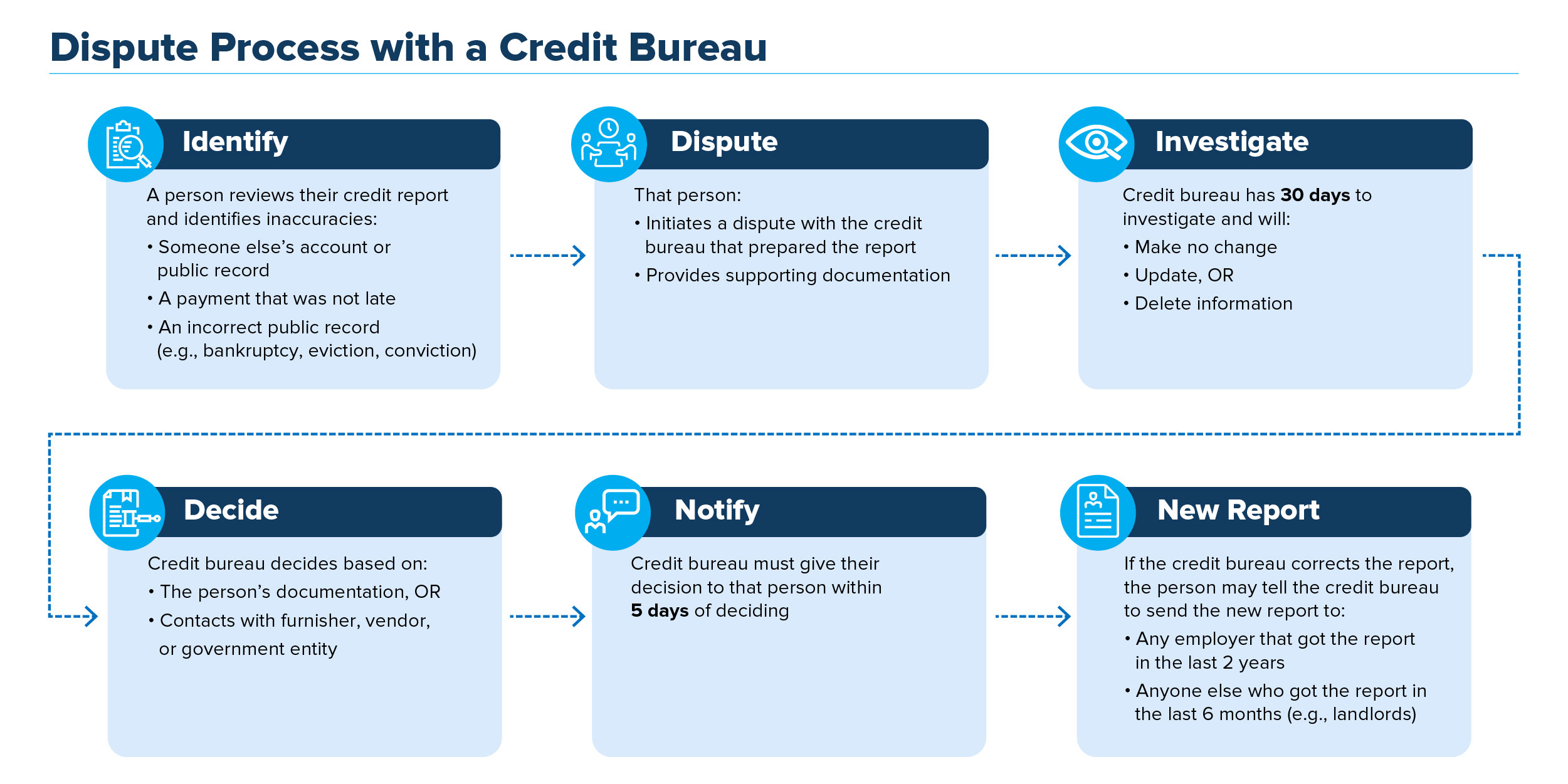
After submitting your dispute, it's important to monitor its progress. Credit bureaus typically have 30 days to investigate and respond. You can track the status by:
- Logging into your online account with the credit bureau.
- Contacting the credit bureau's customer service for updates.
- Receiving and reviewing the results of the investigation, which should be provided in writing.
Responding to the Outcome
If the dispute results in the correction or removal of the erroneous information, request an updated credit report to verify the changes. If the dispute is not resolved to your satisfaction, you can:
- Request a detailed explanation of the investigation results.
- File a dispute directly with the creditor involved.
- Seek assistance from a consumer protection attorney or a credit counselor.
7. Potential Outcomes of a Dispute
Possible Results After Investigation
The outcomes of a dispute can vary based on the accuracy and verifiability of the information provided:
- Item Corrected: The credit bureau updates the information to reflect accurate data.
- Item Removed: The erroneous information is deleted from your credit report.
- Dispute Rejected: If the information is verified as accurate, the dispute is denied, and the information remains unchanged.
Understanding Your Rights
Under the Fair Credit Reporting Act (FCRA), you have the right to dispute incomplete or inaccurate information on your credit report. Credit bureaus are obligated to investigate and correct any errors within the stipulated time frame. Additionally, you are entitled to a free copy of your credit report if the dispute results in a change, allowing you to review the updated information.
8. Maintaining Your Credit Report
Regular Monitoring
To prevent future errors and protect against identity theft, regularly monitor your credit reports. Utilize credit monitoring services or set reminders to obtain your free annual credit reports from each bureau. Early detection of inaccuracies can save you from potential financial setbacks.
Practicing Good Credit Habits
Maintaining a healthy credit report involves:
-
Paying bills on time to avoid negative marks.
-
Keeping credit card balances low relative to your credit limits.
-
Avoiding unnecessary credit inquiries.
-
Regularly reviewing your credit reports for accuracy.
-
Addressing any discrepancies promptly through the dispute process.
Conclusion
Disputing an error on your credit report is a critical step in maintaining your financial health and ensuring that your creditworthiness is accurately represented. By understanding your credit report, identifying errors, gathering necessary documentation, and following the proper dispute process, you can effectively rectify inaccuracies and protect your credit score. Regular monitoring and practicing responsible credit habits further reinforce the accuracy and integrity of your credit profile.
References
Last updated January 28, 2025