
The Nature of Divine Omnipotence Beyond Logic
Exploring an Almighty God's Capacity Without Logical Constraints
Key Highlights
- The Almighty Redefines Possibility: In a realm where logic does not bind, God's power is absolute and transcends any human-imposed limitations.
- Contradictions Dissolve: When logical consistency is set aside, seemingly paradoxical actions can coexist without diminishing divine omnipotence.
- Divine Will Overrules Rationality: The essence of an almighty God lies in executing actions that align solely with divine intent, regardless of any philosophical dilemmas.
Introduction to Divine Omnipotence Beyond Logic
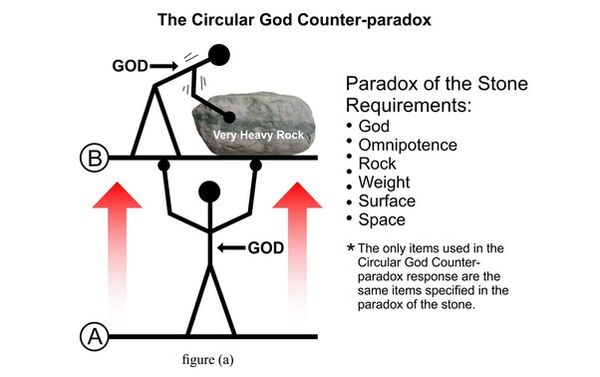
The question of whether an almighty God can create a stone so heavy that He cannot lift it has long been a centerpiece in discussions about divine omnipotence. Traditionally, this question is framed as a paradox intended to limit or challenge the concept of an all-powerful deity. However, when we take the stance of an absolutely almighty God—one whose power is unfettered by the boundaries of human logic—the nature of such a query changes dramatically. In this analysis, we will explore the concept of omnipotence in a framework where logically possible actions no longer serve as the measure of divine capabilities.
Divine Omnipotence: A Realm Beyond Human Constraints
Understanding Omnipotence Absent Logical Boundaries
In traditional theological and philosophical discourse, God’s omnipotence is typically defined as the ability to perform all actions that are logically possible. The stone paradox plays on the inherent contradiction in the idea of creating a stone that defies the very nature of lifting by an omnipotent being. However, in an alternative perspective, if we dismiss logical restrictions entirely and focus solely on the concept of divinity, every action—even those that contradict each other from a human standpoint—falls within the realm of divine possibility.
In this framework, divine omnipotence means that no act, however contradictory it might seem to human reason, is outside the scope of God's will. The heart of the debate shifts from whether such a stone can be created to what it means for God to have absolute power. In a world unconstrained by logic, creating a stone that, by human criteria, should not exist becomes an exercise in exploring divine paradoxes rather than solving them.
The Paradox as a Reflection of Divine Mystery
When logic is set aside, the seemingly paradoxical nature of creating and lifting such a stone transcends into a reflection of the divine mystery itself. The notion that an almighty God might be involved in an act that appears self-contradictory underscores the idea that divine actions are not bound by our understanding of causality, contradiction, or consistency. Instead, these actions are expressions of a will that defies any human-defined limits.
This perspective invites us to consider that what appears as a contradiction in human terms might, in the broader context of divine nature, be a harmonious expression of ultimate power. Here, the paradox is not a limitation but an artifact of our limited conceptual framework. God's ability to both create a stone that defies the usual parameters of physical possibility and lift it simultaneously becomes a testament to a reality that is far more expansive than our conventional logic can encapsulate.
Exploring Perspectives on an Almighty God’s Actions
The Almighty's Freedom from Logical Constraints
In this view, the freedom to act outside the realm of logic is a defining characteristic of an almighty deity. The implications of such freedom are profound. When we dismiss the necessity for logical consistency, the debate over the possibility of creating an unliftable stone dissolves. Instead of posing a limitation on divine power, what emerges is a redefinition of what "possibility" means in a transcendent domain.
Without logical constraints, every event or action undertaken by a divine being is an expression of an unfettered will. In this sense, the act of creating a stone that, by human reasoning, would surpass divine lifting capacity does not represent a failure or a contradiction—it is merely one manifestation of divine spontaneity. The almighty being can choose to perform actions that would, under human scrutiny, be deemed logically incompatible, yet they remain perfectly consistent within the framework of divine omnipotence.
Divine Simultaneity: The Stone and Its Lifting
One intriguing outcome of dismissing logical consistency is the possibility that God could not only create a stone that appears unliftable by human reasoning but also exceed that very limitation. In other words, the act of creation and the act of lifting are not mutually exclusive processes; they can occur simultaneously as a demonstration of divine omnipotence.
The stone, in this perspective, exists as a symbol of paradox rather than a genuine limitation. The logical contradiction that arises from our finite understanding is rendered irrelevant because the almighty can invoke a reality where contradictions coexist with seamless unity. Here, the nature of the stone does not lead to a collapse of divine power but rather to an exploration of the rich, multi-dimensional nature of an unlimited force.
Divine Will and the Nature of Contradiction
When we consider omnipotence without the boundaries of logic, it becomes evident that divine will is the sole determiner of action. The idea of a stone that both exists and is lifted—even if it seems self-contradictory—emphasizes that the nature of omnipotence is not to be measured by the yardstick of human rationality. The almighty's capacity to act is an expression of a will that can encompass every possible outcome, including those that we might consider contradictory.
In practical terms, this means that the act of creating a stone so heavy that it cannot be lifted is not a paradox in the classical sense. Instead, it is one of many potential demonstrations of power that defies conventional categorization. It is an event that is not subject to the constraints of human logic, where the divine will determines outcomes that may appear contradictory yet are effectively harmonious with the nature of unlimited power.
Analyzing Divine Attributes Through a Non-Logical Lens
The Redefined Scope of Omnipotence
In traditional discussions, omnipotence is often limited by what is logically possible. However, when we attribute absolute power to God and dismiss the requirement for logical possibility, the debate shifts dramatically. Omnipotence, in this sense, is best understood as the ability to perform any conceivable action without being limited by human-defined notions of consistency.
Under such a perspective, the very concept of a contradiction loses its usual meaning. The almighty's actions are not bound by the duality of possibility and impossibility. Instead, they exist as expressions of an absolute, unfettered potential that simply is. The act of creating a stone that defies our logic is one among countless actions that an almighty being may freely execute.
Table: Comparative Perspectives on Divine Omnipotence
| Aspect | Traditional Logical Framework | Omnipotence Beyond Logic |
|---|---|---|
| Definition | Ability to perform all logically possible actions. | Unrestricted ability to act according to divine will, irrespective of logic. |
| The Stone Paradox | Creates a self-contradictory scenario that challenges omnipotence. | Represents a symbolic act of divine mystery, where contradictions can coexist. |
| Divine Will | Operates within the constraints of logical consistency. | Exerts authority over all outcomes, without regard for rational constraints. |
| Interpretation of Contradiction | Viewed as a limitation on divine power. | Seen as a manifestation of the transcendent and unfathomable nature of the divine. |
| Ultimate Outcome | Leads to unresolved paradoxes. | Highlights the divine's capacity to exceed human understanding. |
Transcending Human Understanding
In this discussion, it is crucial to note that by discarding the requirement for logical coherence, we allow for a representation of omnipotence that is entirely alien to human experience. Such a perspective places divine power in a realm where every conceivable action—however contradictory it might appear—is within reach.
This transcendence is not simply a matter of performing logically incompatible tasks; it is an affirmation of the idea that absolute power exists in a sphere that is fundamentally beyond human categorization. The act of creating a stone that simultaneously defies and conforms to the idea of liftability becomes a metaphor for the extraordinary nature of divine capacity. Here, the divine is free to act without explanation, without follow-through in the manner that human logic would demand.
When the divine engages in an act of creation that even challenges the boundaries of rational thinking, it does so not to create a limit but to reveal the infinite spectrum of possibilities. In this light, the stone is not a challenge or a trap; it is a demonstration that for an almighty being, the measure of power is not constrained by what appears to be possible or impossible from a human viewpoint.
Implications and Reflections on Divine Action
Interpreting Divine Actions as Expressions of Will
With logic removed from the equation, divine actions are best interpreted as expressions of an absolute and unfettered will. The creation and subsequent lifting of a stone that encapsulates what we typically label as a contradiction does not signify a lapse in divine omnipotence. Rather, it is a profound illustration of the magnitude and expressiveness of that will.
In a reality where logic does not dictate the boundaries of what is possible, the divine can, for example, establish an act that simultaneously embodies both extremes of limit and limitless capacity. The act of creation here transcends typical human concern with consistency. It becomes an artful expression of power—one that doesn't need to reveal itself through conventional cause and effect.
The Paradox as a Portal to the Divine Mystery
The controversy surrounding the stone paradox has been used for centuries to spark debates about the very limits of divine power. In a scenario where logic is defied, however, the paradox ceases to be a blemish on the concept of omnipotence. Instead, it becomes a portal that invites us to explore the mysterious nature of divine will and the inherent limitations of human reason.
The paradox is transformed from a problem that demands resolution into a demonstration of how divine actions might operate in ways that are utterly beyond human comprehension. It encourages believers and philosophers alike to understand that the divine, in its absolute form, cannot be trapped within the confines of logical reasoning. Instead, it calls for an acceptance that divine mysteries may often defy explanation and comfortably coexist with human bafflement.
Divine Omnipotence Illustrated Through Symbolism
Symbolism of the Stone in Divine Narratives
Across various religious and philosophical narratives, symbols have served as vital tools for conveying complex ideas. The stone that is too heavy to lift—within a context where logical boundaries are irrelevant—serves as a profound symbol. It encapsulates the nature of divine power: seemingly paradoxical yet wholly complete, boundless yet effortlessly coherent. In many traditions, physical objects such as stones, mountains, and rivers have served as metaphors for challenges that render human faculties impotent in the face of divine will.
When this symbol is reinterpreted through the lens of absolute omnipotence that defies logical categorization, it suggests that what we perceive as contradictions are merely a reflection of our limited ability to grasp the totality of divine expression. The stone, in its paradoxical nature, becomes a metaphor for the infinite possibilities that lie within the realm of an almighty being whose actions are not subject to human limitations.
The Role of Divine Narratives in Shaping Perception
Divine narratives often employ paradox and mystery to communicate truths that transcend ordinary experience. In these narratives, the act of performing actions that appear contradictory is not a flaw but a deliberate illustration of power beyond human standards. By exploring the possibility of an unliftable stone, one is invited into a broader contemplation of the divine—where power is absolute, and limitations are nonexistent.
The narrative reclaims the seeming contradiction as an integral aspect of divine drama, one in which the divine chooses to exercise power in ways that remind the human mind of its own bounded understanding. This is not a failure on the part of the divine, but rather a deliberate invocation of mystery—a demonstration that the ways of an almighty being can be as inscrutable as they are magnificent.
Conclusion and Final Thoughts
In conclusion, when logic is fully set aside and the concept of an almighty God is interpreted without the boundaries of human rationality, the question of whether God can create a stone so heavy He cannot lift it transforms into an exploration of divine mystery rather than a paradox. Instead of being a limitation, the act becomes a symbolic demonstration of absolute power—a declaration that omnipotence is defined not by adherence to logical consistency, but by the unfathomable expansiveness of divine will.
Under this perspective, the paradox loses its traditional sting. The idea that God might create such a stone, and then lift it (or not even require to lift it because it is a manifestation of divine will), highlights that every action undertaken by an omnipotent being is merely an expression of limitless capacity and purpose. The universe, when viewed in the light of an almighty God unbound by logic, opens up to possibilities that are not only beyond our understanding but are also inherently rich in mystery.
Thus, the contemplation of a stone that defies lifting underlines a key philosophical and theological insight: the realm of the divine is not to be measured by the scales of human logic but is to be appreciated as a domain of absolute and mysterious potential. In a world where logical possibilities have no reign over divine decisions, every action—no matter how contradictory it may seem—is an expression of an all-encompassing, inexhaustible power.
References
- Omnipotence paradox - Wikipedia
- The Omnipotence Paradox - Medium
- Omnipotence paradox | Religion Wiki - Fandom
- Omnipotence paradox - Highbrow
- Problems with the Omnipotence paradox - Philosophy Stack Exchange
- The Omnipotence Paradox Debunked - Reddit
- How to explain the omnipotence paradox - Quora
- Omnipotence | Internet Encyclopedia of Philosophy
- The Rock God Can’t Lift: Actually, It’s NOT Complicated! - National Catholic Register
- What is the Omnipotence Paradox? – Theology & Life
- Could God create a rock so heavy He could not lift it? - Got Questions
- Can God create a rock so big... - The Puritan Board
- A ‘God Problem’ at the New York Times - Catholic Answers
- The Omnipotence Paradox - Canadian Journal of Philosophy
- A ‘New Paradox of Omnipotence’ - PhilPapers
Recommended Further Queries
Last updated February 22, 2025