
Unlock the Secrets of Water: Craft Your Own Tensor Ring for Enhanced Hydration
A step-by-step guide to creating an energetic tool designed to restructure and revitalize your drinking water.
Tensor Rings, developed by researchers like Slim Spurling and Bill Reid, are fascinating devices believed to harness subtle energies to bring about beneficial changes, particularly in water. These closed-loop coils, typically crafted from copper wire, are designed based on precise measurements known as "cubits." The underlying principle is that these specific lengths resonate with natural frequencies, creating an energy field capable of influencing the molecular structure of water. This process, often referred to as "water structuring," aims to return water to a more natural, crystalline, and energetically vibrant state. By making your own Tensor Ring, you can explore these concepts firsthand and potentially improve the quality of your water.
Essential Insights: Your Quick Guide to Tensor Rings
- Precision is Key: The effectiveness of a Tensor Ring hinges on exact cubit measurements for the wire length, which dictates the ring's resonant frequency.
- Copper's Role: Pure copper wire is the preferred material due to its excellent conductivity and energetic properties.
- The Twisting Technique: Folding the wire and twisting it creates a unique energetic dynamic, crucial for the ring's function in organizing water molecules.
Understanding the Science (and Art) Behind Tensor Rings and Water
Tensor Rings are more than just coiled wire; they are considered to be subtle energy devices. The technology, pioneered in the 1990s, suggests that these rings generate a toroidal vortex – a doughnut-shaped field of rotating energy. This energy column is believed to extend outwards from the ring, creating an organized space within its influence.
How Tensor Rings Influence Water
When water is placed within or passed through this energetic field, its molecular structure is said to become more orderly and coherent. This restructuring process is thought to impart several benefits:
- Molecular Reorganization: The rings energize and reorganize water molecules, potentially restoring water to a state closer to its natural, crystalline form found in pristine springs.
- Enhanced Hydration: By altering its structure, the water may become more easily absorbable by the body, leading to improved hydration.
- Taste and Purity: Anecdotal reports often suggest an improvement in the taste of water. It's also claimed that the structuring process can cause chlorine to dissipate from the water.
- Paramagnetism and ORMUS: Tensor Rings exhibit paramagnetic properties, meaning they are weakly attracted to magnetic fields and can amplify the Earth's natural resonances. This effect is hypothesized to encourage certain elements in water to enter a high-spin state, known as ORMUS (Orbitally Rearanged Monatomic Elements), which may further enhance water's energetic qualities.
- Neutralization of Toxins: While not removing physical toxins, the structured water is sometimes said to neutralize the harmful energetic signature of certain dissolved substances.
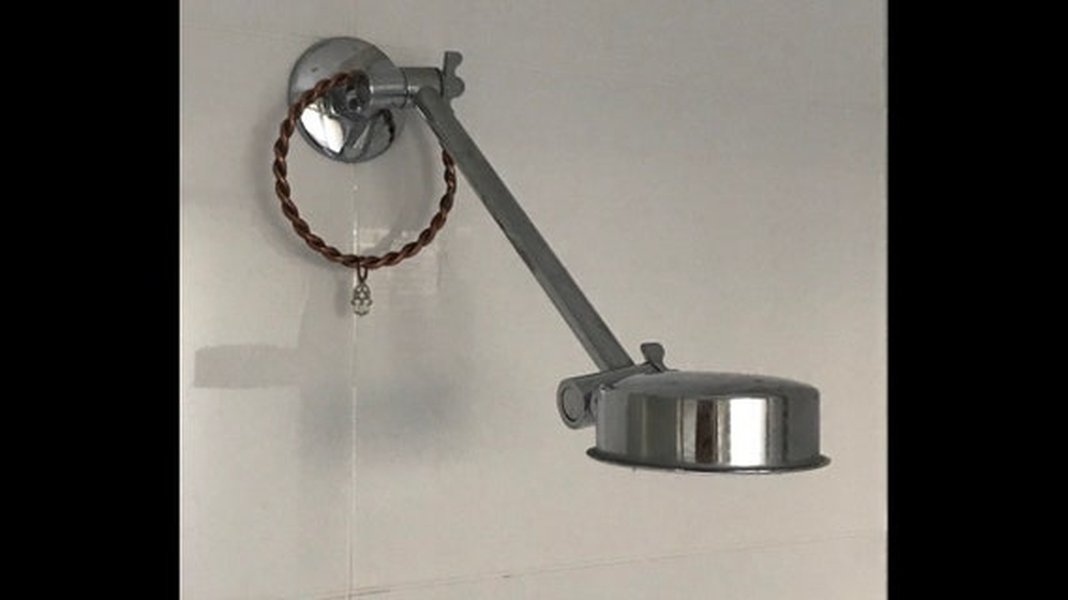
Tensor Rings, like these shown on a shower head, can be used to structure water as it flows.
The Significance of Cubit Measurements
The "cubit" is an ancient unit of length, and different cubit measurements are believed to generate specific frequencies. For water structuring, certain cubit lengths are considered particularly effective:
- Sacred Cubit (approx. 20.6 inches / 52.32 cm wire length): A widely used cubit, associated with general well-being and energy balancing.
- Lost Cubit (approx. 23.49 inches / 59.66 cm wire length): Another popular measurement, often linked to mental clarity and emotional balance.
- Earth Resonance Cubit (approx. 19.65 inches / 49.91 cm wire length): This length is specifically recommended by some practitioners for water structuring, as it is said to tune water to the Earth's core frequency, providing grounding and protective qualities.
The chosen cubit length determines the total length of the copper wire before it is formed into a ring. Precision in this measurement is emphasized for optimal performance.
Materials You'll Need
Gathering the right materials is the first step in crafting your Tensor Ring. Here’s what you’ll typically require:
- Copper Wire: Pure copper wire is preferred. Gauges like 10-gauge or 12-gauge (American Wire Gauge - AWG) are commonly recommended for water structuring rings. Thicker gauges like 6-AWG can be used for more robust rings.
- Measuring Tape or Ruler: For accurately measuring the cubit length of the wire.
- Wire Cutters: To cut the copper wire cleanly.
- Pliers: A pair of sturdy pliers (e.g., linesman or needle-nose) will be helpful for gripping and twisting the wire. Some prefer two pairs.
- Drill (Optional but Recommended for Twisting): A hand drill or power drill can make twisting the wire much easier and more uniform.
- Vise or Clamps (Optional): To hold one end of the wire securely while twisting.
- Ring Mandrel or Cylindrical Object: A sturdy round object (e.g., wooden dowel, metal pipe, sturdy bottle, or a specialized ring mandrel) to help shape the wire into a perfect circle. The diameter will determine the final size of your ring.
- Marker: To mark measurements on the wire if needed.
- Safety Gear: Safety glasses are recommended, especially when cutting or twisting wire. Gloves can protect your hands.
- Soldering Iron and Solder (Optional): For a more permanent and conductive join, you can solder or braze the ends of the ring. This is often recommended for rings intended for long-term water use to prevent corrosion and enhance durability.
Step-by-Step Guide to Creating Your Tensor Ring
Follow these instructions carefully to construct your own Tensor Ring for water structuring.
Step 1: Determine Your Cubit Length and Cut the Wire
Choose the Right Measurement
Select a cubit length known for its water-structuring properties, such as the Earth Resonance Cubit (19.65 inches / 49.91 cm), Sacred Cubit (20.6 inches / 52.32 cm), or Lost Cubit (23.49 inches / 59.66 cm). This measurement refers to the total length of the single strand of wire you will start with.
Measure and Cut
Using your measuring tape, accurately measure out the chosen length of copper wire. Ensure your cut is clean and precise. For example, if you choose the Earth Resonance Cubit, cut a piece of wire exactly 19.65 inches long. Some methods involve doubling this length if you are not using the fold-and-twist method described next, but the fold-and-twist is common.
Step 2: Prepare and Twist the Wire
Folding the Wire
Take your measured length of copper wire and carefully fold it exactly in half, bringing the two ends together. You will now have a doubled wire that is half the original cubit length.
Twisting the Wire
This is a critical step. The twisted wire creates the tensor field. Secure the folded end (the loop) in a vise or hold it firmly with pliers. Grip the two loose ends with another pair of pliers or insert them into the chuck of a drill. If using a drill, set it to a low speed and ensure the wire is taut. Slowly activate the drill to twist the two strands of wire together. Aim for a consistent twist along the entire length, often described as forming a 45° angle or simply a tight, even twist. If twisting by hand with pliers, twist in one direction consistently. The goal is to create a single, neatly twisted piece of wire. Be careful not to over-twist, which could weaken the wire.
Step 3: Shape the Ring
Forming the Circle
Once the wire is twisted, carefully remove it. Now, you need to shape this twisted wire into a circle. Take your ring mandrel or cylindrical object. Wrap the twisted wire around it to form a ring. The two ends of the twisted wire should meet or slightly overlap.
Ensuring Uniformity
Adjust the wire to make the ring as perfectly circular as possible and ensure the twists are evenly distributed. The circumference of this ring will be approximately half the original single-strand cubit length you started with (e.g., if you started with a 19.65-inch wire, folded and twisted it, the resulting ring will have a circumference of roughly 9.825 inches).
Step 4: Secure the Connection
Joining the Ends
The ring must be a closed loop. The two ends of the twisted wire need to be securely joined. There are several ways to do this:
- Twisting: You can simply twist the overlapping ends tightly together using pliers. Ensure the connection is snug and won't easily come apart.
- Soldering or Brazing (Recommended for Durability): For a more robust and conductive connection, soldering or brazing the joint is highly recommended, especially if the ring will be near water. This creates a permanent, seamless loop. Ensure you use lead-free solder if the ring might come into contact with anything related to consumption.
The key is to create a continuous, closed loop. Any gap can disrupt the tensor field.
Step 5: Refine and Finish
Final Touches
Inspect your finished Tensor Ring. Ensure there are no sharp edges or loose ends, especially if you twisted the ends together. You can gently file or hammer any sharp points. The ring should be smooth and symmetrical. If you soldered, make sure the joint is clean.
Visualizing Tensor Ring Properties
The following chart provides a conceptual comparison of different cubit lengths often discussed in the context of Tensor Rings and their purported attributes for water structuring. These are based on common interpretations and not definitive scientific measurements.
This chart helps visualize how different cubit lengths might be perceived in terms of their energetic strengths. The Earth Resonance Cubit, for example, is often highlighted for its grounding properties and specific efficacy with water.
The Tensor Ring Creation and Application Process
This mindmap outlines the journey from selecting materials to utilizing your homemade Tensor Ring for enhancing water quality.
(e.g., Earth Resonance, Sacred)"] id2["Materials Needed"] id2a["Pure Copper Wire
(10-12 gauge recommended)"] id2b["Measuring Tools"] id2c["Wire Cutters & Pliers"] id2d["Drill (optional for twisting)"] id2e["Mandrel/Cylindrical Form"] id2f["Soldering Kit (optional)"] id3["Construction Steps"] id3a["Select & Measure Cubit Length"] id3b["Cut Wire Precisely"] id3c["Fold Wire in Half"] id3d["Twist Wire Uniformly"] id3e["Shape into a Circle using Mandrel"] id3f["Secure Ends (Twist or Solder)"] id3g["Refine & Finish (Smooth edges)"] id4["Using the Tensor Ring for Water"] id4a["Around Water Containers
(jugs, bottles, glasses)"] id4b["Around Faucets or Showerheads"] id4c["Leave Water Overnight for Structuring"] id4d["Caution: Avoid direct long-term copper immersion"] id5["Purported Benefits for Water"] id5a["Molecular Reorganization"] id5b["Improved Taste & Softer Feel"] id5c["Enhanced Hydration Potential"] id5d["Chlorine Dissipation"] id5e["Increased Energetic Quality"]
This mindmap provides a clear overview of the entire process, highlighting key considerations at each stage of creating and using your Tensor Ring.
Using Your Tensor Ring for Water Structuring
Once your Tensor Ring is complete, you can begin using it to structure your water. Here are common methods:
- Around Water Containers: Place your Tensor Ring around a glass, pitcher, jug, or water bottle. Leave the water within the ring's field for several hours, or ideally, overnight. The longer the water is exposed, the more refined its structure is believed to become.
- On Faucets and Showerheads: Larger rings can be placed around water taps, showerheads, or even incoming water lines. This allows water to be structured as it flows through the ring's energy field.
- Portable Use: Smaller rings can be carried with you to structure water in your personal water bottle throughout the day.
Important Considerations:
- Direct Immersion: It is generally not recommended to place copper Tensor Rings directly into water for extended periods, as copper can oxidize and leach into the water. The energetic field of the ring is considered sufficient for structuring without direct contact. Solid silver rings are sometimes used differently, but copper requires this caution.
- Patience and Observation: The effects of structured water can be subtle. Pay attention to any changes in taste, how you feel after drinking it, or even how plants respond if you use it for watering.
Insights from an Expert on Tensor Rings and Water
The following video features MJ Pangman, co-author of "Dancing with Water," discussing the use of Tensor Ring technology specifically for water. It provides valuable context on how these tools are thought to interact with water and the kinds of effects users have reported.
In the video, Pangman elaborates on the principles behind Tensor Rings and their application in enhancing water quality, drawing from her extensive research and experience in the field of water structuring.
Key Cubit Lengths for Water Structuring: A Comparison
Different cubit lengths are associated with varying energetic properties. The table below summarizes some common cubit lengths used for Tensor Rings and their typical applications or perceived effects, particularly concerning water.
| Cubit Name | Approximate Wire Length (Single Strand) | Approximate Resulting Ring Circumference (after folding/twisting) | Primary Purported Focus for Water |
|---|---|---|---|
| Earth Resonance Cubit | 19.65 inches (49.91 cm) | ~9.825 inches (24.95 cm) | Grounding, protection, tunes water to Earth's natural energy, enhances crystalline structure. |
| Sacred Cubit (Royal Cubit) | 20.6 inches (52.32 cm) | ~10.3 inches (26.16 cm) | General energy balancing, vitality, physical well-being, broad-spectrum water enhancement. |
| Lost Cubit | 23.49 inches (59.66 cm) | ~11.745 inches (29.83 cm) | Emotional and mental balance, may affect water's subtle energetic properties related to consciousness. |
| Empowerment Cubit (often larger) | Varies, e.g., 33.3 inches (84.58 cm) | ~16.65 inches (42.29 cm) | Amplification of intentions, personal power, may potentize water with specific energetic signatures. |
Note: The resulting ring circumference is approximate as the twisting process can slightly alter the final dimensions. The "wire length" is the crucial starting measurement.
Frequently Asked Questions (FAQ)
What is the best type of copper wire to use?
Does the direction of the twist matter?
How long does it take for the Tensor Ring to structure water?
Can I use multiple Tensor Rings together?
How do I clean my copper Tensor Ring?
Are there any scientific studies on Tensor Rings and water structuring?
Conclusion
Creating your own Tensor Ring for water structuring is an accessible DIY project that connects you with fascinating concepts of energy, geometry, and water's potential. By carefully following the steps, particularly regarding the precise cubit measurements and the twisting of the copper wire, you can craft a tool that many believe can enhance the quality and energetic properties of your drinking water. While the science is still evolving in mainstream understanding, the experiential benefits reported by users worldwide make it a worthwhile exploration for those interested in holistic wellness and the subtle energies around us.
Recommended Further Exploration
Delve deeper into related topics with these queries:
- What are the different cubit lengths used in Tensor Rings and their specific properties?
- How does paramagnetism relate to Tensor Ring technology and water quality?
- Explore the concept of ORMUS and its connection to structured water.
- What are other DIY methods for structuring or energizing drinking water?
References

Last updated May 21, 2025