
Unlocking E-commerce in Iraq: A Django Blueprint for a Points-Based Marketplace
Crafting a robust, Amazon-like platform tailored for the Iraqi market, powered by innovative points and dynamic roles.
Key Insights for Your Django E-commerce Platform
- Tailored Points System: Your platform will operate on a unique points system, where 1 point equals 1 Iraqi Dinar (IQD), facilitating transactions in a region without traditional online payment gateways. Users can acquire points via physical cards from supermarkets or through a manual top-up process managed by administrators.
- Dynamic Role-Based Access Control (RBAC): Implement a flexible RBAC system using Django's built-in groups and permissions. This allows for the creation and assignment of roles (e.g., Customer, Vendor, Admin) dynamically, providing granular control over user access and functionalities.
- Comprehensive E-commerce Functionality: Develop core e-commerce features including product catalog, shopping cart, and order management, all seamlessly integrated with the points-based payment system. This ensures a familiar user experience akin to established online marketplaces.
Building an e-commerce platform in Iraq, akin to Amazon but with a unique points-based payment system, presents both challenges and innovative opportunities. Given the absence of traditional online payment gateways, your strategic decision to use a points system (1 point = 1 IQD) is a brilliant adaptation. Furthermore, the integration of dynamic user roles will ensure a flexible and scalable administrative framework. As an expert web developer, I will outline a comprehensive blueprint using Django, renowned for its rapid development capabilities and robust security features, to bring your vision to life.
Laying the Foundation: Project Setup and Architecture
The initial phase involves setting up a strong project foundation and defining the core architecture that will support all subsequent development. This ensures modularity, scalability, and maintainability.
Core Application Structure
Begin by initializing a new Django project and structuring it into logical applications. This modular approach makes the codebase easier to manage, test, and scale. Recommended applications include:
users_app: For all user-related functionalities, including authentication, profiles, and dynamic roles.products_app: To manage product listings, categories, inventory, and search features.orders_app: For handling shopping carts, checkout processes, and order management.points_app: Dedicated to the unique points system, managing transactions, card redemptions, and manual top-ups.
Database Design with PostgreSQL
PostgreSQL is highly recommended for its robustness, reliability, and advanced features, making it ideal for handling transactional data in an e-commerce environment. Your database schema will include several key models:
- User Model: Extend Django's
AbstractUserto create aCustomUsermodel. This is crucial for embedding custom fields such aspoint_balance(usingDecimalFieldfor precision) and linking to dynamicRolemodels. - Product Model: Define fields for
name,description,price_in_points(orprice_in_IQDwhich will be converted),stock,category, andimage. - Order & OrderItem Models: An
Ordermodel will trackuser,order_date,status(e.g., pending, completed, cancelled), andtotal_points_paid. AnOrderItemmodel will linkOrderandProduct, specifyingquantityandpoints_at_purchase. - Point Transaction Model: Essential for auditing and tracking all point movements. Fields should include
user,amount(positive for earning, negative for spending),transaction_type(e.g., 'card_redemption', 'manual_add', 'product_purchase'),timestamp, and areference_codefor point card redemptions. - Point Card Model: To manage your physical point cards. Include
card_code(unique),value_in_points,is_redeemed(boolean),redeemed_by_user(ForeignKey to User), andredeemed_at(DateTimeField). - Voucher/Coupon Model (Optional): For promotional points or discounts, with fields like
code,points_value,expiry_date, andis_active.
Empowering Users: Dynamic Roles and Permissions
Implementing a dynamic Role-Based Access Control (RBAC) system is paramount for managing diverse user types and administrative functionalities efficiently. Django's built-in authentication and authorization system provides a strong foundation for this.
Custom User Model and RBAC Implementation
Your CustomUser model will be the cornerstone for user management. Instead of creating multiple user models, a single custom user model is recommended, differentiating user types through roles or related models.
from django.db import models
from django.contrib.auth.models import AbstractUser, Group, Permission

class Role(models.Model):
    name = models.CharField(max_length=50, unique=True)
    # A role can have multiple permissions
    permissions = models.ManyToManyField(
        Permission,
        blank=True,
        help_text="The permissions granted to this role.",
        related_name="role_set", # Add a related_name to avoid clash with default User.groups
    )

    def __str__(self):
        return self.name

class CustomUser(AbstractUser):
    # Link CustomUser to a Role
    role = models.ForeignKey(
        Role,
        on_delete=models.SET_NULL,
        null=True,
        blank=True,
        help_text="Designates the user's role in the system.",
    )
    point_balance = models.DecimalField(
        max_digits=10,
        decimal_places=2,
        default=0.00,
        help_text="Current points balance (1 point = 1 IQD)."
    )

    # You can add more custom fields here as needed
    # Example: phone_number = models.CharField(max_length=15, blank=True, null=True)

    class Meta:
        verbose_name = 'Custom User'
        verbose_name_plural = 'Custom Users'

    # Override get_group_permissions and get_all_permissions
    # to include permissions from the assigned role
    def get_group_permissions(self, obj=None):
        permissions = super().get_group_permissions(obj)
        if self.role:
            permissions.update(self.role.permissions.values_list('content_type__app_label', 'codename'))
        return permissions

    def get_all_permissions(self, obj=None):
        permissions = super().get_all_permissions(obj)
        if self.role:
            permissions.update(self.role.permissions.values_list('content_type__app_label', 'codename'))
        return permissions

    def __str__(self):
        return self.username
This structure allows administrators to define new roles (e.g., "Customer," "Dashboard Manager," "Point Distributor") and assign specific permissions to each dynamically through the Django admin interface. Users can then be assigned these roles upon registration or by an administrator.
For access control, leverage Django's @permission_required decorator for function-based views or PermissionRequiredMixin for class-based views. In templates, use {% if perms.app_label.permission_codename %} to conditionally display content or features based on user roles.
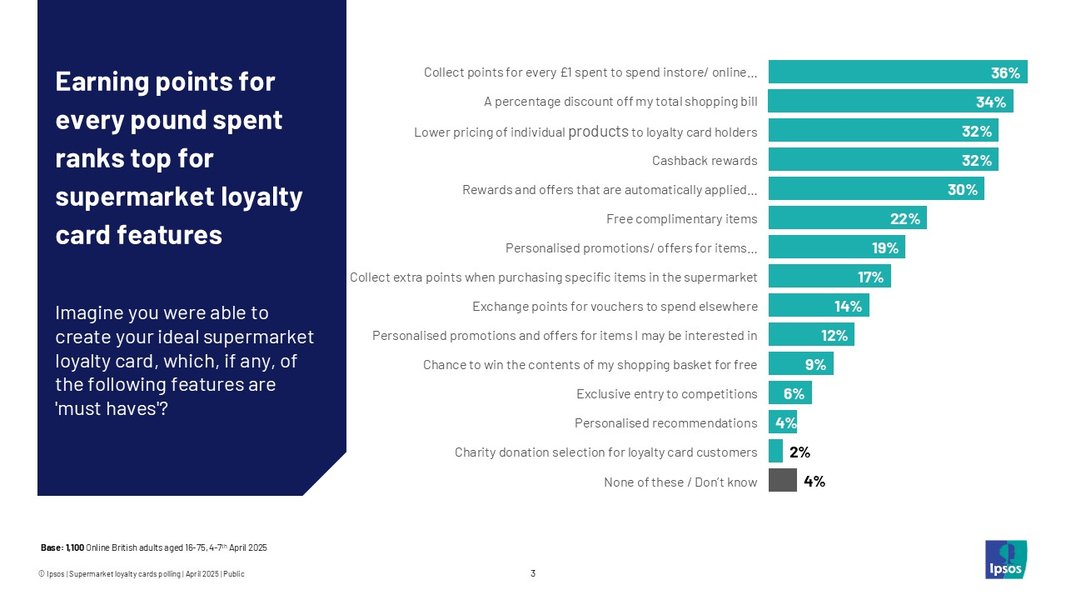
Illustrating the concept of loyalty points and customer engagement, which aligns with your point card system.
The Points Economy: Earning and Spending
Your unique points system is the core of your platform's payment mechanism. This section details its implementation, ensuring secure and efficient transactions.
Points Earning Mechanisms
Users will primarily add points through two methods:
- Point Cards:
- Implement a user-facing form or API endpoint where users can input a unique
card_codefrom physical cards purchased in supermarkets. - The system will validate the
card_codeagainst thePointCardmodel, checking its validity andis_redeemedstatus. - Upon successful validation, the user's
point_balancewill be updated, the card marked as redeemed, and aPointTransactionrecord created, noting thetransaction_typeas 'card_redemption'.
- Implement a user-facing form or API endpoint where users can input a unique
- Manual Add via Special Number/Dashboard:
- For users calling a special number, an authorized administrator (e.g., with a "Dashboard Manager" role) will access a dedicated dashboard interface.
- This interface will allow administrators to select a user and manually add a specified amount of points to their balance. This action must also trigger a
PointTransactionrecord, withtransaction_typeas 'manual_add' and relevant remarks. - This endpoint must be secured with appropriate permissions to prevent unauthorized point manipulation.
The radar chart above visually represents the perceived effectiveness of different aspects of your proposed Django e-commerce platform. It offers a qualitative assessment of key areas, reflecting the balance between innovative features and core functionalities. For instance, 'Points System Robustness' is rated highly due to its central role and careful design, while 'Scalability for Future Growth' considers the inherent advantages of Django and PostgreSQL. 'Security Measures' are also emphasized, highlighting the critical importance of protecting user data and transactions. The chart provides a quick, intuitive overview of the strengths and focus areas of your application blueprint, guiding development priorities.
Points Spending for Product Purchases
The checkout process will be adapted to handle points as currency:
- Shopping Cart: A standard e-commerce shopping cart functionality will allow users to add, update quantities, and remove products.
- Checkout Process:
- Upon checkout, the
total_points_requiredfor the order will be calculated. - This total will be compared against the user's
point_balance. If sufficient, points will be deducted atomically from the user's balance, and anOrderandOrderItemrecord will be created. - A
PointTransactionrecord will log the points spent, noting thetransaction_typeas 'product_purchase'. - If points are insufficient, clear feedback will be provided to the user.
- Upon checkout, the
- Refunds/Cancellations: A robust process must be designed to reverse point transactions in case of order cancellations or product returns, involving adding points back to the user's balance and creating corresponding
PointTransactionrecords.
Core E-commerce Functionality
Beyond the unique payment system, your platform requires standard e-commerce features to provide a familiar and engaging user experience.
Product Management and Catalog
This involves robust management of products, categories, and inventory:
- Product Catalog: Implement views to display products, organize them by categories and subcategories, and provide detailed product pages.
- Search and Filtering: Develop comprehensive search and filtering capabilities to allow users to easily find desired products.
- Inventory Management: Crucial for tracking stock levels and updating them based on orders. An admin interface will be necessary for CRUD (Create, Read, Update, Delete) operations on products and managing inventory.
Shopping Cart and Order Processing
The user journey from browsing to purchase requires a seamless flow:
- Shopping Cart: Users should be able to add items, update quantities, and remove items from their cart. Cart persistence (e.g., via session or database) is important.
- Order Management: Implement user-facing order history and a comprehensive admin dashboard for viewing, updating status, and managing all orders. This includes functionalities for refunding points if an order is canceled.
Administrative and User Interfaces
Both users and administrators require intuitive interfaces to interact with the platform effectively.
Leveraging Django Admin
Django's powerful built-in admin interface will be invaluable for managing various aspects of your application:
- Users, their roles, and groups.
- Products, categories, and inventory.
- Orders and order items.
- Point cards (generation, tracking redemption status).
- Point transactions (for auditing and troubleshooting).
- Custom permissions for granular control.
Custom Dashboards
- User Dashboard: Provide users with a personalized area to view their current point balance, transaction history, order history, and an interface to redeem point cards or request manual point top-ups.
- Admin/Dashboard Manager Dashboard: A custom dashboard specifically for authorized personnel to manually add points to user accounts (as per the "special number" request). This dashboard can also include reports on point card sales, total points redeemed, popular products, and overall platform analytics. Django REST Framework (DRF) can be used to build APIs if a separate frontend (e.g., React, Vue.js) is desired for the dashboard.
Technical Considerations: Architecture and Security
Beyond features, robust architecture and stringent security measures are critical for the success and reliability of your e-commerce platform.
System Architecture and Technologies
Your technical stack will leverage the strengths of Django and complementary tools:
- Backend: Django (Python) with Django REST Framework (DRF) for API endpoints.
- Database: PostgreSQL for production, offering reliability and advanced features.
- Task Queue (Recommended): Celery with Redis/RabbitMQ for background tasks, such as asynchronous processing of point card redemptions, generating reports, handling potential point expiration logic, and sending notifications.
- Frontend: Django Templating Language for server-side rendered pages initially. For a more dynamic user experience, consider a JavaScript framework like React or Vue.js integrated with DRF APIs for a Single Page Application (SPA).
- Deployment: Cloud providers like AWS (EC2, Elastic Beanstalk), DigitalOcean, or Heroku are excellent choices. Set up Nginx/Apache as a web server and Gunicorn/uWSGI as an application server. Configure static and media file serving (e.g., AWS S3) and ensure HTTPS for secure communication.
Security Best Practices
Security must be a top priority to protect user data and ensure transaction integrity:
- Authentication and Authorization: Use Django's built-in features for robust authentication, dynamic roles, and granular permissions.
- Data Validation: Implement strict validation for all user inputs, particularly for point card codes and point amounts.
- Transaction Integrity: Ensure atomicity of all point transactions using Django's
transaction.atomic()to prevent partial updates and data inconsistencies. - Sensitive Data Handling: Never store raw point card codes or other sensitive information unencrypted. Hash or encrypt data as appropriate.
- Rate Limiting: Implement rate limiting for critical APIs (e.g., point card redemption, login attempts) to protect against brute-force attacks.
- Protection against common vulnerabilities: Guard against CSRF (Cross-Site Request Forgery), XSS (Cross-Site Scripting), and SQL injection by following Django's security recommendations.
Development Workflow and Future Enhancements
Adopting an agile methodology and planning for future enhancements will ensure continuous improvement and growth of your platform.
Development Process
Employing best practices during development will lead to a high-quality, maintainable application:
- Agile Methodology: Break down the project into smaller, manageable sprints, allowing for iterative development and frequent feedback.
- Version Control: Use Git and host your repository on platforms like GitHub or GitLab for collaborative development and change tracking.
- Testing: Write comprehensive unit, integration, and end-to-end tests for all critical functionalities, including user authentication, the points system, and order processing.
- Documentation: Document your API endpoints, database schema, and custom logic to facilitate future development and maintenance.
- Scalability: Design the system with scalability in mind, especially for the database and application servers, to accommodate future user growth and transaction volume.
This mindmap visually outlines the comprehensive architecture and interconnected components of your Django e-commerce platform. It starts with the foundational project setup and branches out into key functional areas like user management, the unique points system, core e-commerce features, and administrative interfaces. Each node represents a critical aspect, and its connections demonstrate how different parts of the system interact, providing a clear roadmap for development. This structured overview helps ensure all requirements are addressed cohesively, from dynamic roles to the specific points earning mechanisms unique to your Iraqi market context.
Enhancements and Future Features
Consider these additions to further enhance your platform:
- Voucher/Coupon Integration: Offer promotional points or discounts using vouchers.
- Referral Programs: Reward users with points for referring new customers.
- Analytics Dashboard: Provide detailed insights into sales, points usage, and user behavior.
- Mobile App Integration: Develop native mobile applications or ensure a fully responsive frontend for mobile users.
- Notifications: Implement email or in-app notifications for order status updates, points transactions, and promotions.
- Customer Support: Integrate live chat or a ticketing system for customer assistance.
Essential Django Packages and Tools
Several Django packages can streamline your development process:
| Category | Recommended Package/Tool | Purpose |
|---|---|---|
| Authentication & Roles | django-allauth |
Comprehensive user authentication, registration, and account management. |
| Authentication & Roles | django-role-permissions (or custom implementation) |
Streamlines Role-Based Access Control (RBAC) on top of Django's built-in permissions. |
| API Development | django-rest-framework (DRF) |
For building powerful and flexible APIs, especially if you opt for a decoupled frontend or custom dashboards. |
| Background Tasks | Celery with Redis/RabbitMQ |
Handles asynchronous tasks like processing point card redemptions, generating reports, or sending notifications. |
| Database | PostgreSQL |
Robust and reliable database for production environments, suitable for transactional data. |
| Payment Concepts | django-loyalty-points-app (conceptual adaptation) |
Provides a model for loyalty points systems, adaptable for your unique points-as-currency approach. |
| Security | Built-in Django Security Features | Protection against CSRF, XSS, SQL injection, and secure password handling. |
This table summarizes key packages and tools that will be instrumental in building your Django application, aligning with the functionalities discussed. These choices are based on industry best practices and their direct relevance to your project's unique requirements, from user authentication to handling your custom points system.
Understanding User Roles and Permissions in Django
The following video provides a deep dive into implementing custom roles and permissions in Django Rest Framework, which is highly relevant for your dynamic role requirements. While it focuses on DRF, the core concepts of defining roles, assigning permissions, and restricting access are universally applicable to your Django project.
This video explains how to create custom roles and permissions in Django, a fundamental concept for your dynamic user access control system.
The video covers how to implement dynamic roles and permissions effectively. This involves extending Django's built-in user model, creating custom permission sets, and applying them to various user groups. For your project, this directly translates to defining roles like "Customer" (who can only purchase products), "Dashboard Manager" (who can manually add points), and "Admin" (who has full control over the platform). By understanding these concepts, you can ensure that each user type has precisely the access they need, enhancing both security and user experience.
Frequently Asked Questions (FAQ)
What is the advantage of a custom user model in Django?
point_balance or a direct link to a Role model) to your user profiles from the very beginning, without needing to modify Django's default user table later. This provides greater flexibility and is a recommended practice for most Django projects that require custom user data.How can I ensure the security of point transactions?
Can I integrate traditional payment gateways later if they become available in Iraq?
How do dynamic roles differ from static user types?
Conclusion
Building an Amazon-like e-commerce platform in Iraq with a points-based system and dynamic user roles is an ambitious yet highly achievable endeavor with Django. By meticulously planning your project foundation, implementing a robust custom user model with flexible RBAC, designing a secure and efficient points economy, and integrating comprehensive e-commerce functionalities, you can create a truly innovative and valuable service. Remember to prioritize security, adopt agile development practices, and plan for future scalability to ensure the long-term success of your platform. This blueprint provides a solid roadmap, and with diligent execution, your vision for a localized, points-driven marketplace will thrive.
Recommended Searches
- Building a scalable Django e-commerce platform
- Implementing loyalty points system in Django
- Advanced Django RBAC with custom permissions
- Django asynchronous tasks with Celery and Redis
Referenced Search Results

 docs.aws.amazon.com