
Dopamine Reward Prediction Error and Its Role in Human Learning
Unraveling the Neural Mechanism Behind Adaptive Behavior
Key Takeaways
- Dopamine serves as a critical teaching signal by encoding discrepancies between expected and actual rewards, facilitating learning and decision-making.
- Reward Prediction Error (RPE) influences both synaptic plasticity and the formation of associations between cues and rewards, enhancing adaptive behavior.
- Disruptions in dopamine RPE signaling are linked to various psychiatric conditions, including addiction and depression, highlighting its importance in mental health.
Introduction to Dopamine Reward Prediction Error
Dopamine reward prediction error (RPE) is a pivotal neural mechanism that underpins learning in the human brain. By signaling the difference between anticipated and actual rewards, dopamine facilitates adaptive behaviors and cognitive processes. This comprehensive exploration delves into the multifaceted role of dopamine RPE in learning, decision-making, and its broader implications for mental health.
Dopamine as a Teaching Signal
Encoding Reward Discrepancies
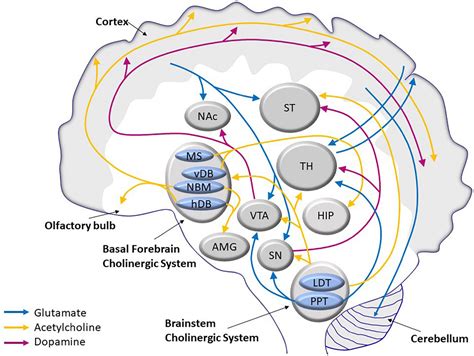
Dopamine neurons, primarily located in the midbrain regions such as the ventral tegmental area (VTA) and substantia nigra, are responsible for encoding reward prediction errors. When an outcome surpasses expectations, a positive RPE is generated, leading to an increase in dopamine neuron firing rates. Conversely, when outcomes fall short of predictions, a negative RPE occurs, resulting in decreased firing rates. This dynamic signaling serves as a foundational teaching signal, guiding the brain's learning processes.
Facilitating Synaptic Plasticity
The phasic dopamine signals associated with RPEs drive synaptic plasticity, the brain's ability to strengthen or weaken synaptic connections based on activity patterns. In regions such as the prefrontal cortex and basal ganglia, dopamine influences the efficacy of synapses by modulating neurotransmitter release and receptor sensitivity. This modulation ensures that behaviors leading to positive outcomes are reinforced, while those leading to negative outcomes are diminished, promoting efficient learning and adaptation.
Associative Learning and Dopamine RPE
Forming Associations Between Cues and Rewards
Associative learning involves the brain's ability to link specific cues with anticipated rewards. Initially, dopamine neurons respond directly to the reward itself. However, as the association between a cue (e.g., a sound or visual signal) and the reward strengthens, the dopamine response shifts to the predictive cue. This shift indicates that the brain has learned to anticipate the reward upon encountering the cue, thereby refining its predictive capabilities and enhancing learning efficiency.
Adapting to Environmental Changes
As environmental contingencies evolve, dopamine RPE signals enable the brain to adjust its predictions and behaviors accordingly. This adaptability is crucial for navigating complex and dynamic environments, ensuring that learning remains relevant and responsive to new information. By continuously updating reward predictions, the brain maintains an optimal balance between exploration and exploitation, fostering both resilience and flexibility in decision-making processes.
Neural Circuitry Involved in Dopamine RPE
Key Brain Regions
The dopamine RPE mechanism engages several critical brain regions:
-
Ventral Tegmental Area (VTA)/Substantia Nigra (SN): Primary sources of dopaminergic neurons that project to various brain regions.
-
Striatum: Main target area receiving dopamine signals, involved in reward processing and action selection.
-
Prefrontal Cortex: Facilitates complex reward-related information processing and executive functions.
-
Amygdala: Represents expected rewards and aids in guiding future behavior based on emotional significance.
Dopamine Interaction with Other Neuromodulators
Dopamine does not operate in isolation; it interacts with other neuromodulators such as serotonin to encode long-term learning and manage behavioral trade-offs. These interactions provide a nuanced modulation of synaptic activities, ensuring that learning processes are both robust and adaptable to varying contextual demands.
Temporal Difference Learning and Prediction
Theoretical Framework
Temporal Difference (TD) Learning is a computational model that describes how dopamine neurons update reward predictions over time. Unlike simple reinforcement models that respond solely to final outcomes, TD Learning posits that dopamine signals are also influenced by predictive cues, allowing for the anticipation and temporal organization of rewards. This framework helps explain phenomena such as the shifting of dopamine responses from rewards to predictive cues as associations strengthen.
Application in Pavlovian Conditioning
In Pavlovian conditioning experiments, the presentation of a neutral cue (e.g., a bell) that reliably predicts a reward (e.g., food) initially elicits dopamine neuron responses upon the reward's delivery. Over time, as the association solidifies, dopamine neurons begin to respond to the cue itself rather than the reward. This transition exemplifies how TD Learning facilitates the updating of reward predictions and enhances the brain's ability to anticipate and respond to environmental stimuli effectively.
Modulation of Synaptic Plasticity
Strengthening and Weakening Synapses
Dopamine RPE signals play a crucial role in synaptic plasticity by modulating the strength of synaptic connections. Positive prediction errors, marked by increased dopamine release, enhance synaptic strength, making it more likely that rewarded behaviors will be repeated. Conversely, negative prediction errors result in the weakening of synaptic connections, discouraging the repetition of unrewarded or harmful behaviors. This bidirectional modulation ensures that the brain efficiently adapts its neural networks based on experiential feedback.
Interaction with Glutamate in the Striatum
Within the striatum, dopamine interacts with glutamate neurotransmission to regulate synaptic changes. This interaction is essential for the fine-tuning of neural circuits involved in reward processing and motor control, supporting the acquisition and consolidation of learned behaviors. The balance between dopamine and glutamate signaling determines the direction and magnitude of synaptic plasticity, influencing overall learning outcomes.
Impacts on Memory and Cognition
Enhancing Memory Encoding
Dopamine RPE signals not only reinforce behaviors but also enhance the encoding of memories associated with rewarding experiences. Positive prediction errors, in particular, facilitate the consolidation of detailed and vivid memories, making unexpected and pleasant experiences more memorable. This enhancement of memory encoding aids in the formation of long-term associations between actions and outcomes, thereby improving future decision-making processes.
Fostering Cognitive Flexibility
The ability to adaptively switch strategies in response to changing environmental contingencies is underpinned by dopamine-guided RPE. This cognitive flexibility is vital for navigating complex social interactions, problem-solving, and high-stakes decision-making. By updating reward predictions and adjusting behaviors based on new information, dopamine RPE contributes to the maintenance of adaptable and resilient cognitive functions.
Adaptive Behavior and Decision-Making
Guiding Behavior Based on Past Experiences
Dopamine RPE signals enable the brain to prioritize behaviors that have historically led to positive outcomes. When a particular behavior consistently results in a reward, dopamine signaling strengthens the likelihood of its repetition. Conversely, if a behavior no longer yields the expected reward, dopamine signaling adjusts expectations, leading to a decrease in that behavior. This mechanism ensures that decision-making is informed by past experiences, optimizing behavioral strategies for better outcomes.
Optimizing Decision-Making Strategies
The continuous updating of reward predictions based on dopamine RPE allows for the optimization of decision-making strategies. This optimization involves balancing exploration of new behaviors with the exploitation of known rewarding actions, thereby enhancing overall behavioral efficacy. In complex and dynamic environments, this balance is crucial for maintaining efficient and effective decision-making processes.
Dopamine RPE in Habit Formation and Goal-Directed Behaviors
Formation of Habits
Repeated associations between specific actions and rewards lead to the formation of habits, wherein these behaviors become automatic responses to certain cues without conscious deliberation. As habits form, the reliance on dopamine RPE signals diminishes, allowing behaviors to be executed with minimal cognitive effort. This efficiency is beneficial for performing routine tasks but can also contribute to the persistence of maladaptive habits if not properly regulated.
Support for Higher-Order Learning
While habits represent automatic responses, dopamine RPE also supports higher-order learning such as planning and anticipating long-term outcomes. By encoding discrepancies between expected and actual rewards, dopamine facilitates the development of goal-directed behaviors that involve foresight and strategic planning. This dual role ensures that the brain can engage in both automatic and deliberate behaviors as required by different contexts.
Clinical Implications of Dopamine RPE
Link to Psychiatric Disorders
Dysregulation of dopamine RPE signaling has been implicated in various psychiatric conditions, including addiction, depression, and anxiety disorders. In addiction, drugs of abuse can hijack the dopamine system, leading to exaggerated positive RPE signals that reinforce drug-seeking behaviors despite adverse consequences. In depression, impaired dopamine signaling may result in anhedonia, characterized by a diminished capacity to experience pleasure, thereby reducing motivation and engagement in rewarding activities.
Potential for Therapeutic Interventions
Understanding the mechanisms of dopamine RPE offers valuable insights for developing treatments for psychiatric disorders. Therapeutic strategies that target dopamine signaling pathways could potentially restore normal RPE functions, alleviating symptoms and promoting healthier behavioral patterns. For instance, medications that modulate dopamine levels are already used in the treatment of depression and Parkinson's disease, and ongoing research continues to explore their efficacy in addressing a broader range of conditions.
Human-Specific Findings in Dopamine RPE Research
Neuroimaging Studies
Advancements in neuroimaging techniques have enabled researchers to observe dopamine RPE signals in real-time within the human brain. Functional Magnetic Resonance Imaging (fMRI) studies have consistently identified the striatum as a key region where RPE signals are processed. These studies reveal that dopamine RPE responses are elicited not only by direct rewards, such as food and money, but also by abstract or symbolic rewards, demonstrating the system's versatility in encoding a wide range of rewarding stimuli.
Economic Utility Encoding
Research indicates that the dopamine RPE system can encode formal economic utility, representing the subjective value individuals assign to different outcomes. This encoding bridges computational models of economics with neural processes, providing a tangible neural basis for abstract economic concepts. Such findings enhance our understanding of decision-making processes in economic behaviors and market dynamics.
Pharmacological Enhancements
Administration of L-DOPA, a precursor to dopamine, has been shown to enhance reward learning performance in humans. This pharmacological intervention underscores the critical role of dopamine in modulating RPE and highlights potential avenues for enhancing cognitive functions related to learning and motivation through targeted dopamine modulation.
Recent Advances in Dopamine RPE Research
Symmetrical Encoding of Prediction Errors
Recent studies have expanded our understanding of how dopamine neurons encode both positive and negative prediction errors. While positive RPE signals typically dominate due to their reinforcing nature, emerging evidence suggests that negative RPE signals are equally important for learning and adaptation. This symmetrical encoding ensures that the brain can effectively learn from both the presence and absence of expected rewards.
Interactions with Other Neuromodulators
Research has begun to uncover the intricate interactions between dopamine and other neuromodulators such as serotonin. These interactions play a role in encoding complex learning scenarios and managing behavioral trade-offs, adding layers of complexity to the dopamine RPE system. Understanding these interactions is crucial for developing a holistic view of the brain's reward and learning mechanisms.
Implications for Artificial Intelligence
The principles of dopamine RPE have inspired algorithms in artificial intelligence, particularly in reinforcement learning models. By mimicking the brain's reward prediction mechanisms, AI systems can achieve more sophisticated learning and decision-making capabilities, bridging biological insights with technological advancements.
Conclusion
Dopamine reward prediction error is a fundamental neural mechanism that orchestrates learning, decision-making, and adaptive behavior in the human brain. By encoding discrepancies between expected and actual rewards, dopamine facilitates the formation of associations, modulates synaptic plasticity, and enhances cognitive flexibility. Understanding dopamine RPE not only illuminates the intricacies of human learning but also offers valuable insights into addressing psychiatric disorders and advancing artificial intelligence. Ongoing research continues to unravel the complexities of this system, paving the way for novel therapeutic interventions and deeper comprehension of the human brain.
References
Last updated January 18, 2025