
Project Report on Double Wishbone Suspension System
An In-Depth Analysis of Design, Performance, and Optimization
Key Takeaways
- Superior Handling and Stability: The double wishbone suspension system offers enhanced control over wheel motion, leading to improved vehicle handling and stability, especially in high-performance and racing contexts.
- Precise Camber Control: This system maintains optimal camber angles during various driving maneuvers, ensuring consistent tire-road contact and superior traction.
- Comprehensive Design and Analysis: Utilizing CAD tools, Finite Element Analysis (FEA), and multi-body dynamics simulations allows for the optimization of suspension geometry and material selection, resulting in a robust and efficient suspension system.
1. Introduction
1.1 Background
Suspension systems are critical components in automotive engineering, influencing vehicle comfort, handling, and safety. Among various suspension types, the double wishbone suspension system stands out for its superior performance characteristics, making it a popular choice in high-performance and racing vehicles. This project report delves into the design, analysis, and optimization of the double wishbone suspension system, highlighting its advantages, challenges, and applications.
1.2 Purpose and Scope
The primary objective of this project is to provide a comprehensive understanding of the double wishbone suspension system. This includes:
- Describing the configuration and working principles of the double wishbone suspension.
- Highlighting design advantages over other suspension types such as MacPherson struts and multi-link systems.
- Exploring the kinematic and dynamic behavior through computational and experimental methods.
- Recommending design improvements based on simulation and analysis results.
2. Literature Review
2.1 Evolution of Suspension Systems
The evolution of suspension systems has been pivotal in advancing vehicle dynamics. From the simplicity of beam axles to the complexity of independent suspension systems like the double wishbone, each advancement has aimed to enhance ride comfort, handling, and safety. The double wishbone suspension, originally adopted in motorsports, has found its way into production vehicles due to its ability to provide precise control over wheel motion.
2.2 Key Research Themes
Research in double wishbone suspension systems primarily focuses on:
- Kinematic and Dynamic Behavior: Understanding how the double wishbone design optimizes camber control and minimizes tire scrub during maneuvers.
- Material and Manufacturing Advances: Exploring lightweight materials and advanced manufacturing techniques to enhance performance and reduce unsprung mass.
- Comparative Studies: Evaluating the double wishbone suspension against other systems like MacPherson struts and multi-link suspensions to identify superior geometric control and ride comfort.
2.3 Research Gaps and Opportunities
Despite extensive research, several areas present opportunities for further exploration:
- Advanced Simulation Methods: Integrating multi-body dynamics with real-time data analytics to predict and enhance suspension behavior.
- Composite Materials: Utilizing new composite materials to reduce weight while maintaining or improving structural integrity.
- Optimization Algorithms: Developing algorithms to fine-tune suspension geometry for specific vehicle dynamics and operating conditions.
3. Design and Geometry
3.1 Geometric Configuration
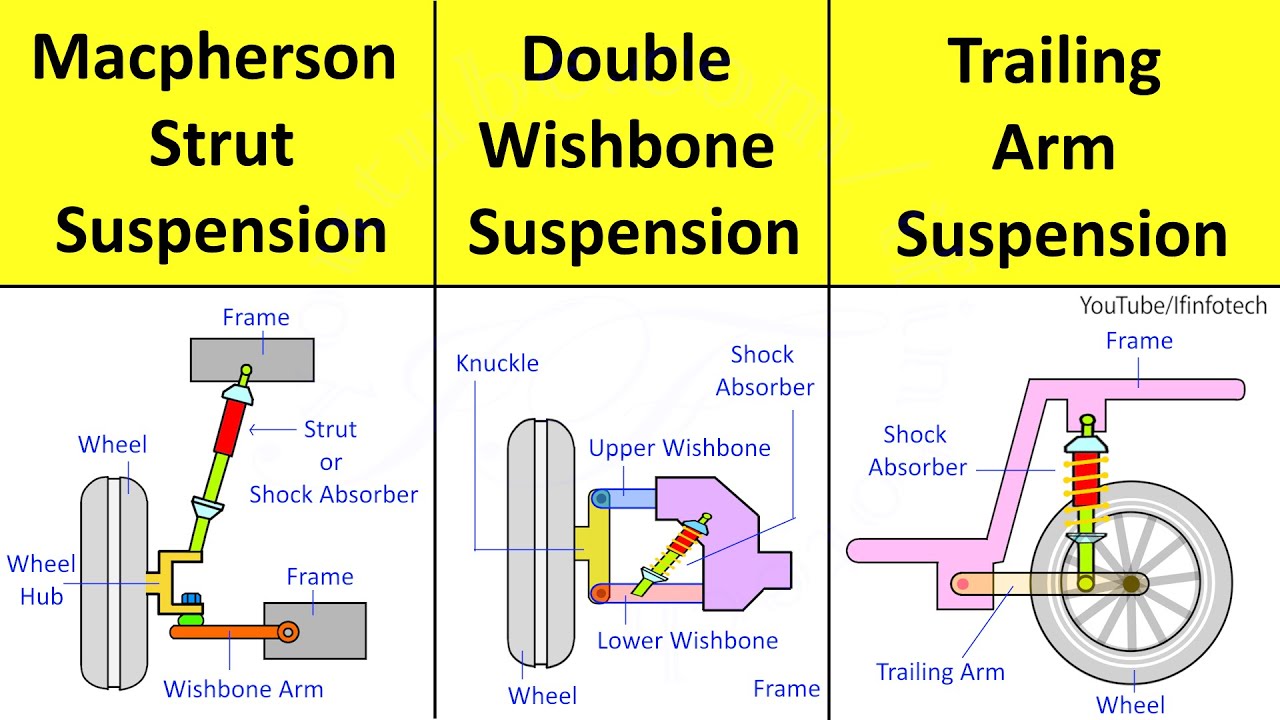
The double wishbone suspension comprises two wishbone-shaped control arms—upper and lower—that connect the vehicle's chassis to the wheel hub. This configuration allows for independent movement of each wheel, enabling precise control over wheel alignment parameters.
3.1.1 Upper Control Arm
The upper control arm maintains a steep roll center, managing lateral forces during cornering and minimizing body roll. Its design is crucial for ensuring that the camber angle remains optimized throughout suspension travel.
3.1.2 Lower Control Arm
The lower control arm is essential for controlling camber variation, especially during dynamic maneuvers. It plays a significant role in maintaining the tire's contact patch with the road surface, enhancing traction and stability.
3.2 Wheel Alignment Parameters
Key wheel alignment parameters influenced by the double wishbone suspension include:
- Camber Angle: The tilt of the wheel relative to the vertical axis. The double wishbone suspension minimizes camber changes during suspension travel, ensuring optimal tire contact.
- Caster Angle: The angle of the steering pivot. Proper caster alignment enhances steering stability and feedback.
- Toe Angle: The direction the wheels point relative to the vehicle's centerline. Managing toe angles ensures predictable steering behavior.
3.3 Component Design
Critical components of the double wishbone suspension include:
- Control Arms: Typically made from high-strength steel, aluminum, or composite materials to balance weight and strength.
- Knuckle or Hub: Connects the control arms to the wheel, facilitating steering and suspension movement.
- Shock Absorbers and Springs: Absorb road shocks and support vehicle weight, contributing to ride comfort and handling.
4. Static and Dynamic Analysis
4.1 Static Stress Analysis
Static stress analysis examines how suspension components react under constant loading conditions. Tools like ANSYS are employed to simulate and analyze stress distributions, ensuring that components do not exceed their yield strengths. This analysis is vital for assessing the structural integrity and durability of the suspension system.
4.2 Dynamic Analysis
Dynamic analysis explores how the suspension system behaves under varying conditions, such as different driving maneuvers and road inputs. This includes:
- Natural Frequencies: Identifying the system's inherent vibration modes to prevent resonance issues.
- Body Displacements: Measuring how the vehicle body moves in response to suspension inputs.
- Velocities and Accelerations: Assessing the rapid movements of suspension components during dynamic events.
5. Finite Element Analysis (FEA)
5.1 Importance of FEA
Finite Element Analysis is a critical tool in evaluating the structural performance of suspension components. By dividing components into smaller finite elements, engineers can simulate and analyze stress, strain, and deformation under various load conditions.
5.2 FEA Process
The FEA process involves:
- CAD Modeling: Creating detailed 3D models of suspension components using CAD software like SolidWorks.
- Meshing: Dividing the CAD model into finite elements for simulation.
- Material Assignment: Defining material properties based on the chosen materials.
- Loading and Boundary Conditions: Applying forces, moments, and constraints to simulate real-world operating conditions.
- Simulation and Analysis: Running the FEA to obtain results on stress distribution, deformation, and potential failure points.
5.3 FEA Results Interpretation
The results from FEA enable engineers to:
- Identify areas of high stress concentration that may require redesign or reinforcement.
- Evaluate the fatigue life of components to ensure long-term durability.
- Optimize the geometry and material selection to enhance performance while reducing weight.
6. Optimization and Simulation
6.1 Simulation Tools and Techniques
Advanced simulation tools are employed to assess and optimize suspension performance:
- CAD Software: Tools like SolidWorks and CATIA are used for detailed component design.
- Multi-Body Dynamics (MBD): Software such as ADAMS and Simpack simulate the interaction between suspension components and the vehicle body.
- Finite Element Analysis (FEA): Platforms like ANSYS and Simscale analyze structural integrity under various loads.
6.2 Optimization Objectives
The optimization process focuses on:
- Weight Reduction: Selecting materials and redesigning components to minimize unsprung mass without compromising strength.
- Performance Enhancement: Adjusting suspension geometry to improve handling, stability, and ride comfort.
- Cost Efficiency: Streamlining the design to reduce manufacturing and maintenance costs.
6.3 Optimization Techniques
Various optimization techniques are applied to refine the suspension system:
- Genetic Algorithms: Used to explore a wide range of design variables and identify optimal configurations.
- Passive Hydraulic Mechanisms: Enhance camber control and stability during braking and cornering.
- Material Selection: Incorporating composites and aluminum alloys to achieve a balance between strength and weight.
7. Performance Advantages
7.1 Handling and Stability
The double wishbone suspension system excels in maintaining vehicle stability during aggressive maneuvers. By allowing independent wheel movement and precise control over camber angles, it ensures that each tire maintains optimal contact with the road, enhancing grip and reducing body roll.
7.2 Camber Control
One of the standout features of the double wishbone system is its ability to maintain consistent camber angles throughout suspension travel. This minimized camber change ensures that tire contact patches remain optimized, providing better traction and reduced tire wear.
7.3 Ride Comfort
Despite its complexity, the double wishbone suspension can be tuned to provide a comfortable ride. The ability to independently adjust various suspension parameters allows engineers to strike a balance between handling performance and ride quality.
7.4 Reduced Unsprung Mass
Utilizing lightweight materials in the construction of control arms and other components reduces unsprung mass. Lower unsprung mass leads to better suspension responsiveness and improved ride comfort, as the suspension can more effectively absorb road irregularities.
8. Applications and Potential Uses
8.1 High-Performance and Racing Vehicles
The double wishbone suspension is a staple in high-performance and racing vehicles due to its ability to provide superior handling and precise control over wheel dynamics. Its configuration allows for quick adjustments to suspension settings, catering to the demanding environments of motorsports.
8.2 Luxury and Everyday Vehicles
Beyond high-performance applications, the double wishbone suspension is also employed in luxury and everyday vehicles where enhanced ride quality and stability are paramount. Its adaptability allows manufacturers to tailor suspension characteristics to meet diverse consumer expectations.
8.3 Specialized Vehicles
The suspension system is also adapted for use in SUVs, all-terrain vehicles (ATVs), and electric vehicles (EVs). In EVs, reducing unsprung mass is particularly beneficial for improving overall vehicle efficiency and handling.
9. Design Challenges
9.1 Complexity and Cost
The double wishbone suspension system is inherently more complex than simpler suspension types like MacPherson struts. This complexity translates to higher manufacturing and maintenance costs, which can be a barrier for adoption in cost-sensitive vehicle segments.
9.2 Space Requirements
The double wishbone system requires more space within the vehicle's chassis compared to other suspension types. This can pose challenges in vehicle packaging and design, especially in compact or front-heavy vehicles.
9.3 Manufacturing Precision
Ensuring precision in manufacturing control arms and other components is critical for maintaining the desired suspension geometry. Any deviations can adversely affect handling characteristics and overall system performance.
10. Optimization Techniques
10.1 Genetic Algorithms
Genetic algorithms are employed to explore a vast design space, optimizing suspension geometry and material selection. These algorithms mimic natural selection processes to iteratively converge on optimal design solutions that enhance performance while minimizing weight and cost.
10.2 Passive Hydraulic Mechanisms
Integrating passive hydraulic mechanisms into the suspension system can enhance camber control and stability. These mechanisms adjust suspension characteristics in response to dynamic loads, improving handling during braking and cornering without the need for active electronic controls.
10.3 Material Optimization
Selecting materials with optimal strength-to-weight ratios is crucial for enhancing suspension performance. Aluminum alloys and composite materials are preferred for their lightweight properties and high strength, enabling the reduction of unsprung mass and overall vehicle weight.
11. Simulation and Analysis
11.1 Multi-Body Dynamics (MBD) Simulation
MBD simulations model the interaction between suspension components and the vehicle body, allowing engineers to assess the dynamic behavior of the suspension under various driving conditions. Software tools like ADAMS and Simpack are instrumental in performing these simulations.
11.2 Finite Element Analysis (FEA)
FEA is utilized to evaluate the structural integrity of suspension components, ensuring that they can withstand operational stresses and loads. By simulating different loading scenarios, engineers can identify potential failure points and optimize component designs for enhanced durability.
11.3 Optimization Outcomes
Through simulations and analyses, several optimization outcomes are achieved:
- Enhanced camber control leading to better tire grip.
- Reduced unsprung mass for improved suspension responsiveness.
- Optimized suspension geometry for balanced handling and ride comfort.
12. Performance Evaluation
12.1 Static Performance
Static performance metrics assess how the suspension system handles constant loads. Key indicators include:
- Load Distribution: Ensuring equal distribution of weight across suspension components.
- Structural Integrity: Verifying that components do not deform or fail under static loads.
- Camber and Caster Stability: Maintaining alignment parameters under load.
12.2 Dynamic Performance
Dynamic performance evaluates how the suspension system responds to changing conditions such as acceleration, braking, and cornering. Important aspects include:
- Ride Comfort: Absorption of road shocks and vibrations to ensure a smooth ride.
- Handling Precision: Responsive steering and minimal body roll for agile maneuvering.
- Tire Traction: Consistent tire-road contact for optimal grip and safety.
12.3 Testing and Validation
To validate simulation results, prototype testing is conducted which includes:
-
Bench Tests: Evaluating component fatigue resistance and durability.
-
On-Vehicle Testing: Assessing real-world ride quality and handling under various road conditions.
-
Sensor Integration: Collecting real-time data on displacement, acceleration, and load forces to fine-tune the suspension system.
13. Conclusion
The double wishbone suspension system offers significant advantages in terms of handling, stability, and ride comfort. Its ability to maintain optimal camber angles and minimize unsprung mass makes it a preferred choice for high-performance and luxury vehicles. Through meticulous design, simulation, and optimization, the double wishbone system can be tailored to meet diverse automotive needs, balancing performance with cost and manufacturing feasibility. Future advancements should focus on integrating active control mechanisms and exploring innovative materials to further enhance suspension performance and efficiency.
14. References
15. Future Work
Future research on the double wishbone suspension system should explore the integration of active control systems to dynamically adjust suspension parameters in real-time. Additionally, investigating the use of novel materials and advanced manufacturing techniques can lead to further weight reductions and performance enhancements. Comprehensive testing across diverse driving conditions will also be essential to validate and refine suspension designs for broader automotive applications.
Last updated February 13, 2025