
Decoding the Dow's Drop: UnitedHealth's Plunge and Market Volatility on April 17, 2025
Understanding the Factors Behind the Decline in US Stock Indexes
Key Market Highlights on April 17, 2025
- UnitedHealth Group's significant drop was the primary driver of the Dow Jones Industrial Average's decline.
- Despite the Dow's fall, most US stocks, including many within the S&P 500, saw gains, indicating a more nuanced market picture.
- The day's trading occurred within a broader context of recent market volatility influenced by trade war concerns and shifts in economic outlook.
The Central Cause: UnitedHealth Group's Steep Decline
The most significant factor contributing to the Dow Jones Industrial Average's decline on April 17, 2025, was the substantial drop in the stock price of UnitedHealth Group (UNH). UnitedHealth, a major component of the 30-stock Dow index, experienced its worst single-day percentage drop in a quarter of a century. This precipitous fall was primarily triggered by the company slashing its full-year earnings forecast.
According to reports, UnitedHealth's revised outlook was a result of higher-than-expected costs, which raised concerns among investors about the profitability of the healthcare giant. Given the significant weighting of UnitedHealth within the Dow, its sharp decline had a disproportionate impact on the index's overall performance.

A view of a bustling stock exchange floor, illustrating the dynamic nature of financial markets.
The Impact of a Single Stock on the Dow
The structure of the Dow Jones Industrial Average, being a price-weighted index of only 30 large companies, means that significant price movements in its components can heavily influence the index's value. UnitedHealth's massive $131 per share drop was reported to be solely responsible for an estimated 805-point decline in the Dow, even as a majority of other Dow components saw their prices rise.
This highlights a key characteristic of the Dow: its susceptibility to the performance of its most expensive stocks, regardless of broader market sentiment or the performance of other index members. While 20 out of the 30 Dow components actually saw their prices increase on April 17, the magnitude of UnitedHealth's fall overshadowed these gains, pulling the entire index lower.
Broader Market Performance: A Mixed Picture
While the Dow experienced a notable decline, the performance of other major US stock indexes on April 17, 2025, presented a more varied picture. The S&P 500, a broader index encompassing 500 of the largest US companies, managed to eke out a small gain for the day. Similarly, the Nasdaq Composite, heavily weighted towards technology stocks, experienced a minor decline.
This divergence in performance between the Dow and the S&P 500 on April 17 was particularly noteworthy. It was reported as the first time on record, dating back to 1928, that the Dow fell by 1% or more while the S&P 500 registered a gain on the same day. This unusual occurrence further underscores the unique impact of UnitedHealth's stock on the price-weighted Dow index compared to the market-capitalization-weighted S&P 500.
Performance of Other Major Indexes
Here's a snapshot of how the major US stock indexes fared on April 17, 2025:
| Index | Closing Value | Change (Points) | Change (%) |
|---|---|---|---|
| Dow Jones Industrial Average | 39,142.23 | -527.16 | -1.3% |
| S&P 500 | 5,282.70 | +7.00 | +0.1% |
| Nasdaq Composite | 16,286.45 | -20.71 | -0.1% |
The Russell 2000 index of smaller companies also saw gains, rising by 0.9%.
Contextualizing the Drop: Recent Market Volatility
The decline in the Dow on April 17, 2025, did not occur in isolation but was part of a period of increased volatility in the stock market. The preceding weeks had seen significant market movements, largely influenced by concerns surrounding tariffs and trade wars initiated by the US President. This broader market downturn began on April 2, 2025, following the announcement of sweeping tariffs.
The period leading up to April 17 included several days of sharp declines across the major indexes, with the Dow experiencing multiple consecutive days of significant losses. The volatility gauge, the CBOE Volatility Index (VIX), had spiked to its highest level since the 2020 market crash, reflecting the heightened investor anxiety.

A chart illustrating the recent performance trends of the S&P 500 index.
Influence of Trade Tensions
Throughout April 2025, trade tensions between the US and China had been a significant overhang on the market. The imposition and retaliation of tariffs led to fears of a global trade war and its potential impact on corporate profits and economic growth. Sectors particularly vulnerable to tariffs, such as retail, technology, and manufacturing, had experienced notable declines in the preceding days and weeks.
While the direct cause of the April 17 Dow drop was UnitedHealth, the underlying market sentiment remained cautious due to the ongoing trade disputes and their potential economic consequences. This broader context of volatility likely exacerbated the impact of UnitedHealth's news on the Dow.
The Role of Sector Performance
Beyond the impact of UnitedHealth, sector-specific movements also played a role in the day's market performance. While the healthcare sector was heavily impacted by UnitedHealth's decline, other sectors saw gains. For instance, some reports indicated gains in sectors like technology, with stocks like Eli Lilly and TSMC showing positive movement, offsetting some of the broader market weakness.
The performance of individual stocks within the Dow also varied. Despite the index's overall decline, a majority of its components closed higher, demonstrating that the selling pressure was not uniform across all large-cap stocks.
Highlights from Other Sectors
- Technology stocks, including some major players, showed resilience, contributing to the Nasdaq's relatively stable performance.
- Pharmaceutical and biotech companies, such as Eli Lilly, saw gains, indicating investor interest in certain areas of the healthcare sector despite the issues faced by UnitedHealth.
- The performance of other sectors like financials and industrials also contributed to the overall market picture, though their impact on the Dow on this particular day was less pronounced than that of UnitedHealth.
Looking Ahead: Market Sentiment and Future Outlook
The events of April 17, 2025, underscore the sensitivity of market indexes to both company-specific news and broader economic and geopolitical factors. While UnitedHealth's earnings revision was the immediate catalyst for the Dow's drop, the existing market volatility provided a backdrop where such news could have a magnified impact.
Investors continue to weigh the potential impacts of ongoing trade disputes, corporate earnings reports, and macroeconomic indicators on the market's direction. The performance of major indexes in the coming days and weeks will likely be influenced by developments on these fronts.
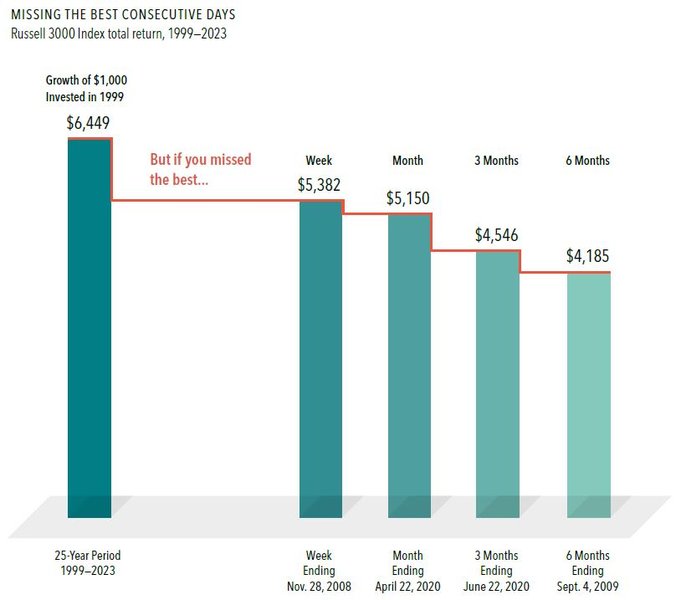
An illustration representing market volatility and the challenges of timing market movements.
Expert Insights on Market Trends
Market analysts are closely monitoring several factors, including:
-
Further developments in international trade relations and the potential for escalation or de-escalation of tariffs.
-
Upcoming corporate earnings reports, which will provide insights into the health of various sectors and individual companies.
-
Statements and actions by central banks regarding monetary policy and interest rates.
-
Geopolitical events that could impact global economic stability.
The mixed performance of the indexes on April 17 suggests a market grappling with conflicting signals, where strong performance in some areas is being offset by challenges in others.
Frequently Asked Questions
Why did UnitedHealth Group's stock drop so sharply on April 17, 2025?
UnitedHealth Group's stock plummeted after the company significantly lowered its full-year earnings forecast. This revision was attributed to higher-than-expected costs.
How did UnitedHealth's drop affect the Dow Jones Industrial Average?
As a major component of the price-weighted Dow index, UnitedHealth's substantial stock price decline had a disproportionate negative impact, single-handedly accounting for a significant portion of the index's overall loss for the day.
Did the S&P 500 and Nasdaq Composite also fall on April 17, 2025?
No, the S&P 500 edged up slightly, while the Nasdaq Composite saw a minor decline. This contrasted with the Dow's larger drop, highlighting the unique factors affecting the Dow on this day.
Was the market drop on April 17 part of a larger trend?
Yes, the market had been experiencing increased volatility throughout April 2025, largely due to concerns over trade wars and tariffs initiated by the US government. The UnitedHealth news occurred within this already cautious market environment.
What does this event indicate about the Dow Jones Industrial Average?
The event underscores how the price-weighted nature of the Dow can make it heavily influenced by the performance of a few high-priced components, even if the broader market or a majority of its other constituents are performing differently.
References
Last updated April 19, 2025