
The Intersection of Organizational Socialization and Digital Transformation: Insights from Dr. Denise Gates
Exploring the evolving landscape of integrating individuals into organizations in the digital age.
Organizational socialization is a critical process by which newcomers are integrated into an organization's culture, norms, values, and behaviors. It's a fundamental aspect of ensuring new hires become productive members of a team and feel a sense of belonging. In today's rapidly evolving technological landscape, the dynamics of this process are being profoundly shaped by digital transformation. Dr. Denise Gates, an author, educator, and consultant, has focused her research on organizational socialization, examining how individuals learn and adapt within various organizational settings, including educational institutions and workplaces.
Dr. Gates' work, including her organizational socialization model first published in 2009, provides a framework for understanding the complexities of this process. Her research explores how people interact within organizations and the factors that influence their successful integration. With the increasing prevalence of digital technologies in nearly every aspect of life, including the workplace, it is essential to consider how these advancements impact the traditional methods and outcomes of organizational socialization.
Key Insights into Organizational Socialization and Digital Transformation
- Dr. Denise Gates' Focus: Dr. Gates' research centers on organizational socialization, exploring how individuals, particularly in educational and workplace settings, are integrated into organizational cultures and norms.
- Digital Transformation's Impact: Digital transformation is significantly altering the methods and experiences of organizational socialization, introducing new tools and challenges for integrating individuals into organizations.
- Evolving Socialization Practices: The digital age necessitates a re-evaluation of traditional socialization practices, requiring organizations to adapt their strategies to effectively onboard and integrate individuals in increasingly digital environments.
Dr. Denise Gates' Contributions to Organizational Socialization
Dr. Denise Gates-Mayweathers is a distinguished figure in the field of organizational behavior, with a particular emphasis on organizational socialization. Her academic background and extensive research have led to significant contributions to our understanding of how individuals are integrated into organizational life. As a business professor, prolific author, and talent optimization consultant, Dr. Gates has examined the nuances of socialization across various contexts, including educational institutions and the corporate world.
The Organizational Socialization Model by Dr. Gates
A cornerstone of Dr. Gates' work is her organizational socialization model, which was first published in 2009. This model provides a structured approach to understanding the stages and factors involved in a newcomer's transition into an organization. It outlines the process by which individuals acquire the necessary knowledge, skills, and attitudes to become effective organizational members. Recent studies conducted in 2023, 2024, and 2025 have reportedly shown unanimous support for this model, highlighting its continued relevance and applicability in contemporary settings.
Dr. Gates' research delves into the practical application of her model, offering insights for educators and practitioners on how to optimize organizational socialization to enhance the integration of students and employees. Her work underscores the importance of effective communication and tailored strategies to facilitate this process successfully.

Illustration of a model related to organizational socialization.
Examining Barriers and Strategies for Success
Beyond the theoretical framework, Dr. Gates' research also addresses the practical challenges individuals face during organizational socialization. Her work has explored the barriers to success from the perspective of organizational socialization and identified strategies that enable individuals to thrive within their environments. This includes examining the impact of workplace dynamics, such as superior-subordinate relationships and traumatic workplace betrayals, on the socialization experience.
Through her books, such as "Next Level Learning: Mastering Organizational Socialization" and "Mastering Organizational Socialization and Communication," Dr. Gates provides actionable guidance for improving communication and human relationships in organizational settings. Her insights are grounded in a deep understanding of human social interaction and the factors that contribute to a positive and productive socialization process.
The Influence of Digital Transformation on Society and Socialization
Digital transformation refers to the profound and accelerating transformation of business activities, processes, competencies, and models to fully leverage the changes and opportunities brought about by a mix of digital technologies. This transformation is not limited to businesses; it has a pervasive impact on society as a whole, reshaping how individuals interact, communicate, and integrate into various social structures, including organizations.
Reshaping Social Interactions Through Technology
Digital technology has fundamentally altered the landscape of social interactions and communication. The omnipresent connectedness facilitated by digital tools has transformed how individuals connect with each other, access information, and participate in social life. This digital socialization has become an integral part of contemporary existence.

Visual depicting organizational socialization in the context of remote work.
Digital Transformation and Social Change
The intersection of digital transformation and social change presents a complex and dynamic landscape. Digital technologies are not merely tools; they are catalysts for societal shifts, influencing everything from economic structures to cultural norms. The discussion of digital technology and social change is closely linked to innovation theory, which examines how new technologies are adopted and diffused throughout society.
However, the impact of digital transformation on society is not without its challenges. Issues such as the digital divide, which exacerbates inequalities in access to digital resources, and the potential for cultural homogenization are significant concerns. It is crucial to consider the implications of digitalization on vulnerable social groups and ensure that digital transformation promotes inclusivity rather than widening existing disparities.
How Digital Transformations Will Shape Socialization According to Dr. Denise Gates
Based on her extensive research in organizational socialization and the broader societal impact of digital transformation, Dr. Denise Gates' work offers valuable insights into how these two forces intersect and shape the future of integrating individuals into organizations. While specific detailed pronouncements solely attributed to Dr. Gates on this precise intersection in the provided sources are limited, we can synthesize her focus on organizational socialization with the documented impacts of digital transformation to infer potential perspectives.
Adapting the Organizational Socialization Model in a Digital Age
Dr. Gates' organizational socialization model, devised to explain how individuals learn and adapt within organizations, will likely need to be applied and potentially adapted to account for the increasing role of digital technologies. The traditional stages of socialization, often involving face-to-face interactions, physical orientation programs, and in-person mentoring, are being supplemented or replaced by digital equivalents.
Consider the anticipatory socialization phase, where individuals form expectations about the organization. In a digital age, prospective employees might gather information through online company profiles, social media, and virtual tours, fundamentally changing how initial impressions are formed. During the encounter phase, where newcomers experience the organization firsthand, digital onboarding processes, online training modules, and virtual introductions to colleagues become central to the experience. The metamorphosis phase, where individuals become integrated and comfortable members, will likely involve ongoing digital communication, participation in online communities, and the development of digital relationships.
The Role of Technology in Facilitating and Challenging Socialization
Dr. Gates' emphasis on communication as a key element of socialization is particularly relevant in the digital age. Digital tools offer new avenues for communication, from instant messaging and video conferencing to collaborative platforms and internal social networks. These technologies can facilitate more frequent and geographically dispersed interactions, potentially accelerating certain aspects of socialization, especially in remote or hybrid work environments.
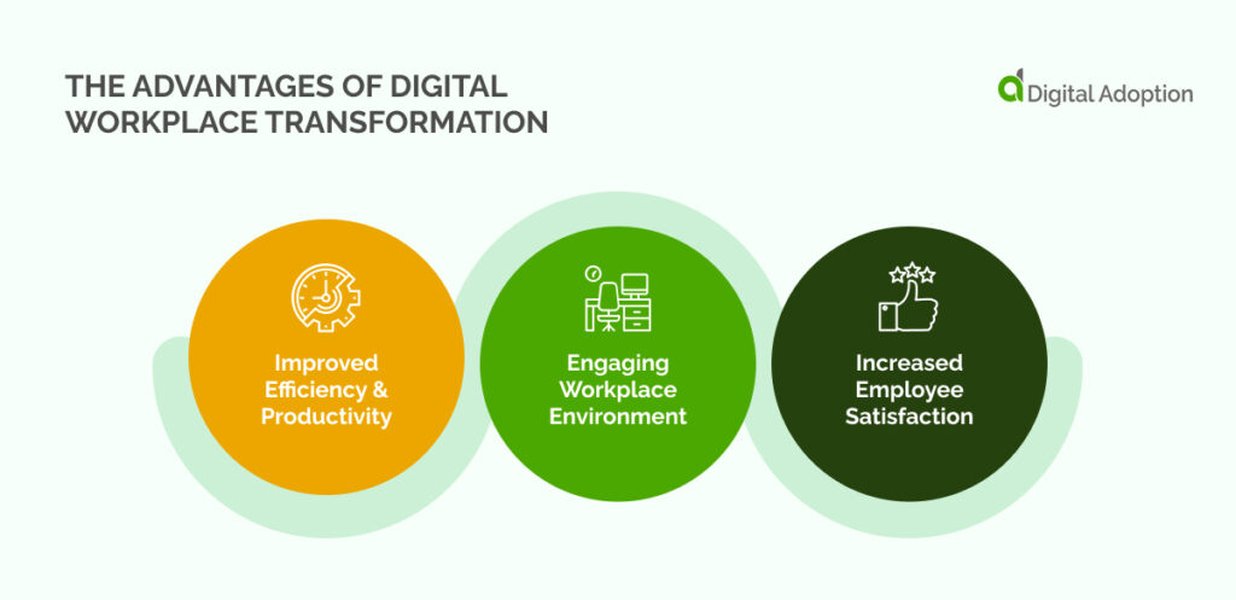
A visual highlighting the benefits of digital workplace transformation.
However, digital transformation also presents challenges to traditional socialization. The lack of in-person cues in digital communication can sometimes lead to misunderstandings or a reduced sense of connection. Onboarding entirely remotely might make it harder for newcomers to absorb the informal aspects of organizational culture or build strong interpersonal relationships. Dr. Gates' work on workplace betrayals and stress suggests that the digital environment could introduce new forms of these challenges, such as online harassment or a constant feeling of being "on."
Addressing the Digital Divide and Inclusivity
Given the documented impact of digital transformation on social inequalities, Dr. Gates' perspective would likely highlight the importance of addressing the digital divide within organizational socialization. Ensuring equitable access to technology and digital literacy training is crucial for effective socialization in a digital workplace. Organizations must be mindful that not all individuals have the same level of comfort or access to digital tools, and socialization processes should be designed to be inclusive and supportive of diverse technological capabilities.
Furthermore, Dr. Gates' research on how individuals from different backgrounds interact in organizations suggests that digital socialization strategies should be culturally sensitive and consider how digital communication norms might vary across different groups. Creating a digital environment that fosters a sense of belonging for all employees, regardless of their background or digital proficiency, is a critical aspect of successful socialization in the digital age.
Future Research and Talent Optimization
Dr. Gates is reportedly completing work on organizational socialization and talent optimization, and her forthcoming research is said to address strategies to manage traumatic workplace experiences. It is reasonable to infer that her future work will continue to explore the evolving nature of socialization in light of technological advancements. Understanding how digital interactions influence workplace stress, trust, and the development of relationships will be crucial for optimizing talent and ensuring employee well-being in digitally transformed organizations.
Ultimately, based on Dr. Gates' established expertise in organizational socialization and the documented trends in digital transformation, it is clear that the future of integrating individuals into organizations will be deeply intertwined with technology. Successful socialization in the digital age will require a thoughtful and strategic approach that leverages the benefits of digital tools while mitigating the potential challenges, ensuring that all individuals can effectively learn, adapt, and thrive within their organizations.
Frequently Asked Questions
What is organizational socialization?
Organizational socialization is the process by which new employees or members learn the values, norms, skills, and behaviors that are necessary to function effectively within an organization. It's how individuals become integrated into the social and cultural environment of their workplace or institution.
What is digital transformation?
Digital transformation involves the integration of digital technology into all areas of a business or society, fundamentally changing how it operates and delivers value. It's a shift from traditional methods to digital ones to improve efficiency, innovation, and engagement.
How does Dr. Denise Gates' research relate to digital transformation?
Dr. Denise Gates' research on organizational socialization provides a framework for understanding how individuals are integrated into organizations. While her core model was developed before the full scale of digital transformation, her ongoing work and the broader context of digital change suggest that her insights are highly relevant to understanding how socialization is being reshaped by digital technologies.
What are the potential impacts of digital transformation on organizational socialization?
Digital transformation can impact organizational socialization by providing new tools and platforms for communication and learning, facilitating remote onboarding, and changing the nature of workplace interactions. However, it can also present challenges related to the digital divide, the quality of digital interactions, and the potential for new forms of workplace stress.
How can organizations ensure effective socialization in a digital age?
Ensuring effective socialization in a digital age requires organizations to adapt their strategies. This includes leveraging digital tools thoughtfully, providing adequate digital training and support, fostering inclusive digital environments, and being mindful of the potential challenges of digital interactions on relationship building and cultural integration.
References

Last updated May 3, 2025