
Navigating Separation: A Comprehensive Guide to Drafting an Agreement in British Columbia
Understanding the Process and Key Components of a BC Separation Agreement
Separation marks a significant transition in life, and in British Columbia, formalizing arrangements through a separation agreement is a common and often recommended step. While there is no legal requirement to have a separation agreement when you separate, it is a legally binding document that outlines the terms agreed upon by both parties regarding various aspects of their separation, including parenting arrangements, child support, spousal support, and the division of property and debt. This guide provides a comprehensive overview of how to approach drafting a separation agreement in BC.
Key Insights on Drafting a BC Separation Agreement
- Understanding the Basics: A separation in BC does not require any formal legal process or document to be legally recognized. However, a separation agreement is a crucial tool for defining the terms of the separation and avoiding future disputes.
- Essential Components: A comprehensive separation agreement should address all relevant issues, including parenting arrangements, child support, spousal support, and the division of family property and debt.
- Importance of Legal Advice: While it is possible to draft an agreement yourself, it is highly recommended that both parties obtain independent legal advice from a family lawyer before signing to ensure the agreement is fair, legally sound, and protects their individual rights and interests.
What is a Separation Agreement in BC?
Defining Separation and the Role of an Agreement
In British Columbia, unlike some other jurisdictions, there is no concept of "legal separation" that requires a court order or official document to initiate. A couple is considered separated when one or both spouses decide the relationship is over and they begin living apart. This can even occur while still residing in the same home, provided there is a clear intention to separate.
A separation agreement is a voluntary contract between separating spouses or common-law partners that formalizes their decisions regarding the practical and financial aspects of their separation. It serves as a roadmap for how they will manage their affairs moving forward, aiming to provide clarity and reduce the potential for future conflict.
Why is a Separation Agreement Important?
While not legally mandated for separation itself, a separation agreement is highly recommended for several reasons:
- Clarity and Certainty: It clearly outlines the agreed-upon terms, reducing ambiguity and potential for misunderstandings.
- Avoiding Court: Reaching an agreement through negotiation and drafting a separation agreement allows couples to resolve issues outside of the court system, which can be time-consuming, expensive, and emotionally draining.
- Enforceability: A properly drafted and executed separation agreement is a legally binding contract that can be enforced by the courts if one party fails to adhere to its terms.
- Foundation for Divorce: If married, a comprehensive separation agreement simplifies the divorce process, as the court will typically incorporate the terms of the agreement into the final divorce order.
- Tailored Solutions: Couples can create an agreement that is tailored to their specific circumstances and needs, rather than having a solution imposed by a judge.
Key Components of a BC Separation Agreement
Essential Clauses to Include
A robust separation agreement should cover all relevant aspects of the couple's relationship and separation. The specific clauses will vary depending on the individual circumstances, but common areas addressed include:
Introductory Clauses
These clauses identify the parties involved, the date of the marriage or commencement of the common-law relationship, and the date of separation. They also typically include a statement of their intention to be bound by the terms of the agreement.
Parenting Arrangements
If the couple has children, the agreement must address parenting arrangements. This includes:
- Parenting Time (Custody and Access): Outlining the schedule for when the children will be with each parent.
- Decision-Making Responsibility: Determining how significant decisions regarding the children's health, education, religion, and extracurricular activities will be made (jointly or by one parent).
- Communication: Establishing guidelines for how the parents will communicate with each other regarding the children.
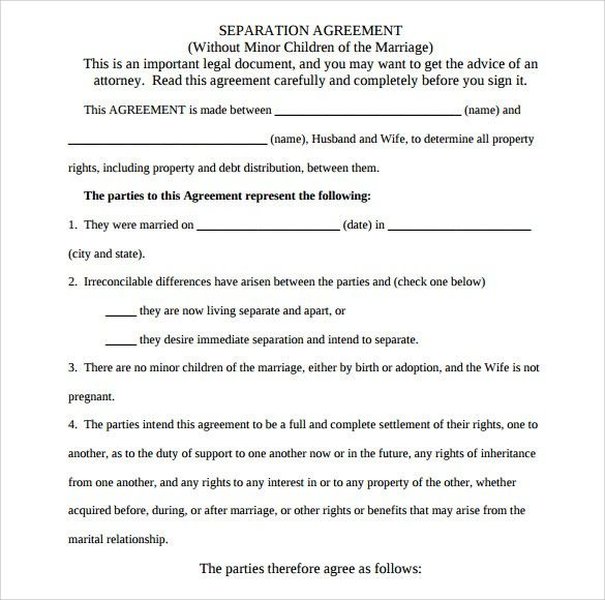
Illustrating the consideration of parenting arrangements in a separation agreement.
Child Support
The agreement should specify how child support will be calculated and paid, typically following the Federal Child Support Guidelines. This includes the base amount of support and how special and extraordinary expenses (such as childcare, medical expenses, and extracurricular activities) will be shared.
Spousal Support
The agreement should address whether spousal support will be paid by one party to the other, the amount, and the duration of payments. This can be a complex area, and legal advice is particularly important here to understand the advisory Spousal Support Guidelines.
Division of Family Property and Debt
In British Columbia, family property and family debt are generally divided equally between the spouses upon separation. The agreement must clearly identify all family property and debt and outline how it will be divided. This includes:
- Real estate (e.g., the family home)
- Bank accounts and investments
- Pensions and retirement savings
- Vehicles
- Businesses
- Debts (e.g., mortgages, loans, credit cards)
Special provisions for dividing pensions may be necessary and must be clearly described in the agreement to be administered by the pension plan.
Other Clauses
Depending on the situation, other clauses may be necessary, such as:
- Tax implications of support payments and property division
- Life insurance
- Wills and estate planning
- Confidentiality
- Dispute resolution mechanisms
Drafting the Separation Agreement
Options for Creating the Document
There are several ways to approach drafting a separation agreement:
Do It Yourself
Couples can choose to draft their own agreement. Resources like the Family Law in BC website provide guides and sample clauses that can be edited to suit individual circumstances. However, this approach is generally only recommended for straightforward cases where there are minimal assets and no children, and both parties are in agreement on all issues. Even in these cases, obtaining independent legal advice is crucial.
Using a Template
Various online platforms and legal resource websites offer separation agreement templates for British Columbia. These templates can provide a starting point, but it is essential to customize them to the specific situation and have them reviewed by a lawyer.
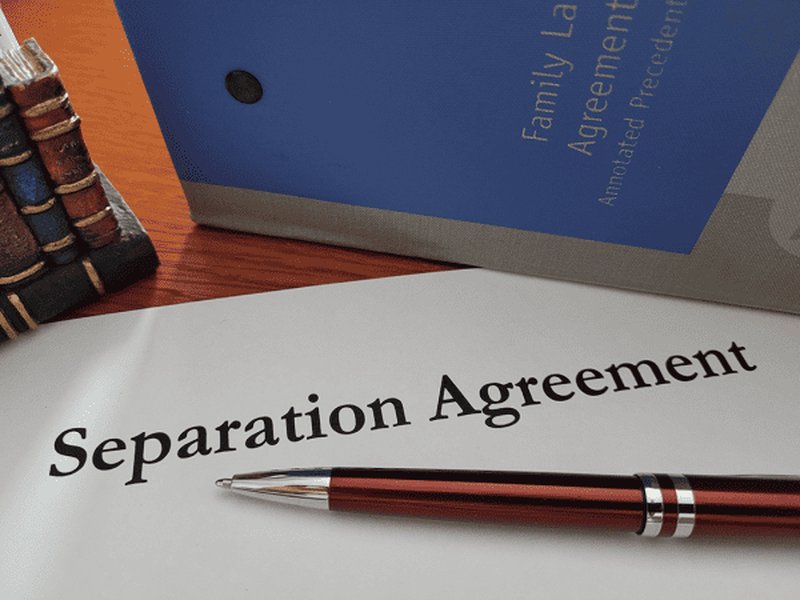
An example of a digital template for a BC Separation Agreement.
With the Assistance of a Mediator or Family Justice Counsellor
A mediator or family justice counsellor can facilitate discussions and help couples reach an agreement on the terms of their separation. They are neutral third parties who do not provide legal advice but can assist in communication and negotiation. Once an agreement is reached, it can be put into writing.
Hiring a Family Lawyer
Engaging a family lawyer to draft the separation agreement is often the most advisable approach, especially for complex situations. A lawyer can provide legal advice, draft clauses that are legally sound and tailored to the specific circumstances, and ensure all necessary issues are addressed. It is crucial that each party has their own independent legal counsel.
Ensuring the Agreement is Legally Binding and Enforceable
Steps to Formalize the Agreement
For a separation agreement to be legally binding and enforceable in British Columbia, certain requirements should be met:
Full Financial Disclosure
Both parties must provide full and frank financial disclosure to each other. This means openly sharing all relevant financial information, including income, assets, and debts. Failure to provide full disclosure can be grounds for a court to set aside or vary the agreement in the future.
Independent Legal Advice (ILA)
It is highly recommended that each party obtain Independent Legal Advice (ILA) from their own lawyer before signing the agreement. Each lawyer will review the agreement with their client, explain their rights and obligations, and advise on whether the agreement is fair and in their best interest. A certificate of ILA is often included in the agreement to confirm that this step has been taken.
Signing the Agreement
The agreement must be signed by both parties. It is advisable to have the signatures witnessed. The witness does not necessarily have to be a lawyer.
No Duress or Undue Influence
The agreement must be entered into voluntarily by both parties without any pressure, coercion, or undue influence from the other party.
Filing the Agreement with the Court
While not mandatory for the agreement to be legally binding, filing the separation agreement with the British Columbia Supreme Court can make it easier to enforce certain terms, such as parenting arrangements and support obligations, as if they were court orders. Filing can be done using a Request to File an Agreement (Form 26).
Common Issues and Considerations
Potential Challenges and How to Address Them
Drafting a separation agreement can present challenges. Some common issues include:
-
Disagreements on Terms: Reaching a consensus on all issues can be difficult. Mediation or legal negotiation can help facilitate agreement.
-
Complexity of Assets and Debts: Dividing complex assets like businesses or multiple properties requires careful consideration and potentially expert valuations.
-
Changes in Circumstances: A separation agreement is a snapshot in time. Significant changes in circumstances (e.g., job loss, relocation) may warrant a review and potential variation of the agreement.
-
Emotional Challenges: Separation is an emotional process, which can sometimes hinder constructive negotiations. Focusing on practical matters and utilizing neutral third parties can be beneficial.
The Role of Full Financial Disclosure
As mentioned earlier, full financial disclosure is paramount. Hiding assets or debts can invalidate the agreement. Both parties have a legal obligation to be transparent about their financial situation.
Comparison: Separation Agreement vs. Court Order
Understanding the Differences
While both a separation agreement and a court order can address family law issues, they differ in how they are reached and their initial enforceability. The table below highlights some key distinctions:
| Feature | Separation Agreement | Court Order |
|---|---|---|
| How it's Made | Voluntary agreement between parties | Decision made by a judge |
| Process | Negotiation, mediation, or lawyer-assisted drafting | Litigation, court appearances, potentially a trial |
| Flexibility | Can be highly customized to specific needs | Based on legal principles and precedents |
| Control | Parties have control over the outcome | Judge makes the final decision |
| Cost | Generally less expensive than court proceedings | Can be significantly more expensive due to legal fees and court costs |
| Timeframe | Can be quicker if parties reach agreement efficiently | Can be lengthy due to court schedules and procedures |
| Enforcement | Legally binding contract, can be filed with court for easier enforcement | Legally binding and enforceable by the court |
Seeking Professional Assistance
When to Involve Lawyers and Mediators
While it is possible to draft a separation agreement without legal counsel, it is strongly recommended to involve a family law lawyer. Lawyers can provide invaluable advice on legal rights and obligations, ensure the agreement complies with the Family Law Act and other relevant legislation, and help negotiate terms. Independent legal advice for each party is crucial to ensure fairness and enforceability.
Mediators can be helpful in facilitating communication and negotiation, especially when direct communication between the parties is challenging. They can assist in reaching mutually acceptable solutions.
Frequently Asked Questions
Do I need a lawyer to get separated in BC?
No, there is no legal requirement to hire a lawyer to separate in BC. Separation occurs when you and your spouse begin living apart with the intention for the relationship to end. However, consulting a lawyer is highly recommended for drafting a separation agreement to ensure your rights are protected and the agreement is legally sound.
Is a separation agreement legally binding in BC?
Yes, a properly drafted and executed separation agreement is a legally binding contract in British Columbia.
What happens if we don't have a separation agreement?
Without a separation agreement, family law issues such as parenting, child support, spousal support, and property division would typically need to be resolved through court proceedings if the parties cannot reach an informal agreement. This can be a more costly and stressful process.
Can a separation agreement be changed after it's signed?
A separation agreement is a contract, and like any contract, it can be varied (changed) if both parties agree. If parties cannot agree on a variation, a court can vary an agreement in certain circumstances, particularly if there has been a significant change in circumstances or if the original agreement was unfair or did not meet legal requirements.
How long after separation can you file for divorce in BC?
In Canada, including BC, you generally need to be separated for at least one year before you can obtain a divorce order. You can file for divorce before the one-year separation period is complete, but the court will not finalize the divorce until the year has passed.
References
Last updated May 5, 2025