
Resurfacing vs. Repaving Driveways
Understanding when to choose resurfacing over repaving your driveway
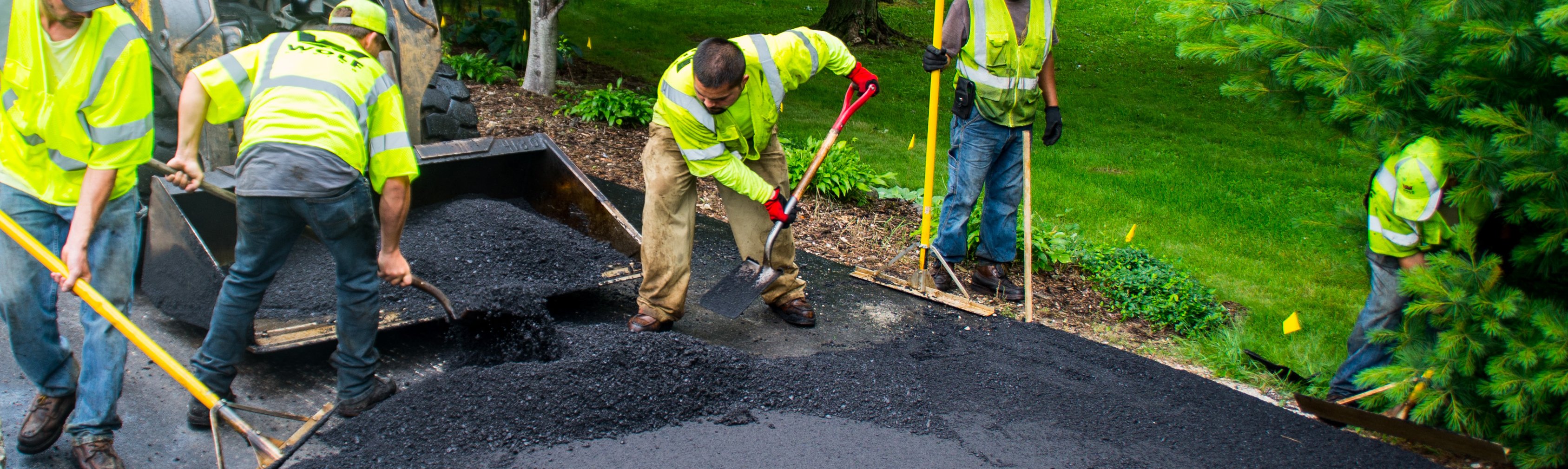
Key Highlights
- Surface vs. Structural Repair: Resurfacing covers minor surface damage while repaving addresses deeper structural issues.
- Cost and Time Efficiency: Resurfacing is generally more cost-effective and quicker, whereas repaving is a more comprehensive, long-term solution.
- Longevity and Durability: The choice depends on the level of damage and age of the driveway—minor cracks warrant resurfacing, while extensive damage requires repaving.
Introduction
Deciding whether to resurface or repave your driveway is a significant decision that involves evaluating the driveway's condition, age, the extent of damage, and your budget. Both methods aim to improve the aesthetics and performance of your driveway, yet they differ in their approach, cost, and long-term benefits. In this comprehensive guide, we will explore the key factors you should consider when choosing between resurfacing and repaving. We will also discuss definitions, ideal conditions for each procedure, cost considerations, maintenance tips, and the expected durability of the improvements.
Detailed Analysis of Resurfacing
What is Resurfacing?
Resurfacing involves applying a new layer of asphalt over the existing driveway surface. This technique is designed to cover minor cracks, potholes, and surface imperfections without completely removing the old material. Typically, the new layer adds approximately 1 1/2 inches to 3 inches of thickness. This method is particularly beneficial if the underlying base is still in good condition and the damage is largely superficial.
Ideal Conditions for Resurfacing
Resurfacing is most appropriate when:
- The driveway exhibits minor to moderate surface damage, such as small cracks less than one-quarter inch wide.
- Only up to about 25% to 30% of the driveway’s surface has visible deterioration.
- The structural foundation of the driveway remains stable and intact.
- The driveway is relatively young, generally less than 20 years old.
Cost and Durability
One of the primary advantages of resurfacing is its cost efficiency. Typically, resurfacing costs range between \( \$3 \) to \( \$7 \) per square foot. For example, resurfacing a 3,000 square foot driveway usually costs between \( \$3,000 \) to \( \$6,000 \). Additionally, resurfacing is a faster process when compared to repaving. With proper maintenance—such as sealing and periodic minor repairs—resurfaced driveways can last anywhere from 10 to 15 years.
Detailed Analysis of Repaving
What is Repaving?
Repaving entails the complete removal of the existing driveway material and replacing it with all-new asphalt or concrete. This process is more extensive than resurfacing. In several cases, repaving may also involve rebuilding the base layer, which is critical when the underlying foundation has deteriorated or is compromised. Repaving is considered a fundamental solution for driveways that are far beyond routine wear and tear.
Ideal Conditions for Repaving
The decision to repave typically arises when:
- The driveway has significant damage, such as deep cracks exceeding one-quarter inch in width and two inches in depth.
- More than 30% to even 50% of the driveway's surface is affected by damage.
- The driveway is quite old (usually over 20 to 25 years old), and normal resurfacing would only provide a temporary fix.
- There are underlying issues with the driveway's foundation that compromise its structural integrity.
Cost and Longevity
Due to its comprehensive nature, repaving is significantly more expensive than resurfacing—with typical costs around \( \$15 \) per square foot or more, depending on the size, local labor rates, and materials used. However, repaving offers a longer-lasting solution as it creates a brand-new surface, effectively addressing both the aesthetic and structural issues. Properly repaved driveways can last between 20 to 30 years, ensuring durability and reducing the frequency of major repairs.
Comparison Table
The following table provides a clear side-by-side comparison of the key aspects of resurfacing and repaving, helping you make an informed decision:
| Aspect | Resurfacing | Repaving |
|---|---|---|
| Definition | Adding a new layer over the existing surface | Complete removal and replacement of the driveway |
| Best For | Minor to moderate surface damage; small cracks and potholes | Severe damage; deep cracks and compromised foundation |
| Surface Condition | Up to 25%-30% damage, structurally sound base | Over 30%-50% damage, or foundation issues present |
| Cost | \( \$3 \) to \( \$7 \) per square foot | \( \$15 \) per square foot and above |
| Time Required | Faster, minimal disruption | Longer duration due to removal and replacement efforts |
| Longevity | 10-15 years with proper maintenance | 20-30 years with a complete overhaul |
Factors to Consider
Age of the Driveway
The age of your driveway is a critical factor when deciding between resurfacing and repaving. For driveways that are relatively new (under 20 years), resurfacing is generally sufficient. The surface damage in these driveways is usually limited to small cracks and minor wear, making resurfacing an economically attractive option. However, if your driveway has been in use for over two decades and shows signs of widespread deterioration, repaving becomes a more viable long-term solution, offering not only a new surface but a renewed structural base.
Extent of Damage
Evaluating the extent of the damage on your driveway is essential to determine the appropriate course of action. For minor surface damage, such as cracks that are less than a quarter-inch wide, resurfacing can provide a smooth, renewed appearance without the need for extensive work. When more than 30% of the driveway is affected by damage, including deep fissures and separation issues, repaving is recommended. This complete overhaul addresses both visible problems and hidden structural issues, ensuring long-term durability.
Budget Constraints
Cost savings are a major factor influencing the decision. Resurfacing is typically less expensive, making it ideal for homeowners with limited budgets. The process is also quicker, which minimizes labor costs and disruption to daily activities. Conversely, repaving demands a higher initial investment due to the thorough methods involved. For those seeking lasting improvement and willing to invest in a complete replacement, repaving provides a more robust and long-term solution.
Long-Term Goals and Usage
It is also important to consider your long-term goals for the driveway. If you plan to maintain a high-traffic area or expect the driveway to endure harsh weather conditions, prioritizing structural integrity through repaving might be a prudent decision. On the other hand, if your priority is enhancing curb appeal and the damage is superficial, resurfacing may extend the driveway’s life while satisfying aesthetic requirements.
Maintenance and Longevity Considerations
Maintenance Tips for Resurfaced Driveways
Even after resurfacing, regular maintenance can greatly extend the life of your driveway. Maintenance steps include:
- Regular cleaning to remove debris that can cause wear over time.
- Periodic sealing to protect against damaging UV rays and automobile fluids.
- Prompt repair of minor cracks or potholes as soon as they appear.
- Avoiding heavy loads that exceed the driveway’s capacity.
With proper upkeep, a resurfaced driveway can maintain its functionality and appearance for as long as 10 to 15 years.
Maintenance Tips for Repaved Driveways
Repaved driveways benefit from the extensive work put in during the overhaul. However, they too require maintenance to maintain optimal performance:
- Regular inspections to catch early signs of wear or potential issues.
- Sealing the new surface to protect the integrity against weather and chemicals.
- Addressing minor issues before they escalate into larger structural problems.
- Maintaining proper drainage to reduce water-related damage.
A well-installed repaved driveway can last between 20 to 30 years, offering a long-term solution to deteriorating driveway conditions.
Additional Considerations
Environmental Factors
Environmental conditions can play a significant role in the decision-making process. Extreme weather, frequent freeze-thaw cycles, and heavy rainfall can all accelerate the deterioration of asphalt surfaces. In areas prone to such conditions, repaving may provide a level of durability and resilience that resurfacing simply cannot match. On the other hand, in milder climates where weather-related wear is less intense, resurfacing might be sufficient to maintain a smooth, aesthetically pleasing driveway.
Technical Requirements and Preparation
The technical requirements for either process vary significantly. Resurfacing often requires minimal preparation if the underlying base is in good condition, making the process less disruptive. Repaving, however, involves stripping away the old asphalt or concrete, which might necessitate additional work on the base layer to ensure proper foundation stability. This distinction is crucial when planning projects around existing structures and considering long-term impacts.
Regional and Local Considerations
Your region’s local construction practices, material availability, and climate can influence both the cost and effectiveness of either treatment. It is advisable to consult with local paving contractors who can assess your driveway's specific condition and provide recommendations tailored to local environmental and budgetary conditions. Local insights often ensure the most appropriate and cost-effective solution is chosen.
Practical Decision-Making
When evaluating whether to resurface or repave your driveway, making a comprehensive checklist can help clarify the decision. Begin by assessing the visible damage and determining whether the foundation is still sound. Look at the cost differential between the two processes and weigh that against the projected lifespan of the improvement. If your driveway exhibits minor wear and tear, resurfacing is likely the better option. However, if deep structural damage is evident, repaving will likely provide a more secure, long-lasting solution even though it comes with a higher upfront cost.
Homeowners should also consider the inconvenience of construction time, as resurfacing is typically faster and causes less disruption compared to repaving, which involves a longer project timeline and more extensive work. Evaluating these factors holistically ensures that you choose the option that best meets your short-term needs and long-term objectives.
Summary Table of Differentiators
| Factor | Resurfacing | Repaving |
|---|---|---|
| Definition | New layer over existing surface | Complete removal and replacement |
| Ideal Damage | Minor cracks & potholes; small area affected | Deep, extensive damage; structural issues |
| Age Suitability | Usually less than 20 years old | Often 20-25 years or older |
| Cost | \( \$3 \) to \( \$7 \)/sq ft | \( \$15 \)/sq ft and above |
| Project Duration | Faster process with less disruption | Longer process with extensive work |
| Durability | 10-15 years with good maintenance | 20-30 years with complete overhaul |
| Maintenance Frequency | Potentially more frequent minor repairs | Less frequent repairs due to complete renewal |
References
- Driveway Resurfacing vs Repaving - Creative Resurfacing Solutions
-
Driveway Repair: Patch, Resurface, or Replace - Angi
- Resurface vs Repaving - Double Blacktop
- Repaving vs Resurfacing - Kompare It
- Difference Between Resurfacing and Repaving - Joseph Schipseal Paving
Recommended Further Queries
Last updated March 15, 2025