
Viability of Launching Drones from Artillery Shells
An in-depth analysis of technological innovation and industry players
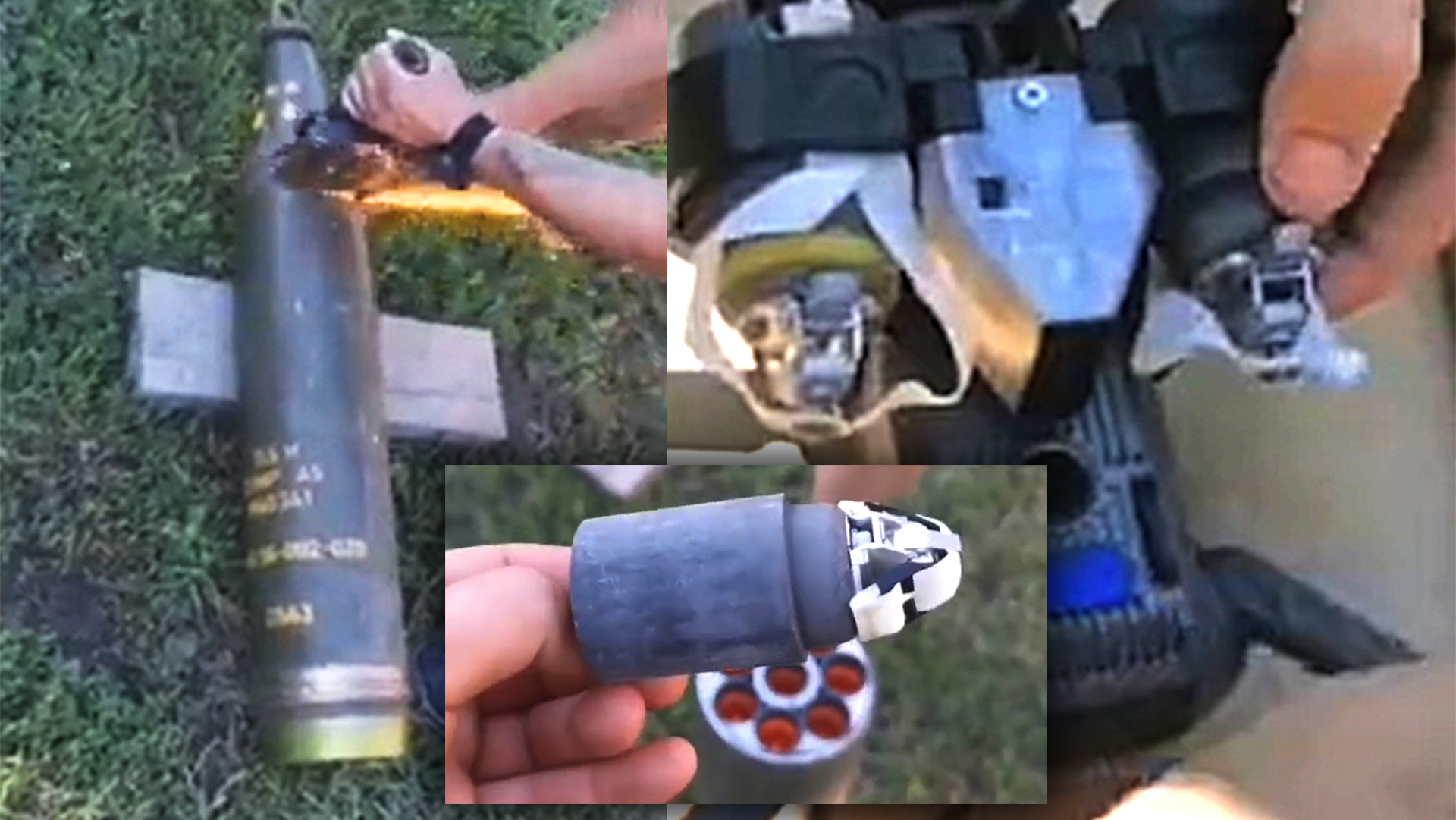
Key Takeaways
- Technical Feasibility and Challenges: Extensive R&D is required to miniaturize and ruggedize components so that drones can survive high acceleration and environmental stresses when launched from artillery shells.
- Operational Advantages and Limitations: Artillery‐launched drones offer rapid deployment and enhanced situational awareness but are limited by payload capacity, range, and vulnerability to countermeasures.
- Industry Engagement: Several prominent defense companies and research organizations are actively pursuing this innovative technology to provide enhanced ISR (intelligence, surveillance, reconnaissance) and targeted strike capabilities.
Introduction and Background
The concept of launching drones from artillery shells represents a significant leap forward in military technology by merging the rapid, long-range delivery capability of conventional artillery systems with the advanced surveillance and strike features of unmanned aerial vehicles (UAVs). This approach aims to enhance battlefield flexibility by delivering drones quickly to areas that might be inaccessible by traditional launch methods and by offering real-time intelligence on enemy positions.
Traditionally, drones have been deployed from ground launch platforms or aircraft. However, integrating their deployment with artillery systems can potentially transform modern combat scenarios. The primary advantages include rapid reaction times, the element of surprise to adversaries, and the ability to provide an immediate aerial perspective on a dynamically changing battlefield. This synthesis of technologies presents opportunities to enhance targeting precision and improve overall operational efficiency.
The underlying operational rationale centers on converting existing artillery infrastructure into multi-role systems capable not only of delivering munitions but also of acting as forward reconnaissance and strike platforms. This dual-purpose use supports a broader spectrum of tactical missions—from direct targeting of enemy positions to broader situational awareness and communications relay in contested environments.
Technical Feasibility and Engineering Considerations
Aerodynamics and Launch Mechanics
The integration of drones into artillery shells is first and foremost a challenge of physics and materials engineering. During an artillery launch, the drone is subjected to extremely harsh conditions, including rapid acceleration, high G-forces, and sudden environmental shifts upon exiting the barrel. To survive these conditions:
Robust Structural Design
The drone must be constructed with advanced materials that offer both strength and light weight. The design generally incorporates features such as robust housing to shield delicate electronics and sensor arrays, while ensuring the missile-like projectile itself maintains the necessary aerodynamic profile. Guidance fins and deployable wings are introduced to stabilize its flight path once deployed, enabling a smooth transition from a high-velocity projectile trajectory into controlled, powered flight.
Aerodynamic Stabilization
The artistic integration of drag parachutes, deployable canard systems, or gliding wings is crucial. These components mitigate the initial velocity shock and allow the UAV to slow down, stabilize, and safely exit the artillery shell casing. The phase immediately after launch is critical; performance hinges on the rapid activation of on-board control systems that recalibrate flight dynamics in real-time.
Guidance and Control Systems
High-precision inertial measurement units (IMUs) are required to monitor orientation and acceleration. Integrated with GPS modules and rapid communication networks, these control systems enable drones to follow predetermined flight paths or adapt dynamically based on live battlefield data. The rapid activation and robustness of these systems act as essential elements in ensuring drones transition effectively from passive projectiles into full-fledged operational UAVs.
Payload Considerations and Mission Flexibility
A central design challenge lies in balancing payload size, sensor capabilities, and battery life. The limited internal volume of an artillery shell restricts the potential payload, influencing the dimensions, endurance, and mission range of the drone. However, a modular design can be implemented so that drones may carry an array of sensors—ranging from high-resolution cameras and laser target designators to electronic warfare systems.
These payloads can serve multiple mission profiles such as real-time intelligence collection, precision targeting, and even acting as loitering munitions. The compact nature of these drones also enhances their stealth capabilities, making them harder to detect and intercept by adversary defense systems.
Propulsion and Materials
Following deployment, a lightweight propulsion system takes over, ensuring that the drone sustains flight over a potential range of up to 80 kilometers and can operate for durations extending to around two hours. The development of materials that provide resistance to heat generated by friction, combined with effective vibration damping, is essential for maintaining the longevity and reliability of the electronic components.
Operational Considerations
Advantages on the Modern Battlefield
The rapid deployment of drones from artillery shells introduces several key tactical advantages:
Enhanced Situational Awareness
Once airborne, these drones provide a real-time bird’s-eye view of the battlefield, relaying vital intelligence back to command centers. This accelerates decision-making processes and offers immediate feedback on the effectiveness of artillery strikes. With visual and electronic surveillance capabilities, these systems can identify enemy positions and adjust targeting strategies on the fly.
Rapid Response and Reduced Risk
Deployed quickly from existing artillery platforms, drones can be dispatched without exposing dedicated air launch assets to counter-strikes. Their rapid deployment ensures that intelligence gathering begins almost instantaneously after the projectile is fired, thereby decreasing the response time needed for targeting or area reconnaissance.
Cost-Effectiveness and Strategic Flexibility
The integration of drone deployment into existing artillery systems may prove more cost-effective over time compared with developing entirely new airborne platforms. Additionally, the dual-role capability of such systems—combining long-range projectile delivery and aerial reconnaissance—ensures that militaries can adapt to emerging threats in a multifaceted manner.
Despite these advantages, there are operational limitations. The drones are generally limited in payload, endurance, and range compared to dedicated UAVs. Furthermore, the conditions of launch require meticulous design and robust fail-safe mechanisms to prevent premature failures, especially when operating in electronic warfare-heavy environments.
Integration with Existing Systems
A critical aspect of operational viability involves how seamlessly these technologies can be integrated with current military artillery platforms. Adaptation often requires modifications in ammunition logistics, fire control software, and post-launch communication systems. The synchronization between artillery targeting data and aerial drone feedback needs to be precise; any delay or miscommunication can severely hamper the effectiveness of coordinated strikes.
From a strategic perspective, these systems have the potential to complement existing ISR assets and even provide a countermeasure against enemy drones. By offering an additional dimension of surveillance and attack options, drone-enabled artillery can enhance the overall effectiveness of conventional forces.
Companies and Initiatives
Key Industry Players
Multiple defense companies and research organizations have recognized the strategic value offered by integrating drone deployment with artillery systems. Although many developments are in the experimental or early production stages, several prominent companies are identified as actively pursuing this technology:
Pioneering Defense Innovators
Some companies have been at the forefront of developing unmanned systems that can be adapted for projectile launches. Recognized players include organizations that have a history of advancing UAV technologies for military applications. These companies focus not only on the drone hardware but also on the supporting infrastructure such as robust communication links, guidance systems, and rapid deployment mechanisms.
Regional and International Efforts
International collaborations and independent initiatives are also in progress. For example, some Asian companies have reported successful demonstrations involving small drones being launched from artillery shells, equipped with sensors capable of target detection and laser designation. Similarly, defense research agencies in Europe and North America are exploring how traditional artillery platforms can be adapted to support drone deployment.
Table of Selected Companies and Their Focus Areas
| Company | Primary Focus | Notable Capabilities |
|---|---|---|
| AeroVironment | Loitering munitions and small UAVs | Rapid deployment from alternative platforms; robust field performance under high G-forces |
| General Atomics | Large-scale UAV systems | Development of long-range maneuvering projectiles and integration of high-precision surveillance systems |
| Chengdu Aviation Corporation | Artillery shell launched drones | Demonstrated deployment from artillery systems; integration of sensor and targeting technologies |
| DRDO / Bharat Electronics | Defense technology research and development | Innovative approaches in miniaturization and robustness for UAV deployment through unconventional launch platforms |
| Elbit Systems | Advanced munitions and UAV technologies | Integration of reconnaissance and strike capabilities with resilient electronics |
These companies are at various stages of research and development, moving from prototype demonstrations to more refined engineering solutions. Although detailed technical information remains partially classified, the collective advancements suggest that drone-launching artillery shells could soon transition into operational systems.
Challenges and Future Prospects
Technical Barriers
Despite promising developments, the technical challenges associated with artillery-launched drones are significant. The primary concerns include:
Miniaturization and Durability
The need to fit advanced sensor suites, control electronics, and propulsion components into a compact form factor means that engineers must innovate in miniaturization techniques without compromising durability. The considerable acceleration and vibration experienced during launch require components that are not only resilient but also capable of rapid activation.
Robust Communication Channels
Another challenge is ensuring uninterrupted communication between the deployed drone and its command center immediately after launch. Due to the high velocity of artillery projectiles and the potentially hostile electronic warfare environment, establishing a reliable link is critical. Redundancy in communication protocols and the integration of fail-safe mechanisms are thus imperative.
Cost and Logistical Considerations
The increased complexity involved in designing drones that can be integrated with artillery systems may lead to higher initial costs compared to traditional UAV platforms. These cost factors, along with required modifications to existing artillery operations, suggest that widespread adoption could be gradual as the technology matures and becomes more economically viable.
Regulatory and Strategic Considerations
Beyond technical hurdles, the regulatory environment presents another layer of complexity. The dual-use nature of these systems—combining conventional artillery with advanced drone technology—raises challenges related to international arms control regulations and export limitations. Furthermore, strategic military doctrines may need to evolve. Combatants must consider the implications of integrating such hybrid systems into traditional battle strategies, both in terms of offensive capabilities and defensive countermeasures.
As military spending grows worldwide with an emphasis on technological advancement, the strategic integration of artillery-launched drones could see increased investment in research and development. While current implementations are mostly experimental, ongoing field trials and partnerships between government research labs and defense contractors suggest a promising outlook for future battlefield deployment.
Conclusion
In conclusion, the concept of launching drones from artillery shells is not only technically viable but also holds the potential to reshape modern military operations. The combination of rapid deployment, real-time reconnaissance, and precision targeting could provide significant strategic advantages over traditional systems. The primary challenges—including miniaturizing components to withstand extreme launch conditions, ensuring robust communication links, and cost-effective system integration—remain areas of intensive research and development.
Several industry leaders and defense research organizations are actively exploring this field. Companies specializing in UAV technologies, as well as traditional artillery manufacturers, are collaborating to create resilient systems that marry the efficiency of artillery fire with the situational awareness provided by modern drones. As technological advancements continue to mitigate current challenges, artillery-based drone systems are poised to become a critical component in future combat tactics.
The integration of such systems is expected to enhance the speed and precision of battlefield operations, providing a much-needed boost in intelligence, surveillance, and reconnaissance capabilities. While not envisioned as a complete replacement for traditional artillery or conventional UAVs, artillery-launched drones represent an innovative hybrid approach that complements and extends the operational capabilities of modern military forces.
References
- Marines Testing Drone Launches - Marine Corps Times
- China Shows Off Cannon-Fired Drones - Popular Science
- New Artillery Tactics Using Recon Drones - Army Recognition
- Marines Pick Companies for Loitering Munitions - Marine Corps Times
- General Atomics Refines Long-Range Projectile - Naval News
- Family of Drone Munitions - Army.mil
- Developments in Artillery - SPS Land Forces
- Top Military Drone Manufacturers - Expert Market Research
More
Last updated February 19, 2025