
Viability of Launching Drones from Artillery Shells
An in-depth exploration of technical, operational, and industry perspectives
Key Takeaways
- Technical and Engineering Challenges: The extreme accelerations, aerodynamic transitions, and timing intricacies require advanced miniaturized, ruggedized designs.
- Operational Advantages: Integrating drones with artillery platforms can provide rapid reconnaissance, real-time targeting updates, and enhanced battlefield situational awareness.
- Industry Engagement: A range of defense companies and research entities are actively pursuing innovations to overcome these hurdles, signaling potential future operational integration.
1. Introduction
The concept of launching drones from artillery shells represents a significant leap in modern military technology. Combining traditional artillery systems with unmanned aerial vehicles (UAVs) offers unprecedented operational flexibility and enhancements in battlefield intelligence and precision targeting. This report provides a comprehensive analysis of the technical viability, operational advantages, and the companies actively investing in such technology.
2. Technical Viability and Engineering Considerations
2.1 Design Challenges
Launching a drone from an artillery shell entails a unique set of engineering challenges. The key technical obstacles include:
Extreme Accelerations
When a drone is embedded within an artillery shell, it is subjected to accelerations that can exceed 10,000 g’s. These forces demand that all components be miniaturized and ruggedized. The drone must incorporate shock-absorbing materials as well as specialized structural designs that allow it to survive the rapid accelerative and decelerative forces encountered during launch.
Aerodynamic Transition and Stability
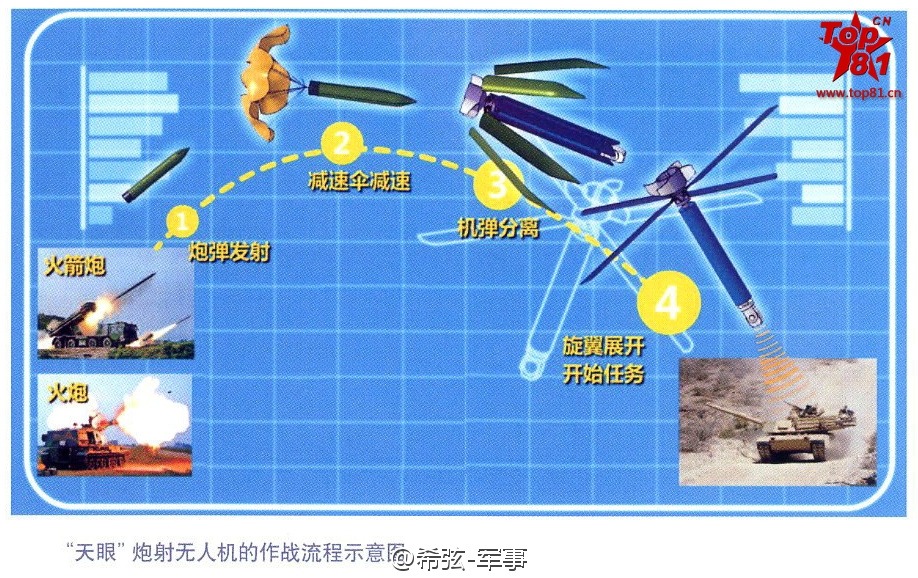
Once the shell reaches a certain point in its trajectory, the drone must seamlessly transition from being a protected payload to an independently maneuvering vehicle. During this phase, the drone deploys its wings or propulsion system and must rapidly achieve stable flight. The integration of aerodynamic features, such as drag parachutes or mechanical separation mechanisms, is critical to control the drone’s deceleration and enable a smooth operational deployment.
Timing and Deployment Synchronization
The timing of the separation event is crucial. If the drone is deployed too early, it may be subjected to overwhelming aerodynamic forces which could impair its structural integrity. Conversely, a delayed deployment would reduce its operational time for the intended mission – whether surveillance, target designation, or engaging hostile assets. Advanced sensors and inertial measurement units (IMUs) help determine the optimal moment for deployment, ensuring a balance between survivability and operational readiness.
2.2 Technological Advancements Enabling the Concept
Recent advancements in microelectronics, materials science, and rapid boot-up of sensors and communications have significantly bolstered the viability of these systems. Miniaturized guidance systems now allow drones to activate their communication links almost instantaneously after launch, minimizing the gap between separation and operational functionality. Furthermore, ruggedized components and resilient battery technologies ensure that these drones can perform their intended tasks despite the harsh conditions of artillery fire.
3. Operational Advantages
3.1 Enhanced Range and Speed
One of the foremost advantages of integrating drone systems with artillery is the enhanced range and speed of deployment. Artillery shells inherently possess high velocities. When a drone is deployed from such platforms, it can rapidly reach its designated operational area, thereby extending the reach of reconnaissance assets. This capability permits forces to gather intelligence far ahead of their primary positions and enables faster reaction times to emerging battlefield threats.
3.2 Tactical Flexibility and Real-Time Reconnaissance
The ability to launch drones from artillery shells adds a substantial degree of tactical flexibility. Since artillery units are already widely dispersed on the battlefield, this system reduces the need for dedicated drone launching platforms. Drones can act as forward observers, transmitting live imagery and data back to command centers, thus allowing for real-time targeting adjustments. This integration is particularly valuable for precision-guided munitions, as drones can confirm target acquisition and trajectory adjustments almost instantaneously.
3.3 Cost-Effectiveness and Force Multiplication
Utilizing existing artillery hardware to deploy drones is generally more cost-effective than developing entirely new launch platforms. The dual-use of conventional artillery systems helps in resource optimization where single platforms serve multiple roles—both as munitions delivery systems and as reconnaissance tools. The lower cost and high proliferation potential of such drones further multiply the force’s capabilities in terms of battlefield situational awareness and target engagement.
4. Companies Actively Developing Artillery-Launched Drone Technologies
4.1 Leading Defense Contractors and Innovators
Several major defense companies and emerging players are investing in or exploring the technical feasibilities associated with launching drones from artillery shells. The following table provides an overview of key companies and their areas of work related to this innovative concept:
| Company | Expertise | Area of Focus |
|---|---|---|
| General Atomics | Unmanned systems integration, Hypersonic and precision munitions | Developing high-speed, maneuvering projectiles with drone-launch capacity |
| BAE Systems | Advanced weapon systems, rapid-deployment technologies | Prototyping ultra-fast weapon systems that can counter threats and enable drone deployment |
| Northrop Grumman | Military drones, sensor integration, and guidance systems | Exploring integration methods of UAVs with existing artillery platforms for reconnaissance and strike roles |
| Shield AI | Autonomous systems and AI-driven unmanned platforms | Developing ruggedized, quick-activation drones that could be adapted for artillery deployment |
| AeroVironment | Small UAVs and loitering munitions | Innovative approaches in deploying small, rapidly responsive drones across the battlefield |
| Elbit Systems / Israel Aerospace Industries (IAI) | Guided munitions, advanced sensor technologies | Integration of aerial sensors into munitions and exploring dual-role capabilities |
4.2 Emerging Research and Collaborative Initiatives
In addition to the major players, academic and governmental research labs are actively conducting feasibility studies on the integration of drones with artillery systems. These research initiatives focus on overcoming the survivability and stability issues through innovations in:
- Shock-absorbing materials and miniaturized electronics
- Fast activation of flight control systems and robust communication links
- Integration of optical and inertial guidance sensors to determine optimal separation timings
Collaborative efforts between military research organizations and defense contractors are crucial in refining these new concepts, even though much of the work remains classified or semi-classified. The approaches being tested are multidisciplinary, combining elements of ballistics, robotics, and advanced material science.
5. Strategic Implications and Limitations
5.1 Tactical Integration with Artillery
Artillery units have long relied on forward observers and dedicated reconnaissance assets for target confirmation and effects assessment. By integrating drone technology directly into the artillery delivery mechanism, forces can reduce response times for target engagement. The deployed drones serve not only as scouting devices to relay real-time battlefield images but also as precursors to targeted bombardment, thus enhancing the overall precision of indirect fire.
5.2 Limitations and Engineering Challenges
Despite the promising operational benefits, several limitations must be considered:
- Payload Limitations: The small size of the drones restricts the payload they can carry, which in turn affects the range and endurance of their reconnaissance or strike capabilities. Their operational duration is typically shorter compared to conventional drones.
- Integration Complexity: Accurately synchronizing the drone’s deployment with the shell’s flight dynamics requires complex engineering solutions. An error in deployment timing can compromise both the drone’s performance and the effectiveness of the overall mission.
- Environmental and Electronic Interference: Extreme battlefield conditions, including electronic warfare environments, may challenge the drone’s communication links and sensor performance. This necessitates robust encryption and interference-resistant designs in the control systems.
5.3 Operational Scenarios and Future Outlook
If the technical challenges are adequately addressed, several operational scenarios can be envisioned:
- Remote target acquisition and fire adjustment for artillery units in dynamic combat environments.
- Surveillance over contested areas where traditional reconnaissance assets might be vulnerable or delayed.
- Potential dual-role operations where, in addition to reconnaissance, drones may carry small munitions for precision strikes.
In essence, the future deployment of artillery-launched drones could be regarded as a force multiplier, enabling more agile decision-making and faster response times in fluid combat zones. However, their introduction would be incremental, supplementing rather than replacing traditional artillery or dedicated UAV systems.
6. Conclusion
The viability of launching drones from artillery shells, while still largely in the experimental phase, is supported by significant technological advancements in miniaturization, ruggedized electronics, and rapid activation systems. Integrating UAVs directly into artillery platforms offers considerable tactical advantages, primarily through enhanced real-time surveillance and precision targeting capabilities. Furthermore, the dual-use of existing artillery systems presents a cost-effective alternative to dedicated drone-launch platforms.
Several major industry players, including General Atomics, BAE Systems, Northrop Grumman, Shield AI, AeroVironment, and leading Israeli defense companies, are actively exploring and refining the technologies required for such integration. In parallel, research laboratories and government-funded initiatives are working to overcome the engineering challenges—particularly those related to high acceleration, timing of deployment, and aerodynamic stability.
Although there remain significant engineering and operational hurdles, the potential benefits in terms of rapid deployment, enhanced battlefield intelligence, and precision indirect fire make this an exciting frontier in modern military technology. Continued research, industry collaboration, and rigorous testing will determine the pace at which artillery-launched drone systems transition from experimental prototypes to routine operational assets. As advancements continue, this integration may well redefine how modern armed forces conduct reconnaissance and deliver precise, real-time fire support.
References
- Marines Testing Drones That Fly from Grenade Launchers - Marine Corps Times
- Drones Are Transforming the Battlefield in Ukraine - War on the Rocks
- Drones on the Front Line for Ukraine’s Counteroffensive - Inside Unmanned Systems
- Integration of Drones with Artillery - Total Military Insight
- Ukraine Army Uses Guns, Weapons, Drone Combo - NBC News
- Army Hypervelocity Projectiles - Defense Scoop
- Military Drone Stocks - Exoswan
- Rise of the Drones: 11 Exciting UAS Companies - Karve International
- General Atomics Refines Long-Range Maneuvering Projectile - Naval News
More
Last updated February 18, 2025