
Introduction to Drone Technologies
Exploring the Essential Components, Applications, and Future of UAVs
Key Highlights
- Comprehensive Components: Detailed breakdown of drone structures, controllers, sensors, and materials.
- Diverse Applications: Insights into how drones are revolutionizing industries like agriculture, photography, and emergency services.
- Technological Evolution and Regulation: Discussion on historical advancements, ethical considerations, and emerging regulatory frameworks.
Overview of Drone Technologies
Drone technologies, commonly known as unmanned aerial vehicles (UAVs) or unmanned aircraft systems (UASes), have emerged as one of the most transformative innovations in modern technology. Initially developed for military and reconnaissance applications, drones have expanded their roles dramatically and are now widely utilized for commercial, industrial, and recreational purposes. This synthesis provides a comprehensive overview of drone technologies including their fundamental components, diverse applications, historical evolution, regulatory landscapes, and future trends.
Fundamental Components of Drones
Drones are intricate systems composed of several interconnected parts, each critical for ensuring stable flight and advanced functionality. Their design leverages both mechanical systems and sophisticated computer controls.
Airframe and Structural Elements
The airframe is the physical structure that houses all other components of the drone. Typically constructed from materials such as carbon fiber, aluminum, or high-strength plastics, the airframe must provide durability while minimizing weight. This balance is crucial, as it directly influences the drone’s maneuverability and flight endurance.
Propulsion System
Propulsion in drones is achieved through the use of motors and propellers. The motors, generally powered by lithium polymer (LiPo) batteries, drive the propellers that generate lift and enable controlled movement. The design and arrangement of propellers vary based on the drone type, including multicopters, fixed-wing, and hybrid models.
Flight Controller and Embedded Systems
At the heart of every drone is its flight controller – essentially the drone’s computer. This component processes data from various sensors, stabilizes the aircraft, and executes pre-programmed flight plans. Modern flight controllers integrate multiple sensors including accelerometers, gyroscopes, and GPS units, ensuring precise navigation and stability. Software algorithms within the flight controller enable drones to fly autonomously or under remote control, adapting to real-time environmental data.
Sensors and Cameras
Drones often come equipped with a wide array of sensors, such as infrared cameras, altimeters, magnetometers, and laser rangefinders. These sensors are critical for functions like obstacle avoidance, precise landing, and enhanced data collection. The integration of high-resolution cameras has also revolutionized aerial photography, videography, and remote sensing applications.
Power Sources
The operational efficiency of drones heavily depends on their power sources. Lithium polymer batteries are prevalent due to their high energy density and lightweight properties. Research in battery technology and alternative power solutions continues to improve flight times and reduce the overall environmental impact.
Types and Applications of Drone Technologies
The versatility of drone technologies lies in their various forms and the wide range of applications. Depending on design and functionality, drones are employed in numerous fields, from civilian applications to high-stakes industrial and defense operations.
Varieties of Drones
Drones can be categorized into several types based on their design and intended uses:
Multicopters
Multicopter designs, which include quadcopters, hexacopters, and octocopters, are among the most popular types. These drones feature multiple rotors that provide redundancy and enhanced stability. They are particularly well-suited for aerial photography, videography, and inspection tasks due to their ability to hover precisely.
Fixed-Wing Drones
Fixed-wing drones resemble traditional airplanes and excel in covering large distances with greater speed and efficiency. Their aerodynamic design allows for longer flight durations, making them ideal for surveying extensive areas, mapping, and agricultural monitoring.
Hybrid and VTOL Drones
Hybrid drones combine elements from both multicopter and fixed-wing designs. With Vertical Takeoff and Landing (VTOL) capabilities, these drones can operate in confined areas while transitioning to efficient horizontal flight when covering long distances. Their flexibility makes them suitable for a wide spectrum of applications, from urban deliveries to emergency response.
Applications Across Industries
The use of drones spans multiple sectors, reflecting their ability to enhance efficiency and safety. Here are some of the key industries benefitting from drone technologies:
Agriculture
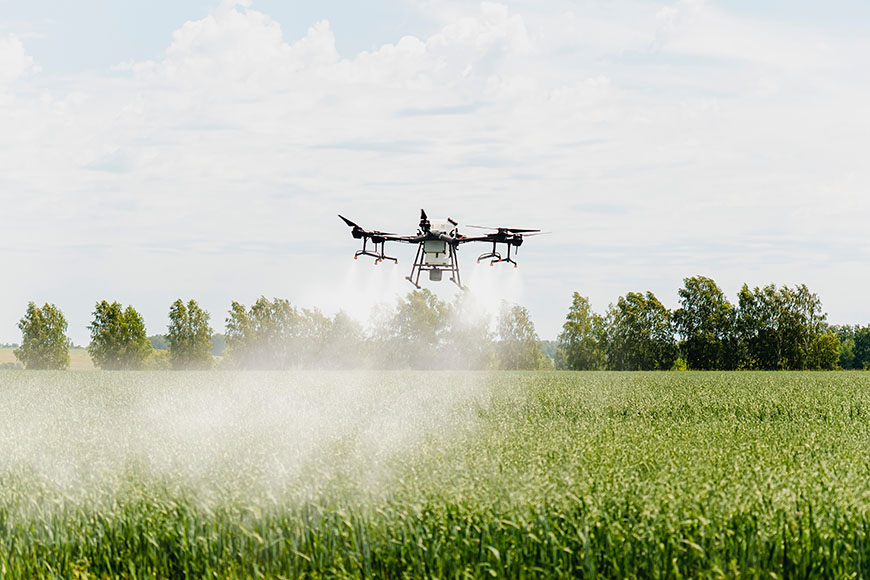
In agriculture, drones are transforming the way farmers monitor crop health, manage land resources, and implement precision farming techniques. Equipped with multispectral cameras and sensors, drones assess plant health, soil conditions, and irrigation needs, allowing for targeted applications of fertilizers and pesticides. This results in cost savings, reduced environmental impact, and improved crop yields.
Photography and Filmmaking
Aerial photography has been revolutionized by drones, providing photographers and filmmakers with new perspectives previously unattainable by traditional methods. Drones enable the capture of dynamic, high-resolution images and videos facilitating creative storytelling in film, advertising, and real estate promotion.
Delivery and Logistics
The logistics industry is exploring the potential of drones to deliver packages over short or difficult-to-access routes. Companies are experimenting with drone delivery services to reduce delivery times, lower labor costs, and decrease carbon footprints. Though still emerging, these innovations may soon redefine urban logistics.
Infrastructure Inspection and Surveillance
Drones offer a safe and cost-effective alternative for inspecting critical infrastructure such as bridges, power lines, and wind turbines. Their ability to access hard-to-reach locations minimizes the risk to human inspectors and allows for detailed, real-time assessments of structural conditions, thereby supporting maintenance and preventive measures.
Emergency Services and Disaster Response
In critical situations such as natural disasters or search and rescue operations, drones serve as pivotal assets. Equipped with thermal imaging and high-definition cameras, drones can swiftly survey affected regions, identify survivors, and deliver emergency supplies, significantly reducing response times and improving outcomes.
Technical Evolution and Regulatory Framework
The evolution of drone technology is marked by rapid advancements in both hardware and software. The integration of advanced sensor systems, improvements in battery technology, and innovations in flight control systems have collectively propelled drones into the mainstream.
Historical Evolution
Drone technology has its origins in military applications that date back to the early 20th century. Initially designed for reconnaissance and surveillance, these early models laid the groundwork for subsequent developments. From the 1990s onwards, as digital technologies advanced, drones began to shift from strictly military roles to broader civilian applications. This evolution reached a turning point in the 2010s when innovations in sensor technology and the widespread availability of GPS turned drones into versatile tools used across varied sectors.
Ethical and Legal Considerations
With their expanded use in public spaces, ethical and legal considerations surrounding drone operations have become of paramount importance. Privacy concerns have been raised regarding the aerial capture of images and video, particularly in densely populated urban areas. Governments and regulatory bodies worldwide are actively refining policies to balance the benefits of drone technology with the need to safeguard individual rights. These frameworks cover aspects such as mandatory registration, pilot certification, no-fly zones, and strict operational protocols to prevent misuse.
Emerging Trends and Future Prospects
Looking forward, drone technology is expected to continue evolving at a rapid pace. Innovations such as improved battery life, enhanced collision avoidance systems, and integration with artificial intelligence (AI) may unlock new applications and further enhance the capabilities of UAVs. Research is currently underway in areas such as swarm technology, where multiple drones operate in a coordinated manner, opening up possibilities for large-scale surveillance, agricultural monitoring, and dynamic delivery services.
Drone Components: A Detailed Comparison
| Component | Description | Key Function |
|---|---|---|
| Airframe | Structural body often made of carbon fiber or aluminum | Provides durability while minimizing weight |
| Propellers & Motors | Multiple rotors powered by electric motors | Generates lift and enables controlled movement |
| Flight Controller | Onboard computer integrating sensors and software algorithms | Stabilizes the flight and executes navigation commands |
| Sensors & Cameras | Includes GPS, accelerometers, gyroscopes, and high-resolution cameras | Ensures accurate navigation and collects aerial data |
| Power Source | Primarily lithium polymer (LiPo) batteries | Provides energy to all onboard components |
Integrating Drone Technology in Various Sectors
As drone systems become more advanced and accessible, their integration into a wide range of sectors continues to expand. The specialized nature of each application calls for customized configurations, whether it be additional sensors for aerial mapping or advanced communication systems for emergency response.
Commercial and Industrial Integration
In commercial settings, drones are deployed to provide valuable insights through detailed aerial data and real-time analytics. For instance, infrastructure inspection using drones has significantly improved the reliability and safety of bridges, wind turbines, and power lines. Similarly, the agriculture industry leverages drones for crop mapping, which helps identify stress areas in fields and optimizes the application of water and nutrients.
Academic and Research Utilization
Academia has embraced drones as a tool for both teaching and research. They serve as practical models for demonstrating principles of aerodynamics, robotics, and embedded systems in STEM education. Researchers are also exploring how drone swarms might collaboratively perform complex tasks, from environmental monitoring to large-scale search operations, thereby advancing the field of collective robotics.
Public Safety and Environmental Monitoring
Within the realm of public safety, drones are being rapidly adopted for tasks such as disaster management and law enforcement surveillance. Their ability to quickly access hazardous areas reduces the risk to human life and facilitates swift, informed responses during emergencies. Additionally, environmental monitoring efforts employ drones to track pollution, assess wildlife habitats, and even monitor deforestation, contributing to more effective conservation strategies.
Addressing Challenges and Future Research Directions
While drones offer transformative benefits, ongoing research and technological advancements are necessary to overcome the challenges they present. Technical issues such as battery endurance, data security, and interference with manned aircraft are active areas of research. Furthermore, developing robust legal frameworks and international standards will be key in regulating drone operations without stifling innovation.
Technical Challenges
The primary technical challenges facing drone technology include battery limitations that restrict flight time and payload capacity. Improving onboard processing power while maintaining energy efficiency is also a significant hurdle. Additionally, ensuring that drones can safely navigate in a crowded airspace without interference requires advanced sensor integration and real-time data processing capabilities.
Regulatory and Ethical Considerations
As drone usage becomes increasingly pervasive, establishing comprehensive regulatory guidelines is critical. Guidelines focus on registration requirements, pilot qualifications, and operational restrictions in sensitive areas. Ethical considerations, particularly regarding privacy and data security, remain central to public acceptance. Continued dialogue among policymakers, industry stakeholders, and the public is essential for creating balanced frameworks that foster innovation while safeguarding societal interests.
Future Research Directions
Researchers are exploring several exciting avenues to further enhance drone capabilities, including artificial intelligence for autonomous control, improved battery technologies, and the development of swarm intelligence. These advancements may lead to drones that communicate and operate cohesively in large numbers, broadening their utility in sectors such as defense, environmental conservation, and urban planning.
References and Resources
For those interested in diving deeper into the world of drone technologies, the following references offer extensive insights into various aspects of UAV development, applications, and regulatory frameworks:
- Drone Technology Basics - ResearchGate
-
How Do Drones Work: A Comprehensive Guide - DroneTechnology
- Introduction to Drones: The Basics - Drone Legends
- Working Principle and Components of Drone - CFD Flow Engineering
- Drone Technology Advancements, Applications, and Future - Drone Operator
Recommended Searches for Deeper Insights
Last updated March 21, 2025