
Understanding the Dynamic Traveling Salesman Problem
Adapting Traditional Routing to Real-World complexities
Key Takeaways
- Real-Time Adaptability: Dynamic TSP requires continuous route optimization to accommodate changing conditions.
- Advanced Solution Methods: Incorporates dynamic programming, reinforcement learning, and metaheuristics for effective problem-solving.
- Wide Practical Applications: Essential in logistics, transportation, robotic motion planning, and real-time delivery services.
Introduction to the Dynamic Traveling Salesman Problem
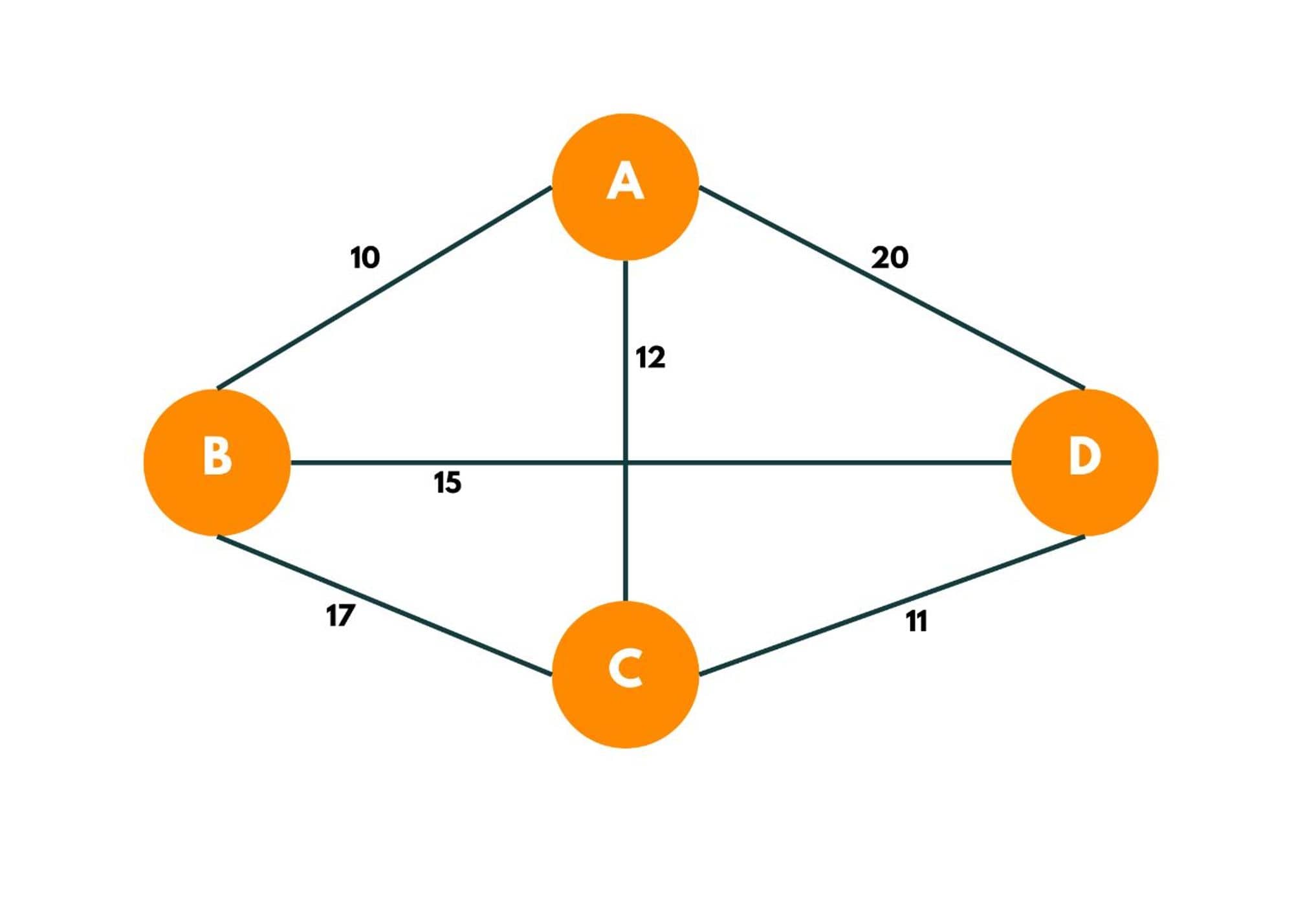
The Dynamic Traveling Salesman Problem (DTSP) is an extension of the classical Traveling Salesman Problem (TSP), which seeks the shortest possible route that visits a set of cities and returns to the origin city. Unlike the static TSP, the DTSP accounts for real-world complexities where conditions change over time, such as fluctuating traffic patterns, dynamic customer requests, or environmental changes. This dynamic nature makes DTSP a more realistic and applicable model for various industries that require adaptive routing solutions.
Problem Definition
In the DTSP, a salesperson must visit a set of locations, but unlike in the static TSP, the distances or travel times between locations can vary during the journey. Additionally, new locations might be added, or existing ones removed in real-time. This dynamic aspect necessitates algorithms that can adapt the route on-the-fly, ensuring optimal or near-optimal paths are maintained despite the changing conditions.
Solution Approaches to DTSP
Dynamic Programming Adaptations
Dynamic programming (DP) is a foundational approach in solving the classical TSP, exemplified by the Held-Karp algorithm, which operates in O(n²·2ⁿ) time complexity. For DTSP, DP can be adapted to handle dynamic changes by continuously updating the solution as new information becomes available. This involves redefining the state space to incorporate time-dependent variables, allowing the algorithm to recalibrate the optimal route in response to real-time changes.
Reinforcement Learning
Reinforcement learning (RL), particularly deep reinforcement learning, has emerged as a powerful tool for solving DTSP. RL algorithms learn optimal routing policies by interacting with the environment, receiving feedback, and adapting to changes such as varying traffic conditions or new customer requests. This approach allows for the development of adaptable and intelligent routing systems that can handle the uncertainties inherent in dynamic environments.
Metaheuristic and Evolutionary Algorithms
Metaheuristic methods like genetic algorithms, ant colony optimization, and tabu search are frequently employed to tackle DTSP due to their ability to explore large solution spaces efficiently. These algorithms are well-suited for dynamic scenarios as they can incorporate mechanisms for adaptability, such as mutation and recombination in genetic algorithms, enabling the algorithm to adjust the route in response to new data without starting the optimization process from scratch.
Stochastic and Adaptive Models
Stochastic models assume that certain elements of the problem, such as travel times or the occurrence of new requests, follow probabilistic distributions. Algorithms designed for the DTSP with stochastic elements, like the Dynamic Traveling Salesman Problem with Stochastic Release Dates (DTSP-srd), leverage these probabilistic models to make informed routing decisions that account for potential future changes.
Hybrid Systems
Hybrid systems combine exact optimization techniques with heuristic or metaheuristic methods to balance solution quality and computational efficiency. For example, a hybrid approach might use dynamic programming for parts of the route that are well-defined while applying heuristic methods for segments affected by dynamic changes. This combination allows for more robust and flexible solutions in dynamic environments.
Challenges in Solving DTSP
Real-Time Decision Making
One of the foremost challenges in DTSP is the need for real-time decision-making. As conditions change dynamically, algorithms must swiftly update the route without significant delays. This requires highly efficient computational methods that can process new information and recalibrate routes on-the-fly.
Computational Complexity
The addition of dynamic elements significantly increases the computational complexity of the problem. Unlike the static TSP, where the problem instance is fixed, DTSP may require continuous re-optimization, which can be computationally intensive, especially as the number of locations increases.
Handling Uncertainty
Dynamic environments are inherently uncertain, with unpredictable changes in travel conditions, demand, and other factors. Developing algorithms that can robustly handle such uncertainties, possibly through probabilistic models or adaptive strategies, is a significant challenge in DTSP.
Scalability
Scalability is a critical issue, especially for applications involving a large number of locations or highly volatile environments. Algorithms must maintain efficiency and effectiveness as the problem size and dynamism increase.
Applications of DTSP
Logistics and Delivery Routing
In logistics and delivery services, DTSP is highly applicable as delivery requests can originate and change in real-time. Companies need routing algorithms that can dynamically adjust delivery paths based on traffic conditions, new orders, or cancellations to optimize delivery times and reduce costs.
Transportation Planning
Transportation systems, including ride-sharing and public transit, benefit from DTSP algorithms to manage routes that adapt to real-time traffic patterns, passenger demand fluctuations, and unforeseen events such as accidents or road closures.
Robotic Motion Planning
In robotics, DTSP is essential for tasks like exploration, surveillance, and reconnaissance, where robots must navigate environments that can change dynamically. Robots need adaptive path-planning algorithms to respond to moving obstacles or new areas of interest effectively.
Last-Mile Delivery Services
Last-mile delivery, the final leg of the delivery process to the consumer, poses significant challenges due to the variability and unpredictability of deliveries. DTSP algorithms enable delivery vehicles to adjust routes in real-time, enhancing efficiency and customer satisfaction.
Cross-Docking Operations
Cross-docking involves the direct transfer of goods from inbound to outbound transportation with minimal storage. DTSP helps in optimizing the routing of goods and vehicles in real-time, ensuring smooth and efficient operations despite dynamic conditions.
Comparing Static and Dynamic TSP
| Aspect | Static TSP | Dynamic TSP |
|---|---|---|
| Problem Instance | Fixed set of cities and travel times | Cities, travel times, and constraints can change over time |
| Solution Approach | Single optimization run using methods like DP or branch and bound | Continuous re-optimization using adaptive algorithms |
| Applications | Static logistics planning, batch processing routes | Real-time delivery services, dynamic ride-sharing, robotic navigation |
| Complexity | Well-defined but NP-hard | More complex due to evolving problem instances |
Computational Techniques and Algorithms
Dynamic Programming
Dynamic programming remains a cornerstone in solving both static and dynamic TSP variants. In DTSP, dynamic programming approaches like the Held-Karp algorithm are tailored to accommodate changing conditions by updating the state space and recalculating optimal paths as new data is introduced.
Reinforcement Learning
Reinforcement learning algorithms, especially those leveraging deep learning, are adept at handling the complexities of DTSP. These algorithms learn to make routing decisions based on real-time feedback, enabling the system to adapt to new routes, obstacles, and demands efficiently.
Metaheuristics
Metaheuristic algorithms offer flexible and robust solutions for DTSP by exploring large solution spaces and escaping local optima. Techniques such as genetic algorithms and ant colony optimization are commonly used to develop adaptive routes that respond to dynamic changes effectively.
Stochastic Models
Stochastic models incorporate randomness and uncertainty into DTSP, allowing for the prediction and accommodation of unpredictable elements like traffic fluctuations or sudden order changes. These models enhance the robustness of routing solutions by anticipating potential variations.
Hybrid Systems
Hybrid systems combine multiple algorithmic approaches to leverage their respective strengths. For instance, integrating exact optimization methods with heuristic strategies can result in more efficient and adaptable solutions, balancing optimality with computational feasibility.
Practical Implementation Considerations
Real-Time Data Integration
Effective DTSP solutions require seamless integration of real-time data sources such as GPS, traffic updates, and customer order systems. This integration enables algorithms to receive timely information necessary for making informed routing decisions.
Scalability and Performance
As the number of locations and the frequency of changes increase, the algorithms must scale efficiently. Optimizing computational performance through parallel processing or distributed computing can help manage larger-scale DTSP instances.
User and System Feedback
Incorporating feedback mechanisms allows the system to learn from past routing decisions, improving future performance. User inputs, such as delivery priorities or preferences, can be integrated to refine routing strategies further.
Robustness and Reliability
DTSP solutions must be robust against system failures and data inaccuracies. Implementing fallback strategies and ensuring data integrity are crucial for maintaining reliable routing operations under dynamic conditions.
Case Studies and Real-World Applications
Logistics Optimization
Major logistics companies utilize DTSP algorithms to optimize delivery routes in real-time, adjusting for traffic congestion, weather conditions, and last-minute order changes. This adaptability leads to reduced delivery times, lower operational costs, and enhanced customer satisfaction.
Ride-Sharing Services
Ride-sharing platforms like Uber and Lyft implement DTSP solutions to match drivers with passengers efficiently. By dynamically adjusting routes based on real-time demand and traffic data, these services optimize ride assignments and minimize wait times.
Robotic Navigation
Autonomous robots in warehouses use DTSP algorithms to navigate efficiently through dynamically changing environments. These robots must adapt to moving obstacles, varying storage layouts, and fluctuating task assignments to maintain operational efficiency.
Emergency Response Routing
In emergency response scenarios, DTSP algorithms can optimize the routing of ambulances, fire trucks, and other emergency vehicles. By dynamically adjusting routes based on real-time incident data and traffic conditions, these systems enhance response times and save lives.
Future Directions in DTSP Research
Integration with IoT and Smart Cities
The proliferation of Internet of Things (IoT) devices and the development of smart cities present new opportunities for DTSP research. Enhanced data collection and communication capabilities can provide more accurate and timely information, enabling even more effective dynamic routing solutions.
Advancements in Machine Learning
Further advancements in machine learning, particularly in reinforcement learning and neural network architectures, promise to enhance the adaptability and efficiency of DTSP algorithms. These advancements can lead to more intelligent systems capable of handling increasingly complex and unpredictable environments.
Sustainability and Green Routing
Incorporating sustainability into DTSP solutions is an emerging area of interest. Developing algorithms that optimize routes not only for efficiency but also for minimal environmental impact, such as reducing fuel consumption and emissions, aligns with global sustainability goals.
Human-AI Collaboration
Exploring how humans and artificial intelligence can collaborate in dynamic routing scenarios is another promising research direction. Combining human intuition with AI's computational power can result in superior decision-making capabilities in complex, real-world applications.
Conclusion
The Dynamic Traveling Salesman Problem represents a significant evolution of the classical TSP, addressing the complexities of real-world scenarios where conditions are continually changing. By leveraging advanced computational techniques such as dynamic programming, reinforcement learning, and metaheuristics, DTSP offers robust and adaptable solutions crucial for industries like logistics, transportation, and robotics. The ongoing research and integration of emerging technologies promise to further enhance the effectiveness and applicability of DTSP, paving the way for more intelligent and responsive routing systems in an increasingly dynamic world.
References
Last updated February 16, 2025