
Unlocking Efficiency: A Deep Dive into Automating Your Enterprise Architecture Feed
Strategizing functional walkthroughs, technical documentation, and robust automation for seamless EA feed integration and testing.
Understanding and automating Enterprise Architecture (EA) feeds is crucial for modern IT operations. This involves a multi-faceted approach, from initial functional understanding and thorough documentation to sophisticated automation of testing and deployment processes. Below, we explore the key discussion points regarding the functional walkthrough, technical documentation of the EA feed, and the specifics of functional automation, including amendments and enhancements for a comprehensive strategy.
Key Insights: Streamlining Your EA Feed Automation
Essential Takeaways for a Robust Strategy
- Foundation of Understanding: A successful EA feed automation strategy is built upon a comprehensive functional walkthrough to grasp user workflows and critical scenarios, coupled with meticulous technical documentation detailing feed specifications, access methods, and data structures.
- Core Automation Capabilities: The heart of the strategy lies in developing automation code capable of dynamically pulling feed images and deploying them as pods with specific test parameters, securely pushing test XML data to GCP buckets, performing direct database validations when APIs are unavailable, and effectively mocking dependencies like DMP/DQ systems using WireMock.
- Amplifying Success: The effectiveness of automation is significantly enhanced by integrating it into CI/CD pipelines, implementing robust test data management practices, adhering to stringent security and compliance measures, and establishing continuous monitoring and logging for a resilient and efficient ecosystem.
Functional Walkthrough: Setting the Stage for Automation
Presented by Nikhil - Understanding the User and System Flow
A functional walkthrough is the foundational step, providing a clear understanding of the EA feed's purpose, user interactions, and end-to-end process flows. This involves a detailed review of current processes to identify critical user scenarios, business logic, and key stakeholder interactions. The objective is to ensure that the automation efforts align directly with the functional requirements and cover all essential aspects of the feed's operation.
Key Aspects of the Functional Walkthrough:
- End-to-End User Paths: Mapping out complete user journeys and system interactions related to the EA feed.
- Critical Scenarios: Identifying high-impact business processes and use cases that must be prioritized for automation and testing.
- Gap Analysis: Pinpointing any missing functionalities or areas requiring particular focus during the automation design phase.
- Test Coverage Mapping: Ensuring that the walkthrough informs the scope of test coverage, linking functional requirements to specific test cases.
This phase, as presented by Nikhil, ensures all team members share a common understanding, paving the way for effective technical documentation and targeted automation development.
Technical Documentation of EA Feed: The Blueprint for Success
Presented by Sundar - Detailing the Feed's Architecture and Specifications
Comprehensive technical documentation, as outlined by Sundar, serves as the definitive guide for the EA feed. It details the feed's structure, data format, access mechanisms, update frequency, and integration points. This documentation is vital for developers, testers, and operations teams involved in automating and maintaining the feed.
The "EA feed" can refer to various enterprise data exchanges, potentially including systems like Expert Agent, which often utilize XML feeds delivered via FTP, or more general Enterprise Application integration feeds. Regardless of the specific source, robust documentation is key.
Key Components of EA Feed Documentation:
- Feed Format and Structure: Specification of data formats (e.g., XML, JSON), schema definitions, elements, attributes, and data relationships. Sample payloads are crucial here.
- Access Methods and Protocols: Details on how the feed is retrieved (e.g., API endpoints, FTP servers, message queues) and any authentication/authorization mechanisms.
- Update Frequency and Data Lifecycle: Information on how often the feed is updated, data retention policies, and versioning strategies.
- Integration Points and Dependencies: Clearly defined interactions with other systems, upstream data sources, and downstream consumers.
- Error Handling and Troubleshooting: Documented error codes, potential failure scenarios, and recommended troubleshooting steps. This includes processes for logging support tickets for feed setup or operational issues.
- System Architecture Diagrams: Visual representations (e.g., using tools like PlantUML) of the feed's architecture, data flow, and interactions with other components.
Ensuring this documentation is up-to-date, easily accessible (e.g., in a central repository), and comprehensive will significantly reduce ambiguities and streamline the automation development process.
Functional Automation: Bringing Efficiency to Life
Presented by Pallavi - Core Capabilities and Implementation Strategy
Pallavi's presentation focused on the functional automation aspects, outlining the specific capabilities the automation code must possess. This is where the theoretical understanding and documentation translate into practical, automated processes designed to test and validate the EA feed efficiently and reliably.
Core Automation Capabilities:
The automation strategy encompasses several key technical requirements:
1. Image Pull and Pod Deployment
The automation code must be able to retrieve a "feed image" – likely a container image (e.g., Docker image) that either represents the feed processing application or a critical component of its test environment. This image will then be "spun up" or deployed into a container orchestration environment, such as a Kubernetes pod. This deployment must be configurable with predefined test parameters, allowing for isolated and repeatable test executions. This requires integration with container orchestration APIs and tools (e.g., Kubernetes client libraries, Helm charts).
2. Test XML Data Push to GCP Bucket
Automation scripts are needed to push test data, formatted as XML, to a Google Cloud Platform (GCP) storage bucket. This test data will serve as input for various testing scenarios, simulating real-world data feeds. This capability involves secure authentication with GCP, use of GCP SDKs or APIs for cloud storage operations, and potentially mechanisms for managing different versions or sets of test XML data. The XML schema for these test documents needs to be clearly defined.
3. Functional Validation with Database (if no APIs are available)
In situations where the system under test does not expose adequate APIs for validation, the automation code must be capable of interacting directly with the backend database. This involves executing queries to verify that data has been processed correctly, states have been updated as expected, and data integrity is maintained. This requires secure database connection credentials, appropriate database drivers (e.g., JDBC, ODBC), and well-crafted SQL queries or ORM interactions tailored to the specific database type (e.g., relational, NoSQL).
4. WireMock for DMP / DQ Control Checks
To ensure robust and independent testing, WireMock (or a similar service virtualization tool) will be implemented to simulate external dependencies, particularly Data Management Platforms (DMP) and Data Quality (DQ) control systems. By mocking these services, the automation can control their responses (simulating success, errors, delays, specific data quality flags) and verify that the EA feed system interacts with them correctly. This allows for testing various scenarios without relying on the availability or state of actual external services. Configuration of WireMock will involve defining request matching rules, response templates, and potentially stateful behavior for more complex simulations.
Visualizing the EA Feed Automation Ecosystem
The following mindmap illustrates the interconnected components of the EA feed automation strategy, highlighting the core capabilities and supporting pillars crucial for its success. It provides a holistic view of how functional understanding, technical documentation, and targeted automation efforts converge.
This mindmap shows how these elements are interconnected, leading to a more resilient and effective automation framework for the EA feed.
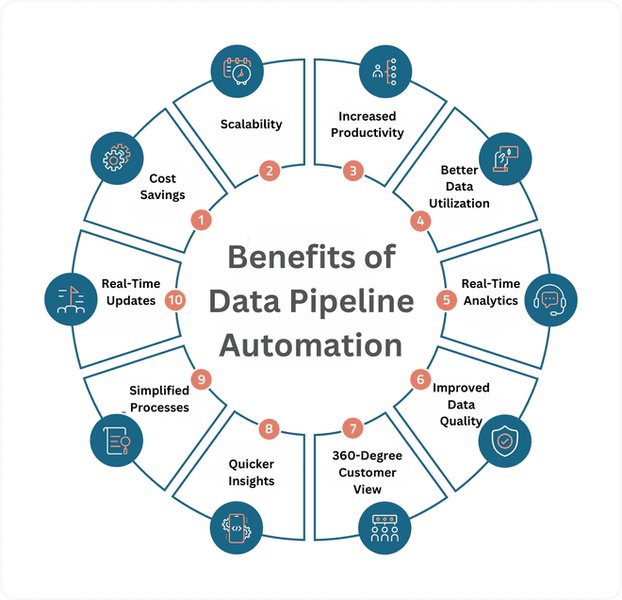
Visual representation of a data pipeline, illustrating the flow and benefits of automation.
Critical Success Factors: Enhancing the Automation Strategy
Amendments and Additional Considerations for Comprehensive Automation
Beyond the core capabilities, several additional factors and amendments are crucial for the long-term success and maintainability of the EA feed automation strategy:
- Test Data Management and Generation: Establish clear processes for creating, managing, versioning, and cleaning up test data. Consider how diverse test scenarios will be supported with appropriate data.
- CI/CD Integration: Integrate the functional automation scripts into a Continuous Integration/Continuous Deployment (CI/CD) pipeline. This ensures that tests are run automatically upon code changes, providing rapid feedback and enabling faster, more reliable deployments.
- Security, Compliance, and Access Control: Ensure all automation scripts and processes adhere to organizational security policies and compliance requirements. This includes secure management of credentials for accessing GCP, databases, and other systems.
- Comprehensive Logging, Monitoring, and Alerting: Implement robust logging within automation scripts to facilitate debugging. Set up monitoring for the automation jobs and alerts for failures or critical issues to ensure prompt attention and resolution. Consider verbose logging options, like those available in WireMock using notifiers or SLF4J levels.
- Environment Management: Define a strategy for managing different test environments (e.g., development, staging). Test parameters, database connections, and configurations for tools like WireMock may need to vary across these environments.
- Error Handling and Resilience in Automation: Build resilience into the automation scripts to handle transient errors or unexpected conditions gracefully.
- Performance Considerations: While the primary focus is functional automation, consider basic performance monitoring related to feed processing or dependency interactions. For more in-depth performance testing, specialized tools and approaches might be needed.
- Specificity of "Feed Image": Ensure clarity on whether the "feed image" refers to a container image, a disk image, or another type of artifact to avoid ambiguity in automation implementation.
- Documentation of Automation Tools and Frameworks: Document the chosen automation tools, frameworks, and libraries, along with configuration details and best practices for their use within the project.
Evaluating Key Automation Dimensions
The radar chart below provides a visual comparison of different facets of the EA feed automation strategy, assessing them based on their current focus versus an ideal state. This helps identify areas that may require more attention or resources to achieve optimal automation maturity. The dimensions include Implementation Complexity, Impact on Quality, Resource Intensity, and Scalability for each core automation task and supporting pillar.
This chart helps visualize maturity and focus areas. For example, while 'Image Pull & Pod Deployment' and 'WireMock for DMP/DQ' might have a strong current focus, areas like 'CI/CD Integration' or 'Test Data Management' might be targeted for significant improvement to reach the ideal state.
Comparative Analysis of Core Automation Tasks
Objectives, Technologies, and Critical Considerations
The following table provides a comparative overview of the core functional automation tasks discussed, outlining their objectives, typical technologies involved, and critical considerations for successful implementation.
| Automation Aspect | Objective | Key Technologies/Tools | Critical Considerations |
|---|---|---|---|
| Image Pull & Pod Deployment | Dynamically create isolated and configurable test environments from feed-related container images. | Docker, Kubernetes, Helm, Container Registries (e.g., GCR, Docker Hub), CI/CD tools. | Image versioning strategy, resource allocation for pods, secure parameter injection, pod lifecycle management, environment parity. |
| Test XML Data to GCP Bucket | Securely store, manage, and provide versioned test XML data for consumption by automation workflows. | Google Cloud Storage (GCS), GCP SDKs (Python, Java, etc.), XML parsing libraries, data generation tools. | Data integrity and validation (XML schema adherence), access permissions (IAM roles), data lifecycle management (creation, update, deletion), cost optimization for storage. |
| Database Validation (No API) | Verify data persistence, transformations, and system state directly within the database when APIs are insufficient or unavailable. | SQL, Database-specific connectors (JDBC, ODBC, etc.), Object-Relational Mappers (ORMs), scripting languages for DB interaction. | Secure management of database credentials, query performance optimization, ensuring data consistency, comprehensive knowledge of database schema and relationships, test data isolation. |
| WireMock for DMP/DQ Control Checks | Simulate external dependencies (like Data Management Platforms or Data Quality systems) to enable isolated, deterministic, and comprehensive testing of interactions. | WireMock (standalone or embedded), HTTP client libraries, JSON/XML for request/response definitions. | Defining realistic mock scenarios (success, various errors, delays), accurate request matching (URL, headers, body), response templating for dynamic behavior, stateful mocking if required, managing mock configurations. |
Video Deep Dive: Introduction to Automated Functional Testing
Understanding the Fundamentals
To further understand the principles behind functional automation, the following video provides an introduction to automated functional testing. While the tools and specific examples may vary, the core concepts of defining test cases, scripting interactions, and validating outcomes are universally applicable to automating the EA feed processes discussed.
This video, "Automated Functional Testing Part 1 Automation of ...", offers introductory insights into the world of automated functional testing, covering fundamental concepts relevant to the automation tasks discussed.
Frequently Asked Questions (FAQ)
Clarifying Key Aspects of EA Feed Automation
What is the primary goal of a functional walkthrough in this context?
The primary goal of a functional walkthrough, as presented by Nikhil, is to establish a shared and thorough understanding of the EA feed's end-to-end processes, user interactions, and critical business scenarios. This ensures that subsequent technical documentation and automation efforts are accurately aligned with the actual functional requirements and cover all essential aspects of the feed's operation, identifying potential gaps or areas needing special focus.
Why is detailed technical documentation for the EA feed crucial?
Detailed technical documentation for the EA feed, as highlighted by Sundar, serves as the definitive blueprint for anyone interacting with or developing for the feed. It includes vital information like data formats (e.g., XML), access methods (e.g., FTP, API), update frequencies, schemas, error handling procedures, and system architecture. This clarity reduces ambiguity, streamlines development and automation, aids in troubleshooting, and ensures consistency in how the feed is used and maintained.
What does "spinning a feed image to a pod" mean in functional automation?
In the context of Pallavi's points on functional automation, "spinning a feed image to a pod" refers to the automated process of taking a container image (e.g., a Docker image, which encapsulates an application or service related to the feed) and deploying it as a running instance within a container orchestration environment, specifically a Kubernetes pod. This pod is configured with specific test parameters, creating an isolated, reproducible environment for testing the feed's functionality.
How does WireMock help with DMP/DQ control checks?
WireMock is a service virtualization tool used to simulate external HTTP-based services. For DMP (Data Management Platform) or DQ (Data Quality) control checks, WireMock can mimic the behavior of these external systems. This allows the automation to test how the EA feed system interacts with DMP/DQ services under various conditions (e.g., successful validation, data quality issues, system unavailability) without relying on the actual, live DMP/DQ systems. It provides controlled and predictable responses, crucial for isolated and reliable functional testing.
Why is database validation important when APIs are unavailable?
When APIs (Application Programming Interfaces) are not available or do not expose enough functionality to verify the outcomes of feed processing, direct database validation becomes essential. Automation code can connect to the backend database to query tables, check for correct data insertion or updates, verify relationships, and ensure data integrity. This provides a reliable way to confirm that the system is functioning as expected at the data persistence layer, even if the API layer is incomplete or inaccessible for testing purposes.
What are the benefits of pushing test XML data to a GCP bucket?
Pushing test XML data to a Google Cloud Platform (GCP) bucket offers several benefits for automation:
- Centralized Test Data: It provides a central, accessible repository for test data.
- Scalability and Reliability: GCP Cloud Storage is highly scalable and durable, ensuring test data is always available.
- Version Control: Buckets can be configured to manage different versions of test data.
- Integration: GCP services often integrate well, allowing the feed processing system (potentially running on GCP) to easily consume this test data.
- Reproducibility: Standardized test data sets stored in a GCP bucket contribute to reproducible test runs.
How does CI/CD integration enhance EA feed automation?
Integrating EA feed automation into a Continuous Integration/Continuous Deployment (CI/CD) pipeline significantly enhances the software development lifecycle. It automates the execution of functional tests whenever new code changes are committed. This leads to:
- Early Bug Detection: Issues are identified quickly, reducing the cost and effort of fixing them.
- Faster Feedback Loops: Developers receive rapid feedback on the impact of their changes.
- Increased Release Velocity: Automation allows for more frequent and reliable deployments of the EA feed system.
- Improved Quality and Consistency: Automated tests ensure that regressions are caught and quality standards are consistently met.
Recommended Next Steps
Further Exploration for Deeper Insights
To further enhance your understanding and strategy, consider exploring these related topics:
- What are the best practices for designing resilient test automation for enterprise feeds?
- How can we effectively manage and version test data for complex automation scenarios involving XML and cloud storage?
- What are advanced techniques for using WireMock to simulate stateful external services and complex API behaviors?
- What security considerations are paramount when automating interactions with cloud services like GCP and backend databases in an enterprise environment?
References
Sources and Further Reading
Last updated May 20, 2025