
The Balancing Act: How the EAC Could Have Maintained Vital Supply Chains During COVID-19 Lockdowns
East African Community's missed opportunities and potential strategies for protecting both public health and cross-border trade during the pandemic
Key Takeaways
- Harmonization of COVID-19 protocols across member states could have prevented border delays and ensured consistent testing procedures
- Implementation of digital tracking systems and electronic clearance would have reduced physical contact while maintaining supply chain flow
- Creation of designated safe zones for truck drivers with access to food, security, and sanitation would have addressed welfare concerns
The Pandemic's Impact on East African Cross-Border Trade
When COVID-19 swept across the globe in early 2020, the East African Community (EAC) faced an unprecedented challenge that tested the resilience of its regional integration. As member states including Kenya, Uganda, Tanzania, Rwanda, Burundi, South Sudan, and later the Democratic Republic of Congo implemented national lockdowns to contain the virus, the vital arteries of cross-border trade began to clog.
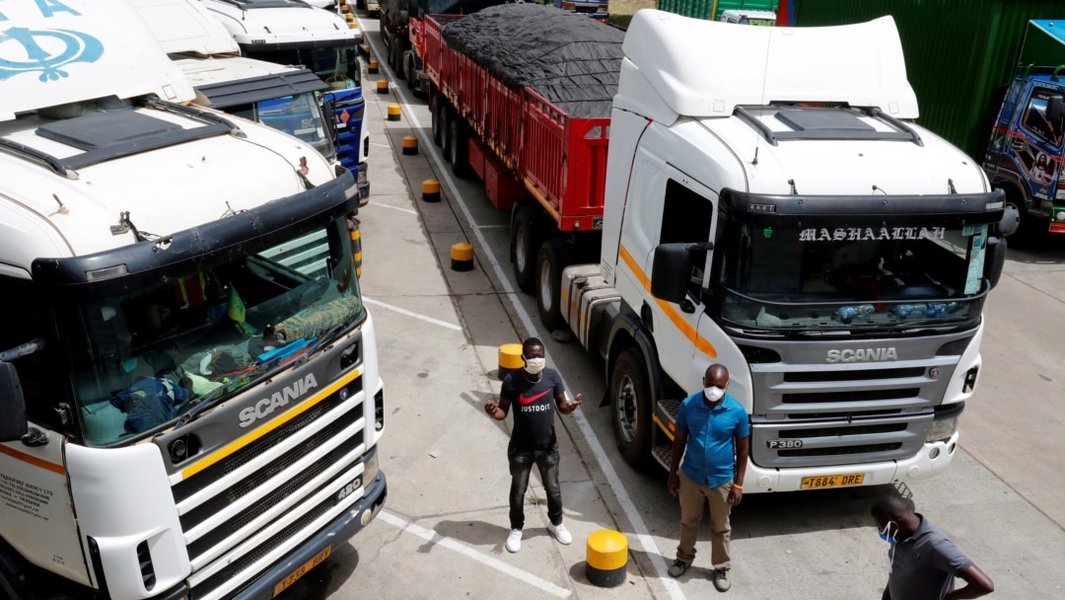
Long queues of trucks formed at border crossings as drivers faced new testing requirements, quarantine measures, and documentation checks that varied significantly between countries. In Rwanda, delays mounted as Tanzanian truck drivers expressed frustration with the stringent measures imposed by local authorities. Meanwhile, drivers heading to landlocked countries like Uganda and South Sudan reported growing fears of running out of food and falling victim to theft during extended waits at border points.
The lack of a coordinated regional response was particularly concerning. Critics pointed to the EAC's failure to implement joint interventions to improve the conditions for truck drivers, who suddenly found themselves on the frontlines of the pandemic while trying to maintain essential supply chains.
The Delicate Balance: Public Health vs. Economic Necessity
The pandemic highlighted the delicate balance between implementing necessary public health measures and maintaining economic lifelines. For the East African region, where cross-border trade is the lifeblood of many economies, this balance was particularly crucial. With landlocked countries depending on imports through coastal neighbors, any disruption to the movement of goods threatened food security, access to medical supplies, and economic stability.
Truck drivers, once seen merely as facilitators of trade, suddenly became potential vectors for disease transmission across borders. This perception led to stigmatization and, in some cases, hostility toward drivers, further complicating their already challenging work conditions during the pandemic.
Strategies the EAC Could Have Implemented
Drawing lessons from the pandemic experience, several strategies could have been employed by the EAC to better balance public health concerns with the need for uninterrupted trade:
1. Harmonization of COVID-19 Protocols
Standardized Testing and Documentation
One of the most significant challenges faced by truck drivers was the inconsistency in COVID-19 testing and documentation requirements across different EAC member states. The EAC could have developed and implemented harmonized guidelines for COVID-19 protocols at border points, including standardized testing procedures, health checks, and quarantine measures.
This approach would have reduced confusion and delays for truck drivers, allowing for smoother cross-border movement while still maintaining necessary health precautions. A unified COVID-19 certificate recognized across all member states would have eliminated the need for multiple tests at different border crossings.
Regional Electronic Cargo and Driver Tracking System
The Regional Electronic Cargo and Driver Tracking System (RECDTS), which was eventually implemented in some parts of the region, could have been deployed more comprehensively and earlier in the pandemic. This system allowed for digital verification of COVID-19 test results and tracking of driver movements, reducing the need for paper documentation and physical interactions at border points.
2. Streamlined Border Procedures
Electronic Customs Clearance
The implementation of electronic customs clearance systems could have significantly reduced wait times at border crossings. By digitizing documentation processes, the EAC could have minimized physical contact between drivers and border officials while expediting the clearance of goods.
"Green Lanes" for Essential Goods
The establishment of dedicated "green lanes" for essential goods such as food, medical supplies, and fuel would have ensured that critical supplies reached their destinations without unnecessary delays. These lanes could have operated with expedited processing procedures while still maintaining necessary health checks.
3. Driver Welfare and Safety Measures
Designated Safe Zones
Creating designated safe zones or rest stops for truck drivers along major transport corridors would have addressed concerns about safety and well-being. These zones could have provided access to food, sanitation facilities, and security, alleviating fears of theft and deprivation during extended waits at borders.
Resource Mobilization for Drivers
The EAC could have coordinated with governments and private sector players to mobilize resources for truck drivers, including food provisions, personal protective equipment (PPE), and access to healthcare services. This support would have not only improved the welfare of drivers but also reduced the risk of virus transmission.
4. Enhanced Regional Coordination
Cross-Border Committees
The establishment of cross-border committees comprising representatives from health authorities, customs officials, immigration officers, and transport associations would have facilitated better coordination and rapid response to emerging issues. These committees could have met regularly (virtually if necessary) to address bottlenecks and adapt strategies as the pandemic evolved.
Involvement of National Trade Facilitation Committees
Strengthening the role of National Trade Facilitation Committees (NTFCs) in emergency response planning would have ensured that trade considerations were adequately addressed in pandemic containment strategies. These committees could have provided valuable input on balancing health measures with trade facilitation needs.
| Strategy | Potential Benefits | Implementation Challenges | Stakeholders Involved |
|---|---|---|---|
| Harmonized COVID-19 Protocols | Reduced delays, consistent procedures, improved compliance | Differing national health policies, sovereignty concerns | Health ministries, EAC Secretariat, border agencies |
| Electronic Tracking System | Real-time monitoring, reduced document fraud, faster clearance | Technical infrastructure, digital literacy, cost | IT providers, customs authorities, transport companies |
| Designated Safe Zones | Improved driver welfare, reduced theft, controlled interactions | Land allocation, security provisions, maintenance | Transport ministries, private sector, local governments |
| Joint Border Management | Coordinated response, shared resources, consistent application | Interagency coordination, legal frameworks | Immigration, customs, health authorities, police |
| Driver Support Program | Better compliance, reduced stigma, improved morale | Funding, logistics, equitable distribution | Transport associations, NGOs, health providers |
5. Communication and Awareness
Information Dissemination
Effective communication of changing regulations, border procedures, and health requirements would have reduced confusion and improved compliance. The EAC could have established dedicated communication channels specifically for truck drivers, including mobile apps, SMS alerts, and radio broadcasts in multiple languages.
Combatting Stigmatization
Public awareness campaigns highlighting the essential role of truck drivers in maintaining supply chains could have helped combat the stigmatization they faced during the pandemic. Recognizing drivers as frontline workers would have fostered greater respect and cooperation from communities and authorities.
EAC's Actual Response and Lessons Learned
While initial responses were criticized, the EAC did eventually take steps to address some of these challenges. In April 2020, the EAC unveiled a comprehensive COVID-19 Response Plan aimed at reinforcing protective measures while ensuring the continued flow of essential goods and services.
The EAC Administrative Guidelines to Facilitate Movement of Goods and Services During the COVID-19 Pandemic were developed to ensure smooth and uninterrupted trade. These guidelines covered various aspects including trade facilitation, encouraging local production of essential products, handling of cargo at ports of entry and internal borders, facilitating cashless payments, and enhancing regional awareness of pandemic measures.
The implementation of the EACPass, a harmonized system to facilitate cross-border movement, was also a positive step. This digital platform reduced the need for repeated testing and verification of COVID-19 test certificates and vaccination status for travelers, helping to minimize cross-border trade impasses.
Nevertheless, the delayed and somewhat fragmented implementation of these measures highlighted the need for better preparedness and more proactive regional coordination in future crises.
Looking Forward: Building Resilience for Future Crises
The COVID-19 pandemic provided valuable lessons for the EAC on balancing public health measures with the need to maintain cross-border trade. Looking forward, the community should focus on building resilience through:
- Development of comprehensive emergency response protocols specifically for cross-border trade during health crises
- Investment in digital infrastructure to support seamless border operations even during emergencies
- Strengthening regional coordination mechanisms to ensure rapid and cohesive responses to future crises
- Regular simulation exercises to test the effectiveness of emergency protocols and identify areas for improvement
- Integration of trade facilitation considerations into public health emergency planning
By learning from the challenges faced during the COVID-19 pandemic, the EAC can emerge stronger and better prepared to maintain the vital flow of goods across borders while protecting public health in future crises.
Frequently Asked Questions
References
- EAC unveils COVID-19 Response Plan - East African Community
- EAC Partner States urged to treat drivers and crew who test positive for COVID-19 - East African Community
- EAC Partner States working towards adopting the EACPass to minimize cross-border trade impasse - East African Community
-
EAC Administrative guidelines to facilitate movement of goods - EAC Repository
- EAC Regional response to the COVID-19 Pandemic - Trade Law Centre
- East African Community Regional Trade Policy amidst the COVID-19 - African Economic Research Consortium
- Facilitating Cross-Border Trade Through a Coordinated African Response to Covid-19 - UNECA
Recommended Topics
Last updated April 3, 2025