
Unlocking Early Numeracy: A Culturally Rich, Hands-On Resource for Young Learners
Discover a versatile numeracy resource using natural items and Aboriginal counting methods for children aged 3-5.
Highlights
- Cultural Integration: Embraces Aboriginal "body tallying" (counting in fives) using natural materials, fostering cultural respect alongside numeracy.
- Holistic Development: Aligns strongly with the Early Years Learning Framework (EYLF) Outcomes 4 & 5, promoting problem-solving, critical thinking, and communication within play-based learning.
- Adaptable & Engaging: Offers "unlimited talkability" through open-ended exploration with natural items, easily adapting to diverse learning scenarios and NSW developmental milestones for 3-5 year olds.
Introducing the Resource: Counting with Nature & Body Tallying
A Hands-On Approach to Early Numeracy
This resource, "Counting with Nature: Body Tallying Explorations," is designed for children aged 3-5 years. It leverages the inherent curiosity children have about the natural world by using readily available items like stones, leaves, gumnuts, shells, and sticks as manipulatives for learning mathematical concepts. The core of the resource lies in its connection to a traditional Aboriginal counting method known as "body tallying," often involving counting in groups of five using fingers and other body parts.
The open-ended nature of natural materials means this resource offers limitless opportunities for discussion, exploration, and adaptation – it truly allows for "unlimited talkability." Children aren't confined to a single way of using the items; they can sort, count, pattern, build, estimate, and create stories, all while engaging with foundational numeracy concepts in a tangible, meaningful way.
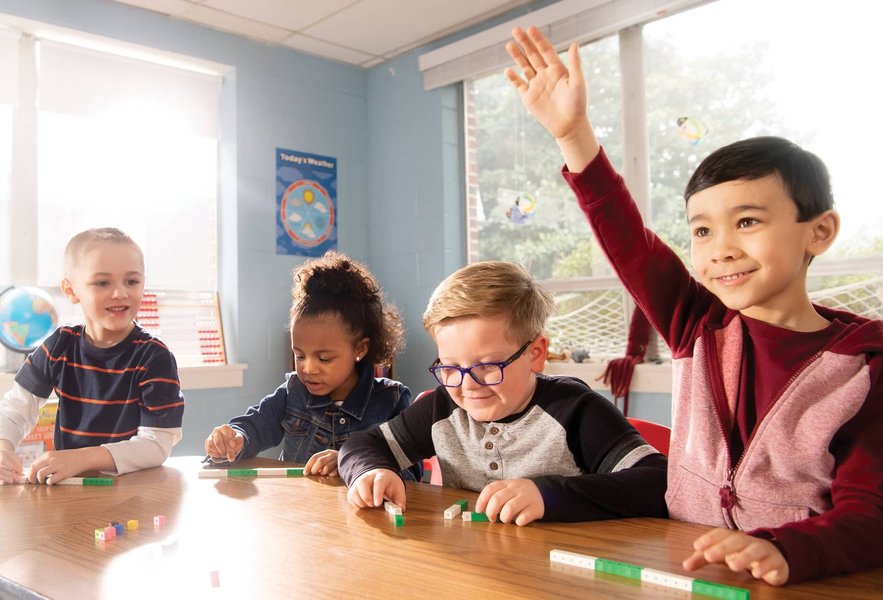
Natural items serve as engaging manipulatives for early math exploration.
Connecting with Aboriginal Ways of Knowing: Body Tallying
Integrating Cultural Numeracy Practices
A key strength of this resource is its authentic integration of Aboriginal ways of counting. Specifically, it introduces children to the concept of "body tallying" or counting in fives, a method historically used by various Aboriginal language groups across Australia. This often involves using fingers on one hand to represent five, then moving to the other hand, feet, or other body parts to track larger quantities.
How it Works in Practice:
Children can gather a collection of natural items (e.g., gumnuts). Using the body tallying concept, they might:
- Group the gumnuts into sets of five.
- Use their fingers on one hand to represent a group of five gumnuts.
- Count multiple groups of five, touching different body parts (fingers, wrist, elbow) to keep track of each group.
- Visually and kinesthetically connect the quantity of items with the counting system.
This approach, as highlighted by the NSW Department of Education resources, makes mathematics tangible and connects it to cultural knowledge, promoting respect and understanding. It moves beyond abstract numbers, grounding mathematical concepts in physical action and cultural context.
Body tallying connects physical actions with mathematical understanding.
Fostering Essential Skills: Problem Solving & Critical Thinking
Developing Higher-Order Thinking Through Play
The open-ended nature of "Counting with Nature" is fundamental to developing problem-solving and critical thinking skills.
Supporting Problem-Solving:
Children encounter natural problems during play that require mathematical solutions. For example:
- Sharing: "We have 12 smooth stones. How can we share them equally between two friends using our counting groups?" (Requires counting, grouping, and division concepts).
- Comparing: "Who collected more leaves? How can we use our body tallying to find out?" (Involves counting, comparing quantities, and potentially estimation).
- Building: "How many sticks do we need to make a fence around this sandcastle? Let's estimate and then count in fives." (Involves estimation, counting, and spatial reasoning).
As children apply mathematical concepts to solve these tangible, real-world problems, their understanding deepens, aligning with research highlighted by the Australian Education Research Organisation (AERO) on applying numeracy skills.
Encouraging Open-Ended Critical Thinking:
Unlike resources with single correct answers, natural collections invite diverse approaches. Educators can foster critical thinking by asking open-ended questions:
- "How else could we sort these shells?" (Promotes classification based on different attributes like size, colour, texture).
- "What patterns can you make with these leaves and stones?" (Encourages exploration of repeating sequences).
- "Can you show me the number 7 using body tallying and these pebbles?" (Allows for different representations and explanations).
- "What happens if we add two more items to each group of five?" (Sparks thinking about addition and changing quantities).
This encourages children to explore possibilities, justify their reasoning, and think flexibly – key components of critical thinking in early mathematics.
Alignment with Frameworks and Milestones
Connecting to EYLF and NSW Developmental Guidelines
This resource strongly aligns with the Australian Early Years Learning Framework (EYLF V2.0) and NSW developmental milestones for children aged 3-5.
EYLF Outcomes, Practices, and Principles:
- Outcome 4: Children are confident and involved learners.
- 4.1 Children develop dispositions for learning such as curiosity, cooperation, confidence, creativity, commitment, enthusiasm, persistence, imagination and reflexivity. (The resource encourages exploration, persistence in problem-solving, and creative use of materials).
- 4.2 Children develop a range of skills and processes such as problem solving, inquiry, experimentation, hypothesising, researching and investigating. (Directly supported through sorting, grouping, counting challenges).
- 4.4 Children transfer and adapt what they have learned from one context to another. (Applying body tallying from a guided activity to free play or other scenarios).
- Outcome 5: Children are effective communicators.
- 5.1 Children interact verbally and non-verbally with others for a range of purposes. (Discussing their sorting methods, explaining their counting).
- 5.4 Children begin to understand how symbols and pattern systems work. (Recognising groups of five, creating patterns with natural items).
- 5.5 Children use information and communication technologies to access information, investigate ideas and represent their thinking. (While the core resource is hands-on, digital tools could be used to document findings or explore related concepts).
- EYLF Practices: It embodies Learning through Play (hands-on exploration), Intentional Teaching (educators guiding, questioning, and introducing concepts like body tallying), and Cultural Competence (respectfully embedding Aboriginal knowledge).
- EYLF Principles: It upholds Respect for Diversity (valuing Aboriginal counting methods), High Expectations and Equity (providing rich learning for all children), and Secure, Respectful, and Reciprocal Relationships (learning collaboratively).
NSW Developmental Milestones (Ages 3-5):
The resource supports key NSW guidelines for this age group, including:
- Counting: Developing skills in counting objects reliably, initially to 10 and beyond. Body tallying supports counting in groups.
- Number Sense: Understanding quantity, more/less comparisons, and the idea that the last number counted represents the total (cardinality).
- Sorting and Classifying: Grouping objects based on shared characteristics (size, shape, colour, texture).
- Patterning: Recognising and creating simple repeating patterns.
- Problem Solving: Using objects and counting to solve simple, practical problems (sharing, building).
- Spatial Awareness: Arranging objects in space, understanding positional language.
Visualizing the Connections: Mindmap Overview
Interlinking Resource Elements
This mindmap illustrates how the "Counting with Nature" resource connects key educational concepts, skill development areas, and cultural integration.
(Stones, Leaves, Sticks)"] id1b["Open-Ended Exploration"] id1c["'Unlimited Talkability'"] id2["Core Numeracy Focus"] id2a["Aboriginal Counting Method
(Body Tallying / Counting in Fives)"] id2b["Hands-on Manipulation"] id3["Skill Development"] id3a["Problem Solving
(Sharing, Comparing, Building)"] id3b["Critical Thinking
(Sorting Rules, Patterns, Estimation, Justification)"] id3c["Mathematical Language"] id4["EYLF Alignment (V2.0)"] id4a["Outcome 4: Confident & Involved Learners
(Curiosity, Persistence, Transfer)"] id4b["Outcome 5: Effective Communicators
(Expressing Ideas, Understanding Symbols)"] id4c["Practices
(Play-based, Intentional Teaching, Cultural Competence)"] id4d["Principles
(Respect for Diversity, High Expectations)"] id5["NSW Milestones Alignment"] id5a["Counting & Cardinality"] id5b["Sorting & Classifying"] id5c["Patterning"] id5d["Basic Problem Solving"] id6["Math Concepts Developed"] id6a["Number Sense & Quantity"] id6b["Grouping (Base-5)"] id6c["One-to-One Correspondence"] id6d["Measurement (Comparison)"] id6e["Spatial Awareness"] id6f["Estimation"]
Mathematical Concepts Explored
Building Foundational Math Understandings
Through engaging with natural items and body tallying, children develop a range of fundamental mathematical concepts:
| Mathematical Concept | How the Resource Develops It |
|---|---|
| Counting & Cardinality | Matching one item to one count (one-to-one correspondence); understanding that the last number said indicates the total quantity; rote counting. Using body tallying reinforces sequences. |
| Number Sense | Developing an understanding of quantity, comparing amounts (more/less/same), recognizing small quantities instantly (subitizing). |
| Sorting & Classifying | Grouping items based on attributes like size, colour, texture, type (e.g., all the smooth stones, all the long leaves). Articulating the sorting rule. |
| Patterning | Recognizing, copying, and creating repeating patterns using different natural items (e.g., stone, leaf, stone, leaf...). |
| Grouping & Base Systems | Understanding the concept of grouping items, specifically in fives through body tallying, as a foundational step towards base-ten understanding. |
| Measurement (Comparison) | Informally comparing items by length, weight, or size (e.g., "This stick is longer," "This stone feels heavier"). |
| Spatial Awareness | Arranging items in space, using positional language (e.g., "Put the leaf next to the stone," "Make a circle with the shells"). |
| Estimation | Making reasonable guesses about quantity before counting (e.g., "How many gumnuts do you think are in this pile?"). |
| Early Addition/Subtraction | Solving simple problems involving adding items to a group or taking items away. |
Developing Pre-Math Skills Video
Understanding how children develop mathematical thinking from an early age is crucial. This video provides insights into foundational pre-math skills, complementing the hands-on approach of the "Counting with Nature" resource by highlighting the cognitive development educators aim to support.
Resource Effectiveness Radar Chart
Visualizing Strengths Across Key Areas
This radar chart provides a visual representation of the perceived strengths of the "Counting with Nature: Body Tallying Explorations" resource across various educational domains relevant to early childhood development. The scores (out of 10) reflect its strong potential in fostering numeracy through cultural integration, play, and critical thinking, while aligning well with established frameworks.
Presentation Slide Content Outline
Structuring Your PowerPoint
Here is a suggested structure and content outline for a 3-page PowerPoint presentation based on this resource:
Slide 1: Introduction - Counting with Nature & Body Tallying
- Title: Counting with Nature: Exploring Numeracy Through Aboriginal Perspectives (Ages 3-5)
- Image: Children engaging happily with natural materials (stones, leaves).
- Body Points:
- Introduces a hands-on numeracy resource using natural items.
- Highlights its open-ended nature ("unlimited talkability") and adaptability.
- Briefly mentions the integration of Aboriginal "body tallying" (counting in fives).
- Initial EYLF Link: Connects to Outcome 4: Confident & Involved Learners (fostering curiosity, persistence).
Slide 2: Cultural Links, Skills & Milestones
- Title: Body Tallying, Problem Solving & Critical Thinking
- Image: Illustration or photo depicting body tallying (hand showing five) alongside natural items.
- Body Points:
- Explains Aboriginal "body tallying" – counting in fives using body parts.
- How the resource supports this (grouping natural items).
- Supports Problem-Solving: Examples like sharing items fairly, comparing quantities.
- Supports Open-Ended Critical Thinking: Examples like different ways to sort, exploring patterns.
- Aligns with NSW Developmental Milestones (counting, sorting, basic problem-solving for 3-5 years).
Slide 3: EYLF Deep Dive, Math Concepts & References
- Title: Framework Alignment & Mathematical Foundations
- Image: EYLF logo or graphic representing diverse learning.
- Body Points:
- Deeper EYLF Links:
- Outcome 5: Effective Communicators (mathematical language, symbols).
- Practices: Play-Based Learning, Intentional Teaching, Cultural Competence.
- Principles: Respect for Diversity, High Expectations.
- Mathematical Concepts Developed: List key concepts (Counting, Cardinality, Grouping, Sorting, Patterning, Estimation, Spatial Awareness). Use table format if space allows.
- References: Include key URLs (see References section below).
- Deeper EYLF Links:
Frequently Asked Questions (FAQ)
How do I introduce Aboriginal counting methods respectfully?
Start by acknowledging the diversity of Aboriginal cultures and counting systems. Explain that you are sharing *one* example (like counting in fives/body tallying) used by *some* groups. Focus on the mathematical concepts involved (grouping, tallying) and the connection to physical actions. Avoid presenting it as the *only* Aboriginal method. If possible, consult with local Aboriginal Elders or community members for guidance specific to your region. Emphasize respect and learning *from* the culture, not appropriating it.
What if children struggle with counting in groups of five?
That's perfectly normal! Start with foundational skills like one-to-one correspondence and counting smaller groups (2s or 3s). Use visual aids like the five fingers on one hand. Focus on the physical act of grouping the natural items first. Body tallying is a more advanced concept for this age group, so introduce it playfully and without pressure. Celebrate their attempts and focus on building number sense gradually.
Where can I source the natural materials?
The beauty of this resource is its accessibility. Materials can often be collected ethically and safely from the local environment (parks, gardens, beaches) – involving children in the collection process adds another layer of learning. Ensure items are clean, non-toxic, and appropriately sized (not choking hazards). You can also supplement with natural materials purchased from craft or educational suppliers if needed.
How does this resource support the 'unlimited talkability' aspect?
Natural items are inherently open-ended. Unlike a puzzle with one solution, stones, leaves, and shells can be used in countless ways. Children can discuss:
- Their sorting criteria ("I put all the rough ones here").
- The patterns they create ("Mine goes shell, stone, shell, stone!").
- The stories they build around the items ("These sticks are a house for the gumnut people").
- Their counting strategies ("I used my fingers to count five leaves").
- Comparisons ("This rock is bigger than that one").
- Problem-solving approaches ("We need more leaves to finish the circle").
Recommended Reading & Exploration
- Explore practical ways to embed EYLF principles like cultural competence and play-based learning into everyday math interactions.
- Discover effective open-ended questions that promote critical thinking and mathematical reasoning in young children.
- Gain a deeper understanding of the specific mathematical thinking milestones expected for 3-5 year olds according to NSW guidelines.
- Find more inspiration for using natural materials across various learning domains in early childhood settings.
References
Last updated May 5, 2025