
The Impact of Doubling Earth's Mass on Its Orbital Stability
Exploring the Orbital Mechanics and Terrestrial Consequences of a Heavier Earth
Key Takeaways
- Orbital Stability Maintained: Earth's orbit around the Sun remains largely unchanged despite a mass doubling.
- Dominant Role of the Sun's Mass: The Sun's immense mass governs orbital dynamics, rendering changes in Earth's mass negligible in this context.
- Profound Terrestrial Consequences: A doubled Earth mass would lead to catastrophic changes on the planet's surface, atmosphere, and local systems.
Understanding Orbital Mechanics
Kepler's Laws of Planetary Motion
Kepler's laws are fundamental in describing the motion of planets around the Sun. The third law, in particular, states that the square of the orbital period (\( T \)) of a planet is directly proportional to the cube of the semi-major axis (\( a \)) of its orbit, mathematically represented as:
$$ T^2 \propto \frac{a^3}{M_{\text{Sun}} + M_{\text{Earth}}} $$
Given that the Sun's mass (\( M_{\text{Sun}} \)) is about 99.86% of the total mass of the Solar System, even if Earth's mass (\( M_{\text{Earth}} \)) were to double, its contribution remains minuscule. Therefore, the value of \( \frac{a^3}{M_{\text{Sun}} + M_{\text{Earth}}} \) remains virtually unchanged, ensuring that the Earth's orbital period and distance from the Sun remain stable.
Newton's Law of Universal Gravitation
Newton's law states that the gravitational force (\( F \)) between two masses is given by:
$$ F = G \frac{M_{\text{Sun}} \times M_{\text{Earth}}}{r^2} $$
Where:
- \( G \) is the gravitational constant.
- \( r \) is the distance between the centers of the two masses.
If Earth's mass (\( M_{\text{Earth}} \)) doubles, the gravitational force exerted by the Sun on Earth would also double. However, the required centripetal force to maintain Earth's orbit is already satisfied by the existing gravitational pull. Since Earth's velocity and distance from the Sun remain unchanged, the balance between gravitational and centripetal forces persists, ensuring orbital stability.
Angular Momentum Conservation
Angular momentum (\( L \)) is conserved in the Earth-Sun system. It is given by:
$$ L = m \times v \times r $$
Where:
- \( m \) is the mass of Earth.
- \( v \) is the orbital velocity.
- \( r \) is the orbital radius.
Doubling Earth's mass (\( m \)) without altering its velocity (\( v \)) or orbital radius (\( r \)) means that the angular momentum remains consistent, thereby maintaining the integrity of Earth's orbit.
Dominance of the Sun's Mass in Orbital Dynamics
Mass Ratio and Its Implications
The Sun's mass is approximately \( 1.989 \times 10^{30} \) kilograms, dwarfing Earth's mass of \( 5.972 \times 10^{24} \) kilograms. Even with a doubled Earth mass, the Sun remains overwhelmingly dominant in determining the gravitational dynamics of the Earth-Sun system.
Barycenter Considerations
The barycenter is the common center of mass around which two bodies orbit. In the current Earth-Sun system, this point lies within the Sun due to its massive scale. Doubling Earth's mass would shift the barycenter slightly, but still keep it well within the Sun. This minimal shift is insufficient to cause any significant alteration in Earth's orbit.
Gravitational Interactions with Other Celestial Bodies
While doubling Earth's mass would marginally increase gravitational interactions with other planets, the collective gravitational influence of the Sun overshadows these effects. Consequently, the overall orbital pattern of Earth remains stable within the Solar System.
Catastrophic Terrestrial Consequences
Surface Gravity and Its Effects
Doubled Earth's mass would result in an increase in surface gravity from approximately \( 9.81 \, \text{m/s}^2 \) to \( 19.62 \, \text{m/s}^2 \). This would have profound implications:
- Human Physiology: Increased gravity would place immense strain on the human body, potentially leading to severe health issues such as cardiovascular problems and musculoskeletal stress.
- Structural Integrity: Buildings and infrastructure not designed to withstand doubled gravitational forces would likely collapse under the increased weight.
- Movement and Mobility: Everyday activities would become extraordinarily difficult, as the force required to perform physical tasks would double.
Atmospheric Compression and Climate Alterations
A stronger gravitational pull would compress Earth's atmosphere, potentially thickening it. This compression could lead to:
- Temperature Extremes: Altered atmospheric composition might result in more extreme weather patterns and temperature fluctuations.
- Breathing Challenges: Higher atmospheric pressure could make breathing more strenuous for many life forms.
- Climate Instability: Changes in atmospheric dynamics could disrupt global climate systems, leading to unpredictable and severe weather events.
Geological and Seismic Upheaval
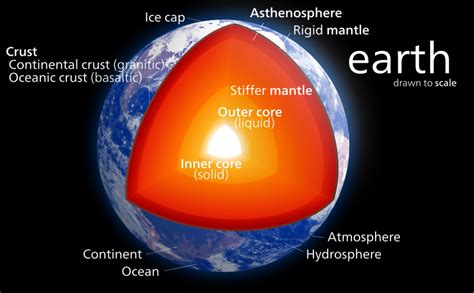
Doubling Earth's mass would increase the planet's internal pressure, potentially triggering widespread geological instability:
- Massive Earthquakes: Increased pressure could lead to more frequent and intense seismic activity.
- Volcanic Activity: Higher internal pressures might result in increased volcanic eruptions, releasing vast amounts of volcanic ash and gases into the atmosphere.
- Plate Tectonics Disruption: The movement of tectonic plates could become more erratic, leading to unpredictable geological formations.
Impact on the Moon and Tidal Forces
The Moon's orbit around Earth is influenced by Earth's gravitational pull. With doubled mass:
- Orbital Dynamics: The Moon might experience changes in its orbital period and distance from Earth.
- Tidal Forces: Stronger gravitational forces could result in more extreme tides, affecting marine life and coastal ecosystems.
- Stability of the Moon's Orbit: Increased mass could either stabilize or destabilize the Moon's orbit, potentially leading to long-term astronomical consequences.
Disruption of Artificial Satellites
Human-made satellites orbiting Earth are carefully calibrated to maintain specific velocities and altitudes:
- Orbital Decay: Increased gravitational pull would cause satellites to experience greater atmospheric drag, leading to faster orbital decay.
- Recalibration Needs: Satellites would require adjustments to their orbital parameters to prevent collisions with Earth's surface.
- Communication Disruptions: The instability of satellite orbits could result in widespread disruptions to communication, navigation, and observation systems.
Ecological and Biological Implications
Life on a doubled-mass Earth would face unprecedented challenges:
- Biodiversity Loss: Many species would be unable to adapt to the increased gravity, leading to widespread extinctions.
- Ecosystem Collapse: Altered climates and atmospheric conditions could disrupt food chains and habitat structures.
- Human Extinction Risk: The compounded effects of physiological strain, environmental instability, and infrastructure collapse could pose existential threats to humanity.
Astrophysical Resonances and Solar System Stability
While the immediate impact on Earth's orbit is negligible, over extended periods:
- Orbital Resonances: Slight shifts in Earth's mass could influence orbital resonances with other planets, potentially leading to long-term orbital instability.
- Gravitational Perturbations: Increased mass might result in minor gravitational perturbations affecting the orbits of neighboring planets.
- Solar System Dynamics: The collective gravitational interactions within the Solar System could experience minuscule changes, though the Sun's dominance remains unchallenged.
Quantitative Analysis of Orbital Stability
Calculating the Orbital Period with Kepler's Third Law
Kepler's Third Law is mathematically expressed as:
$$ T^2 = \frac{4\pi^2 a^3}{G(M_{\text{Sun}} + M_{\text{Earth}})} $$
Where:
-
\( T \) is the orbital period.
-
\( a \) is the semi-major axis of the Earth's orbit.
-
\( G \) is the gravitational constant.
Given that \( M_{\text{Sun}} \) is approximately \( 1.989 \times 10^{30} \) kg and \( M_{\text{Earth}} \) is \( 5.972 \times 10^{24} \) kg, doubling Earth's mass would make it \( 1.1944 \times 10^{25} \) kg. However, \( M_{\text{Sun}} \) remains the dominant term, and the change in \( M_{\text{Earth}} \) is negligible in the denominator. Therefore, the orbital period \( T \) remains essentially unchanged.
Barycenter Shift Calculation
The barycenter (\( R \)) between two bodies can be calculated using:
$$ R = \frac{d \times M_{\text{Earth}}}{M_{\text{Sun}} + M_{\text{Earth}}} $$
Where \( d \) is the distance between the centers of the two bodies. Current barycenter calculations place it well within the Sun. Doubling Earth's mass results in a slight increase in \( R \), but it remains inconsequential relative to the Sun's vast size, ensuring no significant shift in orbital dynamics.
Gravitational Influence on Satellites
The orbital velocity (\( v \)) required for satellites is given by:
$$ v = \sqrt{\frac{G M_{\text{Earth}}}{r}} $$
Doubling \( M_{\text{Earth}} \) increases the required orbital velocity for a stable orbit. Existing satellites would find their current velocities insufficient, leading to orbital decay unless adjustments are made.
Conclusion
Doubling Earth's mass would not disrupt its orbital path around the Sun due to the overwhelming gravitational dominance of the Sun and the principles outlined by Kepler's and Newton's laws. However, the terrestrial ramifications would be catastrophic, fundamentally altering the planet's environment, geological stability, and the viability of life as we know it. While the orbital mechanics remain steadfast, the internal and surface changes would render Earth uninhabitable, highlighting the delicate balance that sustains our planet within the Solar System.
References
Last updated January 17, 2025