
Beyond Cyanide: Unveiling Safer Pathways for Gold Extraction?
Exploring the growing landscape of environmentally conscious alternatives revolutionizing the gold mining industry.
The extraction of gold, a cornerstone of global economies and technological advancement, has traditionally relied heavily on cyanide leaching. While effective, this method carries significant environmental and health risks due to the high toxicity of cyanide. Spills and improper management can lead to devastating consequences for ecosystems and communities. Fortunately, driven by increasing environmental awareness, regulatory pressures, and technological innovation, the mining industry is actively developing and adopting safer, more sustainable alternatives. This response delves into the promising eco-friendly methods poised to reshape the future of gold processing.
Key Highlights: The Shift Towards Greener Gold
- Environmental Imperative: Growing concerns over cyanide's toxicity and incidents of environmental contamination are major drivers pushing the industry towards safer extraction methods.
- Diverse Alternatives: A range of chemical, biological, and physical processes, including glycine, thiosulfate, halide leaching, and bioleaching, offer viable cyanide-free pathways.
- Innovation & Adoption: Research institutions and mining companies are actively refining and implementing these greener technologies, some already reaching commercial scale, demonstrating a tangible shift towards sustainability.
Why Seek Alternatives to Cyanide Leaching?
The Environmental Toll of Traditional Methods
Cyanide (specifically sodium cyanide, NaCN) has been the dominant chemical (lixiviant) used in gold extraction for over a century due to its efficiency and cost-effectiveness in dissolving gold from ore. However, its extreme toxicity presents substantial risks:
- Water Contamination: Accidental spills from tailings dams or processing facilities can release cyanide into rivers and groundwater, poisoning aquatic life and potentially contaminating drinking water sources for wildlife and humans.
- Wildlife Impacts: Birds and other animals drinking from cyanide-contaminated ponds can suffer fatal poisoning.
- Soil Contamination: Leaks can contaminate soil, hindering vegetation growth and potentially entering the food chain.
- Human Health Risks: Exposure to cyanide can be lethal, posing risks to mine workers and nearby communities if not managed with extreme caution.
- Regulatory Bans & Restrictions: These risks have led several countries and regions (e.g., parts of the EU, USA, Turkey) to ban or severely restrict cyanide use in mining, necessitating the development of alternatives.

Runoff from mining operations can significantly impact water quality, highlighting the need for less toxic processing methods.
Exploring the Landscape of Cyanide-Free Gold Extraction
Several innovative and environmentally conscious methods are emerging as viable substitutes for traditional cyanidation. These alternatives aim to match or exceed the efficiency of cyanide while minimizing environmental liabilities.
Glycine Leaching: The Amino Acid Approach
Mechanism and Efficiency
Glycine, a non-toxic, biodegradable amino acid, has shown significant promise as a gold lixiviant. It forms stable chemical complexes with gold, facilitating its dissolution from ores. Research, notably from institutions like Curtin University, indicates that glycine leaching can achieve high gold recovery rates, sometimes exceeding 85%, particularly for mildly refractory ores. While traditionally requiring elevated temperatures or higher reagent concentrations, recent advancements show that adding small amounts of oxidants like potassium permanganate allows for efficient leaching at ambient temperatures.
Environmental Advantages
Glycine's primary advantage is its environmental profile. It is non-toxic, readily biodegradable, and poses minimal risk to ecosystems. Furthermore, it is relatively inexpensive and can potentially be recycled within the processing circuit, reducing overall chemical consumption and waste generation.
Thiosulfate Leaching: A Commercially Proven Alternative
Mechanism and Application
Thiosulfate leaching, typically using ammonium or sodium thiosulfate \($ (\text{e.g., } (NH_4)_2S_2O_3) \)$, is one of the most developed and commercially applied cyanide-free methods. Companies like Barrick Gold have implemented it at large scales (e.g., Goldstrike Mine). The process often uses copper as a catalyst to enhance the dissolution of gold. It has proven effective for various ore types, including carbonaceous and complex ores where cyanide struggles, and recovery rates can be comparable to cyanidation.
Environmental and Operational Aspects
Thiosulfate is significantly less toxic than cyanide and breaks down more readily in the environment. While considered much safer, the process chemistry can be more complex than cyanidation, requiring careful control of parameters like pH, temperature, and reagent concentrations. Challenges include reagent consumption and stability under certain conditions, but ongoing research aims to optimize the process.
Halide-Based Leaching: Chloride, Bromide, and Iodide Systems
Diverse Halogen Chemistry
Halogens like chlorine, bromine, and iodine can also be used to leach gold.
- Chloride Leaching: Uses chloride solutions (e.g., cupric chloride, ferric chloride, or even seawater under specific conditions) to form soluble gold chloride complexes. Research suggests efficiency can be enhanced in mild conditions, especially with concurrent gold adsorption onto activated carbon.
- Bromide Leaching: Employs bromide salts. This method is noted for potentially faster leaching kinetics and high efficiency, particularly for ores with lower sulfide content.
- Iodine-Iodide Leaching: Uses iodine and iodide ions. This system is recognized for its high selectivity for gold and ability to operate under relatively mild, eco-friendly conditions.
Benefits and Considerations
Halide-based methods generally offer lower toxicity compared to cyanide. They can be effective for specific ore types and may offer faster processing times. However, some halide reagents can be corrosive, requiring specialized equipment. The cost and stability of reagents, along with process complexity, are factors influencing their adoption.
Thiourea Leaching: A Fast-Acting Alternative
Process Characteristics
Thiourea \($ (CS(NH_2)_2) \) leaching, typically conducted in acidic conditions, has been studied for decades. It is known for its rapid dissolution rates for both gold and silver. A key advantage is its effectiveness on ores containing elements like copper, arsenic, antimony, and sulfur, which often interfere with cyanidation.
Safety and Environmental Profile
Thiourea is considered significantly less toxic than cyanide. However, it is not entirely benign and requires careful handling and management. Concerns exist regarding reagent stability and potential environmental persistence if not managed correctly. It can be regenerated, which helps minimize waste.
Cornstarch-Based Extraction: An Unexpected Innovation
Researchers have developed a novel method using alpha-cyclodextrin, a compound derived from cornstarch. This non-toxic, biodegradable approach involves using the cornstarch derivative to selectively isolate gold ions from solutions, leaving other metals behind. It has shown potential for efficiently recovering gold from various sources, including electronic waste, offering a remarkably green and potentially low-cost alternative.
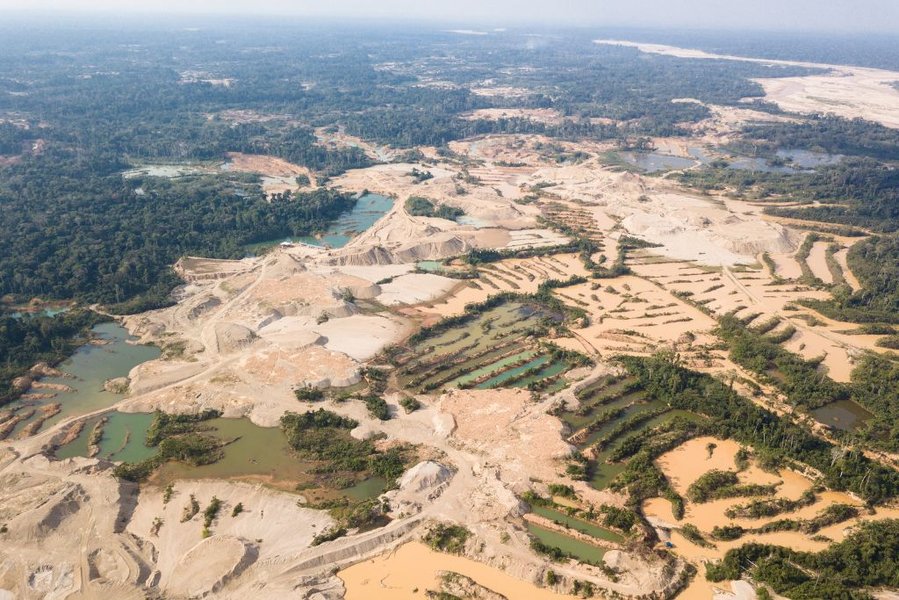
Sustainable extraction methods are crucial for minimizing the environmental footprint of resource recovery, including gold.
Bioleaching: Harnessing Microbial Power
Bioleaching, or biomining, employs microorganisms (bacteria or archaea) to facilitate the extraction of metals. In the context of gold, specific microbes oxidize sulfide minerals that typically lock up gold particles (refractory ores). This pre-treatment step liberates the gold, making it accessible for subsequent recovery using mild chemical methods or physical concentration. Bioleaching avoids harsh chemicals for the initial breakdown, operates at low temperatures, and can be cost-effective for low-grade ores. It is considered a very environmentally friendly approach, though the kinetics can be slower than chemical leaching.
Other Approaches: Physical Methods and Urban Mining
Physical Concentration
For certain types of gold deposits, particularly in artisanal and small-scale mining (ASM), physical methods can be employed to concentrate gold without chemicals. Techniques like gravity separation (using sluices, jigs, shaking tables, spiral concentrators, centrifuges) and panning separate denser gold particles from lighter gangue minerals. While often requiring a subsequent leaching step for fine gold, maximizing physical recovery first significantly reduces the amount of material needing chemical treatment and avoids the use of mercury, another toxic substance historically common in ASM.

Physical concentration equipment, like sluices, offers a chemical-free way to recover coarser gold particles.
Urban Mining (E-Waste Recycling)
Urban mining refers to the recovery of valuable materials from waste streams, particularly electronic waste (e-waste). E-waste contains significant amounts of gold and other precious metals. Developing efficient and environmentally sound methods (including some of the non-cyanide chemical methods mentioned above, like thiosulfate or cornstarch-based processes, as well as specialized absorbents like graphene composites) to extract gold from discarded electronics reduces the need for primary mining and its associated environmental impacts.
Visualizing the Alternatives
Comparative Assessment of Key Alternatives
The following chart provides an illustrative comparison of the main cyanide-free alternatives based on several key factors. Scores are relative and intended to highlight general characteristics rather than precise quantitative data, as performance can vary significantly based on specific ore types and process conditions.
Mindmap of Cyanide-Free Gold Extraction Methods
This mindmap illustrates the primary categories and specific examples of environmentally friendly alternatives to cyanide leaching discussed in this overview.
(alpha-cyclodextrin)"] id1f["Other Commercial Reagents
(e.g., Eco-Goldex)"] id2["Biological Methods"] id2a["Bioleaching / Biomining
(Microbial Oxidation)"] id3["Other Approaches"] id3a["Physical Concentration"] id3a1["Gravity Separation
(Sluices, Jigs, Tables, Centrifuges)"] id3a2["Panning"] id3b["Urban Mining
(E-Waste Recycling)"]
Video Spotlight: Non-Toxic Gold Extraction Research
The following video from Curtin University provides insights into the development of their glycine-based cyanide-free gold leaching process. It highlights the motivations behind seeking alternatives and demonstrates the potential of amino acid chemistry in achieving environmentally sound gold extraction. Understanding the research and development process showcases the scientific efforts underpinning the shift towards sustainable mining practices.
Summary Table of Alternatives
This table provides a concise overview of the main environmentally friendly alternatives to cyanide gold leaching, comparing their key characteristics.
| Alternative Method | Primary Reagent(s) | General Mechanism | Key Advantages | Potential Challenges | Environmental Profile |
|---|---|---|---|---|---|
| Glycine Leaching | Glycine (amino acid), Oxidant (optional) | Forms stable gold-glycinate complex | Non-toxic, biodegradable, potentially recyclable, low cost | May require specific conditions (temp., oxidant), newer technology | Excellent, very low impact |
| Thiosulfate Leaching | Thiosulfate (e.g., Ammonium, Sodium), Copper (catalyst) | Forms gold-thiosulfate complex | Non-toxic, commercially proven, effective on some refractory ores | More complex chemistry, reagent consumption/stability issues | Good, significantly safer than cyanide |
| Halide Leaching (Cl, Br, I) | Chloride, Bromide, or Iodide salts/solutions | Forms soluble gold-halide complexes | Can be fast, effective for specific ores, lower toxicity than cyanide | Corrosivity, reagent cost/stability, process complexity varies | Moderate to Good, depends on specific halide and management |
| Thiourea Leaching | Thiourea, Acid | Forms gold-thiourea complex | Fast kinetics, effective on complex ores (As, Sb, Cu) | Moderate toxicity (requires care), reagent stability, acidic conditions | Fair, less toxic than cyanide but requires management |
| Cornstarch-Based | Alpha-cyclodextrin | Selective complexation/precipitation | Non-toxic, biodegradable, low cost, highly selective | Primarily lab/pilot scale, application scope still developing | Excellent, very environmentally benign |
| Bioleaching (Pre-treatment) | Microorganisms (Bacteria/Archaea) | Oxidizes sulfide minerals, liberating gold | Uses natural processes, low energy, low chemical input for oxidation | Slower kinetics, requires specific microbial conditions | Excellent for the oxidation step |
Frequently Asked Questions (FAQ)
Are these alternatives as efficient as cyanide?
Are these cyanide-free methods more expensive?
How widely are these alternatives being used today?
Can these methods be used for artisanal and small-scale mining (ASM)?
References
- Eco-friendly Extraction: The Future of Gold Mining - MFEA
-
Revolutionizing Mining: Eco-Friendly Alternatives for Sustainable Gold Extraction and Waste Management - Farmonaut
- Making Gold Green: New Non-Toxic Method for Mining Gold - Northwestern Now
- Cyanide-Free Gold Recovery Methods | Gold CIL & CIP Plant Manufacturer - Yantai CNLITE Mineral Processing Reagents Co., Ltd.
- Researchers up ante on cyanide-free gold leaching process - Mining Magazine
-
A review of the leaching and recovery of gold from ore in cyanide-free glycine media - ScienceDirect
- Cyanide-free gold recovery - CSIRO
- Artisanal and Small-Scale Gold Mining Without Mercury | US EPA
Recommended
Last updated April 20, 2025