
Economical Drivers for Econowave in 2025
A Comprehensive Analysis of Cost-effective Components and Design Strategies
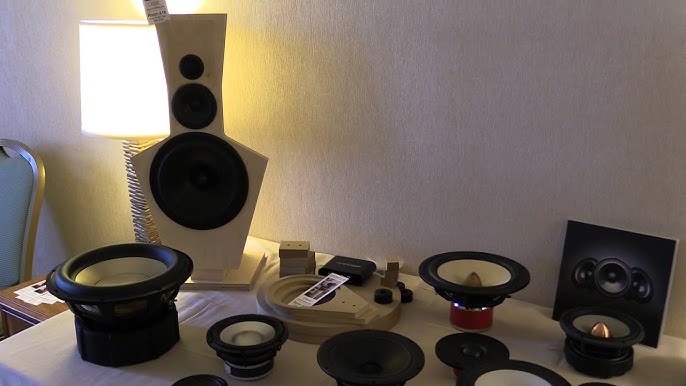
Highlights
- Cost-Effective Component Selection: Prioritize drivers and woofers that blend affordability with performance.
- Balanced Design Considerations: Strike the right balance among frequency response, sensitivity, and sound quality.
- DIY Speaker Building Insights: Utilize proven design strategies, component combinations, and community recommendations.
Introduction
The Econowave speaker concept in 2025 continues to focus on delivering high-quality audio performance without compromising on budget. At its core, the Econowave design marries innovative engineering with economical component selection to achieve sound reproduction that is both clear and dynamic. This design strategy not only addresses the need for affordable audio systems but also caters to the DIY audio community that seeks functional yet cost-effective solutions. As such, this guide provides an in-depth look at the economical drivers – both in terms of the physical components within the speaker design and the underlying economic factors – that are central to the success of Econowave speakers in 2025.
Understanding the Econowave Speaker Concept
The Econowave speaker is built around the idea of achieving a superior audio experience using components that are readily available and economical. Despite a focus on affordability, the design does not sacrifice performance. Instead, it carefully combines several elements:
- Waveguide technology for directing sound efficiently.
- A robust compression driver for clear mid to high frequencies.
- A well-chosen woofer that supports the lower end of the audio spectrum.
In such systems, the interplay among these components determines overall sound quality. The approach requires that each driver – whether it be a woofer or a compression unit – be chosen for its technical characteristics, such as sensitivity, frequency response, and cost, ensuring the final product is both economical and high-performing.
Key Characteristics for Economical Driver Selection
When pursuing economical drivers for Econowave speakers, several key design parameters are considered. These include:
Driver Performance Metrics
Frequency Response
The ideal driver should offer a frequency response that covers the mid to high frequencies effectively. In practice, most 12" designs tend to have a midbass response that starts around 1 kHz and extends up to about 2 kHz, which is crucial for ensuring intelligibility without sacrificing bass performance.
Sensitivity and Efficiency
Sensitivity, often measured in decibels (dB), plays a significant role in the output efficiency of the driver. Economical driver selections for the Econowave tend to target sensitivities close to 96 dB. A high sensitivity rating ensures that the speaker can deliver adequate volume at lower power inputs, a critical factor for achieving efficiency in budget designs.
Resonance Frequency (Fs)
The resonance frequency of a driver affects its ability to reproduce bass frequencies. For Econowave systems, a resonance frequency around 40 Hz is often targeted. A lower Fs can extend the bass response and provide the necessary depth for a balanced sound.
Component Compatibility and Value-for-Money
A crucial factor in building an Econowave speaker is ensuring that components work together harmoniously. Compatibility between the waveguide and the compression driver, as well as the integration of a well-matched woofer, is essential. Limiting unnecessary high-cost choices while still attaining top-notch performance is fundamental to the Econowave philosophy.
Value-for-money is not just about the lowest cost—it involves considering long-term durability, sound quality, and performance. Several driver options that are both highly economical and effective include those that have been proven by the DIY community over recent years.
Recommended Drivers and Components
Below is a detailed analysis of recommended drivers and woofer options that strike the right balance for an Econowave build:
Woofer Options
The woofer is responsible for producing the lower frequencies that add fullness to the sound. For an Econowave speaker, the following characteristics are prioritized:
- Light cone midbass design for clarity and efficiency.
- Good low bass extension and structural integrity.
Recommended woofer options include models that offer high performance on a budget:
- A high-quality 12" woofer that can effectively handle the midbass frequencies, often seen with sensitivity ratings around 96 dB and an Fs near 40 Hz. Models that match or closely resemble these specifications are popular among builders.
- For larger designs, exploration into 15" variants may be considered, provided they meet the efficiency and performance baseline. However, ensuring compatibility with the other components is critical.
Compression Driver Options
Compression drivers are central to achieving clarity in the higher frequency range. While several options exist, a few stand out as economical choices:
Budget-Centric Models
Among the economical compression drivers, models such as one offered by a well-regarded manufacturer are popular for their balance of price to performance. Often, a mid-range unit that provides consistent performance while remaining budget-friendly is favored over high-end titanium alternatives, which can be unnecessarily expensive for this application.
Enhancement Options
For those willing to slightly stretch their budget, there are premium drivers that, when paired with the right woofer, push the performance envelope without an extreme increase in cost. However, for central Econowave builds, staying within a more conservative price range is common.
Component Synergy
The key to a successful Econowave speaker lies in the synergy between its components. A highly effective combination often includes:
- An economical 10" or 12" woofer that delivers clear, robust low-mid frequencies.
- A compression driver known for its effective handling of mid-to-high frequency ranges, ensuring that the details in vocals and instrumental sections are crisply reproduced.
- A compatible waveguide system that optimizes the projection and dispersion of sound, ensuring that the output is both even and immersive.
When careful attention is paid to the integration of these components — especially ensuring that the chosen compression driver and woofer have complementary frequency domains — the resultant speaker not only offers cost savings but also outstanding sound quality.
Comparative Analysis Table
The following table provides a comparative view of several key drivers and woofers recommended for the Econowave speaker build:
| Component | Model | Size | Sensitivity (dB) | Key Features |
|---|---|---|---|---|
| Woofer | High-Quality 12" Unit | 12" | ~96 dB | Light cone midbass, ~40 Hz Fs |
| Woofer | 15" Budget-Friendly Option | 15" | Comparable to 12" unit | Enhanced low bass extension, robust design |
| Compression Driver | Economical Compression Driver | Varies | High efficiency within budget range | Optimal mid-to-high frequency detail, waveguide-compatible |
| Compression Driver | Premium Stretch Option | Varies | Slightly higher sensitivity | Improved clarity and detail, higher material quality |
Practical Design Considerations
When assembling an Econowave speaker system, the following practical insights are essential to ensure an economical build:
DIY Approach and Community Insight
Many enthusiasts in the DIY audio community favor the Econowave concept, which encourages hands-on experimentation with various component combinations. By participating in community forums, builders can benefit from:
- Real-world performance reviews and recommendations.
- Detailed build-up guides and crossover designs that refine sound output.
- Insights on the integration of waveguides with selected drivers, ensuring maximum efficiency.
Informal testing and iterative improvements are often the backbone of developing an optimal speaker design. Close collaboration among DIY builders supports the notion that a well-researched component selection paired with rigorous testing yields superior results.
Economic Balance – Cost vs. Performance
A central guideline in choosing economical drivers for an Econowave build is the balance between cost and performance. Here, strategic decision-making comes into play:
- Prioritize component synergy: Ensure that each driver’s frequency range complements the others. A woofer with robust low-mid frequencies should pair with a compression driver optimized for mid-to-highs.
- Focus on long-term durability: Economical does not imply low quality. Many recommended drivers are built for longevity and consistent performance, which reduces future maintenance costs.
- Seek community validation: Designs that are supported by multiple reviews and extensive practical testing tend to mitigate risk, offering a well-rounded performance at a minimal price.
The overall success of the Econowave concept lies in its ability to demonstrate that budget-friendly components, when thoughtfully integrated, can perform nearly on par with more expensive systems.
Integration of Modern Economic Trends
Beyond the technical specifications, it is important to consider the broader economic trends influencing the development of Econowave speakers in 2025. The spirit of affordability in speaker design is paralleled by global economic indicators that support cost-efficient manufacturing and distribution:
Global Trade and Supply Chain Efficiency
In today’s globalized market, international trade agreements and improved supply chain management further support the production of economical components. Increased cooperation among manufacturing hubs and more efficient logistics have allowed high-quality drivers and woofers to be produced in larger volumes at reduced costs. This trend means that even premium components may become more accessible for budget-speaker builders.
Innovation and R&D Investment
Investment in research and development, particularly in fields such as acoustics and materials science, has led to improvements in driver technologies. This evolution means that components which once required expensive materials and manufacturing processes can now be produced more economically through innovation. This not only benefits large-scale manufacturers but also trickles down to the DIY market, where improved production methods reduce cost barriers.
Sustainability and Green Manufacturing
Another economic factor contributing to the availability of economical drivers is the increasing focus on sustainability. Manufacturers are actively seeking greener production methods, which can result in cost savings over time. Energy-efficient production processes, recycling of materials, and a greater emphasis on green technologies ensure that future components are not only efficient from an energy standpoint but also affordable.
Detailed Analysis of Design Strategies for Econowave
A successful Econowave speaker build requires a clear understanding of both individual components and overall design strategy. The following sections detail important strategies derived from careful evaluation of technical and economic considerations.
Optimizing the Frequency Crossover
The performance of an Econowave speaker is significantly enhanced by a well-designed crossover network. The crossover divides the audio signal between the woofer and the compression driver, ensuring that each component receives only the frequencies it is best equipped to handle. Developing an economical and effective crossover involves:
- Assessing the natural roll-off of the compression driver and woofer to minimize energy loss.
- Using cost-effective components such as capacitors and inductors that do not compromise performance.
- Experimenting with filter orders to strike a balance between simplicity and performance clarity.
In practical DIY builds, community-sourced designs have often provided insights into optimal filter configurations. These configurations ensure that the transition between drivers is smooth, thus enhancing overall tonal balance.
Waveguide Design Considerations
The integration of a waveguide is key to controlling the dispersion pattern of the compression driver. An effectively designed waveguide can greatly enhance the on-axis performance and even out the off-axis response. For economical builds, polymer-based or composite waveguides are often used because they provide the necessary rigidity and acoustic performance without incurring high costs.
- Material choice: Selecting materials that are inexpensive yet acoustically transparent is paramount.
- Shape and contour: The geometric configuration of the waveguide is tuned based on driver characteristics and cabinet design.
- Integration with the speaker enclosure: Ensuring the waveguide works in harmony with the enclosure is critical to manage standing waves and improve sound diffusion.
Cabinet Construction and Acoustic Damping
The design of the speaker cabinet itself must be taken into account from an economical standpoint:
- Material Selection: Using cost-effective yet acoustically dampening materials ensures that the driver output is not marred by cabinet resonances.
- Internal Damping: Incorporating internal damping materials—such as fiberglass or acoustic foam—can mitigate undesirable resonances and improve clarity.
- Design Optimization: Utilizing computer-aided design (CAD) tools to simulate acoustic performance can reduce trial-and-error in physical builds, thereby saving resources and time.
In a practical build scenario, the proper interplay of the cabinet, drivers, and crossover network can result in a speaker system that not only meets the audio expectations of its users but also remains true to the Econowave philosophy of cost efficiency.
Market Trends and Future Outlook
The drive toward economical speaker systems in 2025 is bolstered by modern market trends and continuous innovation in component manufacturing. As economic conditions tilt toward increased global collaboration and technological efficiency, several trends are worth noting:
Growth in DIY Audio Culture
The DIY audio community is thriving, with many enthusiasts embracing the challenge of constructing quality speakers using economical components. This grassroots movement has led to the dissemination of best practices, standardized design blueprints, and shared experiences that lower the barrier to entry for high-performance sound systems.
Enhanced Component Accessibility
Global trade agreements and improved manufacturing technologies have increased the accessibility of quality audio components at lower costs. As manufacturers optimize production through advancements in robotics and AI-driven quality control, components that once were considered premium now become available to a wider audience at more reasonable prices.
Sustainability as a Market Driver
Sustainability is emerging as a fundamental market driver. Manufacturers who invest in greener production techniques often benefit from reduced waste, lower energy consumption, and improved cost efficiency. This trend not only supports environmental goals but also encourages the production of drivers and woofers that are economically viable for budget-oriented speaker projects.
Conclusion
In summary, the success of Econowave speakers in 2025 lies in the thoughtful selection of economical drivers and complementary components. The integration of cost-effective 10" or 12" woofers, paired seamlessly with compression drivers that deliver clear mid-to-high frequencies, forms the cornerstone of a design that prioritizes both quality sound and affordability. In addition, utilizing advanced waveguide designs, well-optimized crossover networks, and sustainable manufacturing methods further enhances the overall value proposition.
The DIY approach, buttressed by extensive community feedback, has allowed enthusiasts to experiment with various configurations, ensuring that every component performs optimally within the system. Balancing technical performance with budget restrictions requires a deep understanding of driver sensitivity, frequency response, resonance characteristics, and component synergy—a balancing act that Econowave builds achieve admirably.
Looking ahead, global market trends, increased accessibility to quality components, and a strong emphasis on sustainability will continue to drive advancements in economical speaker design. As a result, both new builders and seasoned audiophiles can expect exciting developments in budget-friendly audio systems, making high-fidelity sound more accessible than ever.
References
- Best 10” Woofer, Compression Driver and X-over Combo for Econowave build in 20” by 13” cabinet - diyaudio
- Econowave woofer driver candidates? SB Acoustics & ACR speakers - diyaudio
- Most efficient budget speaker? - diyaudio
- Econowave vs. Tarkus - Techtalk Forum
- Introducing the Econowave speaker - Red Spade Audio
Recommended
Last updated February 23, 2025