
Revolutionizing Warehouse Efficiency: The Definitive Guide to Cycle Counting Methods
Master the art of inventory accuracy with methodical approaches that minimize disruptions and maximize operational flow
Cycle Counting Essentials: Key Insights
- Cycle counting is a systematic inventory verification technique that maintains accuracy without disrupting operations, unlike traditional full physical counts.
- The ABC Analysis method consistently proves most effective, ensuring high-value items receive more frequent attention while optimizing resource allocation.
- Implementation of technology-driven solutions like barcode scanners, RFID, and warehouse management systems can reduce count times by up to 75% while improving accuracy.
Understanding Cycle Counting Fundamentals
Cycle counting is a methodical inventory verification process that involves regularly counting a subset of inventory items rather than conducting full physical inventory counts. This approach allows warehouses to maintain accurate inventory records while minimizing operational disruptions. Unlike traditional annual physical counts, cycle counting is performed continuously throughout the year, enabling early detection of discrepancies and immediate corrective actions.
Top Cycle Counting Methods for Warehouse Excellence
1. ABC Analysis Method
This method categorizes inventory based on value and importance, following the Pareto Principle (80/20 rule):
- A-Items: High-value items (typically 20% of inventory that represents 80% of value) counted most frequently, often monthly
- B-Items: Moderate-value items counted less frequently, often quarterly
- C-Items: Low-value items counted least frequently, often semi-annually
This strategic approach ensures resources are allocated efficiently by focusing on items with the greatest financial impact.
2. Zone Counting Method
The warehouse is divided into specific zones or sections, with each zone counted according to a predetermined schedule. This method:
- Ensures comprehensive coverage of the entire warehouse over time
- Simplifies the counting process by breaking it into manageable segments
- Allows for localization of discrepancies to specific areas
- Minimizes disruption to daily operations by limiting counts to specific zones
3. Random Sample Counting Method
This approach involves selecting a random subset of inventory items for counting. It:
- Provides a statistical representation of inventory accuracy
- Requires less time and resources than full inventory counts
- Works well when combined with statistical analysis to estimate overall accuracy
- Can uncover systemic issues that might not be evident in targeted counting methods
4. Process Control Group Counting
This method focuses on counting items based on their movement or the processes they're involved in. It:
- Targets items with high transaction volumes or error rates
- Promotes accountability within specific operational processes
- Addresses discrepancies at their source rather than symptoms
- Integrates counting into existing workflow processes
5. Opportunity-Based Counting
Counts are conducted during specific events or opportunities, such as:
- When stock reaches minimum levels
- During replenishment activities
- When items are being relocated
- At the time of receipt or shipment
This method maximizes efficiency by combining counting with other operational activities.
This radar chart illustrates the comparative performance of different cycle counting methods across key metrics, including accuracy, efficiency, resource requirements, disruption minimization, implementation ease, and problem detection capability. The ABC Analysis Method shows particularly strong performance in accuracy and problem detection, while Opportunity-Based Counting excels in disruption minimization and efficiency.
Best Practices for Effective Cycle Counting
Preparation and Planning
Establishing Clear Procedures
Develop comprehensive Standard Operating Procedures (SOPs) that outline:
- Specific counting methodologies for different inventory categories
- Clear assignment of roles and responsibilities
- Standardized documentation processes
- Procedures for investigating and resolving discrepancies
- Guidelines for count frequency based on item value and movement
Strategic Scheduling
Optimize cycle count timing by:
- Scheduling counts during low-activity periods
- Avoiding peak shipping or receiving times
- Creating a master calendar that ensures complete inventory coverage
- Balancing count frequency with operational requirements
Execution Excellence
Controlled Environment
Maintain count integrity by:
- Temporarily freezing inventory movements in the counting area
- Clearly marking zones being counted
- Using count teams with defined responsibilities
- Implementing verification counts for discrepancies
Technology Integration
Leverage technology to enhance accuracy and efficiency:
- Barcode scanners for rapid and accurate identification
- RFID systems for automated counting
- Mobile devices for real-time data entry
- Warehouse Management Systems (WMS) for automated scheduling and reporting
- Data analytics for trend identification and process improvement
| Technology Solution | Efficiency Improvement | Accuracy Improvement | Implementation Complexity | Best Suited For |
|---|---|---|---|---|
| Barcode Scanners | 40-60% | 70-85% | Low | All warehouse types |
| RFID Systems | 70-90% | 85-95% | High | Large warehouses with high-value inventory |
| Mobile Counting Apps | 30-50% | 60-75% | Low | Small to medium warehouses |
| Automated Storage Systems | 80-95% | 90-98% | Very High | High-throughput warehouses |
| WMS Integration | 50-70% | 75-90% | Medium | Medium to large warehouses |
Post-Count Activities
Analysis and Adjustment
Maximize the value of cycle counting through:
- Immediate investigation of discrepancies
- Root cause analysis for systemic issues
- Timely inventory record adjustments
- Documentation of findings and corrections
- Regular review of counting effectiveness metrics
Continuous Improvement
Refine the cycle counting process by:
- Analyzing error patterns and trends
- Adjusting count frequencies based on accuracy history
- Refining procedures based on effectiveness data
- Providing ongoing training based on common issues
- Benchmarking against industry standards
Cycle Counting Implementation Framework
A successful cycle counting system requires a structured implementation approach. This mindmap outlines the key components of an effective cycle counting framework:
Benefits of Effective Cycle Counting
Operational Advantages
Implementing effective cycle counting methods delivers numerous operational benefits:
- Minimal Disruption: Unlike full physical counts, cycle counting allows warehouse operations to continue with minimal interruption
- Early Error Detection: Regular counts help identify discrepancies before they become significant problems
- Reduced Labor Costs: Distributing counting activities throughout the year eliminates the need for overtime during annual inventory counts
- Improved Inventory Accuracy: Continuous verification leads to higher overall inventory record accuracy
- Enhanced Operational Efficiency: More accurate inventory records reduce time spent searching for items and processing emergency orders
Financial Benefits
Effective cycle counting delivers substantial financial advantages:
- Reduced Carrying Costs: More accurate inventory allows for lower safety stock levels
- Decreased Stockouts: Better visibility prevents lost sales due to unavailable products
- Improved Cash Flow: Optimized inventory levels free up working capital
- More Accurate Financial Reporting: Precise inventory valuation improves financial statement accuracy
- Lower Write-offs: Early identification of shrinkage reduces end-of-year inventory adjustments
Expert Demonstration: Cycle Counting in Action
This comprehensive video demonstrates practical cycle counting techniques and best practices that can transform your warehouse operations:
The video above provides valuable insights into implementing cycle counting effectively, including practical demonstrations of counting techniques, technology usage, and best practices for maintaining accurate inventory records.
Visual Examples of Cycle Counting Methods
These images illustrate key concepts and practices in effective cycle counting implementation:

Different Types of Cycle Counting Methods: This diagram illustrates the three primary types of cycle counting approaches used in modern warehouse management.
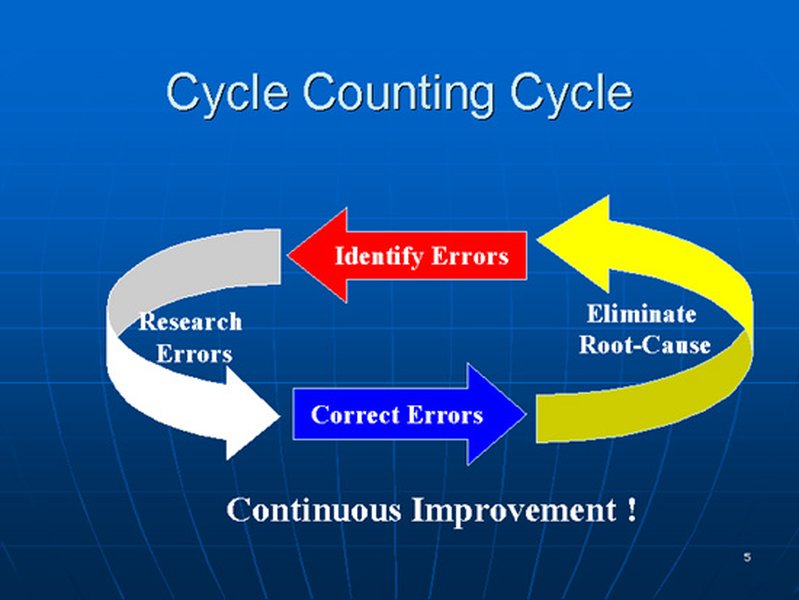
Cycle Counting Process Flow: This flowchart demonstrates the complete cycle counting process from planning through execution to analysis and adjustment.

Warehouse Inventory Audit: This image shows warehouse personnel conducting a cycle count using mobile technology to ensure inventory accuracy.
Frequently Asked Questions
References
- Inventory Cycle Counting 101: Best Practices & Benefits - NetSuite
- Best Practices for Successful Cycle Counting - Smart Warehousing
- Inventory Counting Methods: Which One Is Right For You? - ArcherPoint
- Inventory Cycle Count: The Definitive Guide - RF-SMART
- Cycle Count Inventory: Best Practices & Counting Methods - Rockeye
- Understanding The Inventory Cycle Count Process - PackageX
- Best Practices for Accurate Inventory Counts - Argos Software
Recommended Explorations
Last updated April 8, 2025