
When Bonds Rebel: Unpacking the Shockwaves of a US Treasury Sell-Off
Discover how large-scale selling of US government bonds ripples through the economy, affecting everything from interest rates to global markets.
Key Takeaways from the Recent Bond Market Turmoil
- Soaring Yields, Falling Prices: Heavy selling drives US Treasury bond prices down, causing their yields (interest rates) to climb significantly, impacting borrowing costs across the economy.
- Rising Borrowing Costs: Increased Treasury yields translate directly into higher interest rates for mortgages, auto loans, business financing, and government debt, potentially slowing economic activity.
- Safe Haven Under Scrutiny: Intense sell-offs challenge the long-held view of US Treasuries as the ultimate safe investment, prompting concerns about investor confidence and potential capital flight.
Understanding the Mechanics: What Happens During Heavy Bond Selling?
The Inverse Dance of Prices and Yields
Heavy bond selling in the United States refers to a period when investors rapidly sell off large volumes of U.S. government debt securities, primarily U.S. Treasury bonds, notes, and bills. These instruments are essentially loans made to the federal government. When investors sell these bonds en masse, the increased supply in the market causes their prices to fall. Crucially, bond prices and yields (the effective interest rate an investor earns) move in opposite directions. As bond prices drop, their yields rise to compensate new buyers for the lower purchase price.
Recent events, such as those surrounding President Trump's tariff announcements in early April 2025, provide a clear example. The uncertainty and potential economic disruption triggered by these policies led investors to dump Treasuries. Consequently, yields surged: the benchmark 10-year Treasury yield climbed from below 4% to around 4.5%, with the 30-year Treasury yield even briefly surpassing 5%.
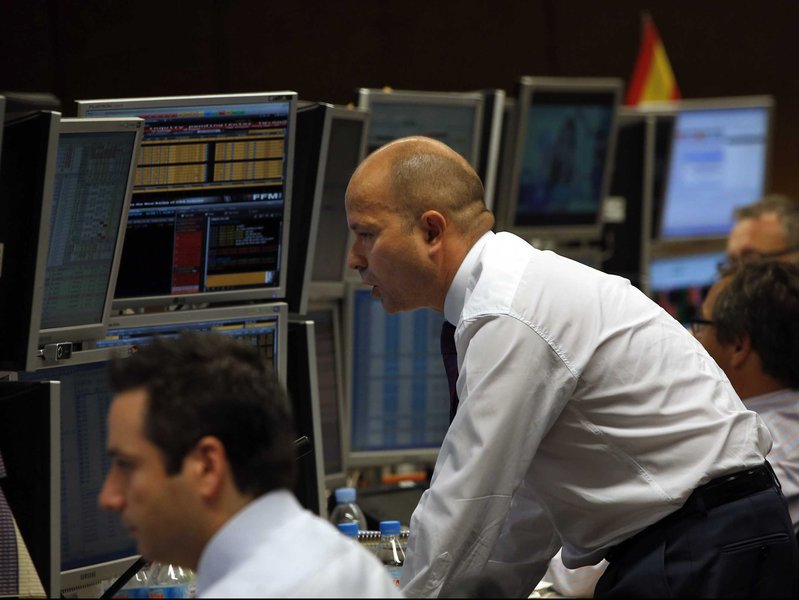
Wall Street Dynamics: Bond market shifts often reflect broader economic sentiment and policy reactions.
The Ripple Effect: Consequences Across the Economy
1. Escalating Borrowing Costs
Impact on Government, Businesses, and Consumers
One of the most immediate and widespread consequences of rising Treasury yields is an increase in borrowing costs throughout the economy. U.S. Treasury yields serve as a benchmark for many other interest rates.
- Government Debt: Higher yields mean the U.S. Treasury must pay more interest on newly issued debt, increasing the cost of financing government operations and adding to the national debt burden.
- Business Investment: Companies often borrow money to fund expansion, research, or operations. Rising rates make this borrowing more expensive, potentially leading businesses to postpone investments and slow hiring.
- Consumer Loans: Interest rates on consumer debt, including mortgages, auto loans, and credit cards, tend to follow Treasury yields. A significant sell-off can quickly translate into higher monthly payments for households, potentially dampening consumer spending. Reports noted this direct link, highlighting how rising long-term yields raise costs across the board.
2. Questioning the 'Safe Haven' Status
Shifting Perceptions of Risk
U.S. Treasuries have long been considered one of the safest investments in the world, a "safe haven" where investors park capital during times of global uncertainty. However, sharp sell-offs, especially when driven by concerns about U.S. economic policy or stability, can erode this perception. When investors sell Treasuries aggressively, sometimes alongside riskier assets like stocks (as observed in early April 2025), it signals waning confidence.
This shift is significant. If the U.S. loses its standing as the ultimate safe haven, it could become more difficult and expensive for the country to attract foreign investment needed to finance its deficits. Several analyses pointed to Treasuries trading more like "risky assets" during the recent turmoil, raising concerns about a potential broader "U.S. asset exodus" involving not just bonds but also stocks and the dollar.
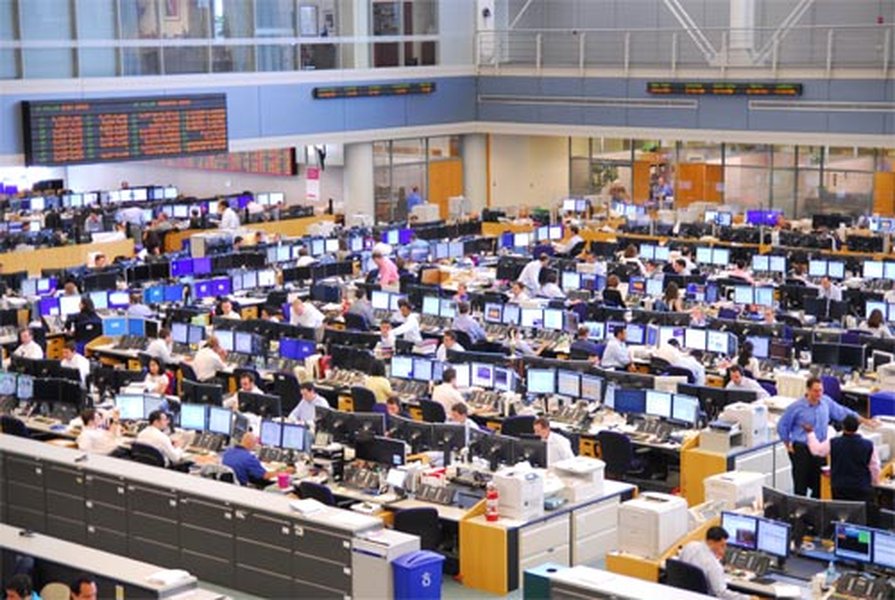
Market Reactions: Trading floors become centers of activity during significant bond market shifts.
3. Heightened Market Volatility and Instability
Echoes of Past Crises
Large and rapid sell-offs inject significant volatility into financial markets. The bond market is typically seen as stable, but severe dislocations can trigger broader instability. The recent events were compared by some analysts to the "dash-for-cash" scenario seen during the early days of the COVID-19 pandemic in March 2020, a period of extreme market stress that required massive intervention by the Federal Reserve.
This volatility isn't confined to bonds. Rising yields make bonds relatively more attractive compared to stocks, potentially pulling money out of the equity market. Furthermore, the uncertainty driving the bond sell-off often negatively impacts stock prices as well. Reports indicated a staggering $7.7 trillion plunge in the value of U.S.-listed stocks coinciding with the bond market turmoil in early April 2025.
Visualizing the Interconnected Impacts
A Radar View of Bond Sell-Off Consequences
The effects of a heavy U.S. bond sell-off are multifaceted and interconnected. This radar chart illustrates the relative intensity of various impacts stemming from such an event, based on recent market observations. The axes represent key areas affected: the direct impact on Treasury yields, the subsequent rise in broader borrowing costs, the increase in overall market volatility, the challenge to the U.S. 'safe haven' reputation, the strain placed on government finances, and the erosion of global investor confidence. Higher values indicate a more pronounced effect.
Government Finances and Policy Pressure
Strained Budgets and Market Influence
As mentioned, higher yields increase the cost for the U.S. government to service its debt. With trillions of dollars in Treasury debt outstanding, even small increases in interest rates can add significantly to annual budget deficits, potentially crowding out spending on other priorities.
Furthermore, the bond market can act as a powerful check on government policy. The sharp negative reaction of the bond market to the proposed tariffs in April 2025 was cited as a key reason for the administration's subsequent decision to implement a 90-day pause on those tariffs. This demonstrated how severe market turmoil, particularly in the crucial Treasury market, can pressure policymakers to reconsider or adjust their actions.
Mapping the Causes and Effects
A Mindmap of the Bond Sell-Off Dynamics
This mindmap provides a visual summary of the key drivers and consequences associated with heavy U.S. bond selling, drawing connections between policy triggers, market mechanics, and the resulting economic and financial impacts discussed.
(e.g., Tariffs)"] id1b["Inflation Fears"] id1c["Shifting Risk Appetite"] id1d["Global Economic Concerns"] id1e["Expectations of
Fed Policy Changes"] id2["Market Mechanics"] id2a["Increased Bond Supply"] id2b["Falling Bond Prices"] id2c["Rising Bond Yields"] id3["Consequences"] id3a["Higher Borrowing Costs"] id3a1["Government Debt Service"] id3a2["Business Loans"] id3a3["Consumer Loans
(Mortgages, Auto)"] id3b["Market Volatility"] id3b1["Stock Market Pressure"] id3b2["Liquidity Concerns
(Dash-for-Cash Risk)"] id3c["Challenged Safe Haven Status"] id3c1["Waning Investor Confidence"] id3c2["Potential Capital Outflows"] id3c3["Risk of US Asset Exodus"] id3d["Government Finance Strain"] id3d1["Higher Deficit Spending"] id3e["Policy Influence"] id3e1["Market 'Rebellion'
Against Policies"] id3f["Global Repercussions"] id3f1["Impact on Foreign Holders
(e.g., China)"] id3f2["International Market Stability"]
Global Dimensions
International Investors and Market Stability
The U.S. Treasury market is the largest and most liquid government bond market globally, attracting significant investment from foreign central banks, sovereign wealth funds, and private investors. Heavy selling raises concerns about the actions of major foreign holders, such as China. Speculation arose during the tariff tensions about whether China might intentionally sell off its substantial holdings of U.S. Treasuries as a form of economic pressure, which could further exacerbate yield increases and market instability.
A broad loss of confidence leading to an exodus of capital from U.S. assets (stocks, bonds, dollar) would have significant global financial implications, potentially disrupting international trade and investment flows.
Market Reaction Explained
Understanding the Bond Market's Response to Tariffs
The video below delves into the dynamics behind the U.S. bond market sell-off that occurred in response to tariff announcements, highlighting how market reactions influenced policy decisions. It explains why the bond market's stability is crucial and how its "rebellion" became a decisive factor, offering context to the events discussed.
Comparing Impacts: Bond Sell-Off Effects
A Summary Table
This table summarizes the primary effects of heavy U.S. bond selling across different sectors of the economy and financial markets, based on the recent events and analyses.
| Area Affected | Primary Effect | Description | Example/Indicator |
|---|---|---|---|
| U.S. Treasury Market | Yield Spike | Inverse relationship between selling pressure (falling prices) and yields (rising rates). | 10-year yield rising to ~4.5%; 30-year yield briefly >5%. |
| Government Finances | Increased Debt Costs | Higher yields make borrowing more expensive for the Treasury. | Increased interest payments on national debt, potential budget strain. |
| Consumers | Higher Loan Rates | Benchmark Treasury yields influence rates for mortgages, auto loans, credit cards. | Increased monthly payments for variable-rate debt; higher rates for new loans. |
| Businesses | Higher Financing Costs | Increased cost of capital for investment, expansion, and operations. | Potential slowdown in business investment and hiring. |
| Investor Sentiment | Erosion of Confidence | Challenged perception of U.S. Treasuries as the ultimate 'safe haven'. | Treasuries trading like 'risky assets'; talk of potential 'asset exodus'. |
| Financial Markets | Increased Volatility | Bond market instability spilling over into other asset classes like stocks. | Sharp declines in stock indices ($7.7T value drop mentioned); comparisons to 'dash-for-cash'. |
| Government Policy | Market Influence | Severe market reactions can pressure policymakers to adjust course. | Tariff pause implemented following bond market 'rebellion'. |
Frequently Asked Questions
What exactly are U.S. Treasury bonds?
U.S. Treasury bonds (along with notes and bills, differing mainly by maturity length) are debt securities issued by the United States Department of the Treasury to finance government spending. When you buy a Treasury bond, you are essentially lending money to the federal government. In return, the government promises to pay you periodic interest payments (coupon payments) and return the principal amount (face value) at a specific future date (maturity date). They are widely considered among the safest investments because they are backed by the "full faith and credit" of the U.S. government.
Why do bond yields rise when prices fall?
Think of a bond's yield as its effective rate of return. Most bonds pay a fixed interest amount (coupon). If the market price of that bond falls (due to heavy selling), a new buyer paying less for the bond still receives the same fixed interest payment. This means their return relative to their lower purchase price is higher. For example, if a $1,000 bond pays $50 interest annually (5% coupon rate), and its market price drops to $950, the new buyer still gets $50 annually. Their yield is now $50 / $950 = approximately 5.26%, which is higher than the original 5%. Hence, falling prices lead to rising yields.
Who are the main sellers during a bond sell-off?
The sellers can be diverse. They include large institutional investors (like pension funds, insurance companies, mutual funds), hedge funds, foreign governments and central banks (who hold large amounts of U.S. debt as reserves), commercial banks, and sometimes even individual investors. Their motivations for selling can vary, including reacting to perceived risks (like inflation or policy changes), needing to raise cash quickly ("dash-for-cash"), rebalancing portfolios, or speculating on future interest rate movements.
How does a bond sell-off affect the stock market?
There are several ways:
1. Competition for Capital: As bond yields rise, bonds become more attractive relative to stocks, potentially leading investors to shift money from stocks to bonds.
2. Discounting Future Earnings: Higher interest rates (influenced by bond yields) are used to discount companies' future expected earnings back to their present value. Higher rates mean future earnings are worth less today, which can lower stock valuations.
3. Economic Signal: A bond sell-off driven by fears of economic slowdown or instability can simultaneously spook stock market investors, leading to equity sell-offs.
4. Borrowing Costs: Higher rates increase borrowing costs for companies, which can reduce profitability and hurt stock prices.
References
- ‘This is Not Normal’: Trump’s Tariffs Upend the Bond Market - The New York Times
- Why did Trump pause the tariffs? The bond market rebelled - CBS News
-
Dislocations in world's biggest bond market jolt nervous investors - Reuters
- Treasuries Suddenly Trade Like Risky Assets in Warning to Trump - Bloomberg
- Investors are growing concerned about a US asset exodus as Treasuries and the dollar decline - CNBC
-
Trump’s Tariffs Rattle the Bond Market. Why It Matters. - Barron's
- US borrowing costs jump as tariff panic grips bond market - BBC News
Recommended
Last updated April 14, 2025