
Unraveling the Delicious Mystery: The Competing Origins of Eggs Benedict
Delving into the captivating, and often debated, history of this iconic brunch classic.
Key Insights into Eggs Benedict Origins
- New York City's Culinary Battleground: The primary contenders for the creation of Eggs Benedict are two renowned New York City establishments: Delmonico's Restaurant and the Waldorf Hotel, both with compelling, albeit conflicting, claims.
- Two Prominent "Benedicts": The dish's name is most often linked to either Mrs. LeGrand Benedict, a patron of Delmonico's, or Lemuel Benedict, a Wall Street broker who sought a hangover cure at the Waldorf.
- Evolution from Originality: While the core components remain—poached eggs, hollandaise sauce, and a bread base—the specific bread and protein have seen variations over time, adapting from initial requests to the modern English muffin and Canadian bacon standard.
Eggs Benedict, a celebrated staple on brunch menus worldwide, entices with its harmonious blend of poached eggs, savory Canadian bacon, and creamy hollandaise sauce, all nestled atop a toasted English muffin. Despite its ubiquitous presence and undeniable popularity, the exact origin of this culinary masterpiece remains shrouded in a delightful historical debate. Multiple compelling narratives, primarily centered in late 19th-century New York City, vie for credit, each offering a unique glimpse into the possible genesis of this iconic dish.
The Contending Claims: Delmonico's vs. The Waldorf
The historical journey of Eggs Benedict leads us to two legendary New York City dining establishments, each with a strong claim to its invention. Both stories involve a "Benedict" and a culinary innovation, making it difficult to definitively pinpoint the sole originator.
The Delmonico's Legend: Mrs. LeGrand Benedict's Culinary Request
One of the most widely cited stories attributes the creation of Eggs Benedict to Delmonico's Restaurant, a renowned fine-dining establishment in Lower Manhattan, celebrated for its pioneering role in American cuisine. According to this account, sometime in the 1860s, a regular and discerning patron named Mrs. LeGrand Benedict grew weary of the standard menu offerings and approached Chef Charles Ranhofer for something new and exciting. Her specific request reportedly included poached eggs, ham, hollandaise sauce, and truffles. Chef Ranhofer, a culinary innovator of his time, then crafted a dish incorporating these elements. The dish, which he later published in his 1894 cookbook, "The Epicurean," under the name "Eggs à la Benedick," quickly gained popularity and became a signature item at Delmonico's.
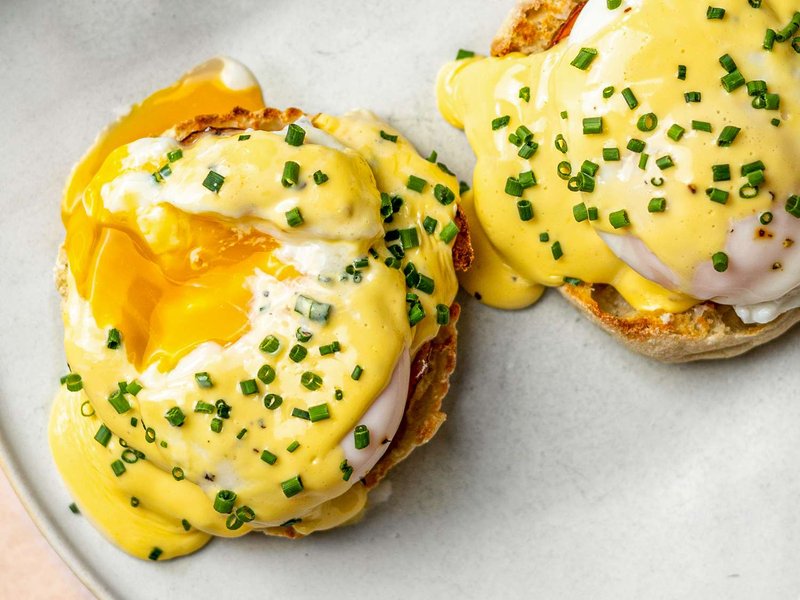
A beautifully prepared plate of classic Eggs Benedict, showcasing its core components.
The Waldorf Hotel Anecdote: Lemuel Benedict's Hangover Cure
Another compelling narrative points to the Waldorf Hotel (now the Waldorf-Astoria) in 1894, featuring a retired Wall Street stockbroker named Lemuel Benedict. As the story goes, a hungover Benedict, seeking a restorative breakfast, ordered "buttered toast, poached eggs, crisp bacon, and a hooker of hollandaise." The maître d'hôtel, Oscar Tschirky (often referred to as "Oscar of the Waldorf"), was reportedly so impressed by this unique combination that he added it to the hotel's breakfast and luncheon menus. However, Tschirky made a significant modification: he replaced the bacon with ham (or Canadian bacon) and the buttered toast with toasted English muffins, solidifying the dish's now-classic structure.
Connections and Overlaps Between the Stories
Interestingly, some historical accounts suggest an overlap between these two prominent narratives. Oscar Tschirky, the maître d'hôtel at the Waldorf, had previously worked at Delmonico's. This connection has led some food historians to speculate that he may have been familiar with or inspired by Delmonico's "Eggs à la Benedick" when he adapted Lemuel Benedict's order. While the precise sequence of events remains debated, the common thread is the emergence of a decadent egg dish in New York City's burgeoning fine-dining scene during the Gilded Age.
The Evolution of a Classic: Beyond the Original
Regardless of its exact birthplace, Eggs Benedict rapidly gained popularity and cemented its place as a brunch icon. The foundational elements—poached eggs and hollandaise—proved to be incredibly versatile, leading to numerous delicious variations around the world.
| Variation Name | Key Substitution/Addition | Description |
|---|---|---|
| Eggs Florentine | Spinach (replaces ham/bacon) | A vegetarian option where sautéed spinach takes the place of meat. |
| Eggs Royale (or Atlantic, Hemingway, Norwegian) | Smoked Salmon (replaces ham/bacon) | A popular choice featuring delicate smoked salmon instead of traditional ham or Canadian bacon. |
| Eggs California | Sliced Tomato and Avocado (replaces ham/bacon) | A lighter, often healthier variation incorporating fresh vegetables. |
| Seafood Benedict | Crab, Shrimp, Lobster, or Scallops (replaces ham/bacon) | A luxurious version featuring various types of seafood. |
| Eggs Halifax | New England Clam Chowder (replaces hollandaise) | A unique regional variation that substitutes the traditional sauce. |
| Eggs Benedict XVI | Rye bread, German sausage/sauerbraten | A modern tribute using traditional German ingredients. |
The adaptability of Eggs Benedict highlights its enduring appeal. Chefs and home cooks alike continue to experiment with different bases (toast, biscuits, potato cakes), proteins, and even sauces, proving that the dish's fundamental concept is a canvas for culinary creativity.
The Essential Elements: What Makes an Eggs Benedict?
While variations exist, the classic Eggs Benedict consists of a few crucial components that come together to create its signature taste and texture:
- English Muffin: Typically, two halves of a toasted English muffin serve as the base, offering a slightly crisp yet soft foundation.
- Canadian Bacon or Sliced Ham: A lean and savory protein layer, traditionally Canadian bacon, provides a salty counterpoint to the richness of the other ingredients.
- Poached Eggs: The hallmark of the dish, perfectly poached eggs with runny yolks that gently spill out when cut, creating a luscious sauce.
- Hollandaise Sauce: A rich, creamy, and tangy emulsion of egg yolks, melted butter, and lemon juice (or vinegar), the hollandaise sauce is arguably the most defining element, binding all the flavors together.
The Role of Hollandaise Sauce
The hollandaise sauce is a culinary marvel, requiring careful preparation to achieve its characteristic silky texture and balanced flavor. Its richness is key to the indulgent experience of Eggs Benedict. The combination of its creamy consistency with the runny yolk of the poached egg creates a luxurious mouthfeel that is central to the dish's appeal.
This video from Delmonico's restaurant provides an insightful look into their historical claim on the creation of Eggs Benedict, highlighting the restaurant's legacy and the dish's importance in American culinary history. It offers a direct perspective from one of the primary contenders in the origin debate.
Assessing the Claims: A Radar Chart Analysis
To visualize the credibility and impact of the various origin stories, let's consider a radar chart. This chart will represent my opinionated analysis of each claim based on factors such as historical documentation, contemporary accounts, and widespread acceptance. Higher values indicate stronger perceived credibility or influence.
This radar chart illustrates the perceived strengths of the various origin stories. The Delmonico's and Waldorf narratives score highly across most metrics, reflecting their strong historical basis and influence on the dish's evolution. The Pope Benedict XIII story, while an interesting piece of trivia, lacks substantial support and thus registers lower across the board. The "Influence on Modern Dish" category assesses how much each claimed origin directly led to the version of Eggs Benedict we commonly enjoy today.
The Enduring Legacy of Eggs Benedict
Despite the lingering ambiguity surrounding its exact origin, Eggs Benedict has cemented its status as an enduring culinary classic. Its rich flavors, elegant presentation, and comforting appeal make it a perennial favorite for breakfast and brunch. The dish represents a confluence of culinary innovation, societal trends (like the rise of public dining in the Gilded Age), and the simple desire for a delicious, satisfying meal.
Whether it was a discerning socialite seeking novelty or a hungover broker seeking solace, the "Benedict" behind the name inadvertently launched a culinary legend. The ongoing debate about its origins only adds to the mystique and charm of this beloved dish, ensuring its place in both culinary history and popular culture.

The inviting presentation of Eggs Benedict continues to captivate diners.
Frequently Asked Questions (FAQ)
What are the main ingredients in classic Eggs Benedict?
Is Eggs Benedict named after Benedict Arnold?
What is hollandaise sauce made of?
Are there different versions of Eggs Benedict?
Conclusion
The fascinating journey into the origins of Eggs Benedict reveals a compelling story of culinary innovation and the vibrant dining scene of late 19th-century New York City. While the precise identity of the "Benedict" who inspired the dish remains a delightful enigma, the competing narratives from Delmonico's and the Waldorf Hotel both paint a picture of a dish born from a desire for something unique and indulgent. What is undeniable is that Eggs Benedict, with its perfect harmony of textures and flavors, has transcended its debated beginnings to become a universally cherished breakfast and brunch icon, continuously inspiring new variations while maintaining its luxurious appeal.
Recommended Further Reading
- How to make perfect hollandaise sauce at home
- Famous historical restaurants in New York City
- The history of brunch as a meal
- Creative variations of eggs Benedict recipes