
Implementing the Ehlers Optimal Tracking Filter Across Trading Platforms
A Comprehensive Overview of a Powerful Trend Following Tool
Key Insights into the Ehlers Optimal Tracking Filter
- Adaptability: The Ehlers Optimal Tracking Filter (EOTF) is designed to adapt to market conditions, aiming to provide a more responsive and less lagging indicator than traditional moving averages.
- Kalman Filter Influence: The EOTF draws on principles from the Kalman Filter, a powerful tool for optimal estimation in noisy systems, which is well-suited for filtering financial data.
- Wide Platform Availability: Implementations of the EOTF are available across numerous trading platforms, including MetaTrader 4/5, TradingView, Amibroker, NinjaTrader, and ProRealTime, catering to a broad range of traders.
Understanding the Ehlers Optimal Tracking Filter (EOTF)
The Ehlers Optimal Tracking Filter (EOTF) is a technical analysis indicator developed by John Ehlers. Its primary goal is to filter out market noise and identify underlying trends with minimal lag. Traditional moving averages, while useful, often suffer from significant lag, which can lead to delayed trading signals. The EOTF seeks to address this by incorporating concepts from optimal estimation, specifically drawing parallels with the Kalman Filter.
The core idea behind the EOTF is to create a filter that can dynamically adjust to the characteristics of the price series, providing a smoother representation of the trend while reacting quickly to changes in direction. This is achieved through a "Tracking Index" which optimizes the filter based on the uncertainty in price movement and the ability to measure it accurately.
The Relationship with Kalman Filters
Dr. R.E. Kalman's introduction of the Kalman Filter in 1960 revolutionized optimal estimation, finding applications in various fields, including navigation systems. The Kalman Filter is a recursive algorithm that estimates the state of a dynamic system from a series of noisy measurements. It does this by combining a prediction based on a system model with the new measurement, weighting each based on their estimated uncertainties. This process results in an optimal estimate that is more accurate than relying on either the prediction or the measurement alone.
In the context of financial markets, price data can be considered a noisy measurement of the true underlying trend. The Kalman Filter's ability to estimate the true state from noisy data makes it conceptually relevant to the goals of the EOTF. While the EOTF may not be a direct implementation of a full Kalman Filter, it utilizes similar principles of adaptive filtering and optimal estimation to reduce lag and improve trend identification compared to simpler filters like Exponential Moving Averages (EMAs), which are a type of Infinite Impulse Response (IIR) filter.
The application of the Kalman Filter in stock trading is explored in various resources, highlighting its potential for estimating underlying trends and identifying deviations that could serve as trading signals. This connection underscores the theoretical foundation of the EOTF in advanced signal processing techniques.
Implementations Across Trading Platforms
The utility of the Ehlers Optimal Tracking Filter has led to its implementation across a wide range of popular trading platforms, making it accessible to a large number of traders. These implementations often include variations and enhancements, such as multi-timeframe capabilities, alerts, and different coloring options to aid visual analysis.
MetaTrader 4 and MetaTrader 5 (MT4/MT5)
MetaTrader is one of the most widely used trading platforms, particularly in the Forex market. The Ehlers Optimal Tracking Filter is readily available for MT4 and MT5, often in the form of downloadable custom indicators. These indicators can be easily installed and applied to charts, allowing traders to visualize the filter's output alongside price data. Various versions exist, including those with stepped price levels, multi-timeframe analysis, and integrated alert functionalities.
Finding the EOTF for MT4/MT5 typically involves searching online forums, indicator databases, and trading communities dedicated to these platforms. Traders can find files in .mq4 or .ex4 format, which can then be placed in the appropriate folders within the MetaTrader installation directory.
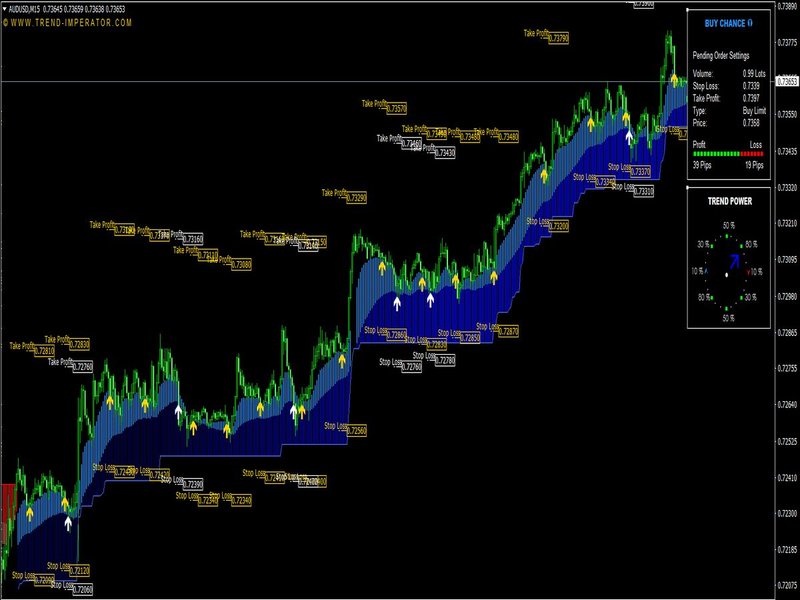
An example of indicators available for MetaTrader platforms.
TradingView
TradingView is a popular web-based charting platform known for its advanced charting tools and social networking features for traders. The Ehlers Optimal Tracking Filter is available on TradingView through its community-driven Pine Script library. Users can find and utilize scripts that implement the EOTF, often with modifications and additional features developed by other traders.
The availability of the source code for many of these implementations on TradingView allows traders to understand how the filter is calculated and even customize it to their specific needs. Searching the TradingView script library for "Ehlers Optimal Tracking Filter" or similar terms will yield various versions of the indicator.
Amibroker
Amibroker is a powerful charting and analysis platform favored by quantitative traders for its scripting capabilities (AFL - Amibroker Formula Language). Implementations of the Ehlers Optimal Tracking Filter are available for Amibroker, allowing traders to incorporate the filter into their automated trading strategies and backtesting analysis.
Resources like WiseStockTrader.com provide AFL code for the Ehlers Optimal Tracking Filter, enabling Amibroker users to download and apply the indicator. These implementations often include parameters that can be adjusted to fine-tune the filter's behavior.
NinjaTrader
NinjaTrader is a trading platform known for its advanced charting, market analysis, and automated trading capabilities. The Ehlers Filter, including variations like the Optimal Tracking Filter, is available within the NinjaTrader ecosystem. Users can find and download indicators from the NinjaTrader user app share or other third-party providers.
The availability of the Ehlers Filter in NinjaTrader allows traders to use it as a standalone indicator or as a component in more complex trading systems and strategies developed within the platform.
ProRealTime
ProRealTime is a charting and trading platform that offers advanced technical analysis tools. The Ehlers Optimal Tracking Filter has been implemented for ProRealTime, often shared within their user community forums and libraries like ProRealCode. These implementations are typically written in ProRealTime's own coding language.
The availability on ProRealTime ensures that traders using this platform can also leverage the benefits of the EOTF for their analysis and trading decisions.
Variations and Enhancements
Across different platforms and developers, various implementations of the Ehlers Optimal Tracking Filter exist, often with enhancements to improve usability and performance. Some common variations include:
-
Stepped Price Levels: Some versions introduce stepped price levels, which can help visualize the filter's output in a discrete manner, potentially making it easier to identify trading signals.
-
Multi-Timeframe (MTF) Capability: MTF versions allow traders to view the EOTF calculated on a higher timeframe while analyzing a lower timeframe chart. This can help in aligning trades with the broader trend.
-
Alerts and Arrows: Many implementations include built-in alert systems that notify traders when the filter changes direction or crosses a certain level. Visual arrows on the chart can also indicate potential buy or sell signals.
-
Coloring Options: Different coloring schemes are often used to represent the direction of the filter or the trend, providing a quick visual cue to traders.
-
Integration with Other Indicators: The EOTF can be used in conjunction with other technical indicators to build more robust trading strategies. For instance, it can be used as a filter for signals generated by oscillators or other trend-following tools.
Practical Considerations and Usage
While the Ehlers Optimal Tracking Filter aims to provide a less lagging and more responsive trend indicator, it's important to consider practical aspects of its usage in trading.
Like any technical indicator, the EOTF is not a perfect predictor of future price movements. It is a tool for analyzing past price data and identifying potential trends. Traders should use it as part of a comprehensive trading plan that includes other forms of analysis, risk management, and consideration of market context.
The parameters used in the EOTF can influence its behavior. Experimentation and optimization may be required to find settings that work best for a particular market, timeframe, or trading style. However, one of the advantages highlighted for Kalman Filter-based approaches is the potential reduction in the need for extensive window length optimization compared to traditional moving averages.
The EOTF is often most effective in trending markets. In choppy or range-bound markets, it may generate whipsaw signals. Some implementations include features or suggest using the filter in conjunction with other indicators that help identify trending versus ranging conditions.
Comparison to Traditional Moving Averages
The primary motivation behind the EOTF is to overcome the inherent lag of traditional moving averages, such as Simple Moving Averages (SMAs) and Exponential Moving Averages (EMAs). While EMAs are a type of IIR filter and offer less lag than SMAs, the EOTF, drawing on optimal filtering concepts, aims for even faster response to price changes without excessive whipsaws.
The table below provides a simplified comparison between the EOTF and traditional moving averages:
| Feature | Ehlers Optimal Tracking Filter (EOTF) | Traditional Moving Averages (SMA, EMA) |
|---|---|---|
| Lag | Aims for minimal lag, adaptive | Inherent lag, fixed calculation window |
| Responsiveness | Designed to react quickly to trend changes | Slower to react, smoother output |
| Noise Reduction | Filters market noise effectively | Smooths price data, but may still show some noise |
| Calculation Basis | Based on optimal estimation principles, Tracking Index | Simple or exponential weighting of past prices |
Video Resource on Filtering in Trading
While not specifically focused on the Ehlers Optimal Tracking Filter, the following video provides an overview of filter indicators in Forex trading, which can offer helpful context on the role and application of filtering techniques in technical analysis:
Exploring the use of filter indicators in Forex trading.
Frequently Asked Questions about the Ehlers Optimal Tracking Filter
What is the main advantage of the Ehlers Optimal Tracking Filter?
The main advantage of the Ehlers Optimal Tracking Filter is its ability to track trends with significantly less lag compared to traditional moving averages, while still effectively filtering out market noise. This can potentially lead to earlier and more accurate trading signals.
How does the EOTF relate to the Kalman Filter?
The EOTF draws inspiration from the principles of the Kalman Filter, a powerful tool for optimal estimation in noisy systems. Both aim to estimate an underlying true state (the trend) from noisy measurements (price data) by using an adaptive filtering approach.
On which trading platforms can I find the Ehlers Optimal Tracking Filter?
Implementations of the Ehlers Optimal Tracking Filter are available on a variety of popular trading platforms, including MetaTrader 4/5, TradingView, Amibroker, NinjaTrader, and ProRealTime.
Are there different versions of the EOTF available?
Yes, various implementations exist across different platforms and developers. These often include enhancements like stepped price levels, multi-timeframe capabilities, built-in alerts, and different coloring options.
Is the Ehlers Optimal Tracking Filter suitable for all market conditions?
Like most trend-following indicators, the EOTF tends to perform best in trending markets. In choppy or range-bound conditions, it may be prone to generating false signals. It is often recommended to use the EOTF in conjunction with other indicators or analysis methods to confirm trends and identify market regimes.
References
Last updated April 22, 2025