
Unlocking the Dancer's Heart: How Indian Classical Dance Shapes Emotional Intelligence
A synthesis exploring the deep connection between ancient art forms and the nuanced world of human emotion in professional dancers.
Essential Insights
- Enhanced Emotional Acumen: Research consistently suggests that professional Indian classical dancers exhibit significantly higher levels of emotional intelligence (EI), particularly in self-awareness, emotional regulation, and empathy, compared to non-dancers.
- The Power of Navarasas: The core concept of Navarasas (nine emotions) in Indian classical dance serves as a fundamental training ground for understanding, embodying, and expressing a wide range of human feelings, directly contributing to EI development.
- Holistic Well-being: Beyond artistic skill, the practice fosters psychological resilience, improved coping mechanisms for stress, higher self-esteem, and enhanced cognitive abilities, highlighting the profound impact of this art form on mental and emotional health.
The Intersection of Ancient Art and Modern Psychology
Understanding Emotional Intelligence in the Context of Indian Classical Dance
Emotional Intelligence (EI), often described as the capacity to perceive, understand, manage, and utilize emotions effectively in oneself and others, has become a cornerstone of psychological research. Simultaneously, Indian classical dance, encompassing ancient forms like Bharatanatyam, Kathak, Odissi, and Kuchipudi, represents a rich tapestry of cultural heritage, intricate physical discipline, and profound emotional expression. This synthesis delves into the fascinating relationship between these two domains, exploring how the rigorous training and expressive demands of professional Indian classical dance in India cultivate heightened emotional intelligence.
These dance forms are not merely physical performances; they are intricate narratives conveyed through sophisticated body language, rhythmic footwork, and, crucially, highly nuanced facial expressions and gestures known as Abhinaya. At the heart of Abhinaya lies the concept of the Navarasas, the nine fundamental emotions or aesthetic flavours that dancers must master to evoke the intended feelings in the audience and embody the characters they portray.
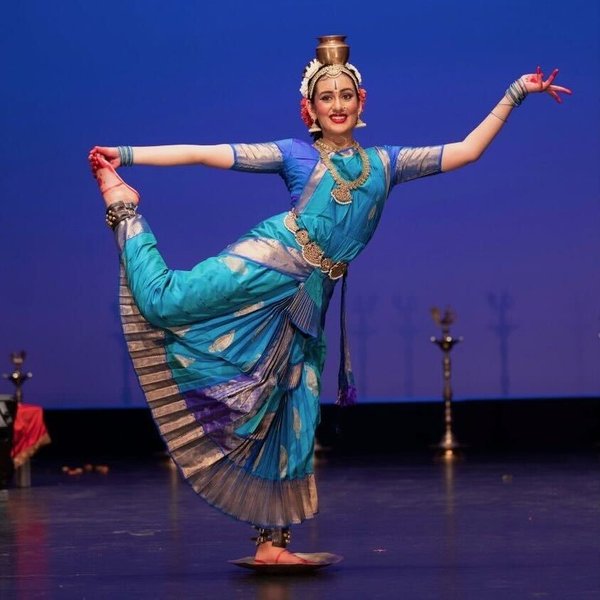
An Indian classical dancer embodies emotion through intricate hand gestures (mudras) and facial expressions (abhinaya).
Navarasas: The Emotional Core of Indian Classical Dance
Cultivating EI through Expressive Mastery
The Navarasas – Shringara (Love/Eros), Hasya (Laughter/Comedy), Karuna (Sorrow/Compassion), Raudra (Anger/Fury), Veera (Heroism/Courage), Bhayanaka (Fear/Terror), Bibhatsa (Disgust/Aversion), Adbhuta (Wonder/Amazement), and Shanta (Peace/Tranquility) – form the emotional bedrock of Indian classical dance. Mastery requires more than technical skill; it demands deep emotional sensitivity, introspection, and the ability to connect with and portray these complex feelings authentically.
The process involves:
- Deep Understanding: Dancers must study and internalize the subtleties of each Rasa, understanding its triggers, manifestations, and psychological impact.
- Embodied Practice: Through rigorous training (Sadhana), dancers learn to physically embody these emotions using specific facial expressions, eye movements (drishti bhedas), and hand gestures (mudras).
- Emotional Regulation: Portraying intense emotions like Raudra (anger) or Bhayanaka (fear) without being overwhelmed requires significant emotional control and regulation.
- Empathetic Connection: To convey Karuna (sorrow) or Shringara (love) convincingly, dancers must tap into their own empathetic capacities to connect with the emotional core of the narrative and the audience.
This constant engagement with the emotional spectrum, facilitated by the Navarasa framework, serves as a powerful, culturally embedded form of emotional intelligence training.
Synthesizing the Research: Key Findings on EI Enhancement
Multiple studies converge on the finding that professional Indian classical dancers tend to possess higher levels of emotional intelligence compared to their non-dancer counterparts. This enhancement appears across several key EI domains:
Heightened Self-Awareness
Knowing Thyself Through Movement
The practice demands constant introspection. Dancers must be acutely aware of their own internal states to authentically portray specific emotions. The discipline of aligning physical movement with emotional expression fosters a deeper understanding of one's own feelings and how they manifest physically. Research indicates dancers excel in identifying and articulating their emotions, a skill honed through the expressive requirements of Abhinaya and Navarasa depiction.
Advanced Emotional Regulation
Mastering the Inner Landscape
Performance anxiety and the physical demands of training require effective stress management. Studies suggest dancers develop adaptive emotional regulation strategies. The very act of embodying and expressing diverse emotions, including challenging ones, within the structured framework of the dance can serve as a form of emotional processing and release. While some studies show dancers utilize cognitive reappraisal, the ability to modulate internal states through the disciplined practice of dance is a recurring theme.
Developed Empathy and Social Skills
Connecting Through Shared Emotion
Indian classical dance is fundamentally a storytelling art. Dancers must step into the shoes of myriad characters, understanding their motivations and emotional journeys. This fosters empathy. Furthermore, performing often involves interacting with musicians, other dancers, and connecting emotionally with the audience, thereby enhancing interpersonal sensitivity and social intelligence crucial for effective communication and collaboration.
Visualizing the Connections: Dance, Emotion, and Well-being
The intricate relationship between Indian classical dance, the cultivation of emotional intelligence, and overall psychological well-being can be visualized through the following mindmap. It illustrates how the core elements of the dance form contribute to specific EI competencies and positive psychological outcomes.
(Introspection)"] id2b["Emotional Regulation
(Stress Management, Modulation)"] id2c["Empathy
(Storytelling, Character Portrayal)"] id2d["Social Skills
(Collaboration, Audience Connection)"] id3["Psychological Outcomes"] id3a["Enhanced Well-being"] id3b["Improved Coping Skills"] id3c["Higher Self-Esteem"] id3d["Stress Reduction"] id3e["Cognitive Benefits"] id4["Cultural Context"] id4a["Natya Shastra Principles"] id4b["Spiritual Dimensions"] id4c["Therapeutic Potential"]
Beyond Technique: Psychological and Cognitive Benefits
The impact of Indian classical dance extends beyond emotional skills. Research points towards broader psychological advantages associated with dedicated practice:
- Enhanced Psychological Well-being: Studies correlate regular practice with higher levels of life satisfaction, autonomy, self-acceptance, and purpose in life.
- Improved Cognitive Function: Some research suggests dancers may exhibit enhanced cognitive abilities compared to non-dancers, possibly due to the complex coordination, memory recall (for intricate sequences and narratives), and focused attention required.
- Stress Reduction and Coping: The meditative aspects often attributed to the practice, combined with physical exertion and emotional expression, can serve as powerful stress relievers and enhance coping mechanisms.
- Increased Self-Esteem: Mastery of a complex and respected art form, coupled with performance opportunities, often contributes to greater self-confidence and self-esteem.
Storytelling Beyond Words: An Example
The following video provides a glimpse into how Bharatanatyam, a prominent Indian classical dance form, is used for empathic storytelling. It showcases the power of Abhinaya and movement to convey complex narratives and emotions without relying on words, directly illustrating the skills linked to enhanced empathy and emotional expression discussed in the research.
Mapping Emotional Intelligence Profiles
While individual experiences vary, research suggests distinct EI profiles may emerge based on engagement with Indian classical dance. The radar chart below offers a hypothetical visualization comparing potential EI strengths across different groups. It highlights how dedicated, long-term practice might cultivate specific EI competencies more strongly compared to novices or non-dancers. The scores are illustrative, representing relative strengths based on synthesized research findings rather than precise quantitative data.
This visualization suggests that professional dancers, through years of dedicated training focused on emotional expression (Navarasas, Abhinaya), tend to develop particularly strong self-awareness, empathy, and expressive capabilities, alongside robust emotional regulation skills, potentially surpassing amateur dancers and non-dancers in these areas.
Methodological Considerations and Synthesis Approach
This overview represents a meta-synthesis of findings drawn from various qualitative, empirical, and mixed-methods studies available in the recent literature (up to 2025). While the user requested a format resembling an APA research paper, this response synthesizes the conclusions of such research rather than being a formal academic paper itself. It integrates themes identified across studies focusing on EI, psychological well-being, and the practice of Indian classical dance among professionals in India.
It's important to acknowledge limitations noted in the source research, such as:
- Variability in EI measurement tools and study designs.
- Predominance of studies focusing on specific dance forms (e.g., Bharatanatyam, Kathak), potentially limiting generalizability across all Indian classical styles.
- Often small sample sizes in individual qualitative studies.
- Need for more longitudinal research to track EI development over a dancer's career.
Despite these points, the convergence of findings strongly supports the link between professional Indian classical dance practice and enhanced emotional intelligence.
Summary Table: EI Enhancement through Indian Classical Dance
The table below summarizes how specific elements of Indian classical dance contribute to the development of key emotional intelligence components, based on the synthesized research:
| EI Component | How Dance Enhances It | Relevant Dance Elements |
|---|---|---|
| Self-Awareness | Requires introspection to connect internal feelings with external expression; fosters understanding of one's emotional landscape. | Abhinaya (Facial Expression), Navarasa Internalization, Sadhana (Practice) |
| Emotional Regulation | Demands control over expressing intense emotions; provides structured outlet for emotional release; builds coping mechanisms for performance stress. | Navarasa Portrayal (e.g., Raudra, Bhayanaka), Performance Discipline, Rhythmic Structure (Tala) |
| Empathy | Cultivated through embodying diverse characters and narratives; requires understanding and conveying complex emotional states to connect with the audience. | Storytelling (Nritya), Character Portrayal, Rasa Evocation |
| Social Skills | Enhanced via collaboration with musicians/dancers; requires sensitivity to audience reception and non-verbal communication. | Group Choreography (Ensemble work), Audience Interaction, Guru-Shishya Parampara (Teacher-Student Relationship) |
| Emotional Expression | Directly trained through the vocabulary of gestures, postures, and facial expressions designed to convey specific emotions. | Abhinaya, Mudras (Hand Gestures), Drishti Bhedas (Eye Movements), Navarasas |
Frequently Asked Questions (FAQ)
What exactly are the Navarasas and why are they important for EI?
The Navarasas are the nine fundamental emotions or aesthetic moods central to Indian arts: Shringara (Love), Hasya (Laughter), Karuna (Sorrow), Raudra (Anger), Veera (Heroism), Bhayanaka (Fear), Bibhatsa (Disgust), Adbhuta (Wonder), and Shanta (Peace). They are crucial for EI development in dancers because mastering them requires deep understanding, precise expression, and the ability to regulate one's own emotions while portraying these often intense feelings. This process inherently trains self-awareness, empathy, and emotional control.
How does Indian classical dance specifically improve emotional regulation?
Several mechanisms contribute. Firstly, the structured portrayal of emotions allows dancers to explore and express feelings within a safe, controlled framework. Secondly, the intense physical discipline and focus required can have a meditative effect, helping manage stress. Thirdly, dancers learn techniques (often implicitly) to evoke and then step back from strong emotions required for performance, enhancing their ability to modulate feelings. Coping with performance pressure also builds resilience and regulatory skills.
Are these EI benefits unique to Indian classical dance, or found in other dance forms too?
Many forms of dance likely offer benefits for emotional intelligence, as movement, expression, and discipline are common elements. Studies on forms like ballroom or contemporary dance also suggest positive impacts. However, Indian classical dance places a unique and highly systematized emphasis on specific emotional portrayal through Abhinaya and the Navarasas, deeply integrated with narrative and cultural context. This explicit focus on codified emotional expression may offer a particularly potent pathway for cultivating certain aspects of EI, especially expressive skill and nuanced emotional understanding.
What are the main limitations of the current research on this topic?
Current research, while indicative, often faces limitations. Many studies use relatively small sample sizes, making broad generalizations difficult. There's also variability in how emotional intelligence is measured across studies. Much research focuses on specific dance forms (like Bharatanatyam or Kathak) or specific regions within India. More large-scale, longitudinal studies using standardized measures across different classical forms and geographical areas are needed to build a more comprehensive understanding and confirm the findings robustly.
Recommended Further Exploration
- How do the Navarasas contribute to emotional development beyond dance performance?
- Compare emotional intelligence levels across different Indian classical dance forms like Kathak versus Odissi.
- What are the specific therapeutic applications of Indian classical dance for mental health and EI?
- Investigate the cognitive benefits, such as memory and attention, associated with learning Indian classical dance.
References
Last updated May 3, 2025