
Unveiling Environmental Impact Assessment (EIA) Methodologies: A Comprehensive Guide
Exploring the Diverse Approaches to Evaluating Environmental Consequences of Development
Key Insights into EIA Methodologies
- Holistic Evaluation: EIA methodologies are designed to comprehensively identify, predict, and evaluate potential environmental, social, and economic impacts of proposed projects, ensuring informed decision-making.
- Diverse Toolset: A range of methods, from simple checklists and matrices to complex spatial analysis and life cycle assessments, are employed in EIA to address varying project complexities and data availability.
- Adaptability and Evolution: Effective EIA methodologies are adaptable to specific project contexts, free from bias, and continuously evolve with technological advancements like GIS and expert systems to enhance precision and effectiveness.
Environmental Impact Assessment (EIA) is a crucial process used globally to evaluate the potential environmental effects of a proposed project or development before it is carried out. This systematic evaluation aims to integrate environmental considerations into decision-making, promoting sustainable development by predicting impacts, identifying mitigation measures, and involving stakeholders. The effectiveness of an EIA hinges significantly on the methodologies employed to identify, predict, and value environmental changes.
Understanding the Core Purpose of EIA Methodologies
EIA methodologies provide a structured approach to analyzing how a proposed action will affect the environment. Their primary objectives include:
- Understanding the nature and location of a project and its possible alternatives.
- Identifying the factors for analysis and assessment objectives.
- Conducting preliminary identification of impacts and scoping.
- Establishing baseline studies to understand existing environmental conditions.
- Predicting and assessing impacts, and comparing alternatives.
- Proposing mitigation measures to minimize negative impacts.
- Monitoring and managing impacts throughout the project lifecycle.
The selection of an appropriate EIA method is critical. It must be easily understood, adoptable within given constraints (such as time, manpower, and budget), and open to modification if necessary. The chosen method should also ensure compliance with regulations, comprehensiveness, and the ability to distinguish between different types of impacts for overall identification, measurement, interpretation, evaluation, and communication.
Fundamental Categories of EIA Methodologies
EIA methodologies vary in complexity, data requirements, and the level of expertise needed for their interpretation. Broadly, they can be categorized into several types, each with its strengths and typical applications.
Qualitative and Quantitative Approaches
Environmental Impact Assessments often utilize a mix of qualitative and quantitative methods to inform environmental, economic, and social impact assessments. Qualitative methods rely on expert judgment and descriptive analyses, while quantitative methods involve numerical data, models, and statistical analysis to predict and measure impacts.
Expert Judgment
Expert judgment involves environmental professionals assessing impacts based on their considerable experience in areas such as water quality, soil integrity, biodiversity, and community effects. While providing valuable insights, ad hoc methods, which heavily rely on expert opinion, can sometimes lack systematic guidance and efficiency. However, expert input is crucial in various stages, especially when dealing with impacts that are difficult to quantify, such as landscape quality or social acceptance.
Checklist Methods
Checklist methods involve listing environmental factors in a structured format. These can range from simple lists to descriptive checklists, scaling checklists, and scaling-weighting checklists. They are strong indicators for impact identification, effectively drawing attention to potential concerns. Impacts are often tabulated with information indicating the possibility or potential existence of an impact, or a scaled value for its magnitude or importance.
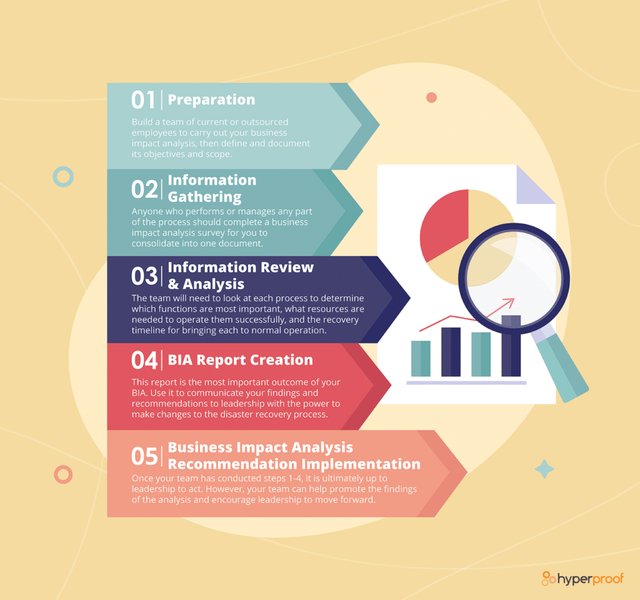
An illustration of an impact analysis framework, demonstrating how various elements interlink.
Matrix Methods
Matrices are among the most commonly used methods for impact identification in EIA. They provide a framework showing the interaction of different project activities with potential environmental impacts. Simple matrices are two-dimensional charts that link project actions (e.g., construction, operation) with environmental components (e.g., air, water, ecology, socio-economic factors). The Leopold Matrix, for instance, lists 100 different project actions along one axis and 88 environmental characteristics on the other, allowing for assessment of both biophysical and socioeconomic environments.
Network Methods
Network methods, also known as interaction diagrams or flowcharts, visually connect a project action to its direct impacts, and then further to secondary or indirect impacts. This method is effective in capturing cause-effect linkages and illustrating multiple impact areas stemming from a single action. It provides a visual snapshot, making complex interactions easier to understand.
Overlay Methods
The overlay method is based on mapping, involving the superimposition of several maps representing different environmental characteristics or sensitivities. This technique, often facilitated by Geographical Information Systems (GIS), allows for the visual identification of areas where proposed project activities might conflict with environmentally sensitive zones, or where multiple impacts might accumulate. GIS tools are increasingly vital in improving the precision and effectiveness of environmental assessments.
Advanced Methodologies and Tools
Modern EIA practices incorporate more sophisticated techniques and tools to enhance accuracy and comprehensiveness.
Life Cycle Assessment (LCA)
LCA is used for identifying and measuring the environmental impact of industrial products throughout their entire life cycle, from raw material extraction and production to use and disposal. This holistic approach helps in understanding the cumulative impacts of products and processes, informing sustainable design and manufacturing.
Predictive or Simulation Methods
These methods involve the use of quantitative physical and mathematical models to predict future environmental conditions under various project scenarios. They range from simple static models to complex dynamic simulations that account for feedback paths and higher-order impacts. This allows for a more detailed and nuanced understanding of potential changes.
Cumulative Impact Assessment (CIA)
CIA assesses the combined effects of the proposed project with other past, present, and reasonably foreseeable future actions. This is crucial for understanding synergistic impacts and ensuring that development does not lead to an unacceptable cumulative burden on the environment.
Battelle Environmental Evaluation System (BEES)
The Battelle Environmental Evaluation System (EES) is a hierarchical assessment methodology that categorizes environmental impacts into main areas like ecology, pollution, aesthetics, and human interest. It assigns environmental quality indicators and weights to quantify impacts, providing a systematic approach to evaluating environmental quality changes.
Flash Environmental Assessment Tool (FEAT)
FEAT is a rapid assessment tool designed for emergency situations or initial screenings, allowing quick identification of critical environmental impacts in dynamic contexts.
Software Tools for EIA
Several software tools assist EIA professionals in managing, analyzing, and reporting environmental impacts. Tools like Esri's ArcGIS Pro facilitate spatial analysis and mapping, while others like SimaPro, GaBi, OneClickLCA, and Enablon focus on Life Cycle Assessments and compliance reporting. These tools help systematize the EIA process, ensuring no critical aspects are overlooked and providing structured data for reports.
This video explains Environmental Impact Assessment (EIA) as a crucial tool for evaluating environmental effects of projects before implementation, guiding sustainable development.
The embedded video provides a foundational understanding of Environmental Impact Assessment (EIA), emphasizing its role in evaluating potential environmental effects of projects preemptively to foster sustainable development. This aligns with the discussion of EIA methodologies, as it underscores the importance of rigorous assessment techniques to achieve such objectives. The video serves as an excellent visual introduction to the overarching purpose that these detailed methodologies aim to fulfill.
Key Characteristics of Effective EIA Methodologies
Regardless of the specific method chosen, an effective EIA methodology should possess several key characteristics:
- Appropriateness to the Task: The method should be suitable for the scale, nature, and complexity of the proposed project.
- Freedom from Bias: The assessment process should be objective and transparent, minimizing subjective influence.
- Comprehensiveness: It should cover all relevant environmental, social, and economic aspects.
- Traceability: The methodology should allow for clear documentation of data, assumptions, and conclusions.
- Replicability: The results should be reproducible if the same methods and data are applied by another party.
- Cost-Effectiveness and Efficiency: The method should be practical within given resource constraints.
- Public Involvement: Facilitating early and meaningful public participation is crucial for identifying impacts and alternatives and improving the quality of EIA reports.
Choosing the Right Methodology: A Strategic Decision
The choice of an EIA methodology depends on several factors, including:
- The nature and scale of the proposed project.
- The characteristics of the receiving environment.
- The type and availability of data.
- The resources available (time, finance, expertise).
- Regulatory requirements and stakeholder expectations.
For example, a simple checklist might suffice for minor projects with limited potential impacts, while a complex industrial development would necessitate a combination of advanced modeling, GIS, and life cycle assessment. Environmental scientists play a vital role in understanding these techniques to assess risks, identify impact indicators, and justify projects effectively.
EIA Methodological Framework Performance Comparison
To better illustrate the comparative strengths of different EIA methodologies, the following radar chart provides an opinionated analysis of their performance across key attributes:
This radar chart visually represents how different EIA methodologies perform across various criteria. For instance, the Checklist Method scores high on "Ease of Use" but lower on "Predictive Accuracy," while the GIS Overlay Method excels in "Comprehensiveness" and "Predictive Accuracy" but requires more data. Life Cycle Assessment (LCA) is highly comprehensive and data-intensive, offering strong predictive accuracy for product-related impacts. This helps in understanding the trade-offs involved when selecting an appropriate methodology for a specific project.
The EIA Process: A Step-by-Step Overview
The application of these methodologies occurs within a structured EIA process, typically involving several stages:
| Stage | Description | Relevance of Methodologies |
|---|---|---|
| Screening | Determining if an EIA is required for a proposed project based on its type, size, and location. | Initial checklists or expert judgment for rapid assessment. |
| Scoping | Identifying the key environmental, social, and economic impacts to be assessed, and determining the appropriate methods and resources. Public input is crucial here. | Checklists, matrices, and expert judgment help define the scope; stakeholder engagement methods inform this stage. |
| Baseline Study & Impact Prediction | Collecting data on existing environmental conditions to serve as a benchmark, and using scientific methods to forecast changes due to the project. | Quantitative models, simulation methods, GIS for data collection and impact prediction; Battelle EES for systematic evaluation. |
| Mitigation & Impact Management | Developing measures to avoid, reduce, or compensate for negative impacts, and establishing plans for ongoing management. | Results from impact prediction methods inform mitigation strategies. |
| Public Consultation | Engaging stakeholders (local communities, NGOs, government agencies) to gather input and ensure transparency. | Essential for all stages, though not a direct "methodology," it influences the choice and application of methods. |
| Reporting & Decision Making | Documenting findings in a comprehensive EIA report, which informs regulatory decisions on project approval and conditions. | All methodologies contribute to the data and analysis presented in the report. |
| Monitoring & Auditing | Tracking actual impacts during project implementation and comparing them to predictions, and assessing the effectiveness of mitigation measures. | Post-project evaluation methods; remote sensing and GIS for ongoing monitoring. |
Each stage of the EIA process benefits from the application of specific methodologies to ensure thoroughness and accuracy. For example, during scoping, checklists and matrices help identify relevant impacts, while during impact prediction, advanced simulation models and GIS tools provide detailed forecasts.
The crucial steps involved in conducting a thorough Environmental Impact Assessment.
The Future of EIA Methodologies
Technological advancements are continuously improving EIA methodologies. Drone monitoring, precision farming, bioengineering, and advanced data analytics are enhancing how environmental impacts are assessed and managed. Furthermore, the integration of artificial intelligence and machine learning could lead to more sophisticated predictive models and automation in data analysis, making EIAs more efficient and precise. The U.S. Energy Information Administration (EIA) itself undergoes extensive model development, with recent updates for its Annual Energy Outlook 2025 including new modules for hydrogen markets and carbon capture, reflecting the evolving landscape of energy and environmental assessment.
Frequently Asked Questions (FAQ)
What is the primary goal of EIA methodologies?
How does expert judgment contribute to EIA?
What are the advantages of using GIS in EIA?
What is the difference between screening and scoping in EIA?
Why is public involvement important in EIA?
Recommended Further Exploration
- How is environmental impact assessment integrated into project planning?
- What are the challenges in applying EIA methodologies in developing countries?
- Future trends and technologies in environmental impact assessment
- Case studies of successful environmental impact assessments
References

 mjcetce455.blogspot.com
Last updated May 21, 2025