
Unveiling the Iconic Height of the Eiffel Tower
A Comprehensive Look at the "Iron Lady's" Stature
Key Insights into the Eiffel Tower's Height
- Current Height: The Eiffel Tower currently stands at approximately 330 meters (1,083 feet) tall, including its broadcast antenna.
- Original Height: When it was first completed in 1889 for the World's Fair, the tower's original height was 300 meters (984 feet) without the flagpole, or 312 meters (1,024 feet) including it.
- Changing Stature: The tower's height has increased over the years due to the addition and upgrading of radio and television antennas.
The Eiffel Tower, often affectionately known as "La Tour Eiffel" or "the iron lady," is one of the most recognizable landmarks in the world, gracing the Parisian skyline. Millions of visitors each year marvel at its intricate wrought-iron structure and impressive height. But exactly how tall is this iconic monument? The answer is not a single number, as the tower's height has evolved over time.
The Tower's Current and Historical Heights
From the 300-Meter Tower to Today's Stature
When Gustave Eiffel designed the tower for the 1889 Exposition Universelle, it was initially referred to as the "300-meter Tower." At its inauguration, its height was indeed around 300 meters (984 feet). However, with the inclusion of a flagpole at the very top, this initial height was approximately 312 meters (1,024 feet). This made it the tallest man-made structure in the world at the time, a title it held until the completion of the Chrysler Building in New York City in 1930.
Over the decades, technological advancements, particularly in the field of broadcasting, have led to additions and upgrades of antennas atop the tower. These additions have progressively increased its overall height. The most recent increase occurred in 2022 with the installation of a new digital antenna, bringing the tower's current height to approximately 330 meters (1,083 feet).
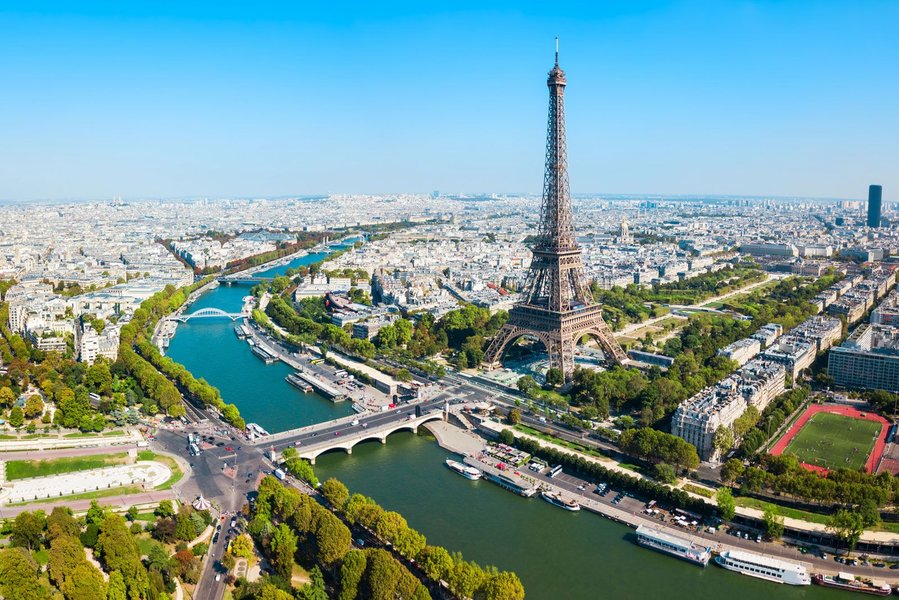
A view of the majestic Eiffel Tower in Paris.
Key Height Milestones
- 1889 (Original): Approximately 300 meters (984 feet) without flagpole, 312 meters (1,024 feet) with flagpole.
- Post-Antenna Additions: Heights varied with different antenna installations throughout the 20th and 21st centuries.
- 2022 (Current): Approximately 330 meters (1,083 feet) with the latest digital antenna.
The Science Behind the Changing Height
Thermal Expansion and Antenna Upgrades
Beyond the permanent additions of antennas, the Eiffel Tower's height can also fluctuate slightly due to temperature changes. The wrought iron from which the tower is constructed undergoes a natural physical phenomenon called thermal expansion. When temperatures rise, the iron expands, causing the tower to grow by a few centimeters. Conversely, in colder temperatures, the iron contracts, and the tower becomes slightly shorter.
However, the most significant changes in the tower's height have been a direct result of its crucial role in telecommunications. From early radio transmissions to modern digital television broadcasting, the tower's summit has been an ideal location for antennas, extending its reach and, consequently, its height.
The Role of Antennas
The addition of antennas has been a primary driver of the Eiffel Tower's increasing height since its inauguration. These antennas have not only served to advance broadcasting technology in France but have also ensured the tower's continued relevance beyond its initial purpose for the 1889 World's Fair.
Here's a brief overview of how antennas have impacted the tower's height:
- Early radio transmissions demonstrated the tower's potential as a giant antenna.
- Subsequent installations for radio and television broadcasting progressively increased the height.
- The latest digital antenna installation in 2022 further extended its reach and height.
Comparing the Eiffel Tower's Height
How It Stacks Up Against Other Tall Structures
While the Eiffel Tower was the tallest man-made structure in the world for over four decades, it has since been surpassed by numerous skyscrapers and towers around the globe. However, it remains the tallest structure in Paris and a significant benchmark in the history of engineering and architecture.
Here's a comparison of the Eiffel Tower's height with a few other notable structures:
| Structure | Approximate Height (meters) | Approximate Height (feet) | Location |
|---|---|---|---|
| Eiffel Tower (Current) | 330 | 1,083 | Paris, France |
| Burj Khalifa | 828 | 2,717 | Dubai, UAE |
| Chrysler Building | 319 | 1,046 | New York City, USA |
| Tokyo Tower | 333 | 1,093 | Tokyo, Japan |
As the table illustrates, while not the tallest in the world anymore, the Eiffel Tower's height is still substantial and impressive, comparable to that of an 81-story building.
More Than Just Height: Key Figures and Facts
Beyond the Vertical Dimension
While its height is a defining characteristic, the Eiffel Tower is remarkable in many other ways. Its construction was a monumental feat of engineering for its time, involving the assembly of thousands of individual wrought-iron pieces.
Structural Details
-
Material: Wrought iron.
-
Weight: Approximately 10,100 tons.
-
Number of Iron Pieces: Around 18,000.
-
Number of Rivets: Approximately 2.5 million.
-
Base Dimensions: Square, measuring 125 meters (410 feet) on each side.
The tower has three levels accessible to the public. The first floor is at a height of 57 meters (187 feet), the second at 114 meters (374 feet), and the third (summit) at 276 meters (906 feet) before reaching the antennas.
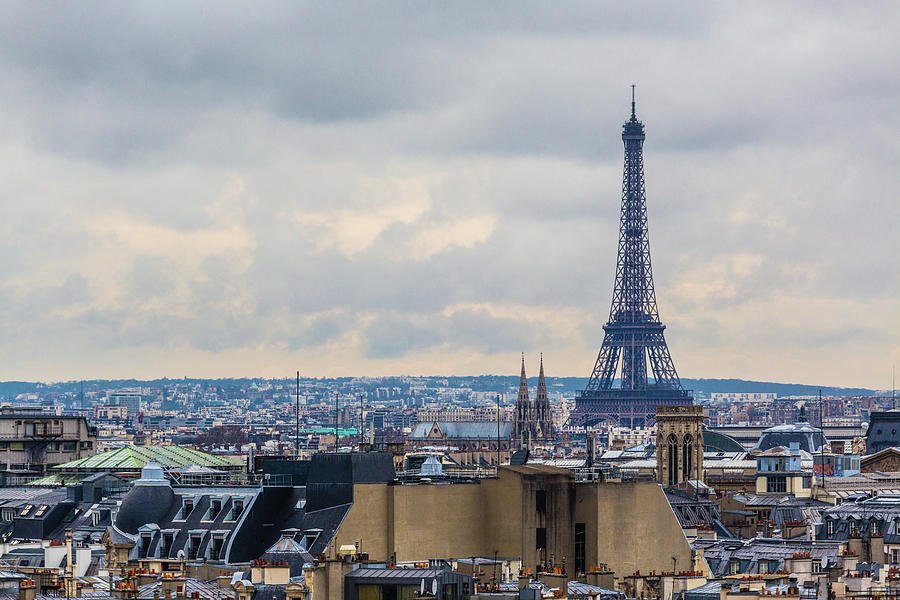
The Eiffel Tower as a prominent feature of the Paris skyline.
Historical and Cultural Significance
The Eiffel Tower was initially met with some artistic opposition but quickly became a symbol of French ingenuity and a global icon. It has played a crucial role in scientific experiments, military communications during World War I, and remains a vital broadcasting hub today. Its enduring popularity is evident in the millions of visitors it attracts annually, making it one of the most visited paid attractions in the world.
The tower's presence on the Champ de Mars, its role in significant events like the 1889 Exposition Universelle, and its designation as a UNESCO World Heritage Site all contribute to its immense cultural significance.
FAQ About the Eiffel Tower's Height
What is the exact current height of the Eiffel Tower?
As of the latest antenna upgrade in 2022, the Eiffel Tower's current height is approximately 330 meters (1,083 feet).
Why has the Eiffel Tower's height changed over the years?
The height has primarily increased due to the addition and upgrading of radio and television broadcasting antennas at the tower's summit. Small fluctuations also occur due to thermal expansion of the iron structure in different temperatures.
Was the Eiffel Tower always the tallest structure in the world?
Yes, upon its completion in 1889, the Eiffel Tower was the tallest man-made structure in the world. It held this record for 41 years until the Chrysler Building was completed in 1930.
How does the Eiffel Tower's height compare to modern skyscrapers?
While it was revolutionary in its time, modern skyscrapers like the Burj Khalifa are significantly taller than the Eiffel Tower. However, it remains a very tall and impressive structure, comparable in height to an 81-story building.
Does the temperature affect the height of the Eiffel Tower?
Yes, the wrought iron structure of the Eiffel Tower expands in heat and contracts in cold, causing slight variations in its height by a few centimeters.
References
Last updated May 14, 2025