
Unplug Before You Unwind: The Critical Impact of Electronics on Your Nightly Rest and Daily Well-being
Discover why powering down your devices before bedtime is essential for quality sleep, mental health, and next-day productivity.
Key Insights: The Unseen Costs of Late-Night Screen Use
- Melatonin Suppression: The blue light emitted by electronic screens significantly disrupts your body's natural production of melatonin, the sleep-inducing hormone, making it harder to fall and stay asleep.
- Mental Health Strain: Frequent late-night electronic use is strongly linked to increased risks of anxiety and depressive symptoms, affecting emotional regulation and overall psychological well-being.
- Impaired Productivity: Poor sleep quality, a direct consequence of pre-bedtime screen exposure, leads to daytime fatigue, reduced concentration, and diminished cognitive performance, impacting daily tasks and long-term success.
In our increasingly digital world, electronic devices have become an indispensable part of our daily lives, often blurring the lines between work, entertainment, and personal time. From checking a final email to scrolling through social media or watching a show, many of us engage with screens right up until we close our eyes. However, this ubiquitous habit carries significant, often underestimated, consequences for our sleep quality, mental health, and even our productivity the following day. Understanding these impacts is the first step toward reclaiming healthier sleep patterns and a more balanced life.
The Pervasive Impact on Sleep Quality: Beyond Just "Feeling Tired"
The most immediate and widely recognized effect of using phones and electronics before bed is their detrimental impact on sleep quality. This is primarily due to the specific type of light emitted by these devices and the stimulating nature of their content.
The Blue Light Blight: Disrupting Your Body's Natural Rhythms
Electronic screens, including those on smartphones, tablets, laptops, and televisions, predominantly emit short-wavelength blue light. This particular wavelength is highly effective at signaling to your brain that it is daytime. During the day, blue light can be beneficial, boosting alertness and cognitive function. However, its presence in the evening hours is counterproductive.
The fundamental issue lies in blue light's ability to suppress the production of melatonin. Melatonin is a hormone crucial for regulating your circadian rhythm, the body's natural 24-hour sleep-wake cycle. When blue light hits the specialized photoreceptors in your eyes, it sends signals to your brain's suprachiasmatic nucleus (SCN), which then inhibits melatonin release from the pineal gland. This tricks your brain into thinking it's still daylight, delaying your natural sleep onset and disrupting the entire sleep architecture.
As Dr. Charles Czeisler of Harvard Medical School aptly states,
“Even dim light can interfere with a person's circadian rhythm and melatonin secretion.”This suppression can last for several hours, making it significantly harder to fall asleep and reducing the overall duration and restorative quality of your rest. Studies indicate that as little as two hours of screen time in the evening can seriously disrupt the melatonin surge needed for sleep.
— Czeisler, Charles. "Blue Light Has a Dark Side." Harvard Health Publishing, Harvard Medical School, 18 July 2018, www.health.harvard.edu/staying-healthy/blue-light-has-a-dark-side.
While some newer research suggests that the intensity of blue light might be more critical than the color itself, and that all light before bed can be disruptive, the consensus remains that reducing exposure to short-wavelength light from screens is a prudent strategy for sleep health. Many devices now offer "night mode" or "blue light filter" settings, which shift the screen's color temperature to warmer tones, potentially mitigating some of these effects, though complete avoidance remains the most effective strategy.
Beyond Light: Mental Stimulation and Sleep Displacement
It's not just the light; the content consumed on electronic devices before bed also plays a significant role in sleep disruption. Engaging with stimulating content such as fast-paced video games, intense movies, stressful work emails, or active social media feeds can increase physiological and mental arousal. This heightened state of alertness makes it difficult for your mind and body to relax and prepare for sleep.
Furthermore, the sheer act of using devices can lead to "sleep displacement." With no fixed end time for electronic use, individuals often stay up later than intended, sacrificing precious sleep hours. This is particularly prevalent among adolescents and young adults, who may prioritize social interaction or entertainment over sleep, leading to shorter sleep durations and irregular sleep-wake cycles.
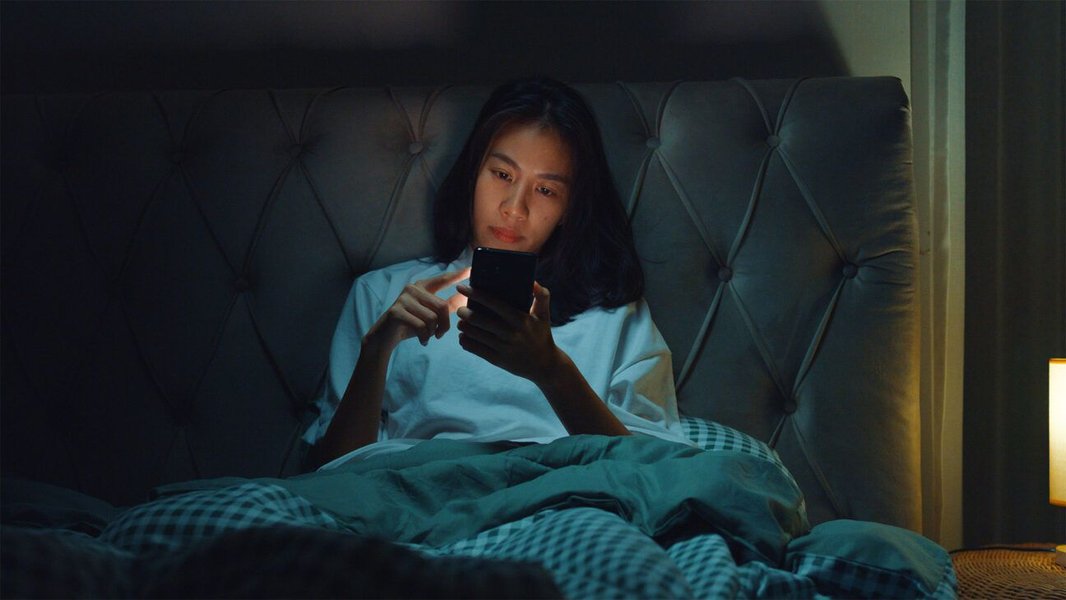
The common habit of using smartphones in bed can significantly impact sleep quality.
The Mental Health Equation: A Vicious Cycle of Screen Time and Well-being
The connection between electronic device use, sleep, and mental health is deeply intertwined. Poor sleep, often a direct consequence of late-night screen habits, is a known contributor to various mental health challenges, while increased mental health issues can, in turn, lead to problematic technology use.
Increased Anxiety and Depressive Symptoms
Frequent nighttime smartphone use and excessive screen time are strongly associated with adverse mental health outcomes. Studies have found a clear correlation between the use of electronic media devices before sleep and an increase in depressive symptoms and anxiety.
“Nighttime use of technology can be associated with an increase in depressive symptoms.”
— "Night-time use of electronic devices, fear of missing out, sleep disturbances, and depressive symptoms in adolescents." Journal of Youth and Adolescence, vol. 53, 2024, link.springer.com/article/10.1007/s12144-024-05934-5.
This link is complex. Sleep deprivation impairs the brain's ability to regulate emotions, process stress, and cope with daily challenges, making individuals more susceptible to feelings of anxiety and sadness. Additionally, constant exposure to social media can foster feelings of loneliness, inadequacy, and "fear of missing out" (FOMO), contributing to mental distress. Checking notifications, emails, or social media feeds in the middle of the night can further disrupt sleep and exacerbate these feelings, creating a vicious cycle.
Sedentary Lifestyles and Social Isolation
Excessive electronic use, particularly at night, often leads to a more sedentary lifestyle. Reduced physical activity has well-documented negative impacts on mental health, including increased risks of depression and anxiety. Furthermore, prioritizing virtual interactions over in-person social connections can lead to social isolation, a significant risk factor for various mental health problems.
For children and adolescents, whose brains are still developing, the impact can be particularly pronounced. Excessive screen time may impair their ability to develop crucial social skills and cope with real-life interactions, potentially leading to social phobia and difficulties in managing emotions.
The Productivity Cost: Diminished Performance and Well-being
The consequences of poor sleep and compromised mental health due to late-night electronic use extend directly into your waking hours, significantly impacting your productivity and overall daily functioning.
Fatigue and Reduced Concentration
When sleep is disrupted, whether in terms of duration or quality, the body and mind do not get the necessary time to repair and consolidate memories. This leads to daytime fatigue, grogginess, and a pervasive lack of energy. Consequently, concentration, attention span, and the ability to focus on tasks are severely diminished.
This impacts performance at school, work, and in daily activities. Simple tasks can feel overwhelming, decision-making becomes harder, and overall efficiency plummets. Chronic sleep deficiency can confuse your internal body clock, making it a difficult cycle to break, affecting both adults and children.
Impaired Cognitive Function
Beyond concentration, sleep is fundamentally linked to higher-order cognitive functions. As the National Sleep Foundation emphasizes:
“Sleep is essential for learning, memory, and decision-making.”
— "Why Electronics May Stimulate You Before Bed." Sleep Foundation, www.sleepfoundation.org/articles/why-electronics-may-stimulate-you-bed.
Insufficient sleep hinders the brain's ability to form new memories, process information, and engage in creative problem-solving. This cognitive impairment can lead to decreased academic performance in students and reduced innovation and effectiveness in the workplace. The long-term accumulation of sleep debt can have a profound and lasting negative effect on cognitive health.
This radar chart illustrates the perceived impact of late-night electronic use across various dimensions of well-being, highlighting its far-reaching consequences.
Embracing Better Alternatives: Strategies for a Restful Night
Given the significant negative impacts, adopting healthier habits around electronic use before bedtime is crucial for overall well-being. The good news is that practical alternatives exist to help you unwind effectively without relying on screens.
Establish a Digital Curfew and Screen-Free Zones
One of the most effective strategies is to set a "digital curfew." This means turning off all electronic devices at least one hour, and ideally two to three hours, before your intended bedtime. This allows your brain to gradually wind down and your body to naturally prepare for sleep without the stimulating effects of blue light or engaging content.
The Sleep Foundation recommends:
“Establishing a screen-free bedtime routine improves both sleep quality and overall wellbeing.”
— "Can Electronics Affect Quality Sleep?" Sleep Foundation, www.sleepfoundation.org/how-sleep-works/how-electronics-affect-sleep.
Creating a technology-free bedroom is another powerful step. Remove televisions, smartphones, tablets, and laptops from your sleeping environment. If you use your phone as an alarm, consider investing in a traditional alarm clock. This eliminates the temptation for late-night scrolling and ensures that notifications or vibrations won't disturb your sleep.
Engaging in Relaxing Bedtime Activities
Replacing screen time with calming activities can significantly improve sleep quality. Here are some effective alternatives:
- Reading a Physical Book: Unlike e-readers that emit blue light, a traditional paper book allows you to engage your mind without stimulating your eyes or brain with artificial light.
- Mindfulness and Meditation: Practices like deep breathing exercises or guided meditation can help quiet a busy mind, reduce stress, and prepare your body for rest.
- Journaling: Writing down thoughts, worries, or reflections can be a therapeutic way to clear your mind before sleep.
- Listening to Calming Audio: This could include soothing music, a podcast, an audiobook, or white noise. Ensure the volume is low and the content is non-stimulating.
- Taking a Warm Bath or Shower: The change in body temperature after a warm bath can promote relaxation and signal to your body that it's time for sleep.
- Gentle Stretching or Yoga: Light, non-strenuous physical activity can release tension and prepare muscles for rest.
This video explores how mindless scrolling on phones before bedtime impacts sleep.
This video delves into the pervasive habit of "mindless scrolling" on smartphones before bedtime and its often underestimated impact on sleep. It highlights how what we perceive as a relaxing wind-down activity can actually be counterproductive, shedding light on the mechanisms through which phone use disrupts our natural sleep processes. Understanding these dynamics is crucial for anyone looking to improve their nighttime routine and overall sleep health.
Comparative Analysis of Pre-Bedtime Activities
To further illustrate the benefits of healthier alternatives, the following table compares the typical effects of electronic device use versus recommended screen-free activities on key aspects of sleep and well-being.
| Factor | Electronic Device Use (e.g., smartphone, tablet, TV) | Recommended Alternatives (e.g., reading, meditation, journaling) |
|---|---|---|
| Blue Light Exposure | High (Suppresses melatonin, disrupts circadian rhythm) | None to very low (Allows natural melatonin production) |
| Mental Stimulation | High (Activates brain, increases alertness, can induce stress/anxiety) | Low (Promotes relaxation, calms the mind) |
| Sleep Onset | Delayed (Takes longer to fall asleep) | Facilitated (Easier to fall asleep) |
| Sleep Quality | Decreased (Fragmented sleep, less restorative) | Improved (Deeper, more continuous sleep) |
| Melatonin Production | Inhibited (Especially 1-3 hours post-exposure) | Maintained (Natural release encouraged) |
| Impact on Circadian Rhythm | Disrupted (Misaligns internal body clock) | Maintained (Supports natural rhythm) |
| Mental Health Effects | Increased risk of anxiety, depression, FOMO | Reduced stress, improved emotional regulation |
| Next-Day Productivity | Reduced concentration, fatigue, impaired decision-making | Enhanced alertness, focus, cognitive function |
| Addictive Potential | High (Behavioral addiction, constant checking) | Low (Promotes healthy habits, self-regulation) |
Frequently Asked Questions (FAQ)
Why is blue light so problematic for sleep?
How long before bed should I stop using electronics?
Can "night mode" or blue light filters on devices solve the problem?
Are e-readers like Kindle better for sleep than tablets?
How does poor sleep from electronics affect mental health specifically?
Conclusion: Prioritizing Your Sleep and Well-being
The evidence is clear: our modern reliance on electronic devices, particularly in the hours leading up to bedtime, comes at a significant cost to our sleep quality, mental health, and daytime productivity. The blue light emitted by screens disrupts our natural circadian rhythms and melatonin production, while the stimulating content can keep our minds wired when they should be winding down. This cascade of effects contributes to sleep deprivation, which in turn fuels anxiety, depression, and a tangible reduction in our ability to function effectively throughout the day.
By understanding these profound impacts, we can make informed choices to foster healthier digital habits. Embracing a digital curfew, making bedrooms screen-free sanctuaries, and replacing late-night scrolling with calming alternatives like reading, meditation, or journaling are not just recommendations; they are essential investments in our physical and mental well-being. As Mesut Barazany wisely said:
“Your future depends on your dreams, so go to sleep.”
— Barazany, Mesut. "Mesut Barazany Quotes." Goodreads, www.goodreads.com/author/quotes/14878345.Mesut_Barazany.
Prioritizing quality sleep by unplugging before you unwind is a fundamental step towards a more rested, resilient, and productive self.
Recommended Searches
- How to create a healthy bedtime routine?
- What is the impact of sleep deprivation on cognitive function?
- Are there natural ways to increase melatonin production?
- What are the benefits of a digital detox for mental health?